
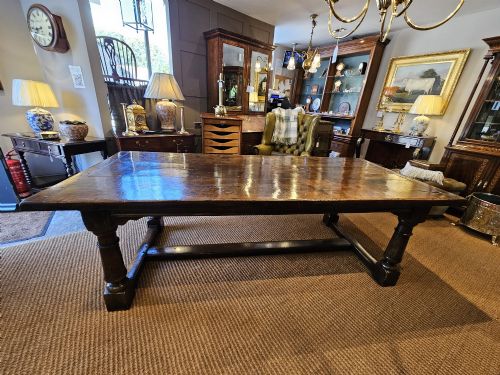
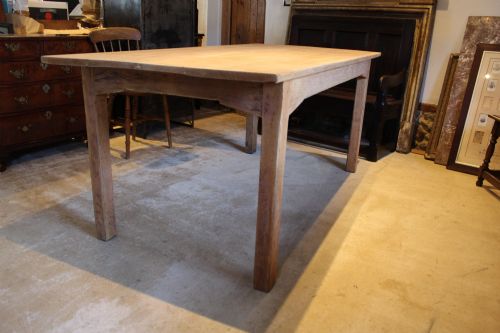
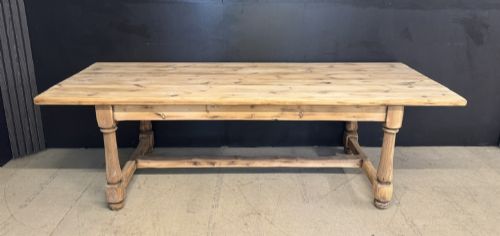
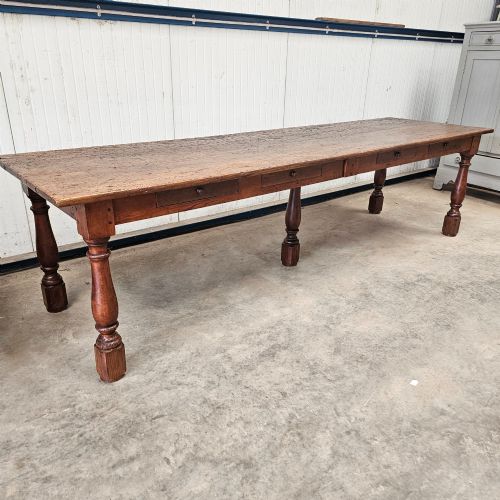
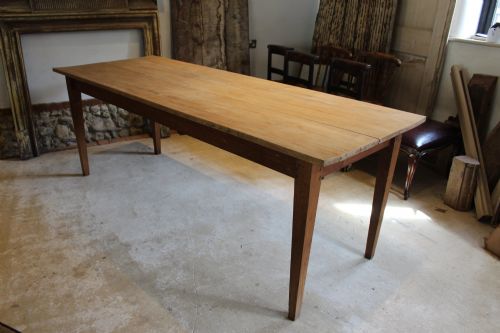


8 Seater Farmhouse Table
An 8 seater farmhouse table provides ample daily dining space, drawing on centuries of sturdy utilitarian design in oak and pine.
8 Seater Farmhouse Table
An 8 seater farmhouse table is a large domestic dining surface designed to accommodate families and guests comfortably for everyday meals. When searching for this phrase, buyers encounter substantial pieces built primarily for hard use in domestic kitchens and dining rooms.
The versions most commonly met on this page span from Georgian and Victorian eras through to the early twentieth century. They draw heavily on regional British and French country traditions, taking the form of refectory tables, scrubbed tables, and large timber boards set on sturdy legs.
Makers constructed these tables from durable native hardwoods and softwoods to withstand decades of daily family life. The surviving examples display the honest proportions and utilitarian character that define classic country furniture.
How they were made
Makers built these tables using solid timbers such as oak, pine, cherrywood, and chestnut, often joining thick top planks to robust stretcher bases for stability. Joinery relied on traditional pegged mortise and tenon joints designed to handle heavy daily downward pressure without shifting.
Surfaces received various finishes depending on their period and working origin, ranging from wax polish and scrubbed bare timber to traditional paint layers. Woodworkers selected specific timbers for their strength and grain, ensuring the top boards remained flat and resilient over generations of use.
Listings feature oak, pine, cherrywood, and chestnut, spanning the Georgian, Victorian, and early twentieth-century periods.
What varies in quality
The quality of these tables depends heavily on the integrity of the timber selection and the weight of the original construction. Superior pieces utilise thick, well-seasoned boards for the top and retain rigid underframes that prevent any lateral wobble.
Proportion and the handling of the timber also separate standard workshop output from finer examples. Tables that retain their original untrimmed length, harmonious leg thickness, and honest patination across the scrubbed or polished surface command greater appreciation.
The 8 Seater Farmhouse Table Glossary
- Scrubbed oak
- A timber surface that has been repeatedly washed and scrubbed clean of finishes over decades of use. This process leaves the grain raised and pale in tone.
- Stretcher
- A horizontal wooden brace running between the legs of a table to reinforce the structure. It prevents the legs from bowing outward under heavy weight.
- Patina
- The deep, lustrous surface sheen developed on old timber over centuries through handling, waxing, and exposure to light. It is a sign of genuine age.
- Mortise and tenon
- A traditional woodworking joint where a projecting tongue fits snugly into a square cavity. This method locks timber pieces together securely without relying on modern metal fasteners.
8 Seater Farmhouse Table: Frequently Asked Questions
How much space do I need for an 8 seater farmhouse table?
An 8 seater table requires a generous room footprint to allow chairs to pull out comfortably on all sides. Buyers should measure their dining space carefully to ensure adequate clearance around the entire perimeter.
Allowing at least ninety centimetres of empty floor space beyond the table edge ensures diners can sit down and stand up without obstruction. Large refectory bases and stretcher rails can also affect where chairs tuck underneath.
Are these tables suitable for daily family use?
These tables were originally built precisely for heavy everyday domestic labour and dining. Their robust timber construction makes them exceptionally resilient for modern family life.
Most antique examples already bear the marks of decades or centuries of use, meaning routine family dining adds to their character rather than harming them. Simple maintenance like periodic waxing helps protect the wood from daily spills.
How do I tell Victorian tables from Georgian ones?
Georgian tables often display lighter, more refined proportions and use dense native oak with finer cabinetmaker joinery. Victorian pieces tend to be heavier, sometimes utilising wider pine boards or darker finishes.
Examining the underside reveals construction clues, such as hand-cut framing marks on older pieces compared to later mechanical sawing techniques. The style of the legs and stretcher placement also shift subtly across the nineteenth century.
Do pine and oak tables require different care?
Pine is a softer wood than oak and absorbs moisture and knocks more readily, developing a softer, more rustic surface character over time. Oak is exceptionally dense and resists heavy wear with greater structural stability.
Both timbers benefit from avoiding extreme central heating fluctuations that can dry out the wood. Regular wiping with a damp cloth and occasional application of appropriate wax keep the grain nourished.