

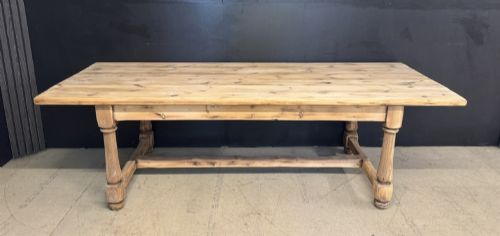
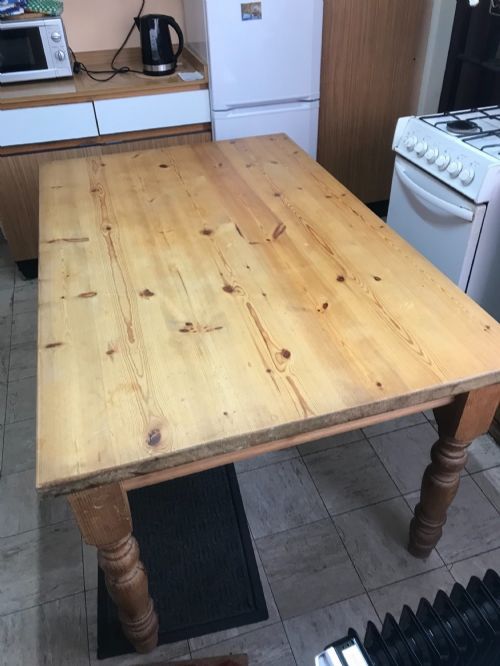

6 Seater Pine Dining Table
A 6 seater pine dining table brings honest proportions and enduring utility to a kitchen or dining room.
6 Seater Pine Dining Table
A 6 seater pine dining table provides a practical surface for daily meals and family gatherings. These pieces appear frequently across Victorian, Edwardian, and early twentieth-century periods, often in farmhouse or country house styles.
Buyers searching for a 6 seater pine dining table will encounter solid timber constructions designed for hard domestic use. Many examples incorporate functional additions such as single or multiple drawers set into the frieze.
The majority of pieces originate from nineteenth-century workshops, reflecting robust utilitarian design. Variations include drop-leaf formats, refectory proportions, and traditional four-legged farmhouse frameworks.
Materials and Construction
Construction relies primarily on solid pine and related timbers, occasionally incorporating chestnut elements for structural stability. Joinery techniques are straightforward and robust, designed to withstand decades of kitchen and dining room service.
Surfaces are often left as bare scrubbed wood or finished with historical painted treatments, such as grey paint over the original pine. Drawer components feature traditional construction methods suited to heavy daily use.
6 Seater Pine Dining Table Retail Price Guide 2026
Typical asking prices for 6 seater pine dining table among the pieces listed under this phrase on Sellingantiques today, from the lower quarter to the upper quarter. They describe what is for sale here now, not the wider market.
Listings for a 6 seater pine dining table span the Victorian era up to the 1930s, featuring both plain pine and painted wood finishes.
Assessing Quality and Character
Quality in these tables rests upon the integrity of the timber and the honesty of the wear. Superior examples retain thick top boards with minimal warping and strong, well-proportioned legs.
The presence of original drawers, sound joinery, and untouched patination distinguishes better pieces from later or overly restored alternatives. Timber selection also plays a role, with denser pine and mixed-wood builds showing superior durability.
The 6 Seater Pine Dining Table Glossary
- Pine
- A softwood commonly used for domestic furniture due to its workability and availability. It develops a rich patination over years of scrubbing and use.
- Refectory table
- A long, narrow dining table traditionally used for communal dining. In later periods, the term describes heavy tables with stretcher bases.
- Drop-leaf table
- A table with a fixed centre section and hinged flaps that fold down. This design allows the footprint to be reduced when space is limited.
- Patina
- The surface sheen and colour change acquired by timber over decades of exposure, handling, and polishing. It serves as an indicator of age and genuine use.
6 Seater Pine Dining Table: Frequently Asked Questions
How many people does it seat comfortably?
A standard six-seater provides enough perimeter length for six chairs without crowding. The leg placement and apron depth also determine how easily chairs tuck underneath.
Measuring the usable space between the table legs ensures that dining chairs fit correctly alongside the board.
Are these tables suitable for daily kitchen use?
These tables were originally built for hard service in Victorian and country kitchens. Solid timber surfaces handle daily meals and family activities.
Routine care involves simple cleaning and allowing the wood to maintain its natural character through regular use.
How do I identify a Victorian pine table?
Victorian examples display distinct construction traits such as hand-cut joints, traditional timber fixings, and deep surface patination. Drawer linings often feature older hand-planed boards.
Comparing the timber density and tool marks helps differentiate nineteenth-century pieces from later reproductions.
Why do some tables have drawers?
Kitchen tables frequently included drawers for storing cutlery, linens, and household implements close to the dining area. Single or multiple drawers were integrated directly into the wooden framework.
These storage compartments add practical utility and indicate a traditional domestic workshop origin.