

20th Century Writing Desk
A 20th century writing desk provides a dedicated workspace shaped by Edwardian craftsmanship and revival styles.
20th Century Writing Desk
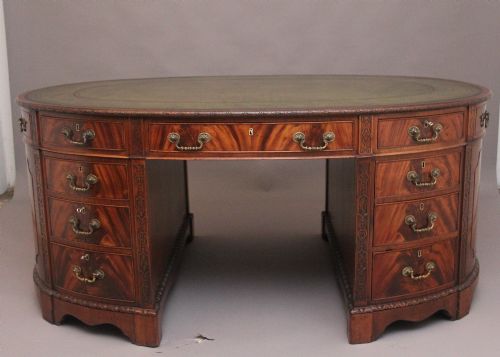
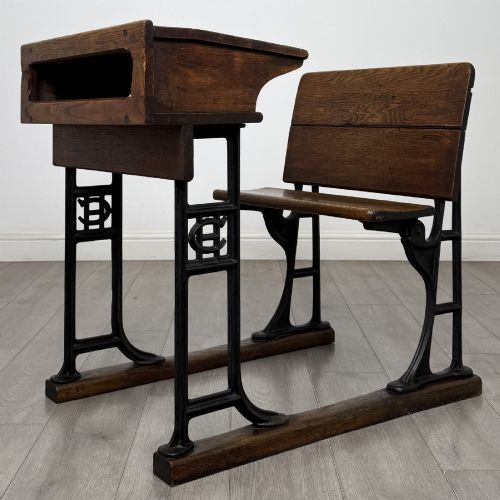
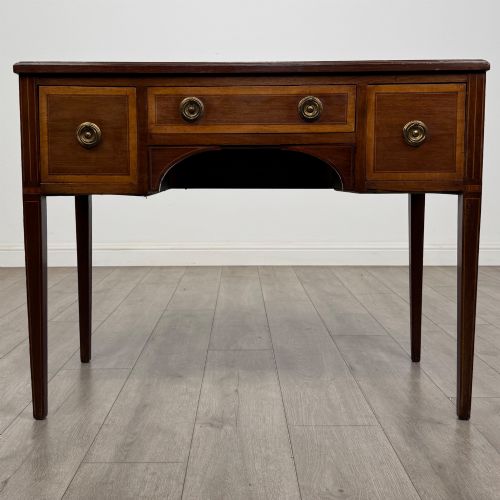
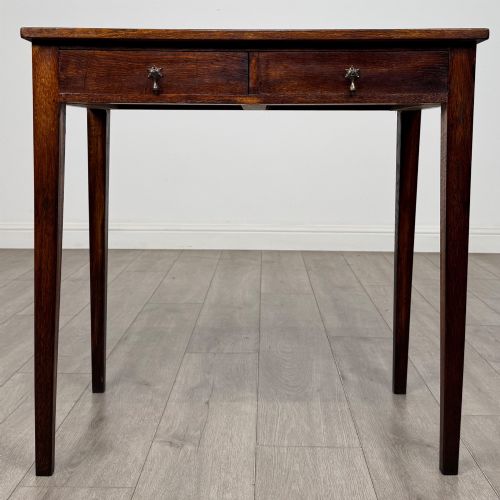
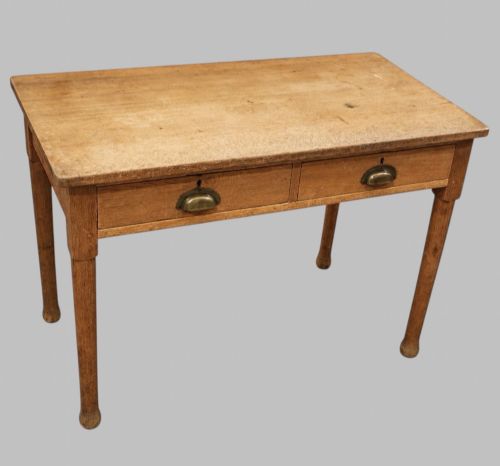
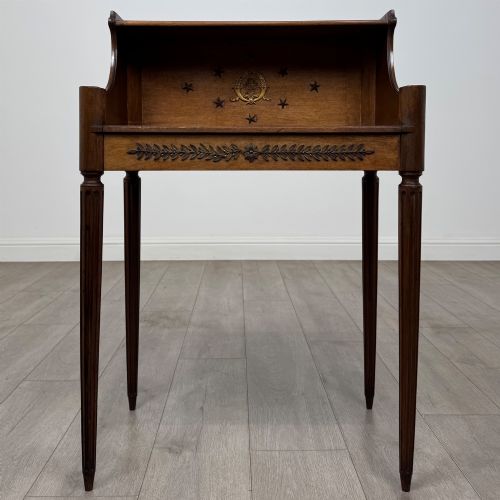
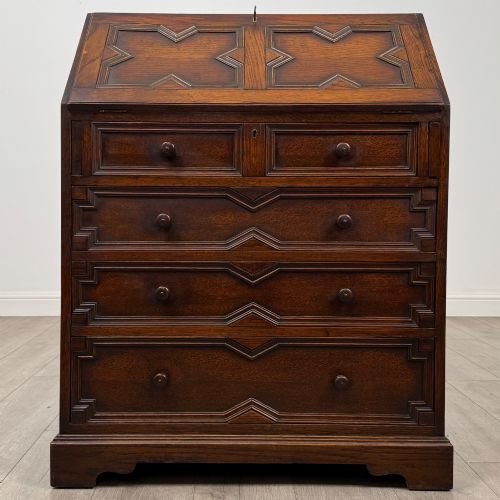
A 20th century writing desk encompasses versatile forms designed for study, correspondence and administrative tasks across domestic and professional spaces. The selection ranges from compact writing tables and slope-front bureaux to substantial pedestal desks and library tables.
Edwardian examples predominate the selection alongside pieces from the 1920s and 1930s. Makers drew heavily on historical design vocabulary, producing items in Queen Anne, Georgian, Jacobean, Tudor, Chippendale and Arts & Crafts revivals alongside Art Deco interpretations.
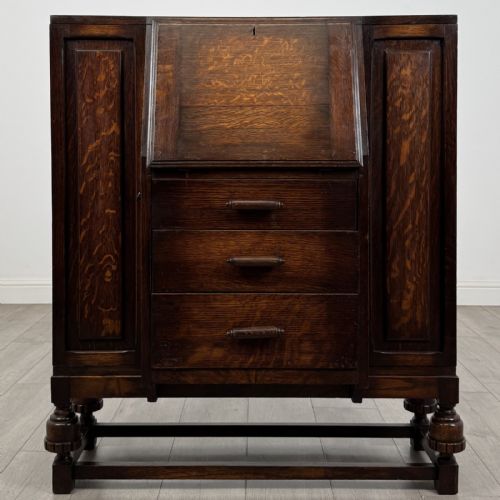
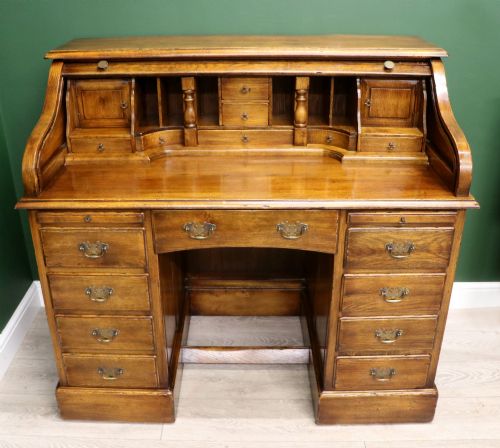
The practical function remains paramount in these pieces, which frequently incorporate fitted drawers, leather writing surfaces and pigeonholes. Bureau bookcases combine a drop-front writing compartment with upper shelving for storage and display.
What separates the range
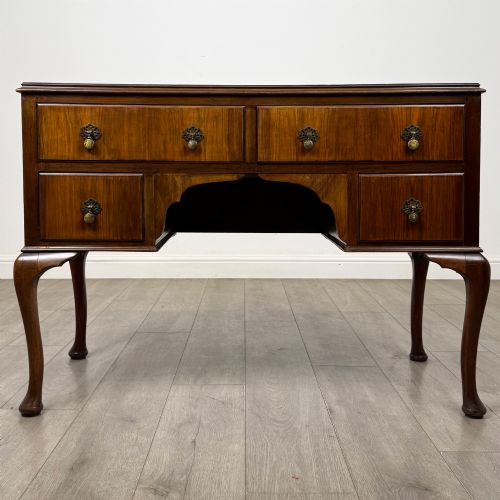
The grade of timber selection dictates much of the visual character, with figured walnut, burr walnut and book-matched oak veneers marking out finer examples. More utilitarian pieces rely on plain domestic oak or standard mahogany without decorative grain emphasis.
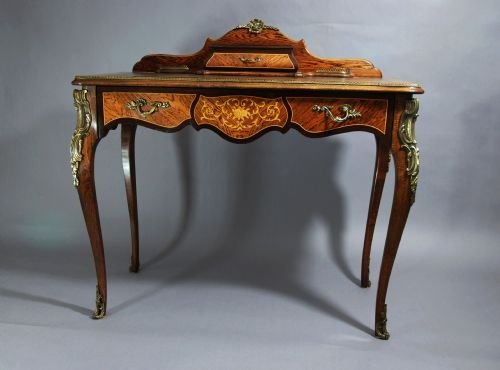
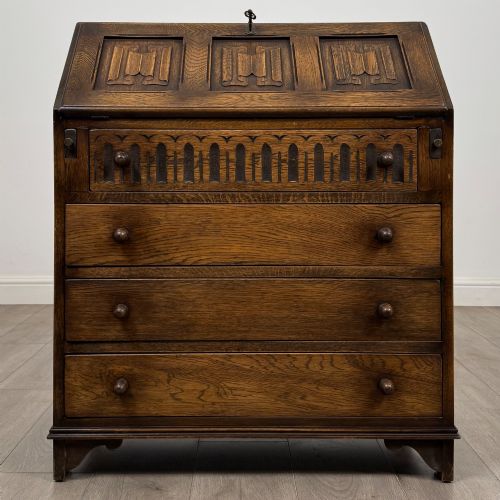
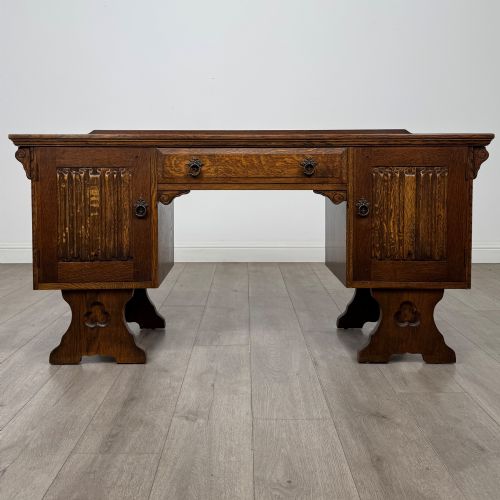
Execution of decorative detail separates production grades. Crisp hand-carving on linenfold panels and precise marquetry inlay indicate higher workshop standards compared to simpler, mass-produced mouldings.
20th Century Writing Desk Retail Price Guide 2026
Typical asking prices for 20th century writing desk among the pieces listed under this phrase on Sellingantiques today, from the lower quarter to the upper quarter. They describe what is for sale here now, not the wider market.
Banker's desks from this era still harbour stray paperclips dropped down drawer runners a century ago.
ARTHUR BASIL REYNOLDS·WYLIE & LOCHHEAD GLASGOW
The 20th Century Writing Desk Glossary
- Bureau
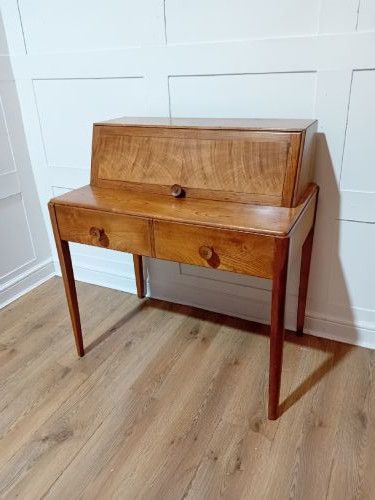
- A desk featuring a sloping hinged flap that opens to reveal a writing surface and interior pigeonholes. It often sits above a chest of drawers.
- Pedestal desk
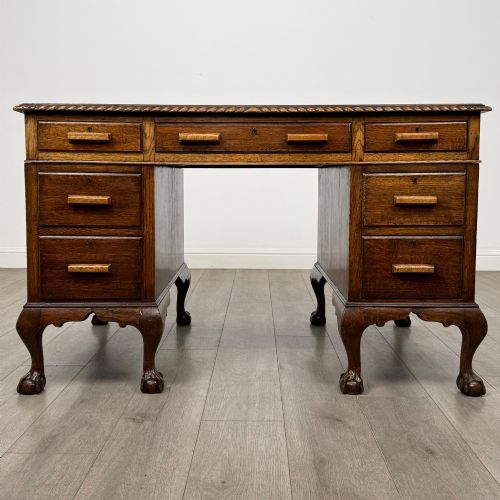
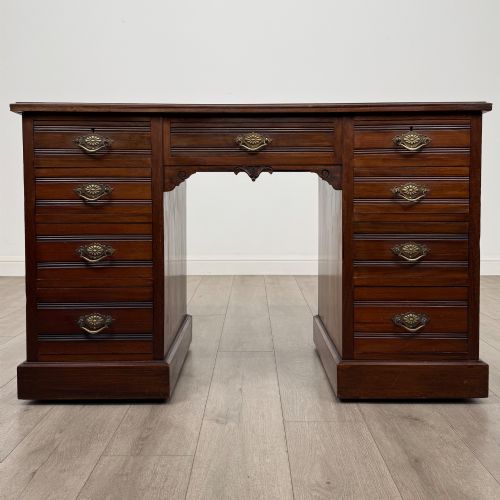
- A heavy freestanding desk supported by two banks of drawers or cabinets beneath the main writing surface. These often feature inset leather tops.
- Linenfold
- A style of wood carving that mimics folded linen cloth. It appears frequently on the panels of Edwardian oak bureaux and desks.
- Partners desk
- A large double-sided desk designed for two people to work opposite each other, featuring drawers and cupboards on both faces.
- Marquetry
- The art of applying pieces of veneer to a structure to form decorative patterns and pictures. It is common on revival writing desks.
20th Century Writing Desk: Frequently Asked Questions
How do I identify an Arts and Crafts desk?
Arts and Crafts desks emphasise visible construction, straightforward joinery and the natural grain of timbers like oak. Ornamentation is minimal and often relies on hand-hammered brass hardware rather than applied factory mouldings.
These pieces reflect the philosophy of craftsmanship promoted by designers and workshops of the early 20th century, avoiding excessive historical revivalism.
Were these desks used in offices or homes?
Early 20th-century writing desks served both domestic studies and professional environments. Pedestal desks and banker's desks were built for commercial offices and libraries, while ladies writing desks and side tables suited parlour rooms.
Size and internal fittings usually indicate the intended setting, with larger library tables designed for central room placement.
What woods were commonly used?
Oak and mahogany remain the most prevalent timbers found across 20th-century desks, reflecting enduring domestic preferences. Walnut and burr walnut appear on finer decorative pieces alongside regional timbers like yew wood.
Ebonised finishes and occasional fruitwood inlays also feature, particularly on pieces influenced by French cabinet-making traditions.