





19th Century Writing Accessories
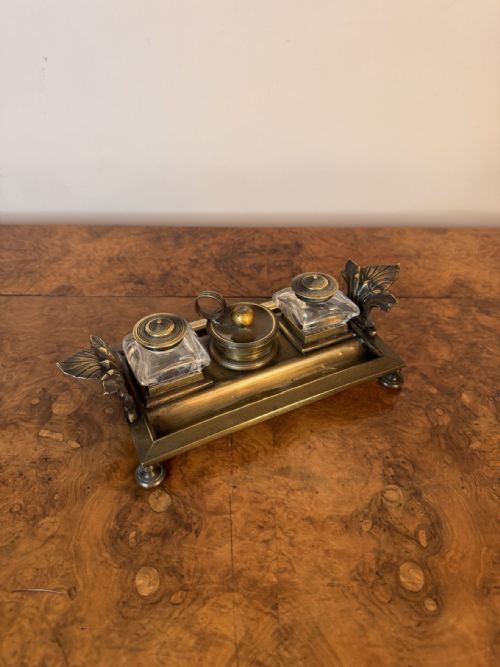
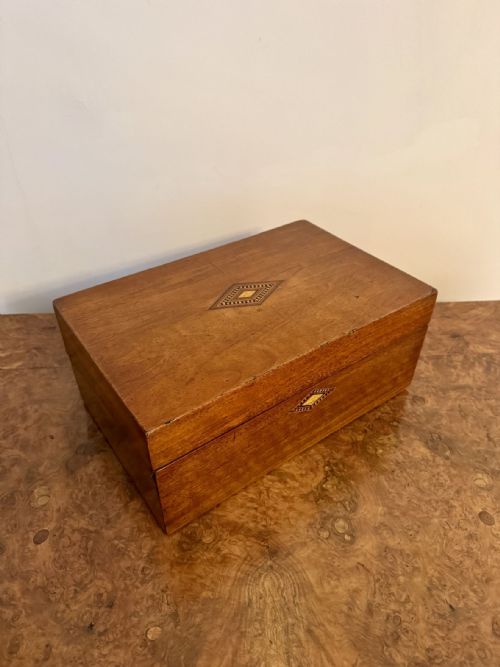
These 19th century writing accessories span portable slopes, desk stands and inkwells crafted to equip the domestic and travel desk.
19th Century Writing Accessories
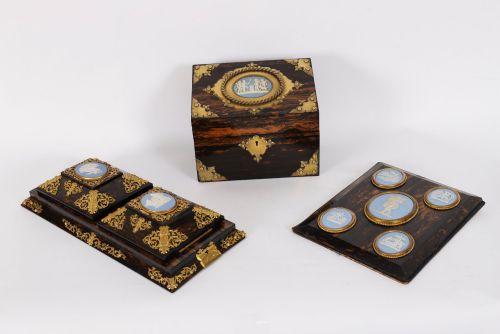
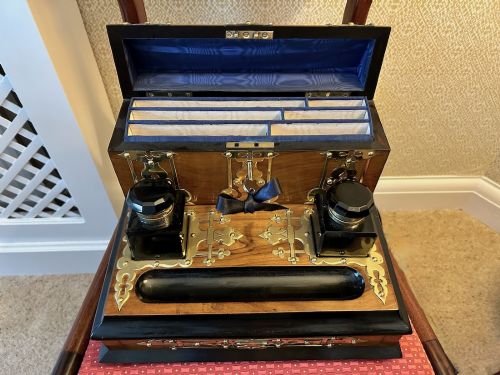
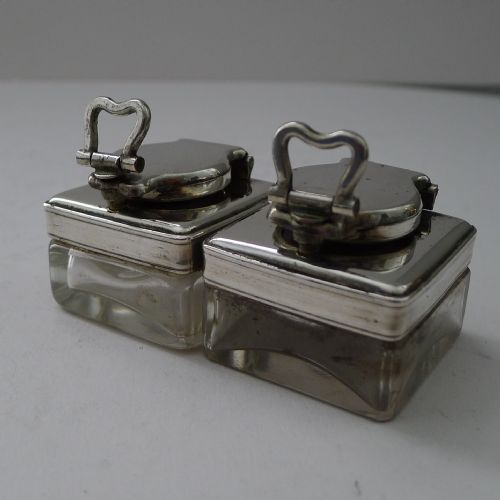
When you examine 19th century writing accessories, you encounter a specialised group of desk equipment designed for correspondence before the dominance of the fountain pen. These items range from compact travel inkwells and folding writing slopes to substantial inkstands and stationery boxes housed in burr walnut, coromandel, and pollard oak.
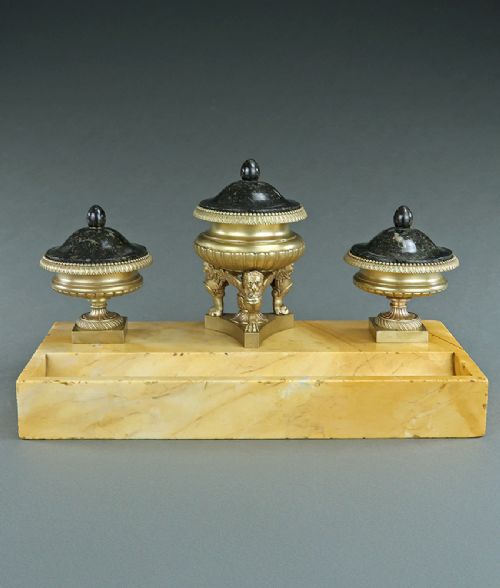
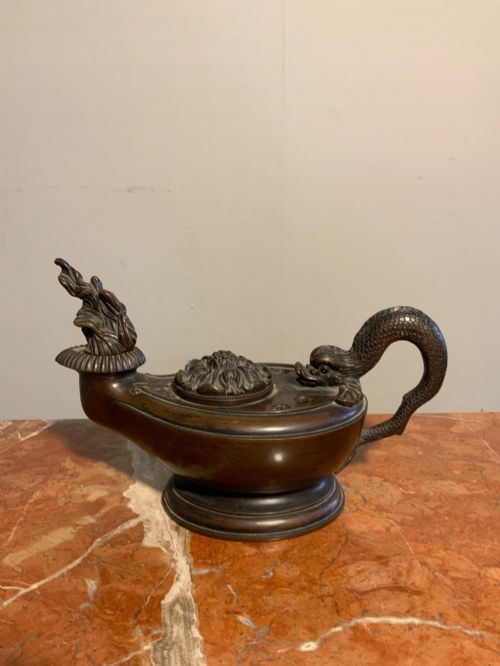
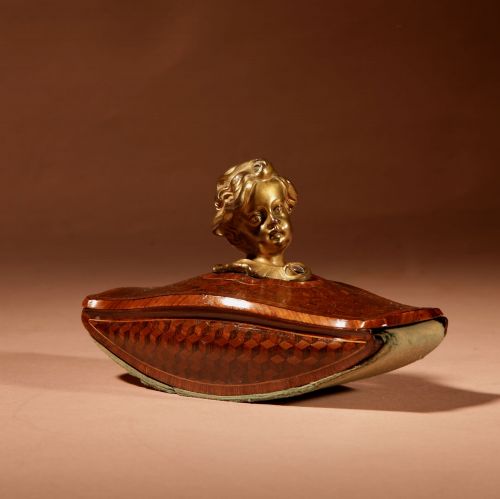
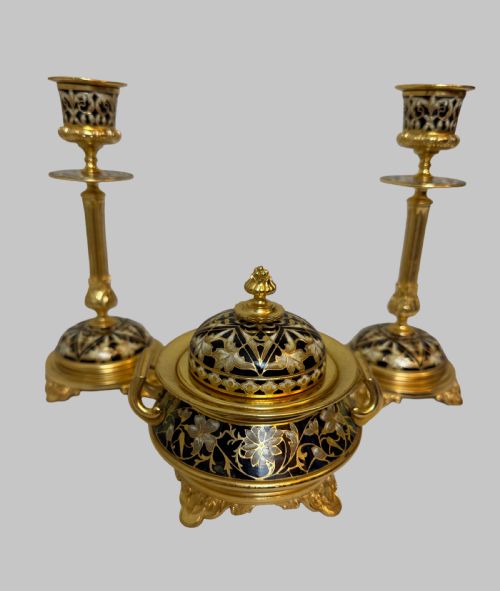
The objects derive from various European and international centres, encompassing French Empire ormolu and marble, English Tunbridge ware and Victorian silver, alongside Black Forest carved wood and Dutch Delft faience. On this page, you are most likely to meet walnut and brass inkstands, portable glass vessels with silver-plated lids, and elaborately decorated desk sets from the middle and late decades of the nineteenth century.
Makers and manufacturers such as Edwards & Jones, Wilkinson & Co, Robert Garrard, and Flight Barr & Barr produced utilitarian objects elevated by artistic craft. Whether configured as a grand tour bronze encrier or a simple ships inkwell with a glass liner, each piece reflects the meticulous correspondence rituals of the period.
Materials and Techniques
Makers utilised exotic hardwoods such as coromandel, burr walnut, and pollard oak as the structural foundation for writing slopes and stationery cabinets, frequently incorporating brass inlay and Tunbridge ware mosaic detailing. These timbers provided both durability for transport and a polished surface suited to formal libraries.
19th Century Writing Accessories Retail Price Guide 2026
Typical asking prices for 19th century writing accessories among the pieces listed under this phrase on Sellingantiques today, from the lower quarter to the upper quarter. They describe what is for sale here now, not the wider market.
Listings feature items spanning the 1800s to 1900, incorporating materials from tortoiseshell and porcelain to cast brass and marble.
Assessing Standard and Execution
The distinction between standard and superior pieces rests on the precision of the joinery and the integration of internal fittings, such as operating Bramah locks and matching ink glass liners. Fineness of execution appears in the crispness of bronze casting, the accuracy of Tunbridge wood mosaic, and the hand-painted detail on porcelain or lacquer surfaces.
Materials dictate baseline worth, moving from utilitarian pewter and plain brass toward heavily gilt ormolu paired with Sienna marble or champleve enamel. Integrity of preservation, including original patination on wood and undamaged gilt surfaces, determines the standing of an individual item within its category.
Edwards & Jones·Wilkinson & Co·Flight Barr & Barr·Robert Garrard·Rupert Favell
The 19th Century Writing Accessories Glossary
- Encrier
- A portable or stationary desk stand holding inkwells, sanders, and pen holders, usually manufactured from bronze, marble, or porcelain.
- Writing slope
- A portable folding box featuring an angled writing surface lined with leather or velvet, opening to reveal storage for stationery and nibs.
- Tunbridge ware
- A form of decorative woodwork produced in Kent using thousands of tiny coloured wood blocks to form mosaic pictorial patterns.
- Ormolu
- Gilded bronze utilised extensively for mounts and decorative frames on French furniture and desk accessories during the nineteenth century.
- Standish
- A raised tray or stand holding ink vessels, quill holders, and sand containers, typically rendered in silver, brass, or ceramic.
19th Century Writing Accessories: Frequently Asked Questions
What is a ships inkwell?
A ships inkwell is a heavy, low-profile desk vessel designed with a dome lid or weighted base to prevent ink spills during transit at sea.
These pieces typically utilise pewter, brass, or thick glass to withstand movement while remaining compact enough for cabin use.
How do I identify a writing slope?
A writing slope is a sloping wooden box that opens flat to display a hinged writing surface, ink compartments, and hidden document drawers.
Originating in various timbers like coromandel and walnut, they served as portable desks for travellers and home correspondents alike.
What are grand tour desk items?
Grand tour accessories are decorative objects collected by wealthy travellers visiting cultural sites across Europe, particularly Italy and France, during the nineteenth century.
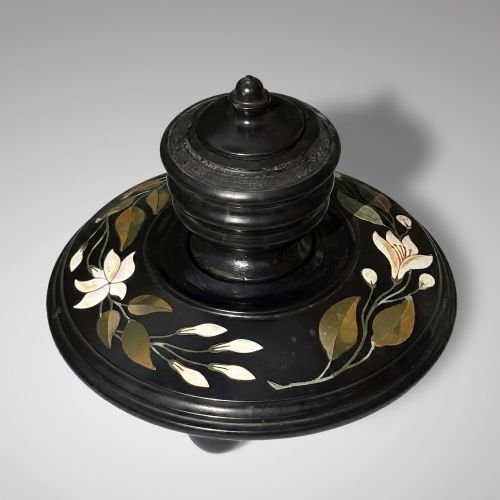
They frequently incorporate classical motifs, bronze castings, Sienna marble, and micro-mosaics into inkstands and paperweights.
How are inkwells dated?
Dating relies on stylistic shifts, metal casting techniques, hallmarks on silver mounts, and the evolution of locking mechanisms like Bramah locks.
Early pieces often display Georgian or Regency neoclassical lines, while later items embrace Victorian revival styles, Egyptian motifs, or Japanese influences.