



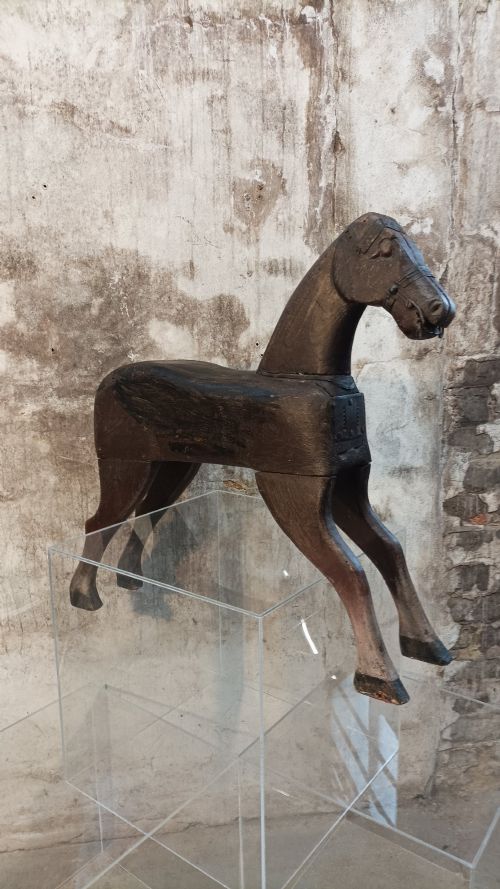
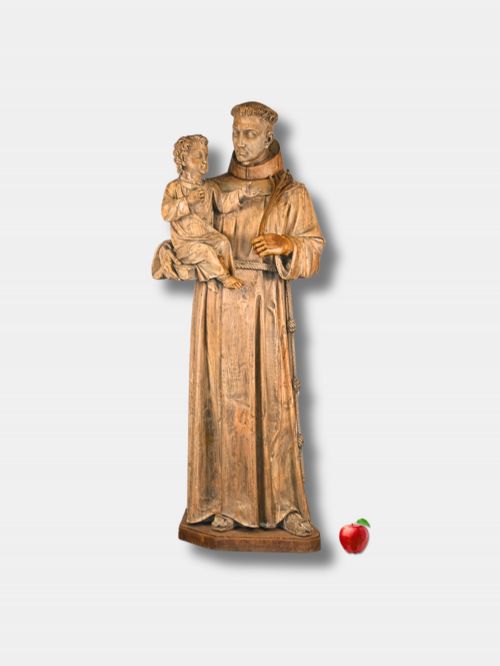
19th Century Wood Statue
When you search for a 19th century wood statue, you enter a diverse world of carved figures spanning European folk traditions, Asian workshops, and global trade.
19th Century Wood Statue
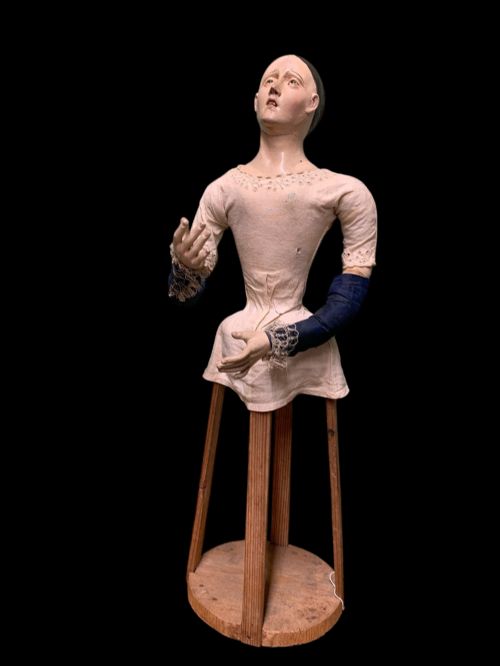
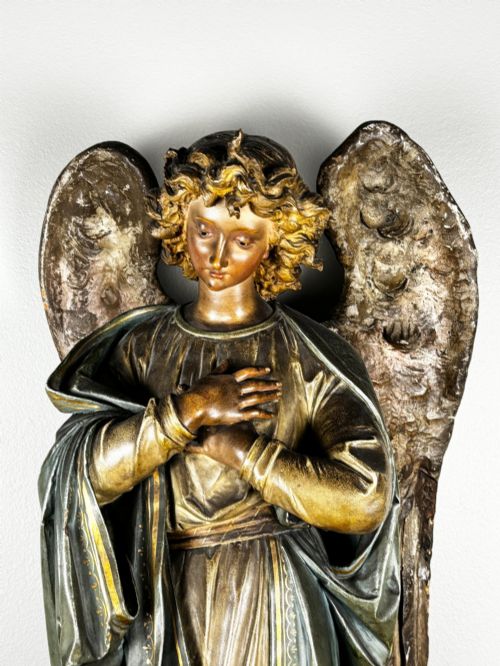
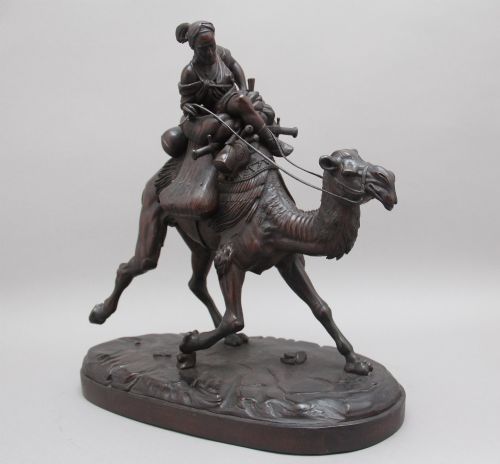
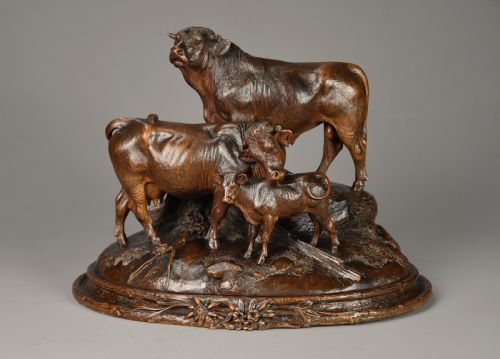
A 19th century wood statue brings together varied international traditions, ranging from European religious carvings and Black Forest animal studies to Chinese hardwood figures and Indian colonial pieces. The selection here leans heavily towards regional European animalier works, folk art horses, religious saints, and Asian deities carved during the Victorian and Meiji periods.
Buyers encounter everything from small cabinet figures and tradesman displays to monumental life-size temple guardians and architectural elements. The material expression shifts dramatically depending on geography, moving from native linden and walnut in Europe to dense exotic hardwoods and lacquer across Asian and Anglo-Indian examples.
Materials and carving techniques
Carvers utilised a wide array of timbers, selecting softwoods like linden and fruitwood for intricate European animal studies and dense hardwoods such as walnut, ebony, and boxwood for detailed portraiture and Asian okimono. Tools included specialised gouges and chisels to yield deep undercut textures, whether rendering the soft fur of a stag or the smooth drapery of a monastic habit.
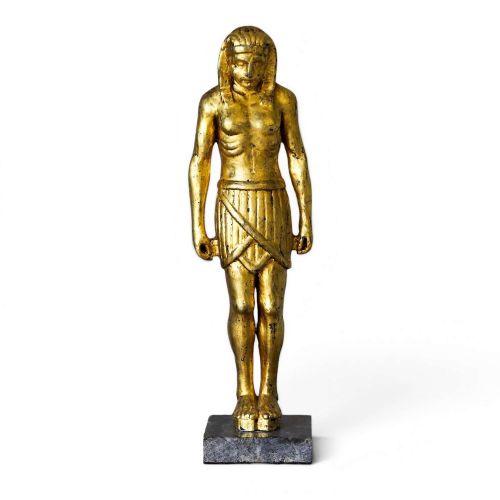
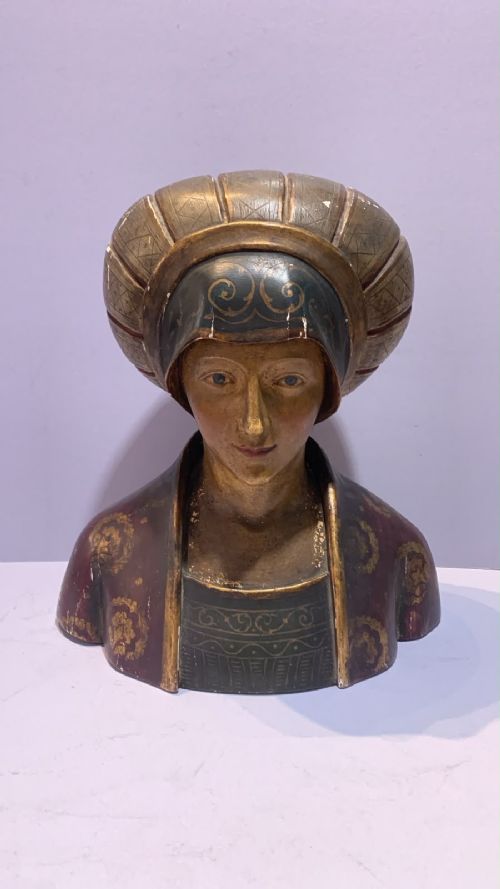
Many sculptures received surface treatments including gold leaf, polychrome paint, gesso, and tinted lacquer to enhance realism or ceremonial significance. These coatings range from subtle oil finishes on European religious figures to elaborate gilt and polychrome layers on Venetian and Asian sculptures.
19th Century Wood Statue Retail Price Guide 2026
Typical asking prices for 19th century wood statue among the pieces listed under this phrase on Sellingantiques today, from the lower quarter to the upper quarter. They describe what is for sale here now, not the wider market.
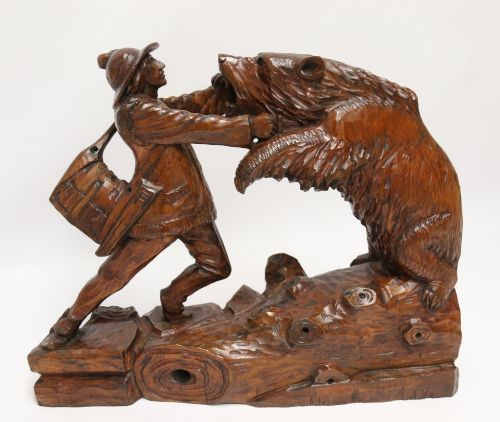
Among the menagerie of carved bears and religious saints, a tobacco-holding Black Forest bear keeps watch over the collection.
Distinctions in craftsmanship and origin
The integrity of the original surface finish heavily dictates value and interest among collectors. Pieces retaining their untouched period polychrome, original gilding, or maker stamps command greater appreciation than those stripped, heavily restored, or re-painted in later decades.
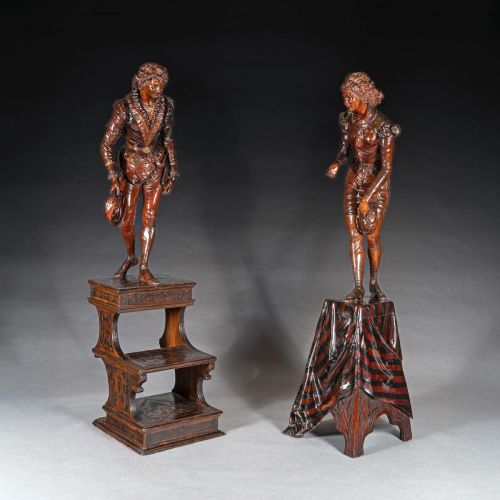
J HUGGLER·Valentino Besarel
The 19th Century Wood Statue Glossary
- Black Forest
- A regional Swiss and German style known for realistic carved wood animalier figures, particularly bears, deer, and forestry groups. These pieces date predominantly to the late 19th century.
- Polychrome
- The practice of decorating sculptural surfaces in multiple colours using paint or tinted washes. This finish frequently appears on religious statues and decorative figures from European and Asian traditions.
- Grand Tour
- A cultural journey undertaken by wealthy young Europeans in the 19th century, resulting in the acquisition of souvenir sculptures, busts, and architectural models. These objects often reflect classical or revivalist tastes.
- Okimono
- A Japanese ornamental carving, typically displayed in a tokonoma alcove, designed for domestic interior decoration during the Meiji period. Common subjects include figures of men, animals, and daily scenes.
- Gesso
- A plaster-like binder applied to wood surfaces to prepare them for gilding or painting. It provides a smooth ground that accepts fine detail work and metallic leaf.
19th Century Wood Statue: Frequently Asked Questions
How do I identify a Black Forest wood carving?
Black Forest carvings are typically rendered in walnut or linden wood, focusing heavily on wildlife such as bears, deer, and dogs. They often display naturalistic poses and detailed fur texturing characteristic of Swiss and German workshops from the late 19th century.
Many pieces also function as utilitarian items, incorporating trays, umbrella stands, or tobacco holders into the sculptural design. Maker stamps occasionally appear underneath or on the base for attribution.
Are these statues usually signed by the carver?
Signatures and workshop stamps remain relatively uncommon on 19th century wood statues, as most folk art and religious figures were produced anonymously. When signatures do occur, they generally point to specific European regional workshops or named carvers.
Asian carvings and Grand Tour pieces more frequently carry artist signatures, character marks, or foundry stamps, though unsigned works dominate the marketplace.
How should I care for an antique wood statue?
Antique wooden sculptures require stable indoor humidity and protection from direct sunlight to prevent the timber from drying, cracking, or fading. Dusting should be done gently with a dry, soft brush rather than using wet cloths or modern cleaning sprays.
Polished or waxed surfaces benefit from occasional application of museum-grade microcrystalline wax to nourish the grain, while painted or gilded surfaces should be handled with extreme care.
What is the difference between European and Asian 19th century wood figures?
European wood figures from this era lean heavily toward realistic animalier studies, religious iconography, and folk art expressions carved in native timbers like walnut, oak, and fruitwood. They frequently incorporate functional elements or Grand Tour themes.
Asian figures, including Chinese hardwood sculptures and Japanese Meiji period okimono, utilise dense exotic hardwoods and often depict deities, immortals, or traditional trades. These pieces highlight intricate surface grain and precise hand-carved detail without relying on added paint.