

19th Century Windsor
These 19th century windsor chairs combine sturdy vernacular joinery with native timbers to deliver enduring comfort and rustic character.
19th Century Windsor
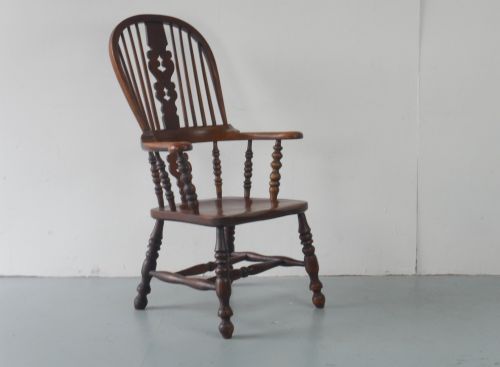
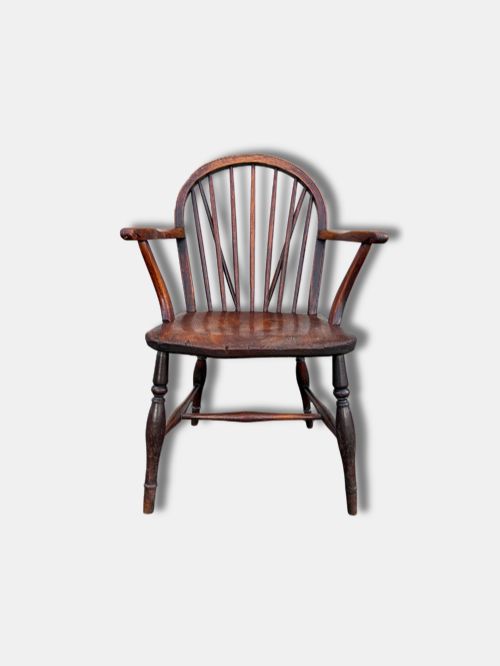
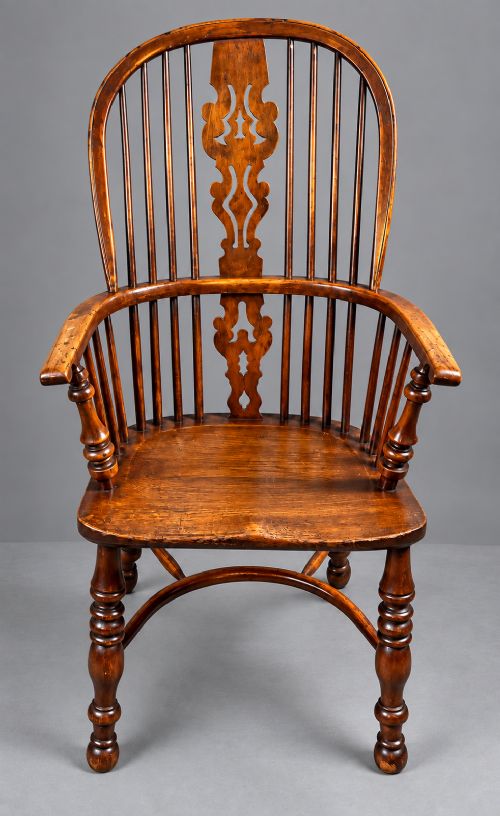
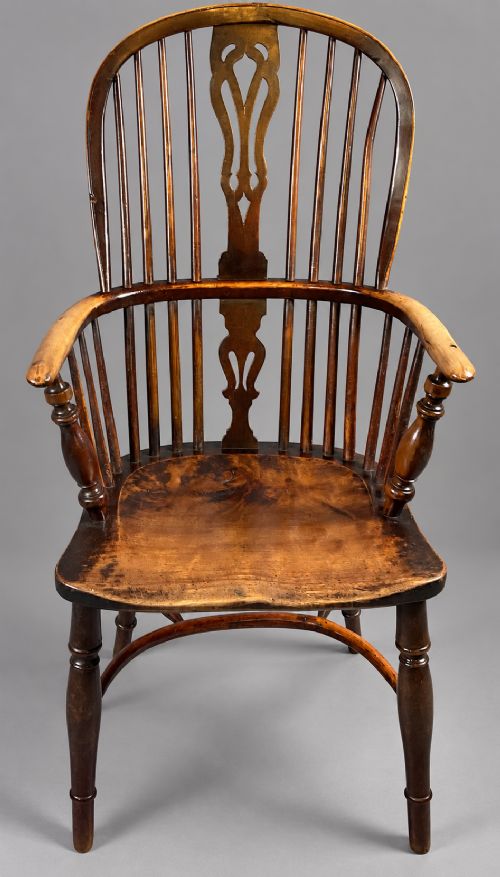
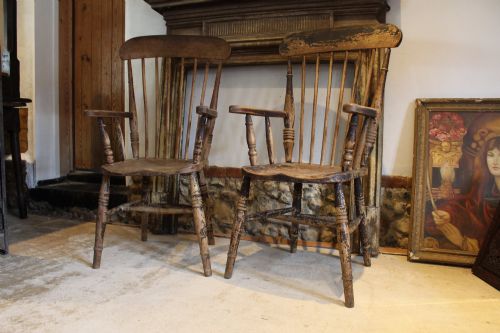
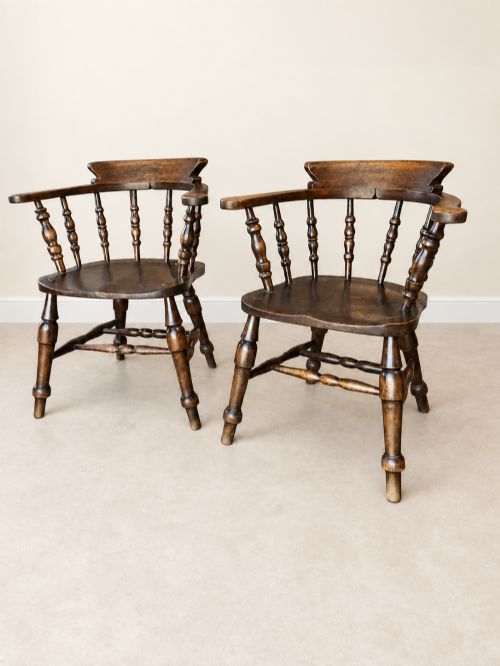
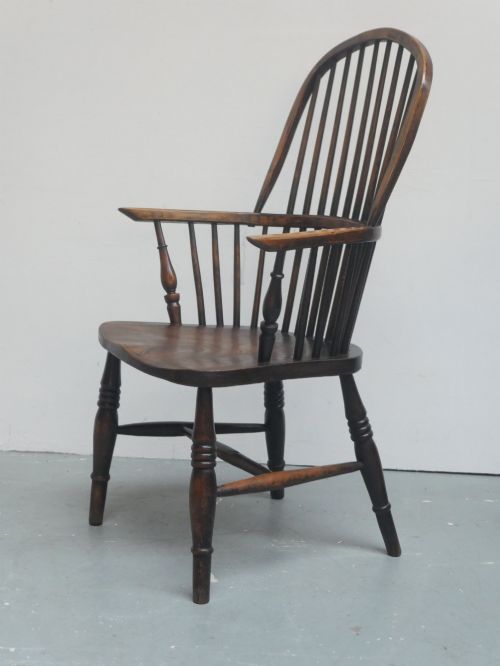
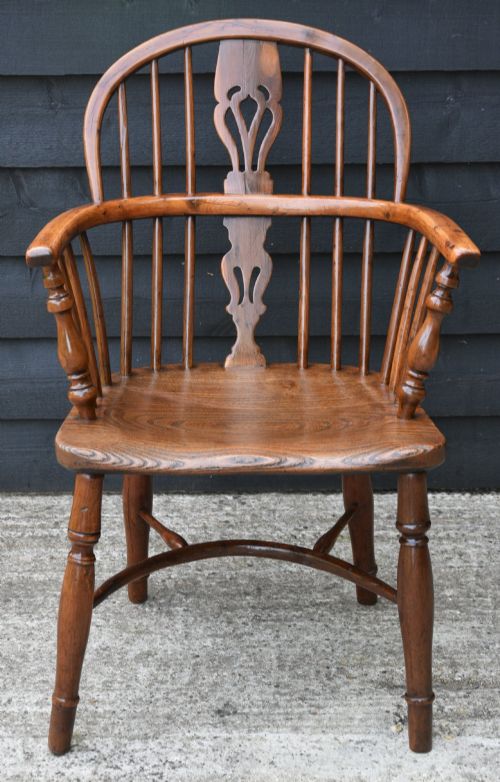
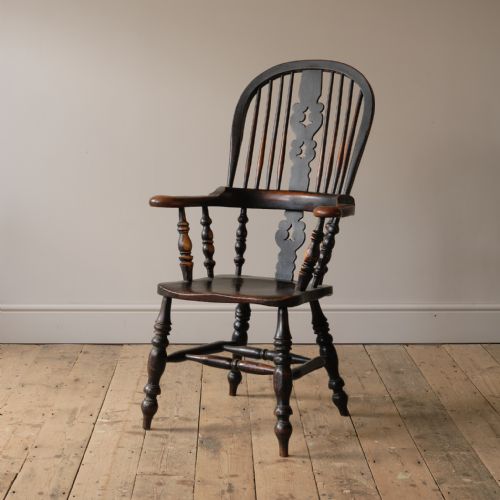
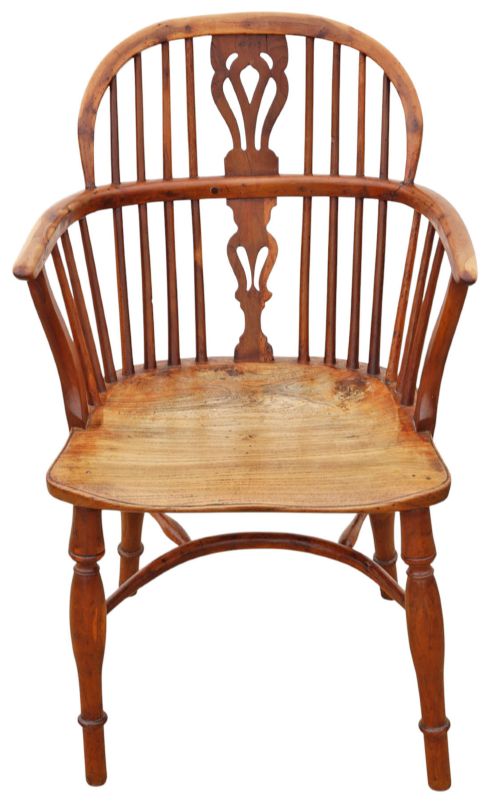
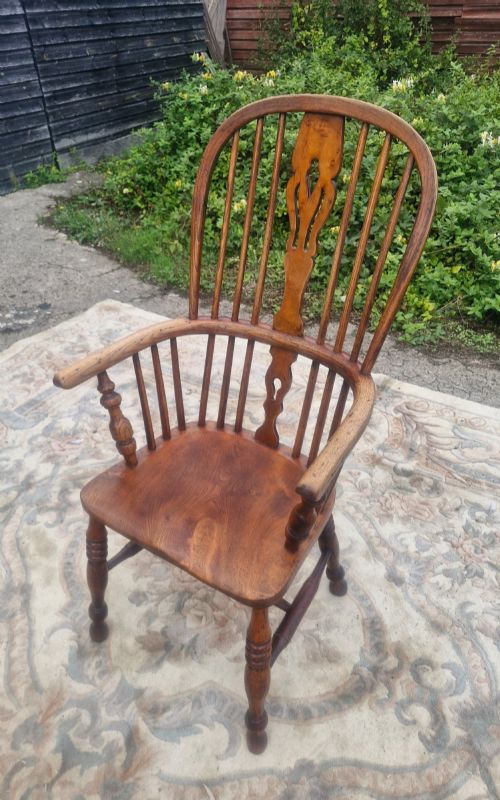
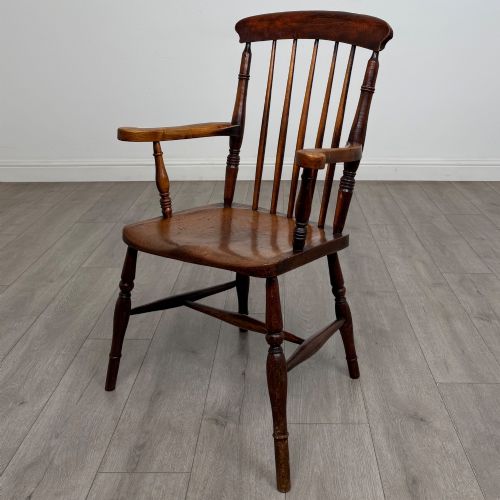
A 19th century windsor search reveals seating designed around a solid wooden seat into which the legs, back spindles and bow are independently wedged or secured. The selection spans high-back and low-back armchairs, smokers bows, captains chairs, and occasional children variants alongside related vernacular stools, benches, and regional forms like the Mendlesham chair. Most examples date from the Victorian period through to the late nineteenth century, rooted primarily in English country house and vernacular traditions.
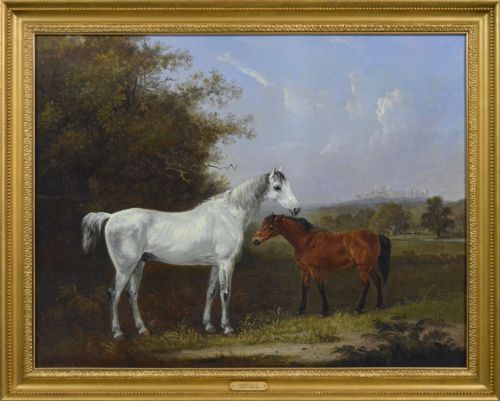
Buyers encounter numerous regional variations, from West Country items to Welsh elm armchairs, reflecting local timber availability and workshop practices. Alongside the chairs, the listings include occasional nineteenth-century oil and watercolour paintings depicting Windsor Castle and the surrounding Thames Valley landscape. Armchairs dominate the selection, heavily favoured for domestic utility and solid construction.
Materials and construction
Makers utilised contrasting native timbers to handle structural demands, frequently pairing flexible ash or beech for spindles and bentwood hoops with tough elm or yew for shaped seats and arm bows. Oak and birch also appear across regional chairs, providing sturdy frames through traditional pole-lathe turning and steam-bending techniques.
Construction relies on through-wedged joints where legs and spindles pierce the seat plank, creating a rigid frame without metal fixings. Surfaces often display accumulated layers of historic paint, oil, or waxed patination developed through decades of domestic use.
Listings feature items dated across the nineteenth century, including specific years like 1850, 1860, 1870, 1880, 1890, and the Georgian and Victorian periods.
Distinctions in quality
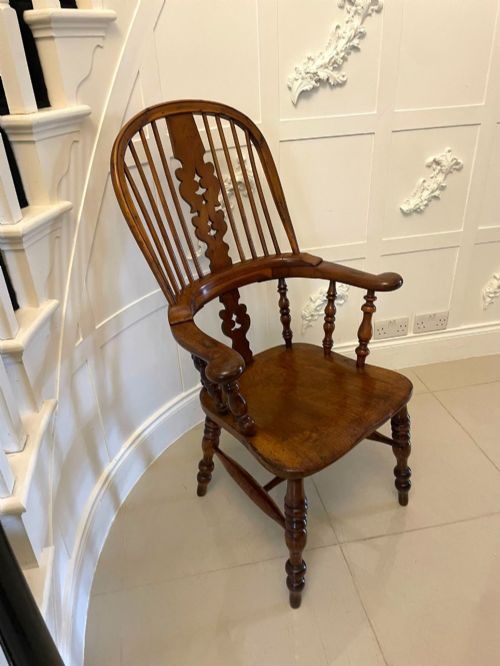
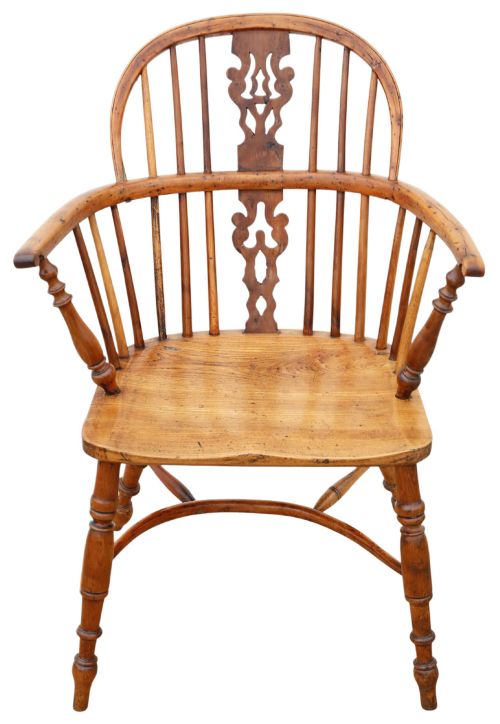
Quality rests upon timber selection and the harmony of proportion, particularly in the sweep of the back bow and the figure of yew wood or elm grain. Chairs fashioned from highly figured yew with well-turned spindles and generous saddle seats occupy the upper tier of the range.
The integrity of the original joints and the preservation of surface patina define the distinction between ordinary utility seating and superior vernacular examples. Maker stamps and documented regional origins add further weight to a piece.
Gabbitass of Worksop·Edmund Bristow·Alfred Young Nutt·J Spencer
The 19th Century Windsor Glossary
- Smokers Bow
- A low-back Windsor armchair, often featuring a continuous curved arm rail and turned spindles, widely used in domestic and public interiors during the nineteenth century.
- Broad Arm
- An armchair featuring one exceptionally wide wooden arm paddle designed for writing or resting, commonly found on nineteenth-century captain chairs.
- Hoop Back
- A chair back formed from a single steam-bent piece of timber curving continuously to create the top rail and arm supports.
- Stick Back
- A vernacular chair construction where turned vertical wooden spindles connect the seat directly to the top rail without a solid splat.
- Saddle Seat
- A solid wooden seat carved with deep hollows and contours to replicate the comfort of a riding saddle.
19th Century Windsor: Frequently Asked Questions
How do I identify a genuine 19th century windsor?
Examine the construction of the seat underside to check for independent wedged legs and tapered spindles driven straight through the timber plank. Look for native hardwoods like elm, ash, and yew that exhibit traditional turning marks and historic patination.
Verify that the proportions align with nineteenth-century vernacular forms, keeping in mind that regional variations across England display distinct spindle counts and hoop shapes.
Where were these chairs originally made?
These seating pieces originate from various English rural workshops and regional centres, utilising locally sourced timber from areas such as the Thames Valley, Lincolnshire, and the West Country. Makers adapted their designs to the specific hardwoods available in their immediate geographic region.
While many remain anonymous vernacular pieces, occasional chairs bear stamps from documented nineteenth-century regional makers or potteries.
How should I care for a wooden antique chair?
Maintain a stable indoor environment away from direct heat sources and dramatic humidity shifts to prevent the native timbers from splitting or warping. Dust regularly with a soft, dry cloth and periodically nourish the wood using traditional beeswax to preserve the historic surface.
Avoid applying modern chemical polishes, which can strip away the accumulated patination built up over centuries of handling.