

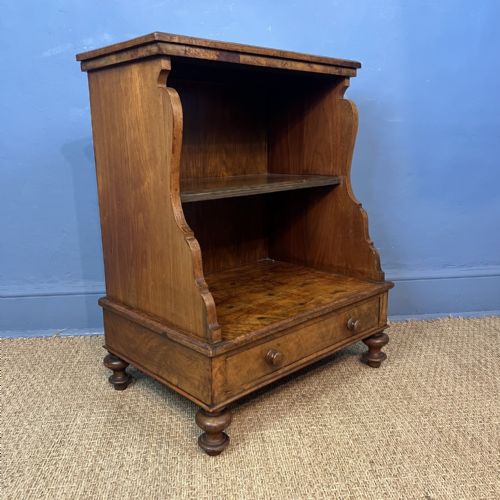


19th Century Waterfall Bookcase
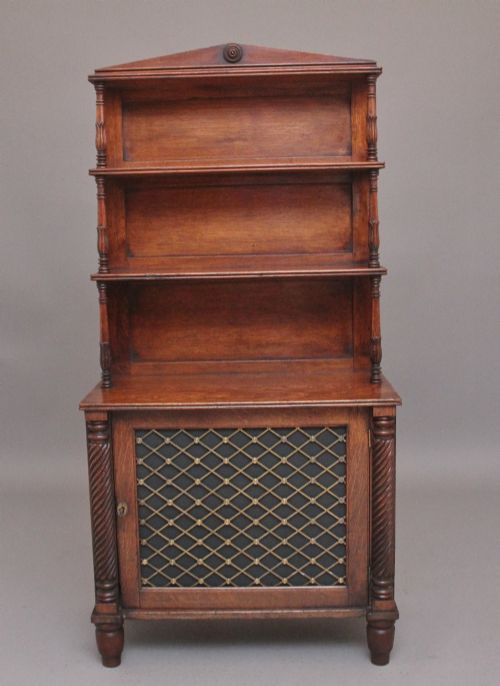
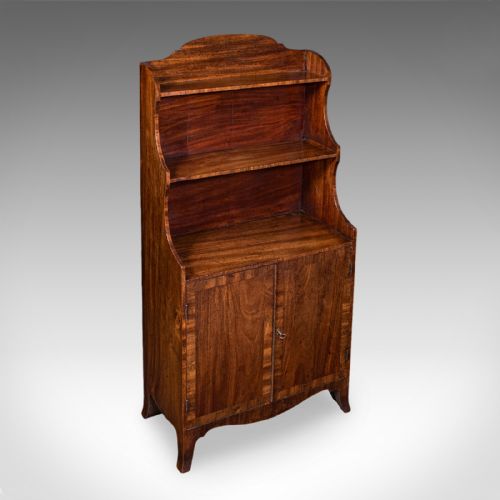
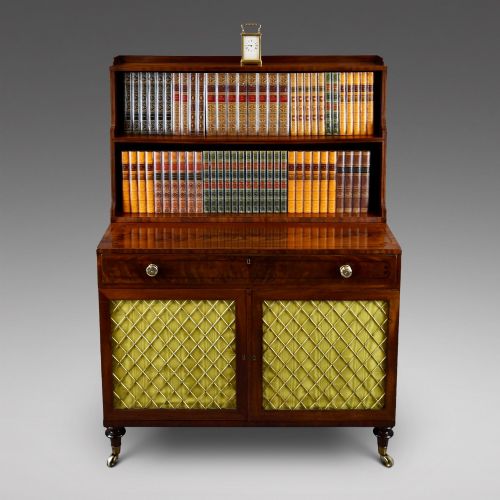
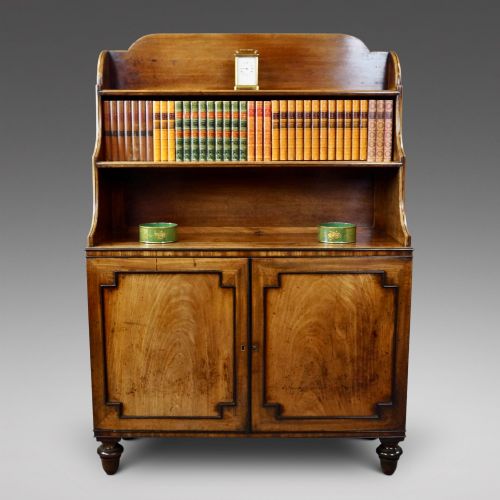
A 19th century waterfall bookcase provides tiered open shelves of diminishing depth, offering a practical and elegant way to display books and objects.
19th Century Waterfall Bookcase
A 19th century waterfall bookcase presents a stepped arrangement of open shelves where each tier is narrower than the one beneath it, creating a distinctive profile. The form appears across the Regency, Victorian, and William IV periods, constructed primarily as freestanding library pieces, low cabinets, or wall-mounted shelves.
Makers designed these pieces in varied dimensions, ranging from petite chiffonier combinations with lower cupboards to large six-tier open gallery display shelves. The evidence shows frequent examples from the Regency era alongside Victorian variations, often incorporating lower drawer sections or Canterbury bases beneath the graduated shelves.
Materials and construction
Cabinet makers utilised dense hardwoods including mahogany, flame mahogany, burr walnut, and rosewood, frequently enhancing surfaces with contrast cross-banding and boxwood stringing. Certain pieces employ simulated rosewood, grained finishes, or black paint over pine and fruitwood timbers.
Structural embellishments involve brass inlays, gallery rails, and integrated lower cupboards, combining solid timber framing with delicate edge veneers to support the tiered shelf progression.
19th Century Waterfall Bookcase Retail Price Guide 2026
Typical asking prices for 19th century waterfall bookcase among the pieces listed under this phrase on Sellingantiques today, from the lower quarter to the upper quarter. They describe what is for sale here now, not the wider market.
One early 19th century bookcase doubles down on storage by incorporating a built-in Canterbury base beneath its cascading shelves.
Distinctions in craftsmanship
Quality separates pieces through the selection of timber figures, such as highly figured flame mahogany or rich burr walnut, matched against plainer secondary woods. The precision of contrasting cross-banding, delicate boxwood stringing, and integrated brass inlay defines the upper tier of cabinet work.
Construction depth also dictates standing, where substantial library pieces and those featuring original grained finishes or fitted lower cupboards demonstrate superior workshop ambition compared to simpler pine or painted iterations.
Gillows
The 19th Century Waterfall Bookcase Glossary
- Waterfall bookcase
- A piece of furniture featuring graduated open shelves where each tier steps back from the one below it. This form became popular during the Regency and Victorian periods for displaying books.
- Cross banding
- A narrow strip of veneer laid across the grain margin of a panel or shelf edge. This technique frames the primary timber with a contrasting wood grain.
- Stringing
- Thin inlaid lines of contrasting wood or light-coloured material set into the surface of a panel. It creates delicate linear decoration around table tops and bookcase edges.
- Canterbury
- A low stand featuring slatted partitions originally designed for holding sheet music or loose folios. In bookcase designs, this element appears integrated into the lower tier.
- Simulated rosewood
- A painted or stained finish applied to a cheaper timber to imitate the dark grain and rich colour of genuine rosewood. Cabinet makers utilised this method during the Regency period.
19th Century Waterfall Bookcase: Frequently Asked Questions
What is a waterfall bookcase?
A waterfall bookcase is a set of open shelves arranged in a stepped vertical cascade, where each higher shelf sits further back than the one beneath it. This design gained prominence in the 19th century, particularly during the Regency period.
Cabinet makers utilised this stepped profile to display smaller volumes at eye level while providing deeper shelves at the base for larger books. The open structure offers immediate visibility from multiple angles in a room.
How were these bookcases used?
These pieces served primarily for the storage and display of books in private libraries, drawing rooms, and studies throughout the 19th century. Their graduated shelves allowed owners to organise volumes by height.
Many examples incorporate lower cupboards, drawers, or Canterbury sections, extending their utility for storing small personal items, papers, or music sheets alongside a book collection.
How do I identify a Regency period piece?
Regency pieces often display characteristic timbers such as mahogany and rosewood, frequently accented with fine boxwood stringing, brass inlay, or contrast cross-banding. The proportions tend to follow classical architectural lines popular in the early 19th century.
Makers working in this era also produced simulated rosewood and grained painted finishes, alongside formal architectural pediments and finely turned upright supports.
Where should I place a low bookcase?
Low open bookcases suit placement against walls where taller furniture might overwhelm the surrounding space, or beneath windows to preserve natural light. Their modest height keeps the room feeling open.
Victorian and Regency examples work well in sitting rooms and home offices, where the top surface provides additional space for displaying decorative objects, clocks, or smaller collections.