


Antique Wooden Standing Shelves
Antique wooden standing shelves combine practical storage and domestic display across various historical periods.
Antique Wooden Standing Shelves
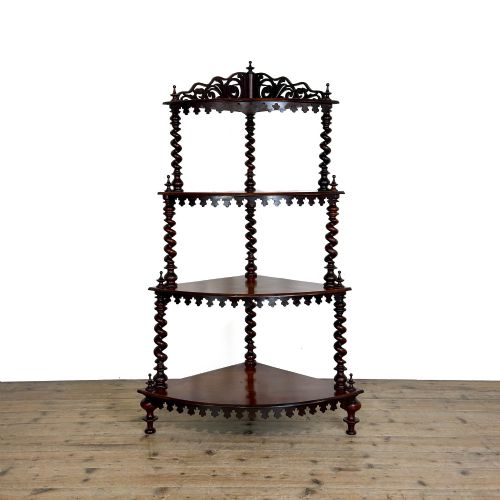
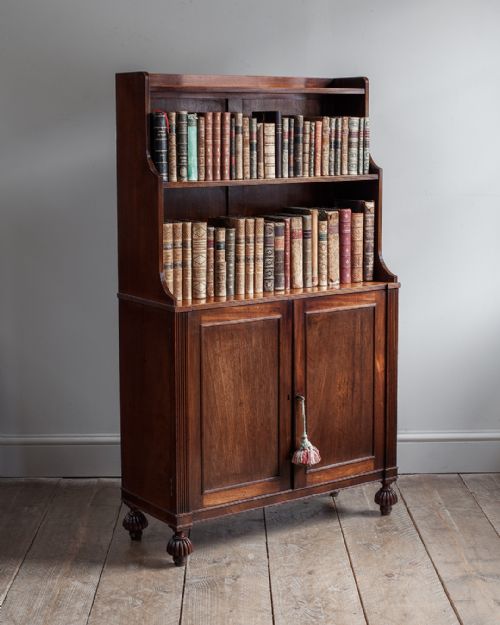
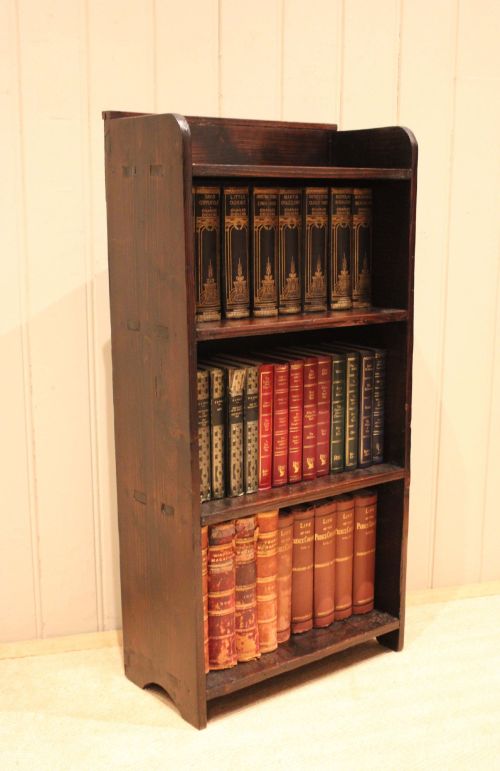
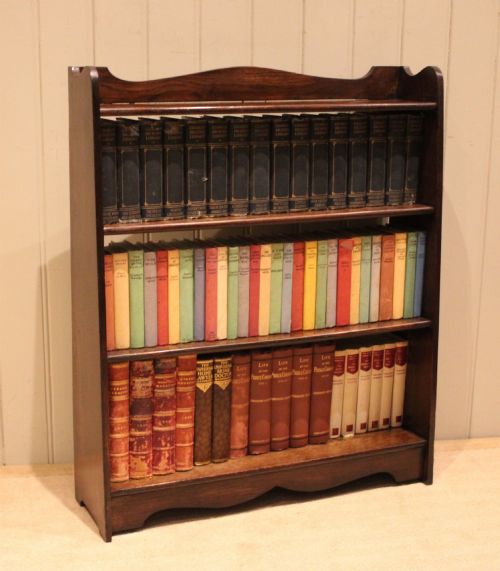
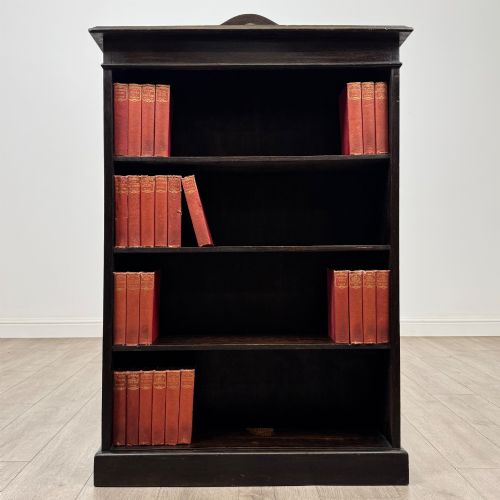
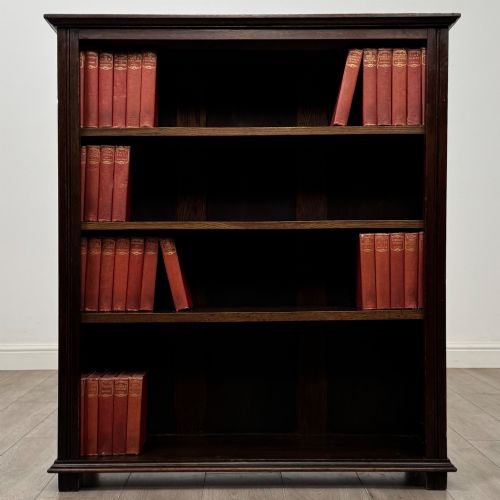
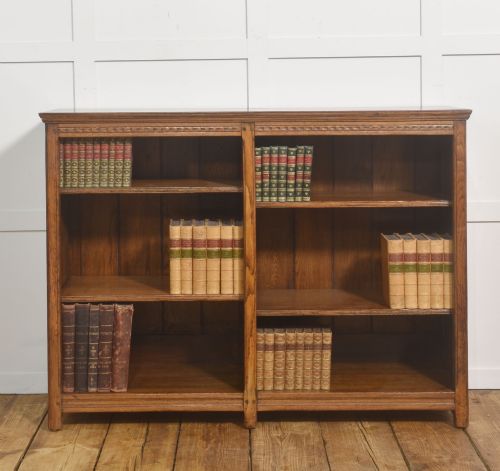
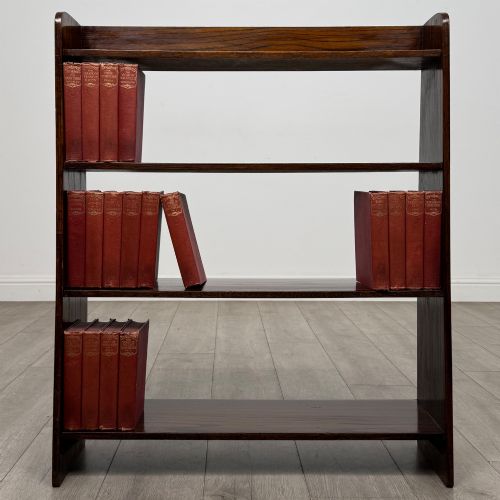
Antique wooden standing shelves encompass bookcases, whatnots, tiered stands, and open shelving units designed to stand independently on the floor. Buyers searching for antique wooden standing shelves encounter pieces originating from the Victorian, Edwardian, and Regency periods, alongside items dated to the nineteenth and twentieth centuries. Bookcases and whatnots form the most common variants found in this selection.
The styles represented span straightforward vernacular oak pieces to refined mahogany waterfall bookcases and Arts and Crafts designs. Certain examples incorporate adjustable shelves, brass castors, or lower cupboards, while others take corner configurations or revolving formats. Woods such as walnut, satinwood, teak, rosewood, and pine appear alongside traditional oak and mahogany.
Materials and construction
Cabinet makers utilised dense hardwoods including mahogany, oak, walnut, and rosewood, often pairing them with brass fittings such as castors and handles. Joinery techniques relied on traditional methods suited to each period, from sturdy nineteenth-century framing to lighter Edwardian construction.
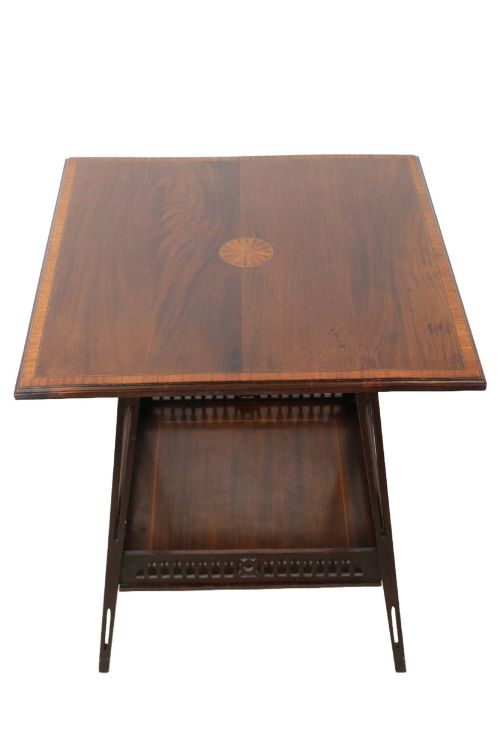
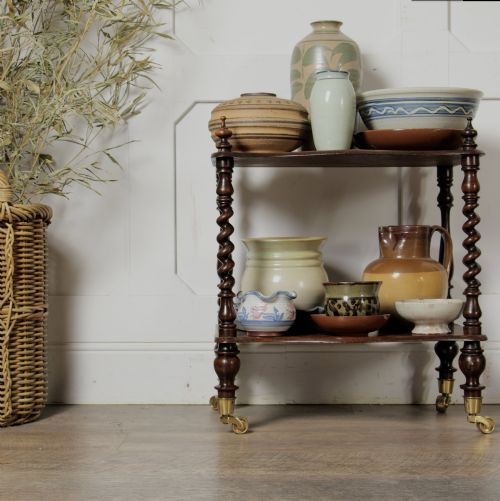
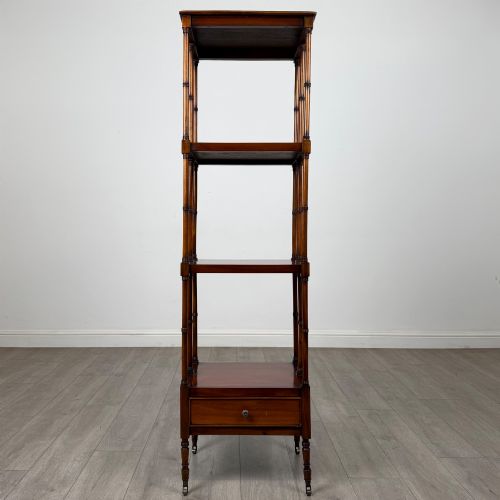
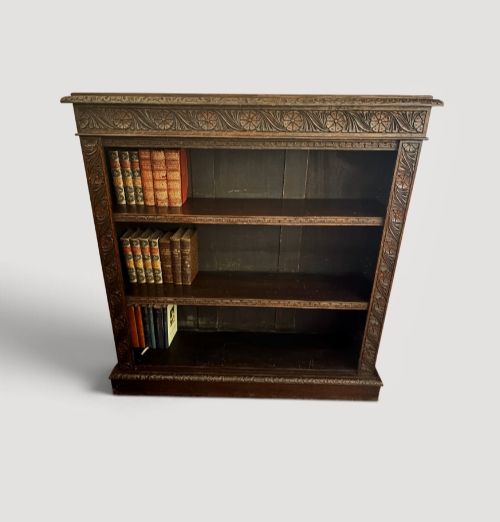
Surface treatments included polished mahogany veneers, carved oak detailing, inlaid satinwood accents, and painted finishes. Structural elements like barley twist supports, turned legs, and graduated tiers defined the architectural profile of individual pieces.
Some nineteenth-century book stands arrived with built-in brass castors so enthusiastic readers could chase the sunlight across the parlour floor.
Evaluating construction and timber
Quality rests upon the selection of timber figures, the precision of the joinery, and the integrity of the original structure. Dense hardwoods and carefully matched veneers demonstrate superior craftsmanship compared to simpler utilitarian builds.
Refined decorative details, such as inlaid stringing, carved mouldings, and integrated brass castors, distinguish higher-grade examples from plain functional furniture.
Trevor Page and Co·Gillows
The Antique Wooden Standing Shelves Glossary
- Whatnot
- A set of open shelves used for displaying ornaments and small objects. These tiered pieces typically feature three or four levels supported by turned columns.
- Waterfall bookcase
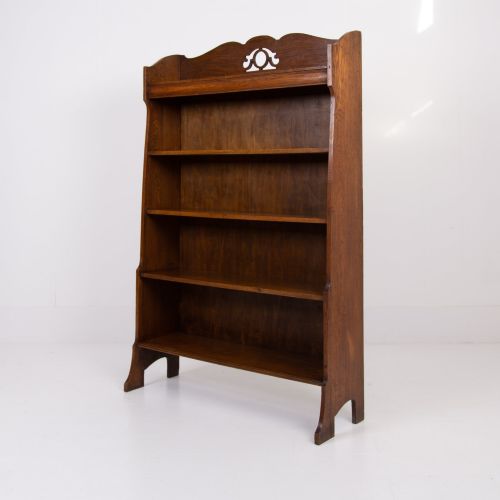
- A set of open shelves where each successive shelf steps back from the one below it. This design creates a tiered profile resembling cascading water.
- Barley twist
- A decorative turning technique resembling a twisted rope. This detail often forms the vertical supports on Victorian stands and bookcases.
- Inlay
- A technique where pieces of contrasting wood or other materials are inserted into depressions in the base timber to form decorative patterns. Satinwood and lighter timbers frequently provide contrast against dark mahogany.
Antique Wooden Standing Shelves: Frequently Asked Questions
What is an antique whatnot?
An antique whatnot is an open tiered shelving unit designed for displaying decorative objects rather than heavy book storage. These pieces became popular during the nineteenth century and often feature slender upright supports.
They fit easily into corners or small wall spaces, offering multiple levels of surface area without dominating a room.
How do waterfall bookcases differ from standard bookcases?
Waterfall bookcases feature graduated shelves that step back progressively from bottom to top, creating a distinct sloping profile. Standard bookcases maintain a uniform depth from top to base.
This stepped design gives lighter proportions to taller pieces while keeping smaller volumes secure on upper tiers.
Where should I place a standing shelf in my home?
Standing shelves suit living rooms, studies, and bedrooms for organising books, ceramics, and daily items. Corner whatnots utilise neglected angles, while low open bookcases fit beneath windows.
Ensure placement avoids direct heat sources to protect the polished timber and historical veneer.