

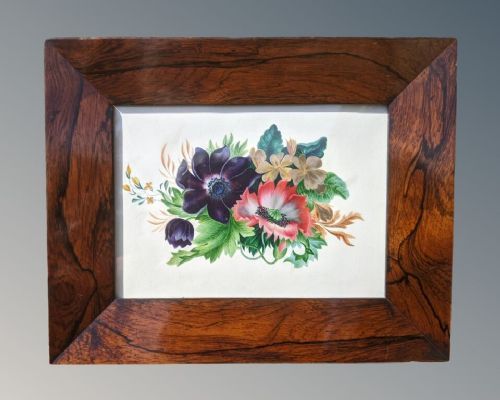


19th Century Watercolour Flowers
These 19th century watercolour flowers bring delicate botanical studies and still-life scenes into your rooms, offering lasting charm for collectors of period art.
19th Century Watercolour Flowers
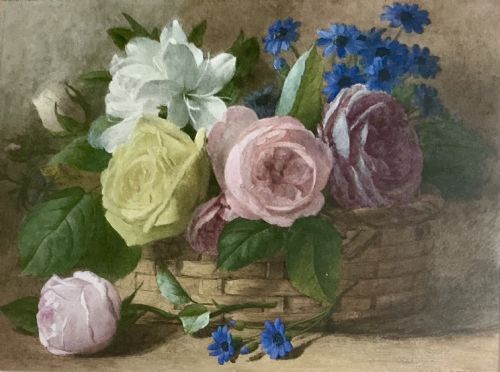
When you search for 19th century watercolour flowers, you encounter delicate paintings capturing botanical studies, garden landscapes, and floral still-life arrangements on paper. The pieces appearing here span the Regency and Victorian eras, including works from the middle and late decades of the nineteenth century.
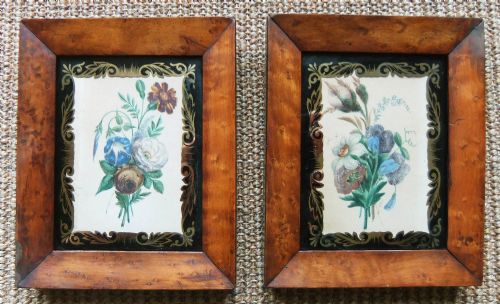
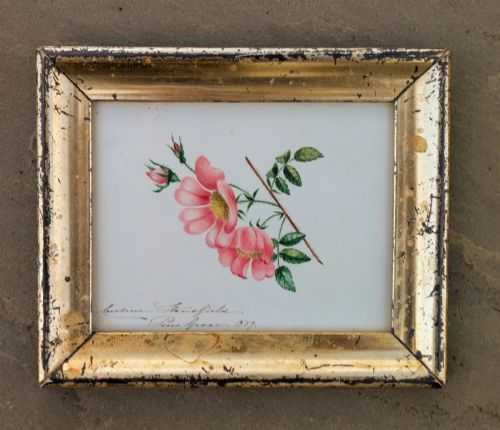
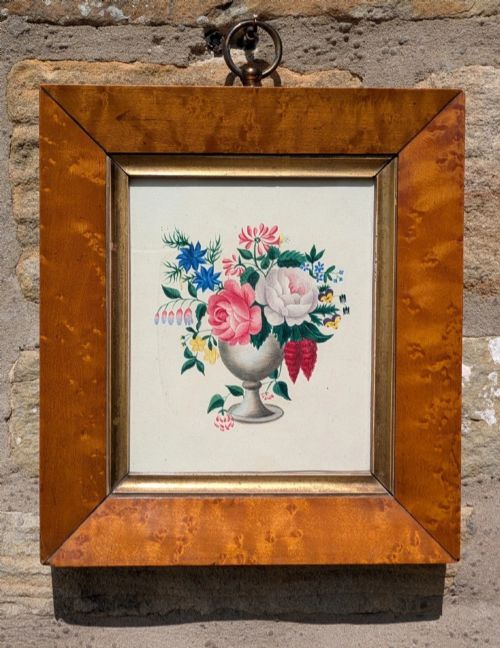
You are most likely to meet framed botanical studies and painted still-lifes featuring subjects like fuschias, wild roses, pansies, and wallflowers. These artworks range from anonymous botanical sheets to signed works by named artists, occasionally paired with gouache on paper.
The selection includes English provincial works alongside Chinese export floral paintings, demonstrating the varied origins found within this category. Many retain their period frames of wood, burr wood, or gilt wood, protected beneath glass.
How they were made
These works rely on watercolour paint applied to paper, sometimes heightened with gouache to build opacity and texture in petals and leaves. Artists utilised fine brushes to capture the intricate details of botanical specimens and garden flowers.
Framing materials reflect the period aesthetic, utilising wood, burr wood, and gilt wood frames designed to complement the delicate tones of the paintings. Glazing with glass protects the paper and water-soluble pigments from atmospheric damage over time.
19th Century Watercolour Flowers Retail Price Guide 2026
Typical asking prices for 19th century watercolour flowers among the pieces listed under this phrase on Sellingantiques today, from the lower quarter to the upper quarter. They describe what is for sale here now, not the wider market.
The listings show watercolours executed on paper, frequently framed in wood, burr wood, or gilt wood under glass, spanning the Regency and Victorian periods.
What varies in quality
The distinction between ordinary and superior pieces rests upon the precision of the brushwork and the lifelike rendering of the botanical subject. Masterful shading and composition elevate a simple study into a compelling work of fine art.
Condition of the paper and vibrancy of the pigments dictate the overall merit of a piece, alongside the originality and appropriateness of the period frame. Signed works by documented painters generally command greater interest than unsigned sheets.
Alice Anne Renshaw·Harry Wanless·Henrietta Creswell·Grace Hastie·Marian Chase·Annie Mary Youngman·Maria Harrison
The 19th Century Watercolour Flowers Glossary
- Watercolour
- A painting method where natural pigments are suspended in a water-based solution and applied to paper. It allows for translucent washes of colour.
- Gouache
- An opaque water-based paint composed of pigment, water, and a binding agent such as gum, often used alongside watercolour to add highlights.
- Botanical
- A detailed scientific or artistic representation of plant species, focusing on accurate forms, leaves, and floral structures.
- Gilt wood
- Wood carved and coated with a thin layer of gold leaf or metallic paint, frequently utilised for Victorian and Regency picture frames.
- Still life
- An artwork depicting inanimate subject matter, typically featuring assembled arrangements of cut flowers in vases or resting on surfaces.
19th Century Watercolour Flowers: Frequently Asked Questions
How should I hang these watercolours?
Keep these framed works away from direct sunlight to prevent the pigments and paper from fading over time. Stable indoor humidity levels protect both the antique paper and the wooden frames.
Position them at eye level in rooms with indirect light to properly appreciate the fine details of the brushwork.
Are these works signed by artists?
Some pieces bear signatures or inscriptions from period artists, while others remain anonymous studio or amateur productions. Signatures often appear discreetly in the corners of the painted surface.
Attribution sometimes relies on accompanying inscriptions on the reverse of the paper or frame.
What framing do these pieces have?
Many retain period framing made from wood, burr wood, or gilt wood, often protected under glass. These original surrounds complement the aesthetic of the nineteenth century.
Check whether the framing materials match the era of the artwork itself.
How do I identify Victorian watercolours?
Victorian examples frequently display rich floral still-lifes or detailed botanical studies executed on paper sheets. The styles range from precise scientific recording to expressive artistic arrangement.
Period framing and historical signatures provide further context for dating the artwork.