



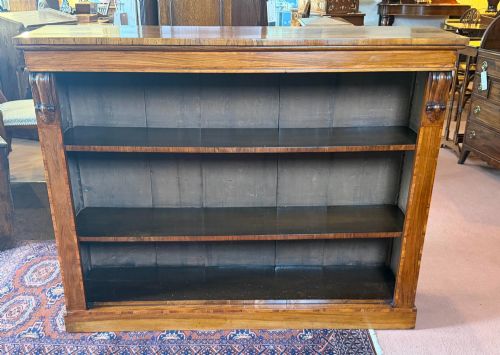
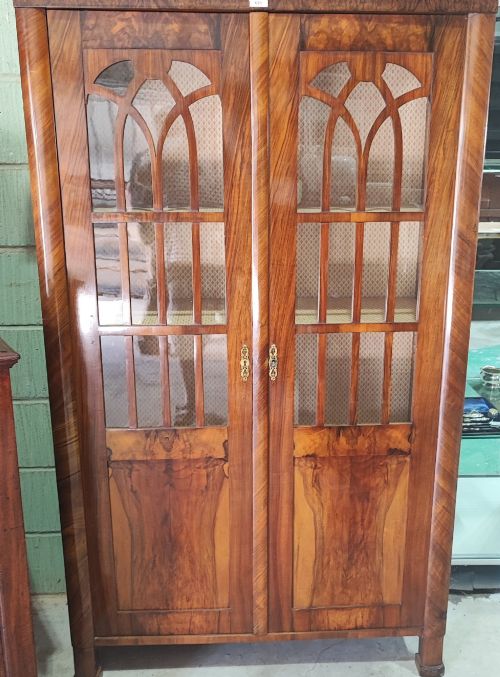
19th Century Walnut Display
These pieces of 19th century walnut display bring rich timber grain and period elegance into a room.
19th Century Walnut Display
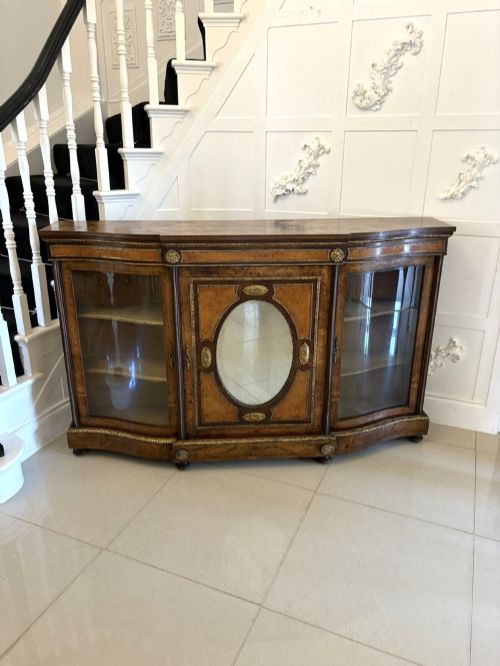
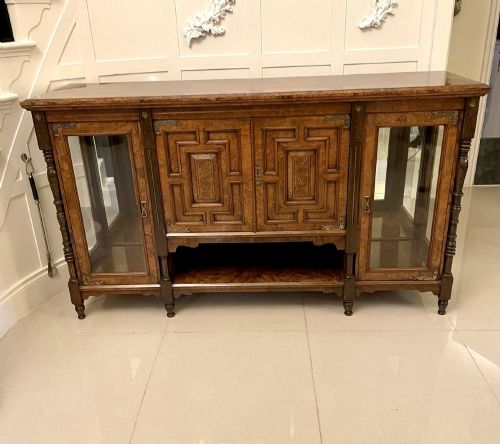
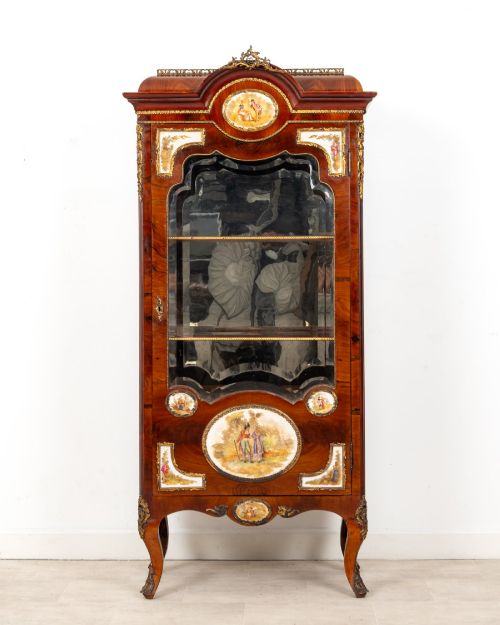
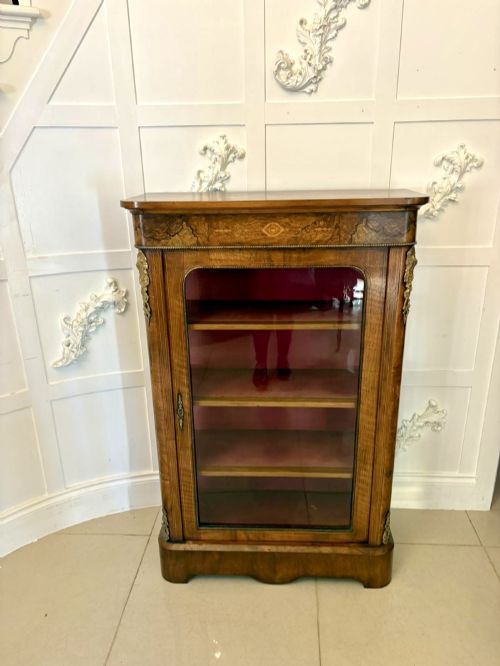
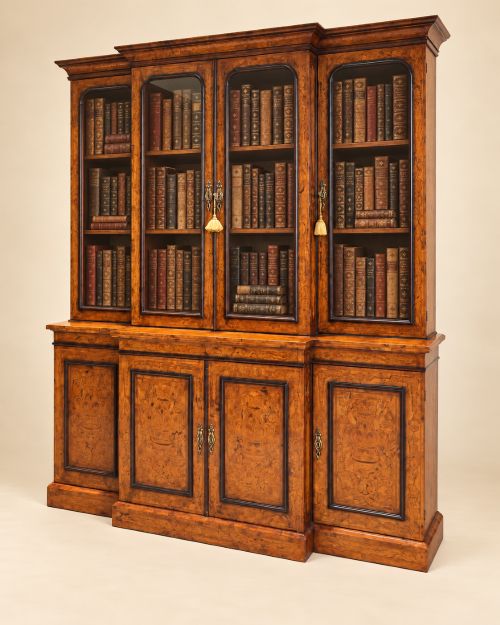
A 19th century walnut display piece serves to showcase and store treasured objects through glazed doors or open shelves. Buyers hunting for a 19th century walnut display frequently encounter Victorian pier cabinets, credenzas, and breakfront bookcases.
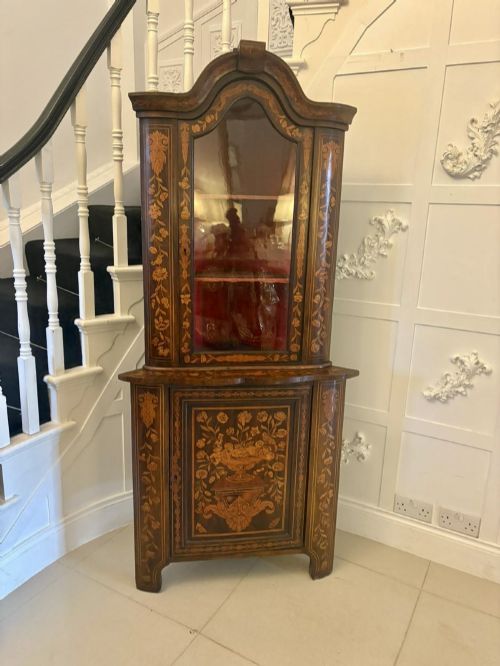
The selection ranges from compact corner cabinets and wall shelves to grand Continental library bookcases and fitted credenzas. Most examples hail from the Victorian era, alongside French, Dutch, and Italian workshop productions.
Makers utilised figured timbers to create striking surface patterns across doors, friezes, and panels. These foundational forms combine practical storage with formal presentation spaces suited to drawing rooms and parlours.
How they were made
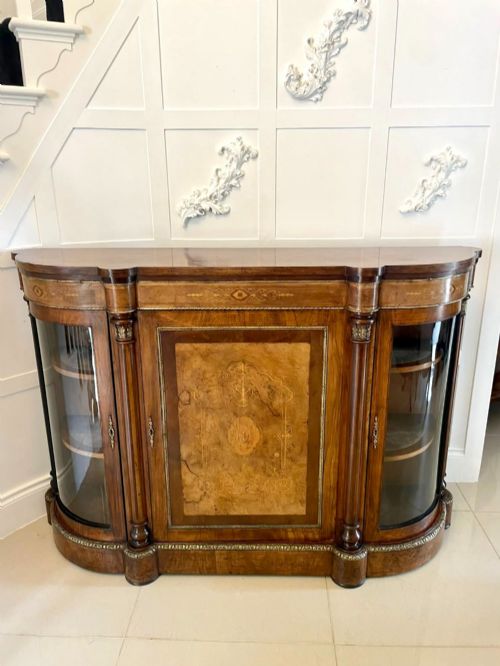
Cabinet makers selected figured walnut and burr walnut veneers for their swirling grain patterns, laying them over sturdy secondary woods. These decorative surfaces often featured intricate marquetry inlay using lighter timbers.
Ormolu mounts, brass details, and gilt bronze adornments embellished corners, borders, and door panels. Glass doors protected interiors lined with fabric or velvet, while mirrors added depth to back panels.
Some music cabinets doubled as etageres, ready to hold sheet scores alongside delicate porcelain figurines.
What varies in quality
The distinction between tiers rests on the choice of timber and the precision of the cabinet work. Finely figured burr walnut veneers matched symmetrically across a door display superior execution compared to plain timber panels.
Mounts cast in ormolu with crisp chased detail elevate a piece above standard brass fittings. The integration of marquetry, inlaid satinwood, and well-fitted doors dictates the standing of individual items.
Gabriel Viardot·Gillows·Lamb of Manchester·Shoolbred
The 19th Century Walnut Display Glossary
- Burr walnut
- A specialised timber cut from tree growths, yielding intricate swirling grain patterns highly prized for decorative veneer work on fine cabinets.
- Credenza
- A low sideboard or cabinet featuring central cupboards flanked by curved glass display sections, frequently mounted with ormolu.
- Pier cabinet
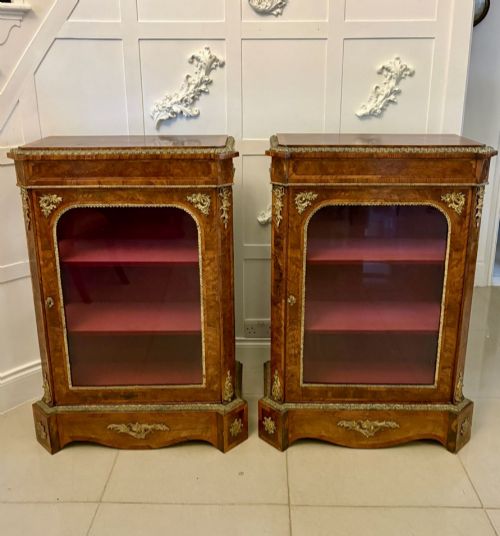
- A narrow display cabinet designed specifically to fit the wall space between windows.
- Marquetry
- The art of applying decorative pieces of veneer to a structure to form intricate picture designs.
- Ormolu
- Gilded bronze applications used as decorative mounts on furniture during the period.
19th Century Walnut Display: Frequently Asked Questions
What rooms suit a 19th century walnut display cabinet?
These cabinets fit well in drawing rooms, dining spaces, and studies where books or collections need protection behind glass. Their warm timber tones complement traditional and eclectic interiors alike.
Compact pier cabinets work well in smaller spaces, while breakfront bookcases anchor larger walls with architectural presence.
How do I identify a Victorian pier cabinet?
Victorian pier cabinets are characterised by their narrow, upright proportions designed to sit against wall piers between windows. They usually feature a single glazed door enclosing velvet-lined shelves.
Ormolu mounts and marquetry inlay frequently adorn the corners and front panels of these refined presentation pieces.
What is the difference between a credenza and a bookcase?
A credenza is a low-profile cabinet featuring enclosed cupboards and curved glass side compartments, originally designed for dining rooms and parlours. Bookcases focus primarily on open or glazed shelving arranged vertically for housing volumes.
Credenzas often display richer surface ornamentation including intricate marquetry and gilt bronze mounts.
How should I care for burr walnut furniture?
Keep walnut furniture away from direct sunlight and heat sources to prevent the burr veneer from drying out and splitting. Regular dusting with a soft, dry cloth maintains the polished finish.
Apply high-quality furniture wax sparingly when the timber appears dry, buffing gently along the grain.