
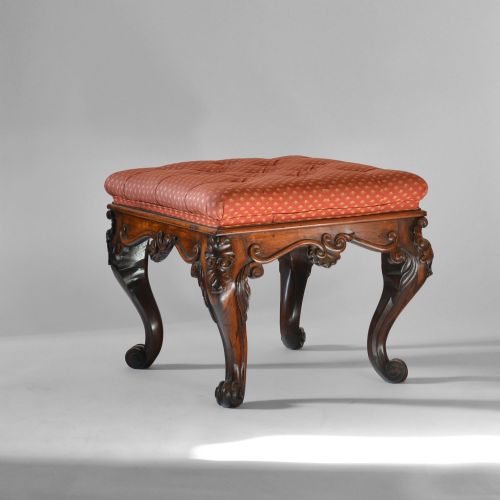
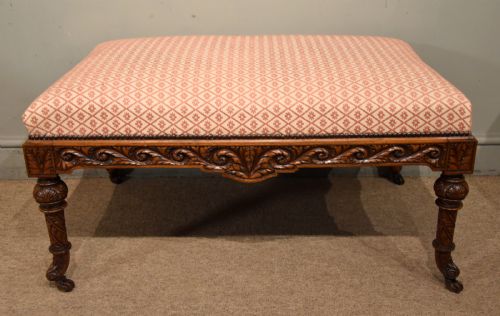
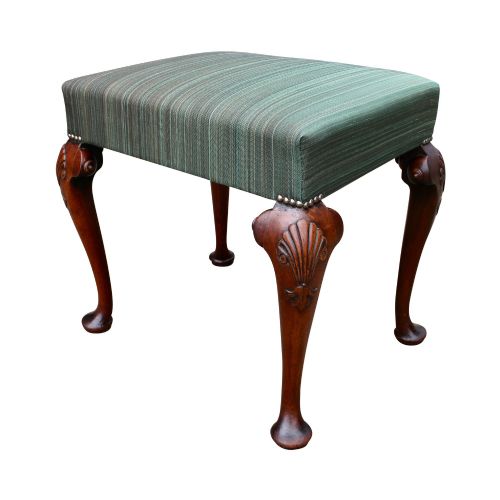
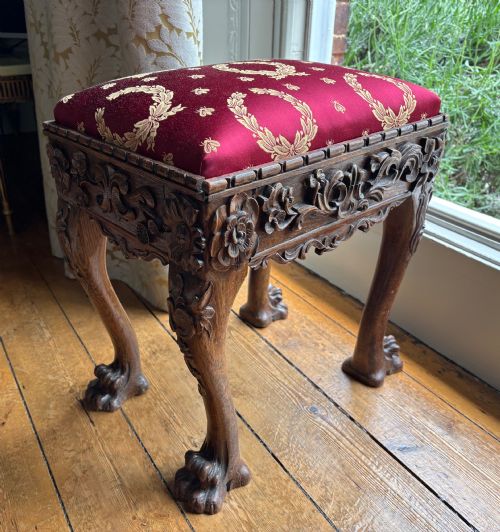

19th Century Vanity Stool
A 19th century vanity stool brings tactile warmth to a dressing area through carved timber and textured upholstery.
19th Century Vanity Stool
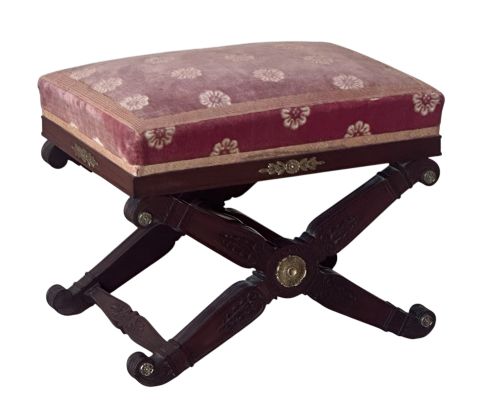
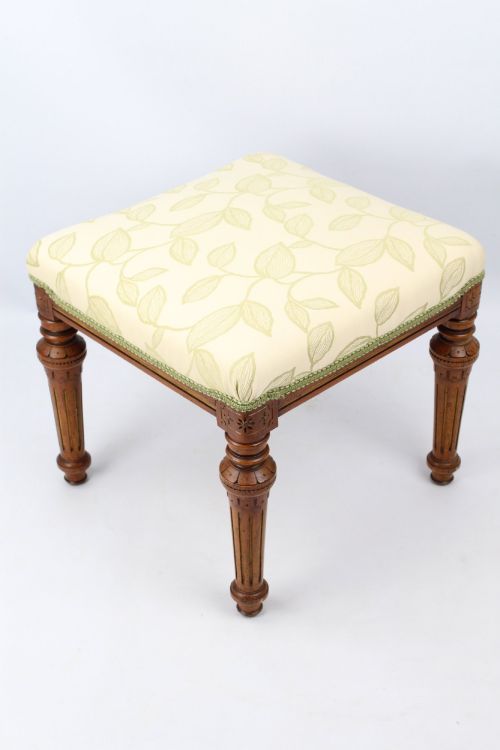
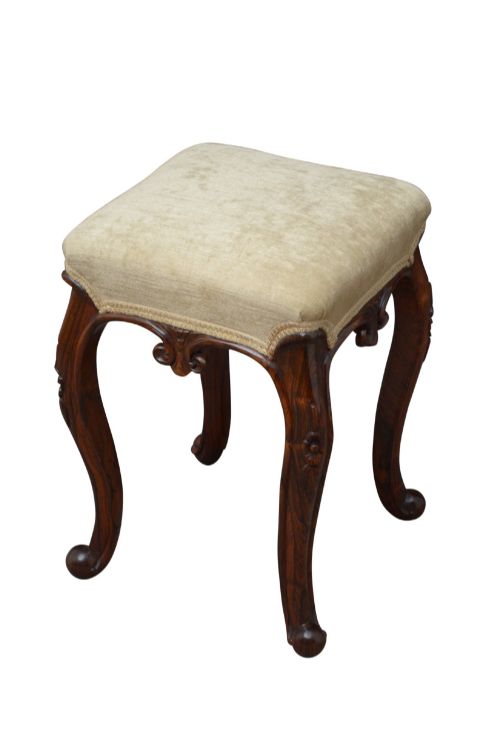
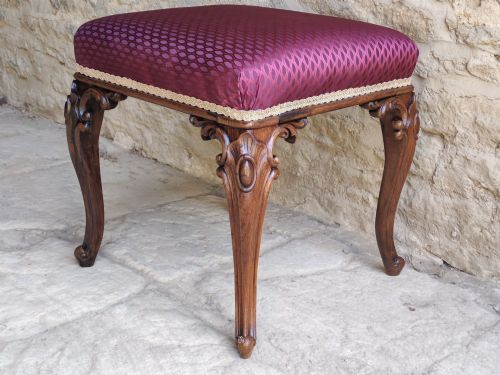
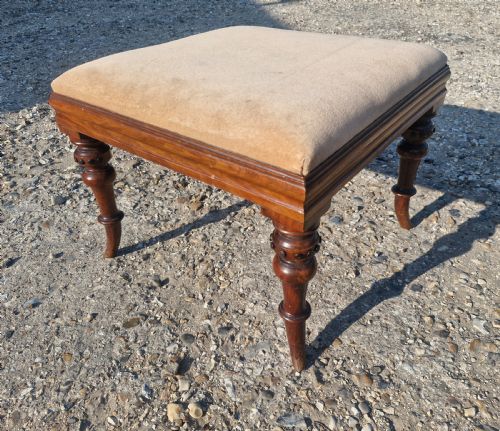
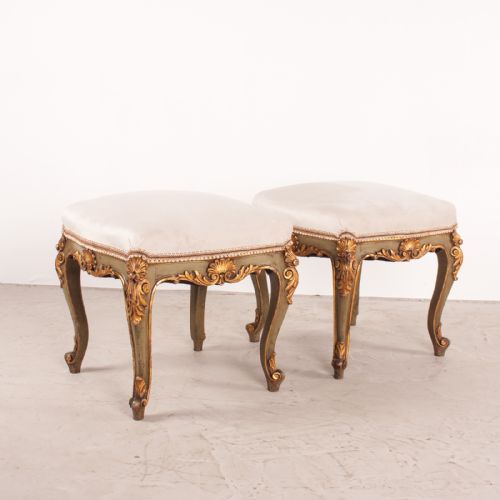
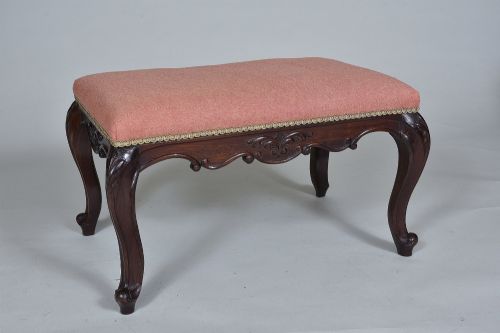
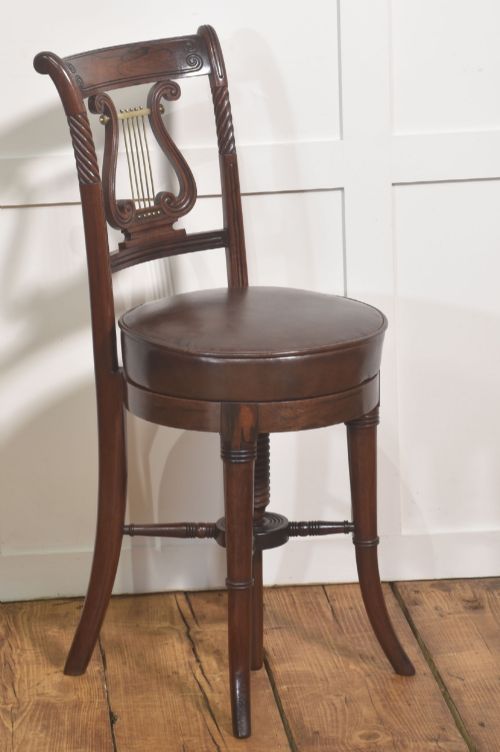
A 19th century vanity stool is a low seat designed for use at a dressing table, boudoir desk or mirror, often appearing under related descriptions such as dressing chairs, piano stools or ottomans. The examples gathered here span the Victorian era, the Regency period and the wider nineteenth century, capturing a range of domestic scales from compact footstools to substantial upholstered benches.
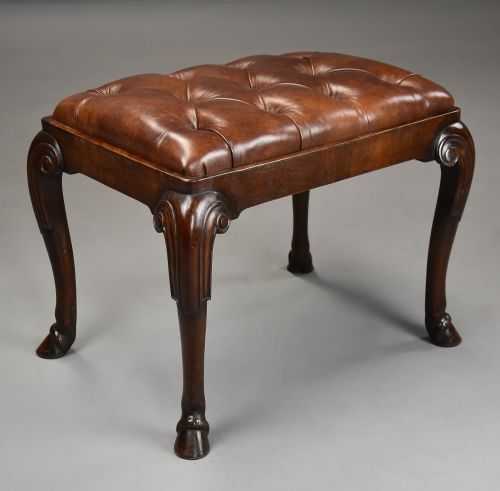
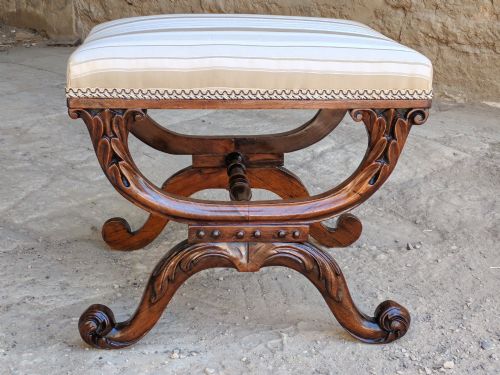
The silhouettes draw heavily on historical revivals, showing Queen Anne cabriole legs, Chippendale carving, French Empire X-frames and robust Victorian rococo curves alongside regional variants like Anglo-Indian rosewood and Swedish birch. Walnut and mahogany predominate as the structural timbers, supported by rosewood, teak, oak, yew and exotic woods like goncalo alves.
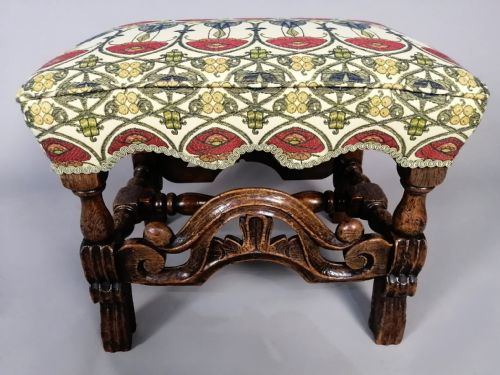
The top of the seat is finished in varied textiles, ranging from original needlepoint and leather to contemporary Liberty fabrics, velvet and plain woven wool. Buyers encounter both revolving mechanisms for piano use and stationary frames intended specifically for the dressing room.
Craft and Proportion
Quality rests in the crispness of the timber carving and the harmony of the proportions, where finer pieces display deeply undercut foliage and balanced cabriole legs rather than flat, machine-cut decoration. The choice of timber dictates the baseline of refinement, with dense figured rosewood, goncalo alves or finely gilt walnut sitting above standard mahogany.
The integrity of the frame construction and the retention of original upholstery textiles or needlepoint elevate an example beyond standard utility pieces. Revolving and adjustable mechanisms demonstrate superior nineteenth-century engineering when they operate smoothly without play in the screw threads.
Listings feature woods spanning mahogany, walnut, rosewood, teak, yew and satin birch, reflecting diverse nineteenth-century workshop palettes.
Loidrault Freres Paris
The 19th Century Vanity Stool Glossary
- Cabriole leg
- A furniture leg that curves out and then narrows down to a foot, mimicking animal limbs. This profile gained popularity during the Queen Anne revival.
- X-frame
- A structural support formed by two intersecting diagonal members creating an X shape. This ancient form reappeared in French Empire and Victorian designs.
- Goncalo alves
- A dense exotic hardwood prized for its striking contrasting grain. Makers utilised it in high-status Victorian seating.
- Needlepoint
- A type of canvas work embroidery used for upholstery. Surviving examples preserve period domestic textile artistry.
- Ottoman
- A low, fully upholstered seat without a back or arms. Nineteenth-century versions served varied functions in the boudoir.
19th Century Vanity Stool: Frequently Asked Questions
What is a 19th century vanity stool?
A 19th century vanity stool is a low seating piece made for a dressing table or boudoir. These items provide functional seating while introducing period woodcraft and textiles to a room.
They appear in various revival styles, utilising timbers like mahogany and walnut alongside decorative upholstery.
How do I date a 19th century stool?
Dating relies on identifying the prevailing style, timber choices and construction methods visible in the frame. Victorian and Regency markers point to specific decades within the broader century.
Secondary clues include the type of joinery used and whether elements like needlepoint or leather upholstery remain original to the piece.
Where were vanity stools used?
These seats belonged in private dressing rooms, bedrooms and boudoirs where individuals sat to groom or dress. Their compact scale allowed them to slide neatly beneath dressing tables when not in use.
Piano stools and small ottomans served similar domestic roles in nineteenth-century sitting rooms.
How do I care for antique wood and fabric?
Maintain timber frames by keeping them away from direct heat sources and applying appropriate natural waxes sparingly. Avoid harsh chemical cleaners that might strip the historic polish.
Protect delicate upholstery textiles such as velvet or antique needlepoint by limiting direct sunlight and gently brushing away surface dust.