
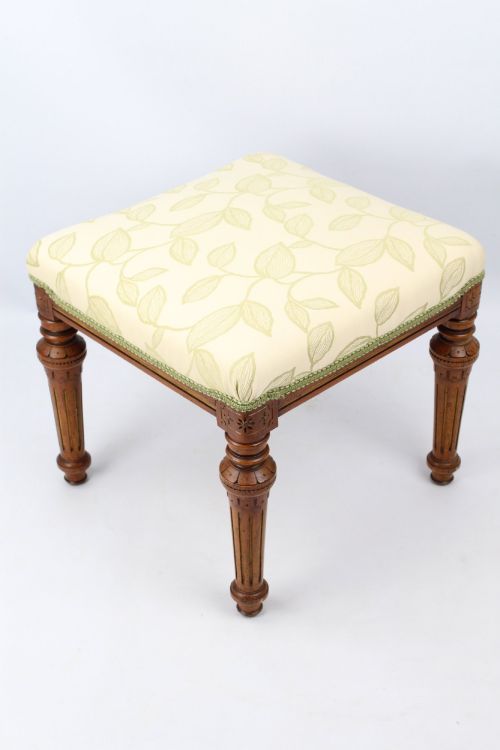
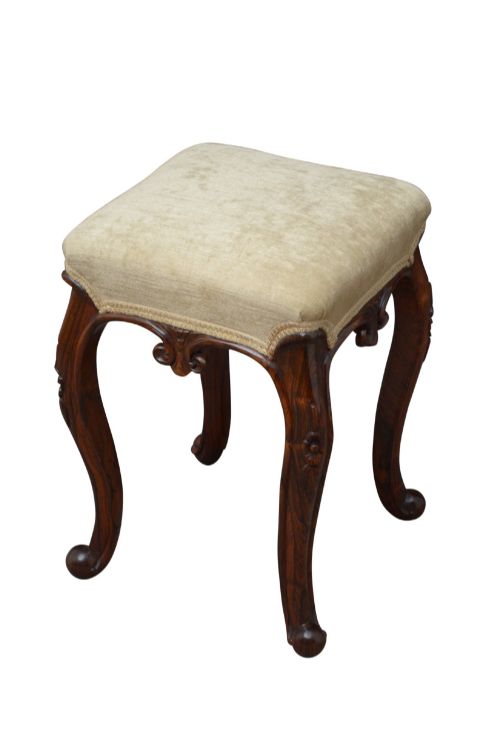
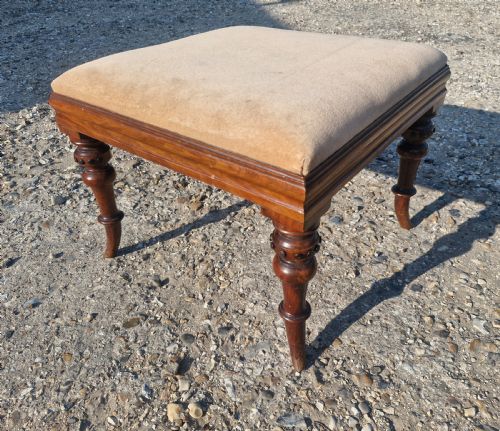
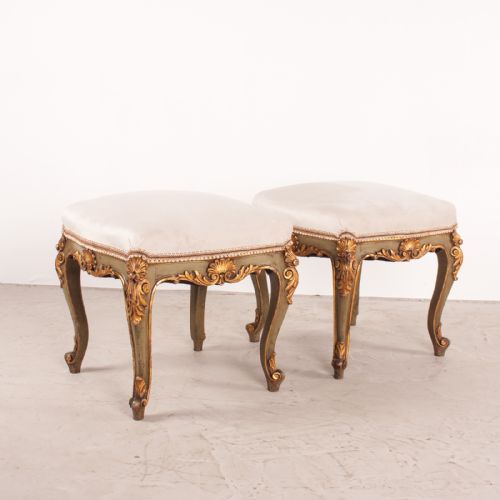
19th Century Vanity Seat
A 19th century vanity seat brings period charm and low seating to a dressing room or bedroom.
19th Century Vanity Seat
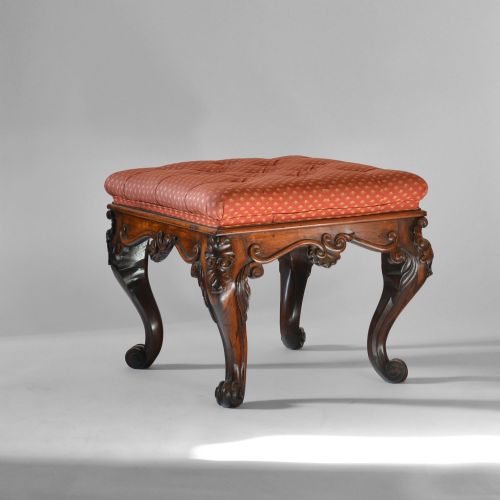
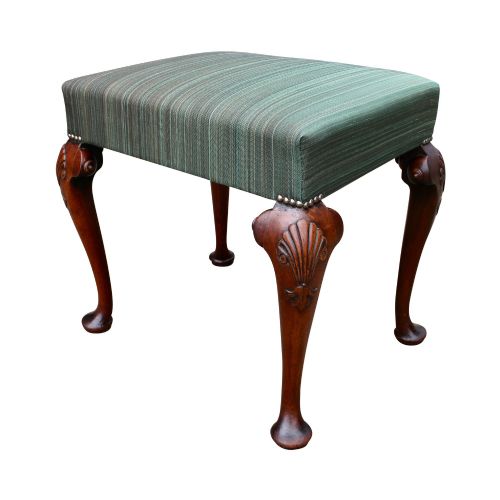
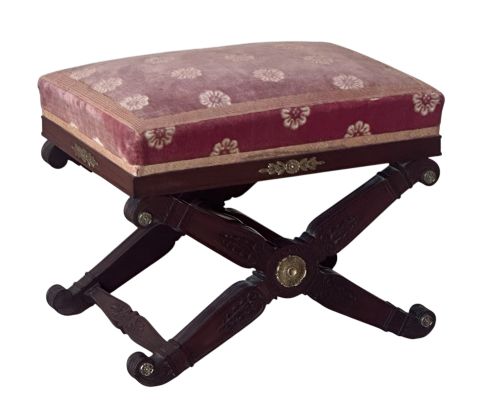
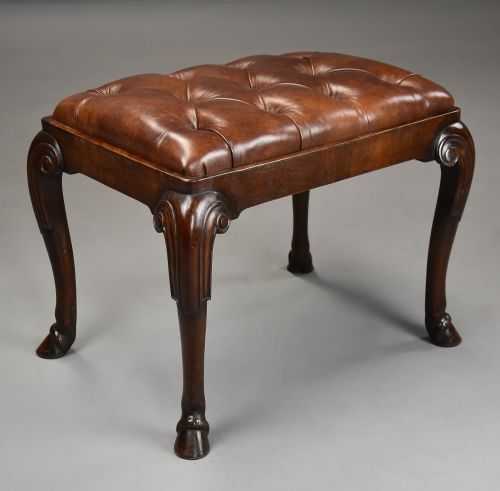
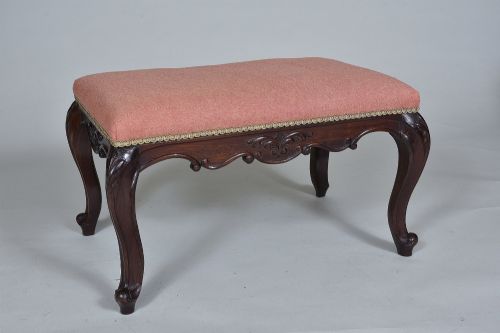
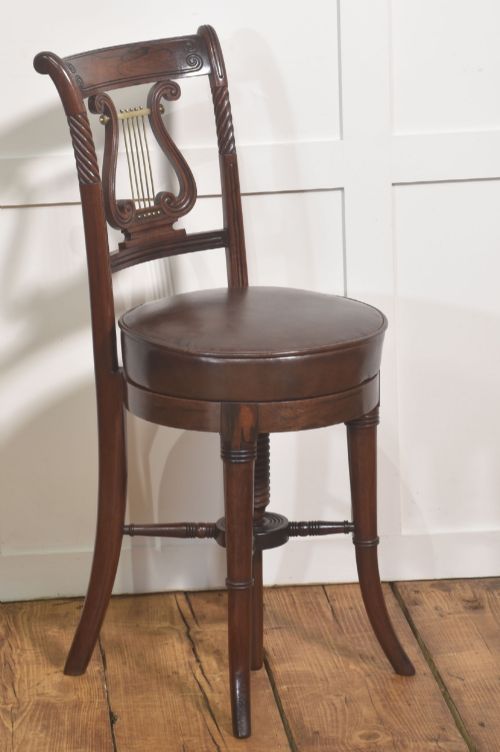
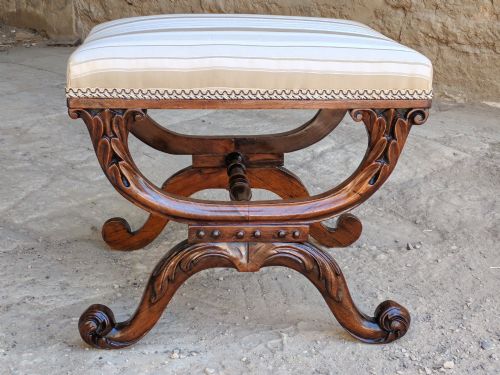
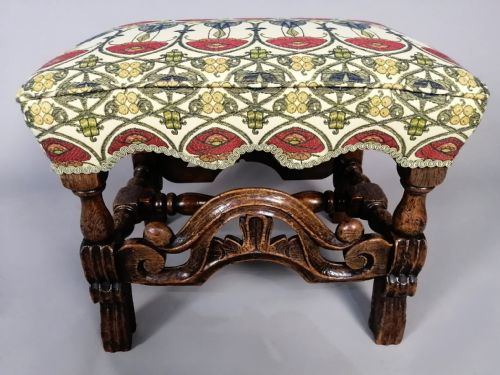
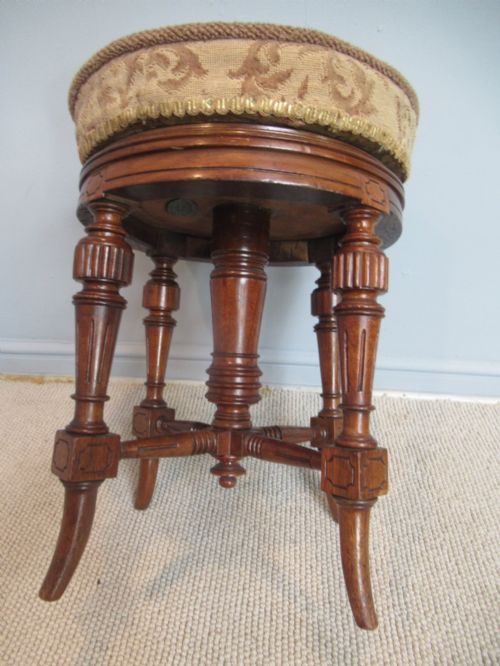
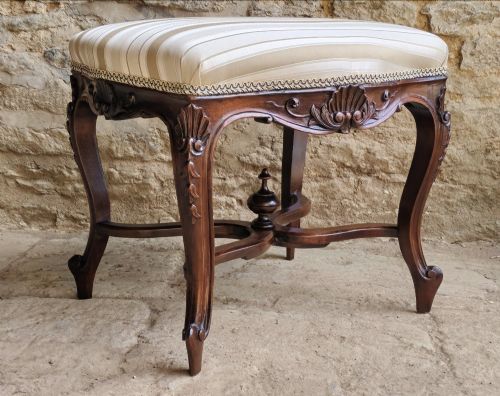
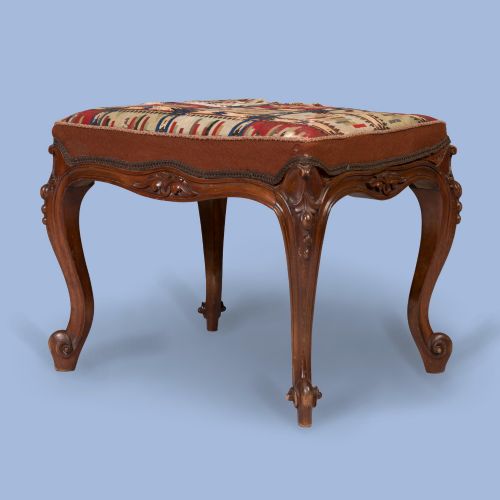
A 19th century vanity seat encompasses a range of low stools, piano stools, dressing chairs, and slipper chairs designed for the bedroom or boudoir. You will frequently encounter mahogany and walnut stools supported on cabriole legs, alongside X-frame designs and revolving seats from the Victorian era.
The selection extends across various revival aesthetics and regional outputs, including Queen Anne, Chippendale, and French Empire styles, alongside Anglo-Indian rosewood and Swedish satin birch pieces. These seats served practical roles at the dressing table or piano, remaining compact enough to tuck beneath surfaces when not in use.
Materials and Techniques
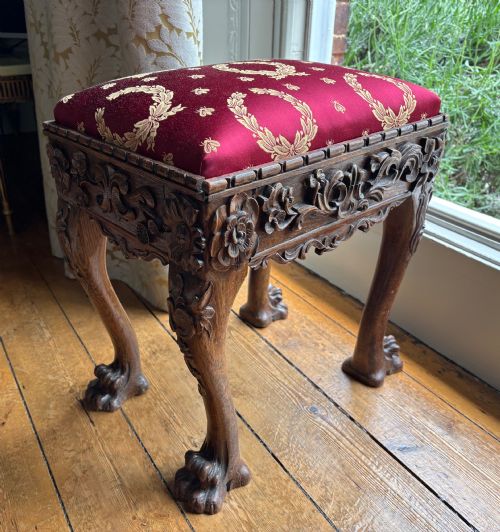
Cabinet makers built these frames using dense hardwoods such as mahogany, walnut, rosewood, and goncalo alves, often employing carved cabriole legs, turned supports, or X-frames. Joinery relied on traditional methods like mortise and tenon to ensure stability under daily seating loads.
Upholstery involved textile coverings such as velvet, leather, and needlepoint, frequently secured over padding with decorative brass framing nails or fringe trims. Giltwood, painted finishes, and inlaid details were also applied to enhance the decorative presence of pieces destined for formal bedchambers.
Some Victorian piano stools spin endlessly, offering a quiet distraction for restless fingers between musical pieces.
Judging Quality
The distinction between ordinary and superior examples lies in the crispness of the wood carving, the choice of timber figure, and the structural integrity of the frame. Well-executed cabriole legs and finely turned stretchers reflect a maker's skill and attention to proportion.
The retention of original textiles, needlepoint, or period-appropriate upholstery materials adds considerable merit to a piece. Subtle details, such as smooth revolving mechanisms on piano stools or well-preserved gilt finishes, separate standard utilitarian seating from refined boudoir furnishings.
Lamb of Manchester
The 19th Century Vanity Seat Glossary
- Cabriole leg
- A furniture leg that curves outward at the knee and tapers inward toward the ankle, ending in a pad or claw foot. This form draws inspiration from animal limbs and frequently appears on Queen Anne and Chippendale style seating.
- X-frame
- A structural base formed by two intersecting diagonal members that create an X shape when viewed from the side. This ancient form provides robust support for folding or fixed stools.
- Slipper chair
- A low-seated upholstered chair designed to assist women with sitting and putting on shoes in the bedroom. These chairs typically feature no arms and short legs to sit close to the floor.
- Needlepoint
- A type of canvas work embroidery executed with wool yarn, often utilised for the upholstered seat covers of period stools and chairs. It adds decorative colour and texture to the top surface.
- Revolving stool
- A seat featuring a threaded spindle or mechanical screw mechanism that allows the top to twist and adjust in height. These are commonly found on piano stools and dressing seats.
19th Century Vanity Seat: Frequently Asked Questions
What is a 19th century vanity seat used for?
These pieces provided comfortable, low seating for personal grooming at a dressing table or vanity mirror in the bedroom.
Their compact proportions allowed them to sit neatly out of the way when not in active use.
How do I distinguish a piano stool from a dressing stool?
Piano stools frequently incorporate a revolving mechanism or a spindle to adjust the seating height for the musician.
Dressing stools are typically fixed in height and often feature upholstered tops tailored to match bedroom textiles.
What wood types are most common for these seats?
Mahogany and walnut dominate the surviving examples from this period, prized for their strength and rich grain patterns.
You will also encounter exotic timbers like rosewood and goncalo alves, alongside painted or gilded finishes.
How do I care for antique upholstery?
Original needlepoint or antique fabric requires gentle dry brushing and protection from direct sunlight to prevent fibre degradation.
If the fabric is recent, follow standard textile care guidelines appropriate to velvet, leather, or woven materials.