


19th Century Triptych Mirror
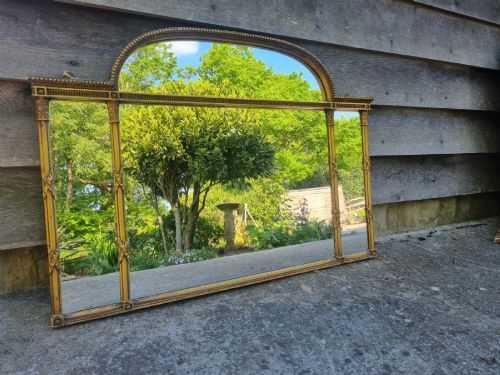
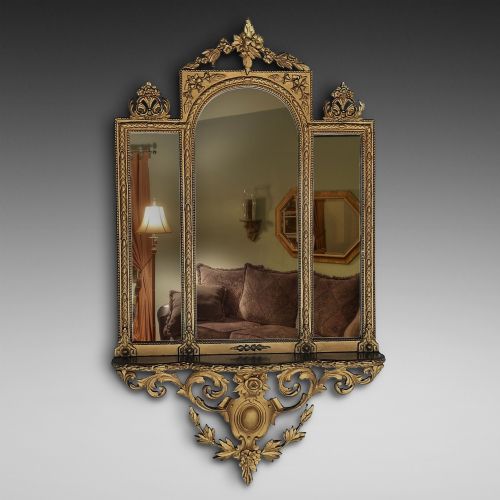
These 19th century triptych mirror pieces are tripartite looking glasses designed to bounce light and command a mantel or wall with tripartite symmetry.
19th Century Triptych Mirror
A 19th century triptych mirror divides a single reflective surface into three distinct vertical sections, often housed within an elaborate overmantel or dressing table frame. These multi-panelled looking glasses were designed to catch and multiply the daylight in principal rooms, serving as architectural anchors above fireplaces or as functional vanity pieces.
The selections available here span the breadth of the nineteenth century, encompassing grand Regency giltwood overmantels alongside compact Victorian mahogany and walnut variants. Buyers will encounter diverse revival styles including French and Irish Rococo, Gothic, and Venetian interpretations, each bringing distinct moulding profiles and decorative motifs to the three-panel format.
Overmantel formats dominate the record, stretching horizontally above hearths with tripartite glass divisions, while smaller table-top and wall-hanging versions offer intimate proportions. The tripartite arrangement breaks the expanse of the wall, using flanking panels to alter the perceived geometry of the interior space.
Materials and construction methods
Makers constructed these frames using solid timbers such as mahogany, walnut, oak, and ebonised wood, alongside carved wood and gesso foundations built for heavy gilding. Composition ornaments were frequently moulded and applied to wooden substrates to achieve ornate relief work without prohibitive carving costs.
Mirror glass was silvered and set into partitioned rebates, sometimes featuring bevelled edges or divided plates held securely by internal glazing bars and wooden backs. Giltwood surfaces combined bole, size, and gold leaf applied over gesso, while brass fittings such as swan neck handles and finials secured smaller dressing table components.
Listings feature periods spanning the Regency era through to the late Victorian period, incorporating Edwardian dressing tables.
Assessing quality in tripartite mirrors
The crispness of the carved or moulded detail distinguishes standard production from finer workshop output, particularly in the definition of giltwood foliate scrolls, Rococo flourishes, and applied composition motifs. Superior examples maintain the structural integrity of their tripartite framing joints without noticeable distortion across the span.
The quality of the mirror plates themselves determines visual clarity, with older silvering showing characteristic patination or foxing that denotes age. The choice of primary timber, whether figured mahogany, walnut, or dense gesso over carved wood, dictates the heft and refinement of the finished object.
The 19th Century Triptych Mirror Glossary
- Overmantel mirror
- A large looking glass specifically designed to sit on the mantelpiece above a fireplace. These pieces often feature tripartite divisions to mirror the architectural width of the chimney breast.
- Giltwood
- Timber that has been coated with gold leaf over a prepared ground of gesso and size. It provides a luminous surface that reflects interior candlelight and daylight.
- Gesso
- A plaster-like mixture applied to wood frames to create a smooth surface for gilding or relief moulding. It allows for intricate surface ornamentation.
- Composition
- A moulded mixture of whiting, resin, glue, and oil pressed into ornaments and applied to frames. It offered a cost-effective alternative to hand-carved wood during the nineteenth century.
- Tripartite
- Divided into three distinct sections or panels. In these mirrors, it refers to the central glass plate flanked by two narrower side mirrors.
19th Century Triptych Mirror: Frequently Asked Questions
Where should a triptych mirror be hung?
These mirrors find their traditional home above a living room fireplace as an overmantel, where their width balances the hearth below. They also function effectively on principal salon walls to amplify natural light.
Ensure the wall construction can support the substantial weight of timber and glass, anchoring securely into studs or masonry.
How do I identify a Regency period mirror?
Regency pieces often display classical motifs such as reeding, ball accents, and Neoclassical decorations. The frames lean towards architectural symmetry and restrained elegance compared to later Victorian exuberance.
Check the timber species and construction joints, as Regency cabinetmakers frequently utilised mahogany and precise giltwood mouldings.
What is the difference between wall and overmantel mirrors?
Overmantel mirrors are traditionally wider than they are tall, proportioned to sit squarely on a fireplace mantel. Wall mirrors are designed for general room placement with independent vertical or square dimensions.
Both types utilise triptych glass divisions, but the framing structure of an overmantel is built to anchor a major interior elevation.
How do I care for antique giltwood frames?
Dust giltwood surfaces gently with a dry, soft brush to protect the delicate gold leaf and gesso layers. Avoid commercial chemical cleaners and moisture, which can dissolve water-soluble sizing beneath the leaf.
Keep the mirror out of direct sunlight and away from extreme temperature fluctuations to prevent timber movement and cracking.