
19th Century Style Sofa
A 19th century style sofa brings nineteenth-century revival design and generous seating into a modern interior.
19th Century Style Sofa
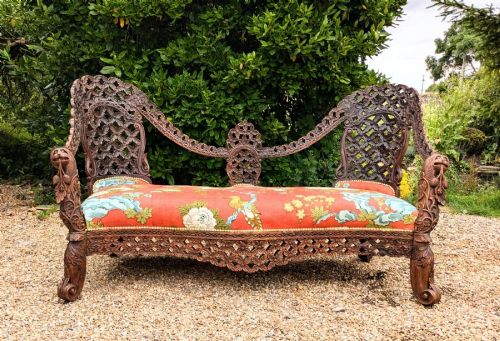
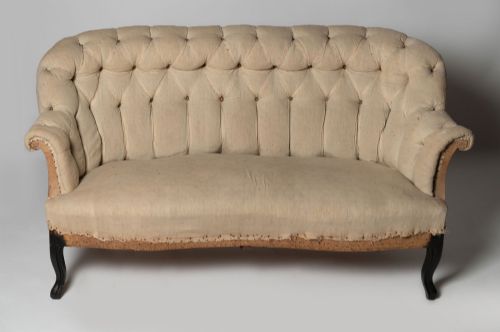
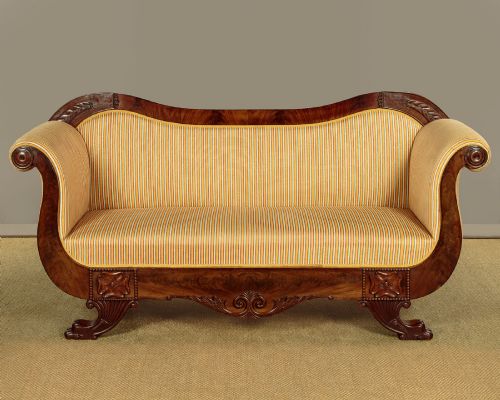
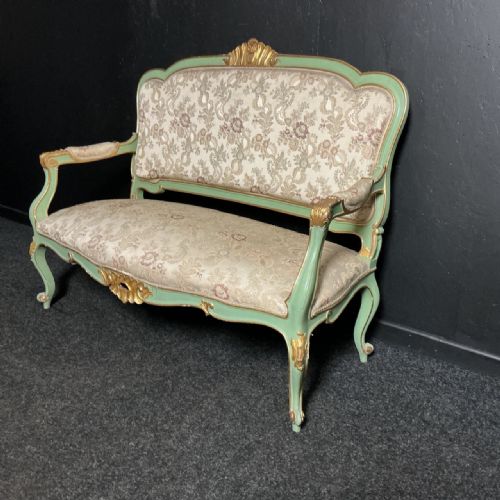
A 19th century style sofa draws on historical periods such as the Regency, Victorian, and Edwardian eras, encompassing revival designs like the Louis XV, Chippendale, and Howard styles. When exploring these selections, buyers frequently encounter French giltwood frames, walnut framework, and upholstered country house forms.
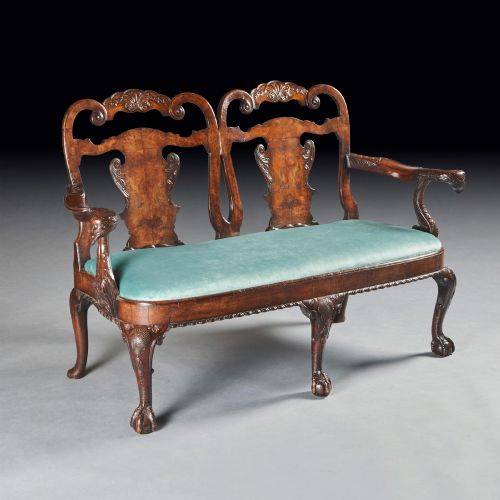
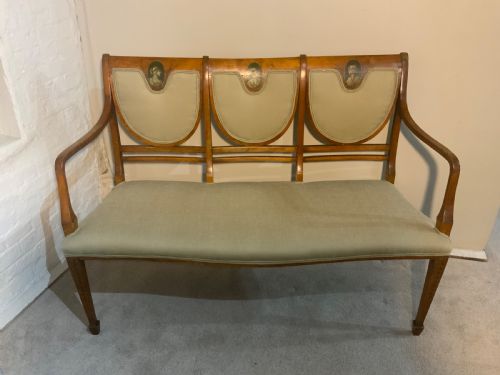
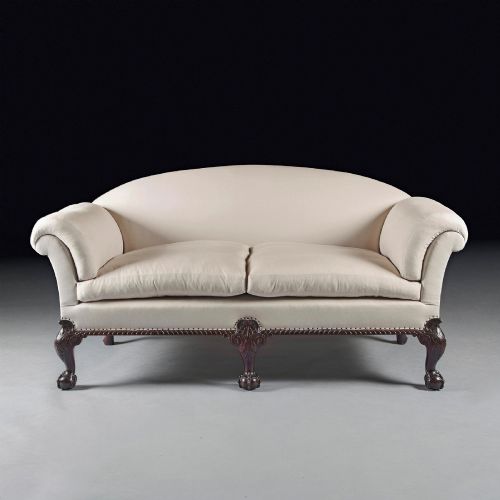
The category spans diverse silhouettes, from camel back and wingback arrangements to scroll end couches, chaise longues, and twin chair back settees. Many pieces echo earlier Georgian or continental proportions while utilising nineteenth-century manufacturing methods.
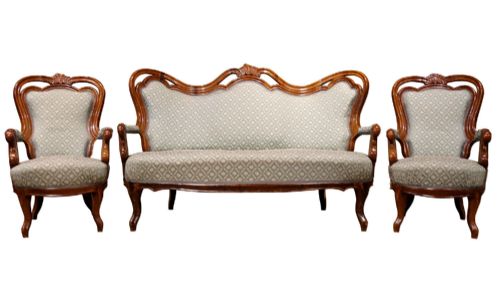
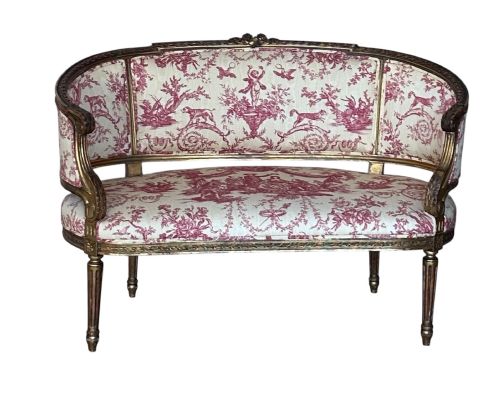
Makers and workshops of the period often looked to the past for inspiration, producing items that range from simple painted wooden benches to large salon suites and intricately carved giltwood canapés.
Materials and Construction
Carpenters and cabinet makers utilised solid hardwoods such as mahogany, walnut, rosewood, and satinwood to build the foundational frames of these seats. Ormolu mounts, brass details, and hand-carved giltwood provided decorative surface enrichment for formal French and English models.
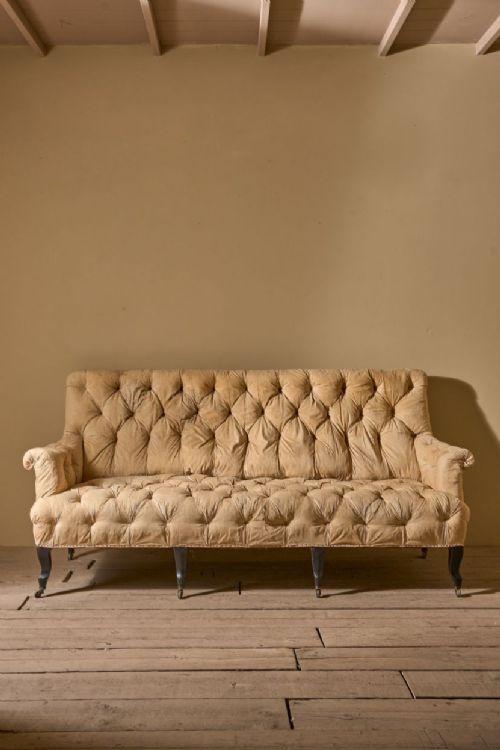
Upholstery techniques involved buttoned backs, drop arms, and supportive springing, finished with textiles like velvet, silk, or heavy woven fabric. Cane panels also appeared on specific frames, particularly on Anglo-Indian and French varieties.
Listings feature woods including mahogany, walnut, satinwood, and rosewood alongside velvet and fabric upholstery.
Judging Quality and Execution
The distinction between tiers rests upon the crispness of the wood carving, the weight and selection of the timber, and the integrity of the joinery. Superior examples display fluent hand-carving on walnut or giltwood frames rather than cast resin replacements.
Upholstery standards dictate longevity, where traditional stuffing methods and robust internal webbing elevate a piece above simpler commercial builds. The harmony of proportions, faithful adherence to historical design sources, and original surface finishes further elevate a piece.
Howard and Sons·Gillows·Butlers of Dublin
The 19th Century Style Sofa Glossary
- Giltwood
- Wood that has been coated with gold leaf or a gold-coloured finish. This technique was frequently applied to formal French salon furniture.
- Canapé
- A traditional French decorative sofa featuring an exposed wooden frame. These pieces often exhibit carved details and cabriole legs.
- Chaise Longue
- An upholstered long chair designed for reclining. It combines the characteristics of a chair and a sofa.
- Ormolu
- Gilded bronze mounts applied as decorative ornaments to furniture. It is commonly found on Biedermeier and Empire pieces.
- Serpentine
- A furniture line that curves inward and outward in a continuous wave. This profile frequently defines the front rails of high-status seats.
19th Century Style Sofa: Frequently Asked Questions
What is a Howard style sofa?
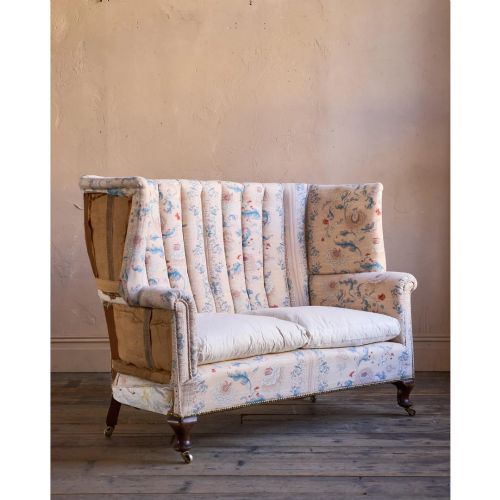
A Howard style sofa is a nineteenth-century English seating design known for deep, comfortable proportions and rolled arms. These pieces became staples of the traditional country house interior.
They typically feature turned wooden legs on castors and dense, supportive upholstery designed for long periods of lounging.
How do I identify a French nineteenth-century sofa?
French sofas from this era often display Louis XV or Louis XVI revival characteristics, featuring exposed giltwood or painted wooden frames. Look for cabriole legs, carved floral motifs, and cane or upholstered backrests.
These models prioritise decorative framework and lighter aesthetic lines compared to heavier British upholstery.
Where should I place a settee in a modern room?
A settee works well in smaller reception spaces, hallways, or at the foot of a bed where a full-sized sofa would overwhelm the floor plan. Their lighter frames allow them to act as accent seating without blocking sightlines.
Pairing a walnut or mahogany settee with contemporary furniture adds historical contrast to a room.
What is the difference between a sofa and a settee?
Historically, a settee referred to a narrow, upholstered wooden bench with a backrest, while a sofa was more fully upholstered and designed for reclining. Over time, the terms have largely merged in everyday description.
In older listings, settees often retain lighter wooden structures and twin chair backs.