

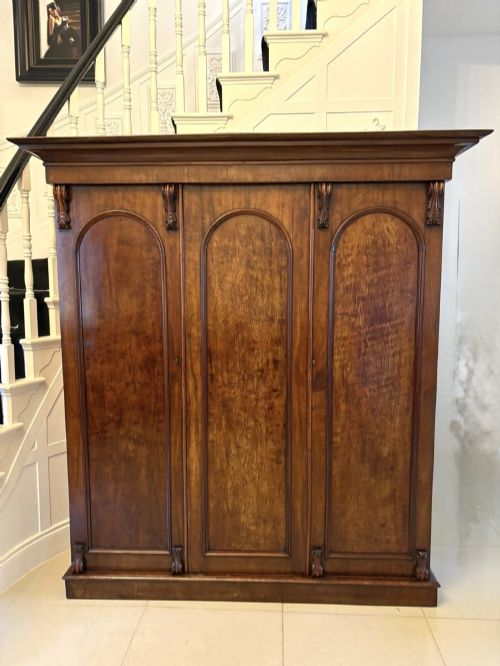

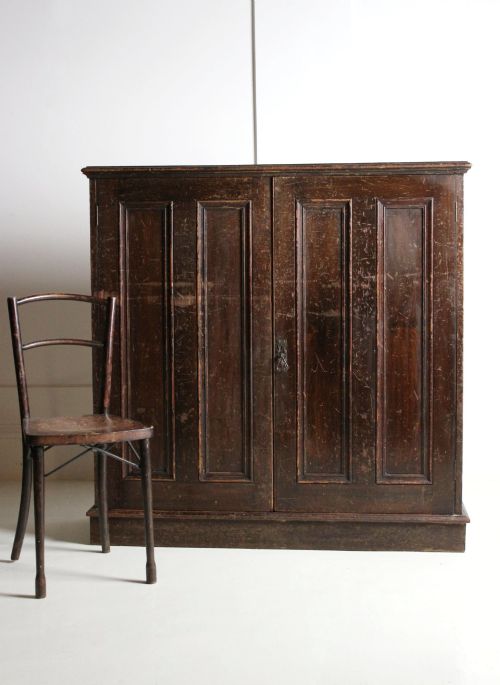
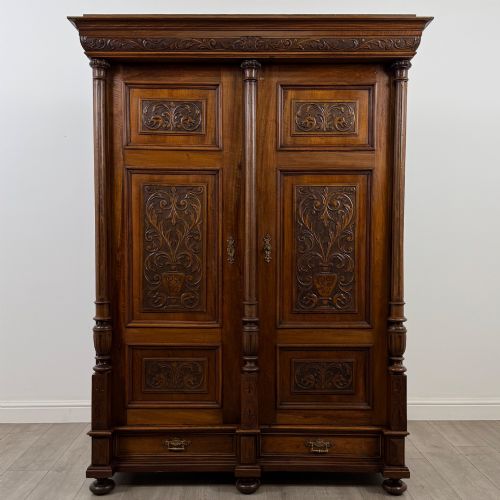
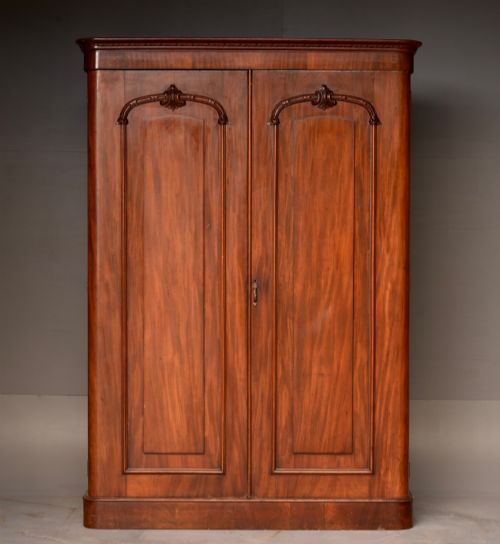
19th Century Storage Armoire
A 19th century storage armoire provides substantial period presence and versatile interior space, bringing enduring utility to modern rooms.
19th Century Storage Armoire
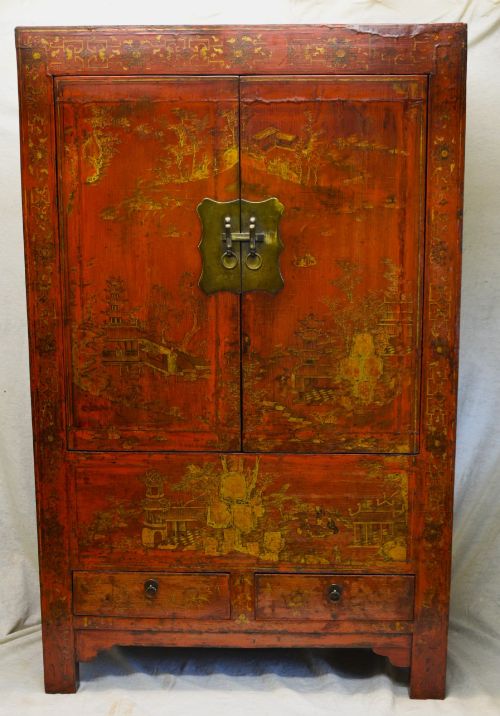
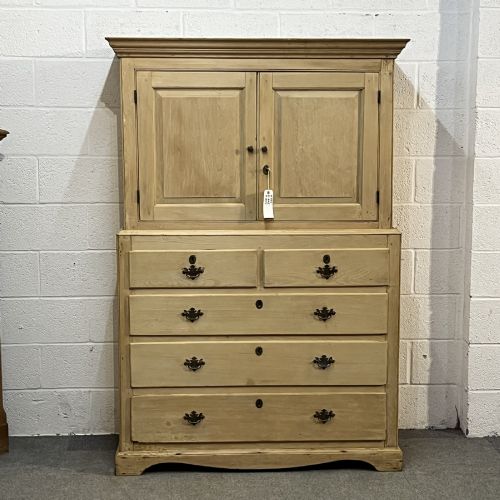
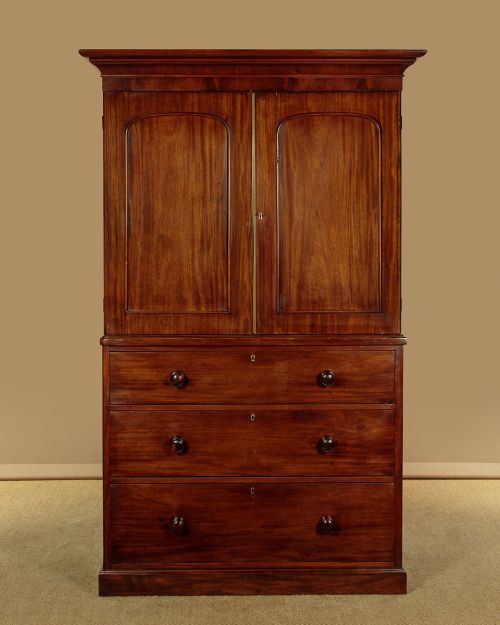
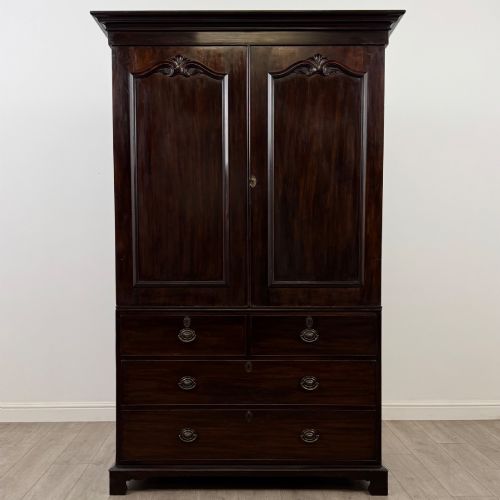
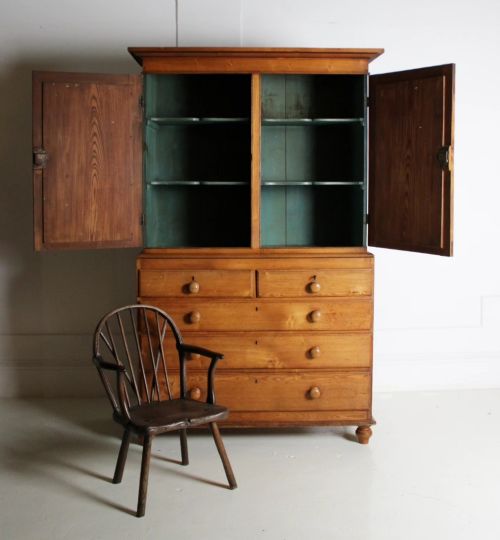
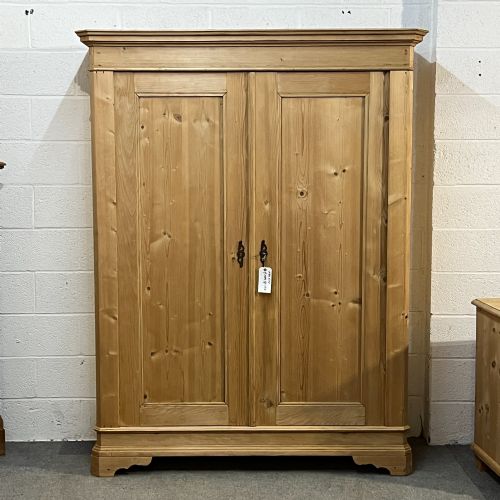
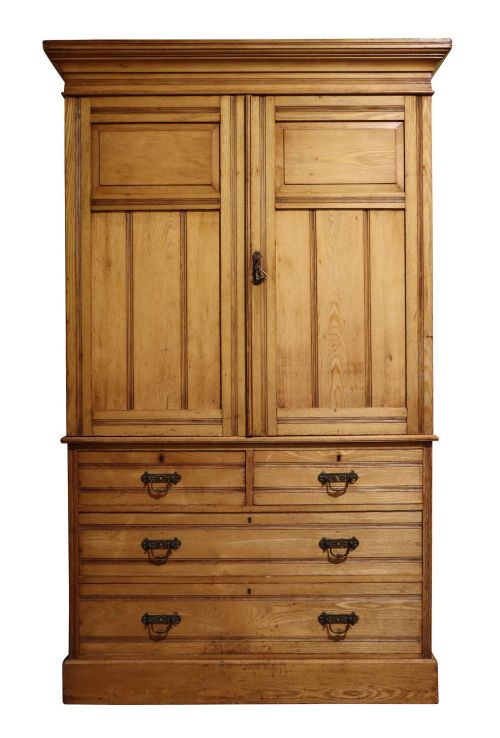
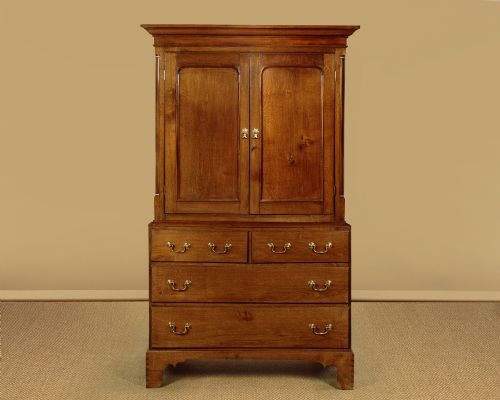
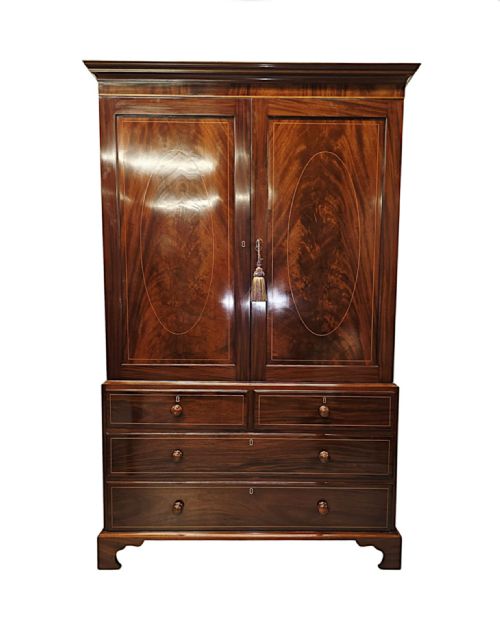
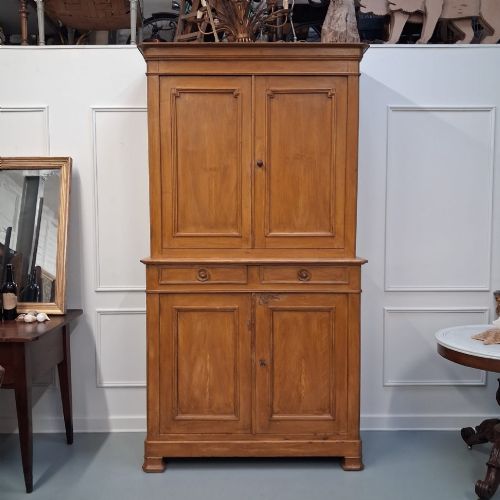
A 19th century storage armoire encompasses large freestanding furniture designed for textiles, garments, and household provisions, appearing across domestic interiors of the era in numerous regional forms. Buyers seeking these pieces encounter wardrobes, linen presses, housekeeper cupboards, and wedding cabinets spanning Georgian, Regency, and Victorian periods.
The selections on this page concentrate heavily on pine, mahogany, and oak examples, ranging from vernacular country pieces to formal British and French urban designs. Provincial workshops and larger makers produced these large storage items to solve domestic storage needs before fitted joinery became common.
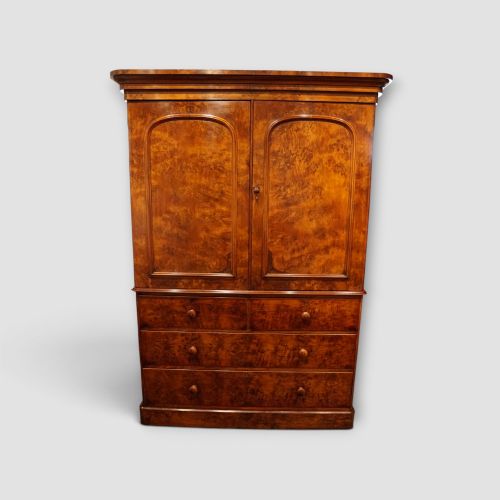
Regional variations display distinct character, from French cherry wood and painted finishes to English flame mahogany and Welsh oak. Whether configured as a traditional linen press with internal sliding trays or a tall double wardrobe, each piece reflects the specific domestic requirements of its period.
Materials and Construction
Carpenters utilised solid hardwoods such as mahogany, walnut, oak, and ash alongside domestic softwoods like pine, frequently applying decorative veneers or surface paint. Flame mahogany and burr walnut figured prominently in formal British pieces, while regional French and Italian workshops relied upon cherry, fruitwood, and local conifers.
Joinery methods combined traditional mortise and tenon frames with hand-dovetailed drawer construction and panelled doors to accommodate seasonal wood movement. Many examples incorporate brass hardware, iron hinges, and internal sliding shelves or linen slides designed to hold textiles flat.
19th Century Storage Armoire Retail Price Guide 2026
Typical asking prices for 19th century storage armoire among the pieces listed under this phrase on Sellingantiques today, from the lower quarter to the upper quarter. They describe what is for sale here now, not the wider market.
Period representation spans Georgian, Regency, and Victorian eras alongside continental provincial workshops.
Assessing Quality and Execution
The distinction between standard utility storage and superior examples rests upon timber selection, architectural proportion, and the crispness of carved or inlaid details. Finer pieces display carefully matched veneers, sophisticated cornices like blind fretwork, and well-executed secondary timbers within drawer linings.
Surface preservation significantly influences the standing of a piece, distinguishing items retaining original paint, scumble finishes, or patinated wax from those stripped or heavily altered. Structural integrity, original hardware retention, and the smooth operation of internal slides and deep drawers separate workshop masterworks from basic utilitarian cupboards.
Maple and Co·Heals
The 19th Century Storage Armoire Glossary
- Linen Press
- A tall piece of furniture featuring upper doors enclosing sliding trays for folded textiles, placed above a base of lower drawers.
- Armoire
- A large freestanding cupboard or wardrobe used primarily for hanging or folding garments, originating in continental Europe.
- Housekeeper Cupboard
- A large two-part storage cabinet traditionally used in country houses for storing provisions, household linen, and domestic supplies.
- Scumble Paint
- A decorative finishing technique involving translucent glaze manipulated over a base coat to imitate grain or create patterned texture.
19th Century Storage Armoire: Frequently Asked Questions
How do I use an armoire today?
These large cabinets adapt readily to modern bedrooms and living areas for wardrobe hanging, shelving, or media storage.
Their deep internal proportions accommodate modern shelving and storage boxes while retaining period character.
What is a linen press?
A linen press combines upper cupboard space fitted with sliding trays with a chest of drawers below.
Originally built to keep household textiles flat and organised, they function well as modern wardrobe alternatives.
How do I distinguish regional styles?
British pieces often employ mahogany and oak with classical cornices, while French and Italian variants frequently use fruitwoods or painted finishes.
Vernacular country pieces rely on local softwoods and simple panel construction rather than formal architectural veneers.
Are these cabinets modular for moving?
Many larger 19th-century pieces, particularly housekeeper cupboards and two-part presses, separate into upper and lower sections.
This modular construction assists with transport and placement in rooms with standard ceiling heights.