



Rosewood Two Door Cupboard
A rosewood two door cupboard brings dense grain and quiet authority to a room, channelling decades of cabinet-making skill into a single functional piece.
Rosewood Two Door Cupboard
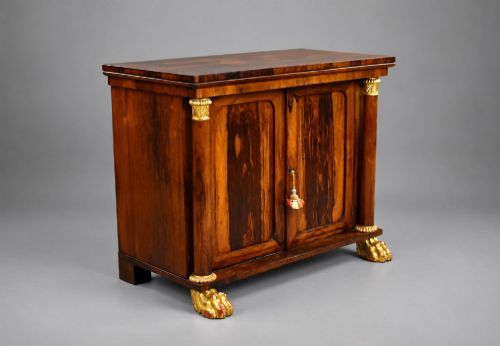
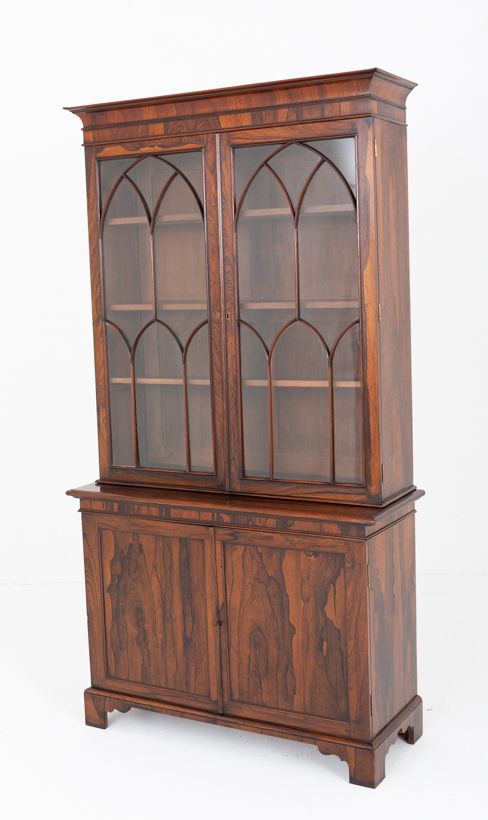
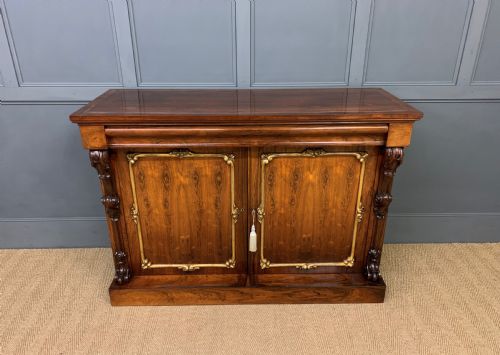
When you search for a rosewood two door cupboard, you encounter forms that span side cabinets, chiffoniers, and glazed bookcases dating from the Georgian, Regency, and Victorian eras. The listings here show pieces created across the nineteenth and early twentieth centuries, featuring styles from William IV to Gothic Revival and Renaissance Revival.
You are most likely to meet low side cabinets and chiffoniers fitted with enclosed storage below, alongside taller glazed bookcases designed for display. These forms originate from British workshops as well as Anglo-Indian colonial makers, employing timber selected for rich colour and striking grain patterns.
The utility of these pieces remains straightforward, offering enclosed shelving behind matched doors that suit contemporary living spaces as neatly as they did period drawing rooms. Each variant demonstrates the enduring appeal of dense tropical hardwood shaped to traditional proportions.
Materials and construction methods
Makers utilised solid rosewood and palisander veneers applied to secondary timbers, building sturdy carcases designed to withstand decades of use. The natural density of the wood allowed for precise moulding and structural stability without excessive bulk.
Decoration often incorporated cast or chased ormolu mounts, brass inlay, and glazed doors framed in timber. These applied elements required careful hand-fitting by skilled cabinet-makers working during the Regency and Victorian periods.
Rosewood Two Door Cupboard Retail Price Guide 2026
Typical asking prices for rosewood two door cupboard among the pieces listed under this phrase on Sellingantiques today, from the lower quarter to the upper quarter. They describe what is for sale here now, not the wider market.
Some nineteenth-century makers concealed extra drawers behind false bookcase fronts to keep private correspondence secure.
Distinctions in craftsmanship
The distinction between standard workshop production and finer cabinet-making lies in the selection of veneer figures and the precision of brass or ormolu mounts. Finer examples exhibit continuous grain matching across doors and superior restraint in applied ornament.
Structural integrity depends on the quality of internal carcase construction and the original condition of the timber. Pieces that retain their unblemished finish and original brasswork demonstrate higher levels of initial craftsmanship and careful subsequent preservation.
Gillows
The Rosewood Two Door Cupboard Glossary
- Palisander
- A term frequently applied to dense tropical rosewood timbers showing deep purple and dark brown grain variations. It provides the characteristic weight and dark lustre seen on nineteenth-century cabinets.
- Chiffonier
- A low sideboard or cabinet equipped with enclosed lower storage cupboards, often surmounted by a shelf or mirror. The form evolved during the Regency period for dining and drawing room storage.
- Ormolu
- Gilt-bronze mounts applied as decorative highlights to cabinet doors and cornices. The technique involves fusing gold amalgam to a bronze base.
- Gothic Revival
- An architectural and decorative style drawing on medieval ecclesiastical motifs. It appears on cabinets through pointed arches, linenfold panelling, and heavy tracery.
Rosewood Two Door Cupboard: Frequently Asked Questions
What periods do these cupboards date from?
The pieces span the Georgian, Regency, and Victorian eras, with the majority originating in the nineteenth century. Specific construction dates often cluster around the Regency and mid-Victorian decades.
Individual items also reflect later revivals, demonstrating how cabinet-makers continued to adapt earlier proportions into the twentieth century.
How do I distinguish Regency from Victorian examples?
Regency pieces often display restrained classical lines, brass inlay, and lighter proportions. They rely on the natural grain of the rosewood rather than heavy ornamentation.
Victorian cupboards tend to be heavier, sometimes incorporating Renaissance or Gothic revival details, deeper mouldings, and more robust timber scantlings.
Where were these cabinets used in a home?
These cupboards served primarily in drawing rooms, dining rooms, and libraries for storing books, china, or household linens. Low side cabinets doubled as serving surfaces or display stands.
Their enclosed storage made them practical for keeping items out of sight while adding decorative presence to reception rooms.
How should I care for rosewood furniture?
Keep the timber away from direct heat sources and strong sunlight to prevent the veneer from drying out or splitting. Gentle dusting with a dry, soft cloth maintains the finish.
Avoid commercial silicones or heavy waxes that can build up on the French polished surface over time.