



19th Century Staffordshire Dogs
These 19th century staffordshire dogs bring unmistakable character to a mantelpiece, offering collectors a rich variety of earthen canine figures modelled across the Victorian era.
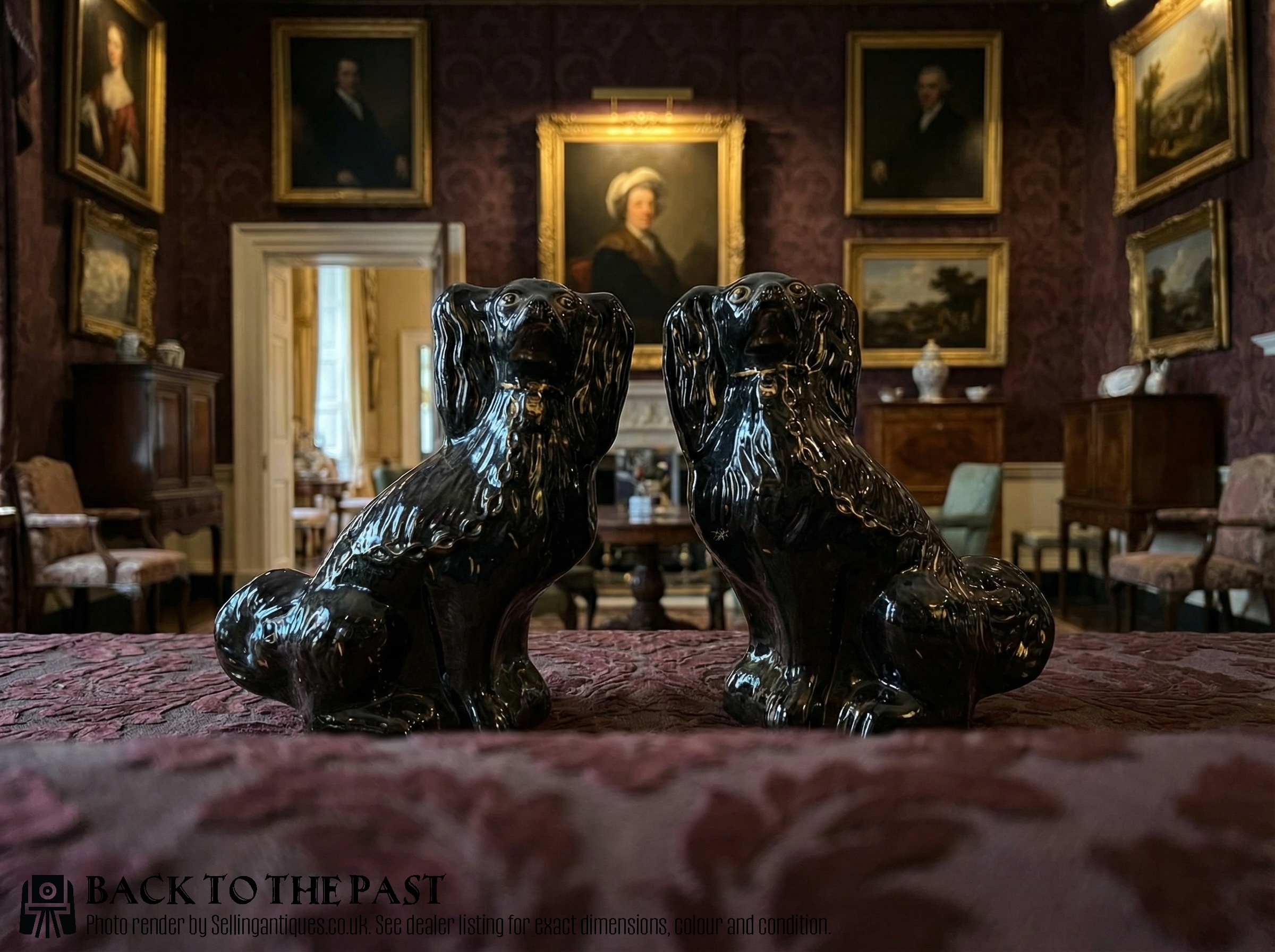
19th Century Staffordshire Dogs
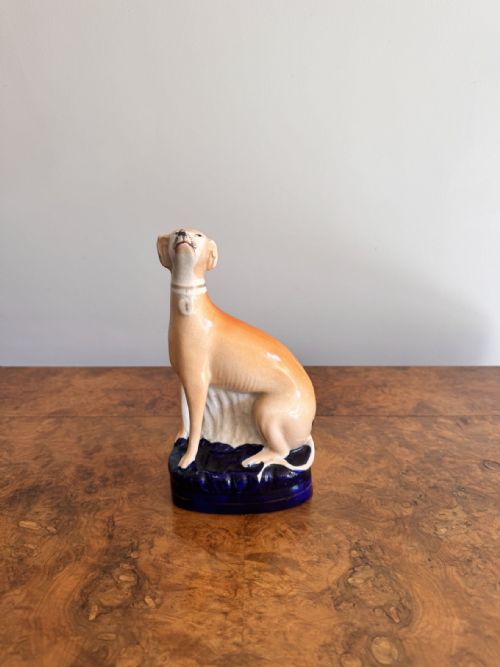
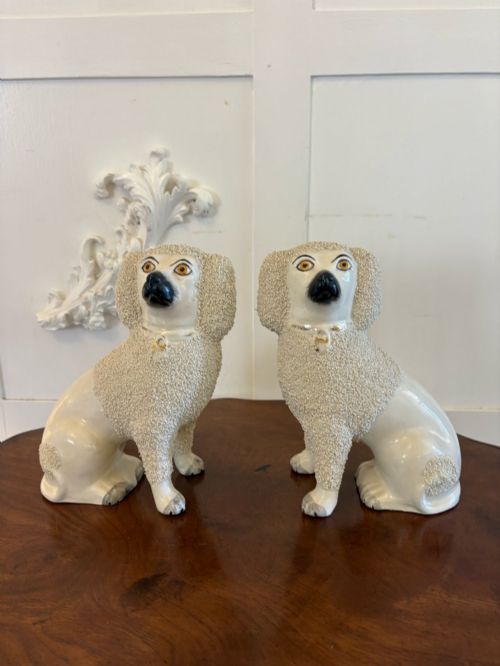
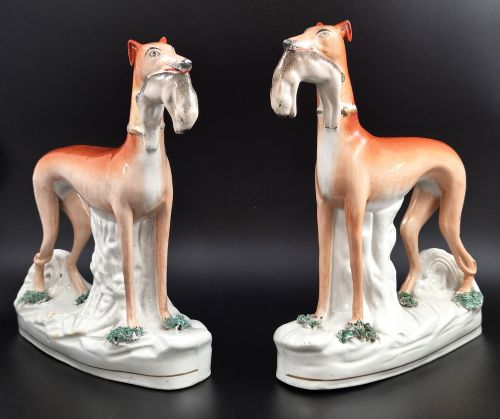
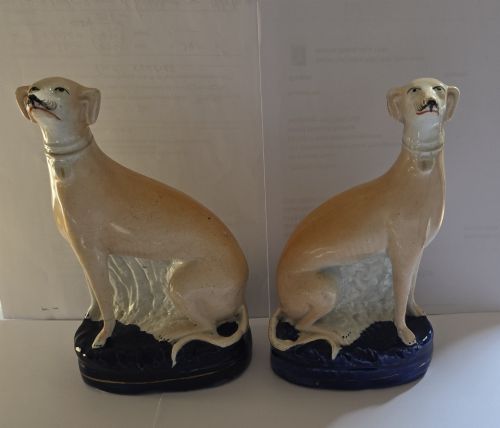
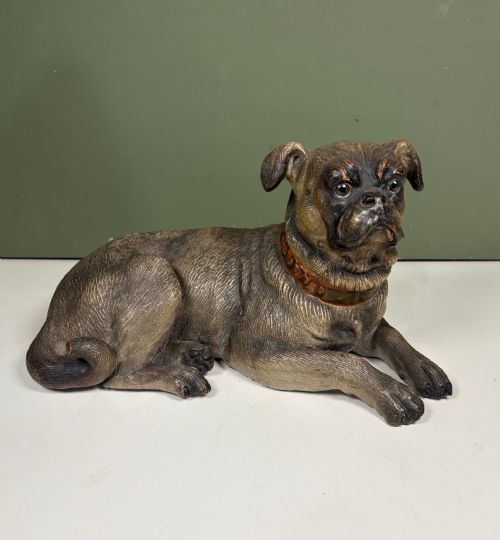
19th century staffordshire dogs comprise decorative pottery figures produced primarily in the Victorian period, capturing popular breeds like spaniels, poodles, greyhounds, pugs, and dalmatians. Buyers encounter these figures most frequently as pairs designed to sit symmetrically on either end of a fireplace mantel, reflecting domestic interior tastes of the era.
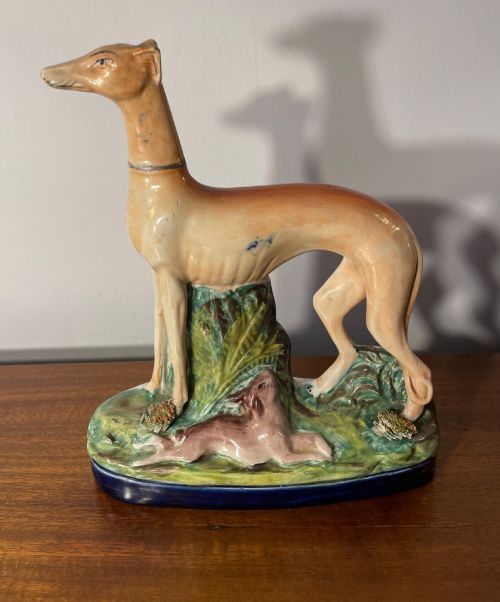
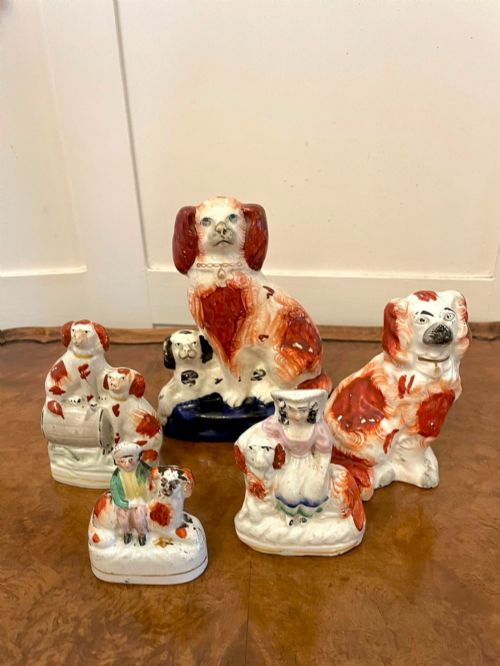
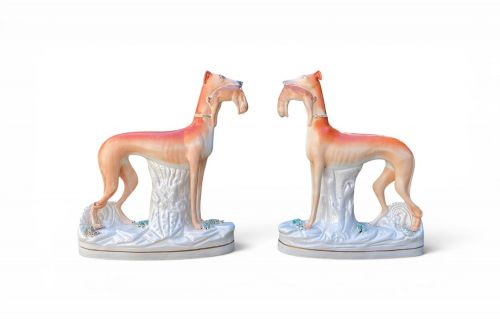
The selection ranges from standard seated spaniels to more elaborate groups incorporating hunting dogs with hares, inkwells, quill holders, and clock cases. Individual pieces and matched sets date across the nineteenth century, spanning Georgian roots through late Victorian production.
Materials and Techniques
Potters built these figures using earthenware and ceramic bodies, shaping the canine forms through moulding techniques before applying lead glaze and enamel decoration. Many examples incorporate hand-painted details in black, red, or gold leaf accents, alongside textured clay treatments known as woolly or encrusted finishes.
The glazing process creates the smooth, reflective surfaces typical of these ceramics, while overglaze enamels provide the facial expressions and collar details. Certain pieces utilise stoneware or specialised slip finishes to achieve distinct colouration and surface depth.
19th Century Staffordshire Dogs Retail Price Guide 2026
Typical asking prices for 19th century staffordshire dogs among the pieces listed under this phrase on Sellingantiques today, from the lower quarter to the upper quarter. They describe what is for sale here now, not the wider market.
Materials utilised across these listings include earthenware, ceramic, lead glaze, enamel, and gold leaf.
Indicators of Quality
The application of glaze and enamel decoration also dictates worth, with cleanly fired surfaces and vibrant, stable colours marking the better end of the range. Intricate functional forms, such as inkwells, clock groups, or figures with pups, demonstrate higher ambition from the pottery.
Thomas Parr
The 19th Century Staffordshire Dogs Glossary
- Earthenware
- Porous pottery fired at relatively low temperatures and glazed to achieve a waterproof surface. It serves as the primary ceramic body for most nineteenth-century Staffordshire animal figures.
- Enamel
- Opaque vitreous material fused to the ceramic surface during secondary firing to add colour. It provides the distinctive coats, collars, and facial markings on the dogs.
- Lead glaze
- A glossy coating containing lead oxide applied to earthenware before firing. This produces the characteristic shiny finish found on the majority of Victorian pottery figures.
- Gold leaf
- Thin sheets of hammered gold applied to parts of the ceramic for decorative highlights. Potters used this to accent collars, lockets, and bases.
19th Century Staffordshire Dogs: Frequently Asked Questions
What breeds are represented?
King Charles spaniels, poodles, greyhounds, pugs, and dalmatians appear frequently across the ceramic figures.
Spaniels represent the most common breed, while greyhounds, poodles, and hunting dogs with hares turn up as pairs.
Were they made as pairs?
Many of these ceramic dogs were produced as symmetrical pairs to adorn the mantelpieces of nineteenth-century homes.
Left-facing and right-facing dogs match each other in size, posture, and decoration to frame a fireplace correctly.
How do I date them?
Dating relies on stylistic clues, ceramic bodies, glaze characteristics, and the evolution of Victorian manufacturing techniques.
Earlier Georgian pieces differ from late Victorian examples through simpler modelling, distinct glaze pooling, and different enamel palettes.
What functional types exist?
Beyond standard decorative figurines, potters integrated practical elements into the ceramic sculpture.
Buyers find examples functioning as inkwells, quill holders, and clock group housings alongside traditional mantel ornaments.