
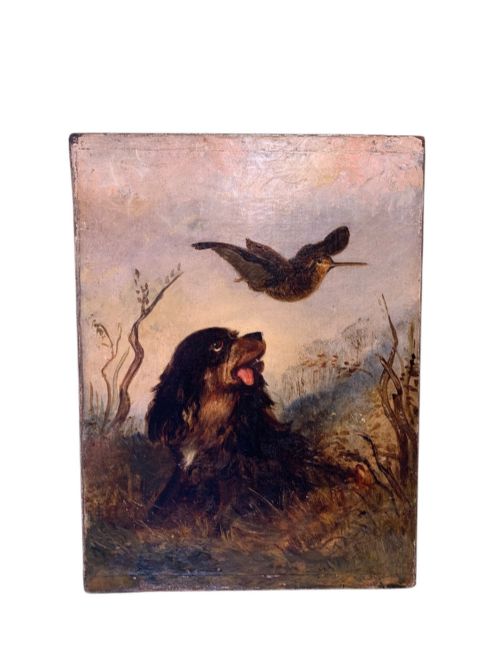
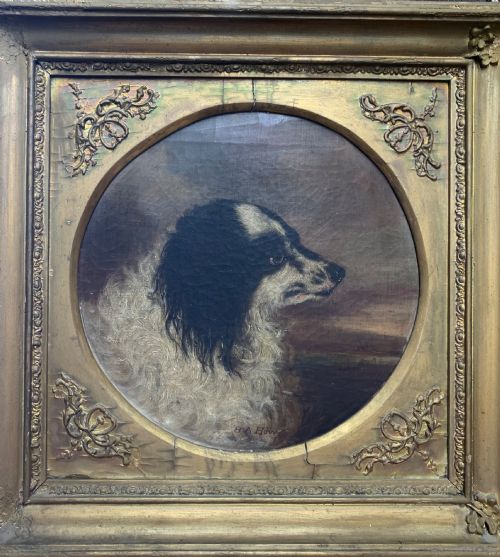
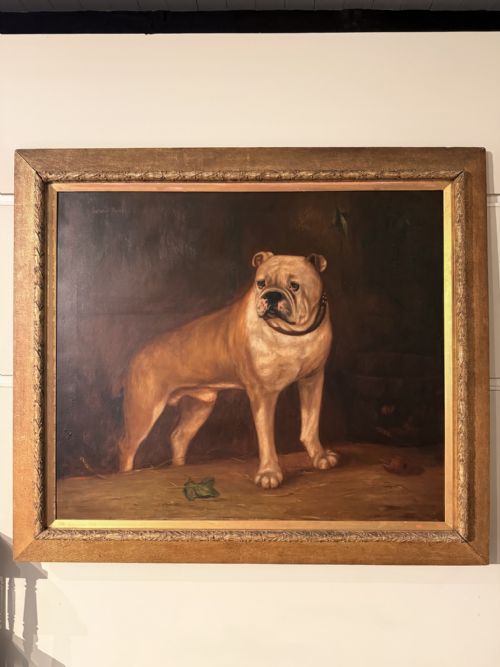
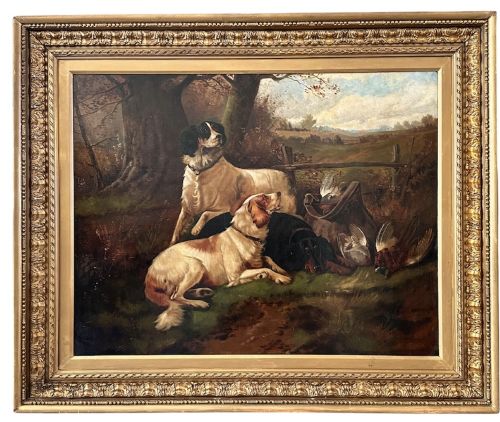
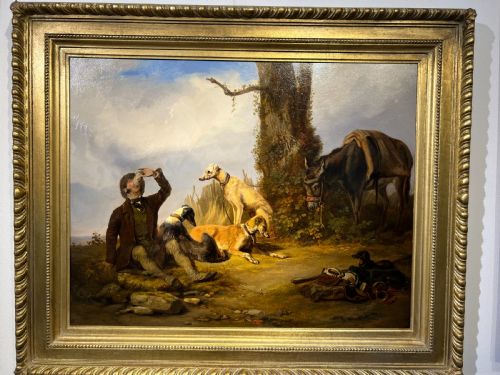


19th Century Sporting Dog Oil
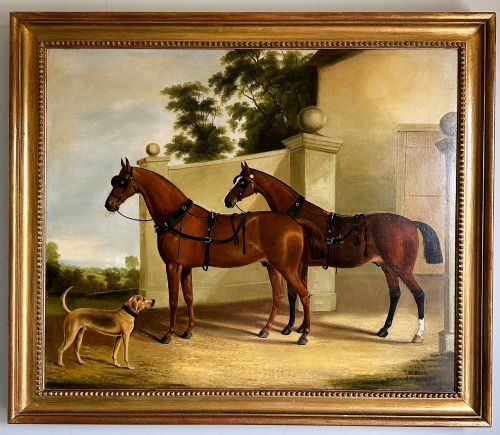
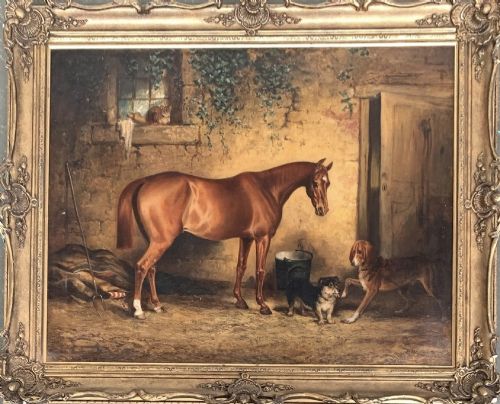
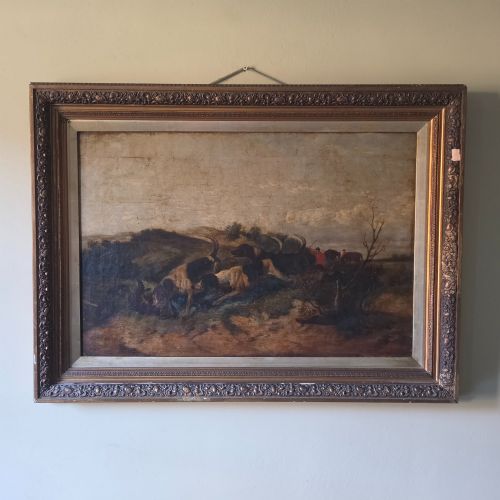
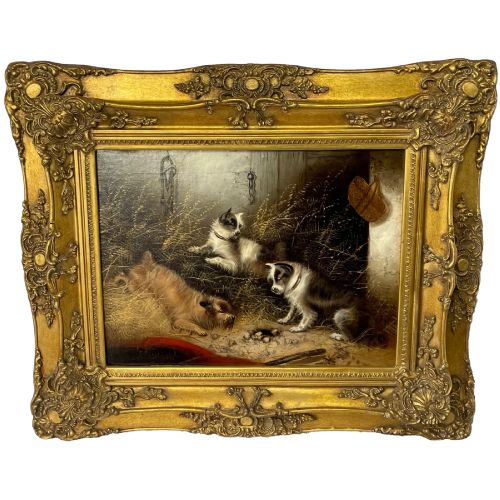
These pieces of 19th century sporting dog oil capture working gundogs, terriers and hounds rendered on canvas or board.
19th Century Sporting Dog Oil
When you search for a 19th century sporting dog oil, you encounter framed canvases and boards depicting hounds, terriers, spaniels and setters in landscapes or country estates. These works reflect the Victorian fascination with field sports, working animals and prized canine companions.
The most common examples on this page date from the Victorian era and span narrative hunting scenes, individual portraits of named dogs, and rustic studies by recognised animal artists. They range from naive folk art depictions to highly detailed academic portraits.
Materials and Construction
These works utilise oil paint applied to woven canvas stretched over wooden frames, or directly onto rigid artist boards.
Finished surfaces are frequently housed within period gesso and giltwood frames, providing structural support and decorative framing typical of the nineteenth century.
Listings span the 19th century and Victorian periods, utilising oil paint on canvas and wood panels.
Factors Separating Quality Tiers
Quality rests upon the artist's ability to render canine anatomy, muscle structure and expression convincingly within a natural landscape.
Works by established nineteenth-century animal painters command attention for their confident brushwork, balanced composition and detailed rendering of fur and light.
Henry Barraud·John Sargent Noble·Sir Edwin Henry Landseer·John Emms·John Frederick Herring Senior·William Barraud·Samuel Raven·George E Sharpe·Colin Graeme Roe·John Trivett Nettleship·Fannie Moody·Edwin Frederic Holt·Robert Cleminson·Henri Schouten·Thomas Blinks·James Ward·Charles Bilger Spalding·Henry Frederick Lucas-Lucas·George Armfield
The 19th Century Sporting Dog Oil Glossary
- Oil on Canvas
- A traditional painting medium where oil paints are applied to a stretched woven fabric support. This combination forms the basis of many nineteenth-century works.
- Giltwood
- Wood carved and coated with gold leaf or metallic powder to create a reflective frame finish. These frames often accompany Victorian oil paintings.
- Gesso
- A plaster-like mixture applied to wooden frames as a smooth base for gilding. It allows intricate moulded decorations to be added around the painting.
- Folk Art
- Art produced by self-taught or naive painters working outside academic traditions. These pieces often display charming simplicity rather than strict anatomical accuracy.
19th Century Sporting Dog Oil: Frequently Asked Questions
What breeds appear in these paintings?
The works depict working gundogs, terriers, bloodhounds, collies and hunting hounds associated with nineteenth-century field sports.
Spaniels, setters and pointers frequently appear alongside game or in country landscapes, reflecting their working roles.
How are these paintings dated?
Dating relies on recorded artist lifespans, costume details in accompanying figures, and stylistic conventions of the Victorian period.
Framing styles and canvas stamps also provide clues to the decade of production.
Where should I hang an oil painting?
These works suit traditional reception rooms, studies or hallways where proper wall space allows comfortable viewing.
Position paintings away from direct sunlight and excessive heat sources to protect the canvas and oil pigments.
Are all these paintings signed?
Many pieces feature artist signatures or monograms, while others remain attributed based on style and subject matter.
Unsigned examples still reflect the distinct techniques of nineteenth-century animal painters.