


19th Century Silver Inkwell
A 19th century silver inkwell is a desk accessory that brings heavy metal and glass to correspondence, combining utility with Victorian ornament.
19th Century Silver Inkwell
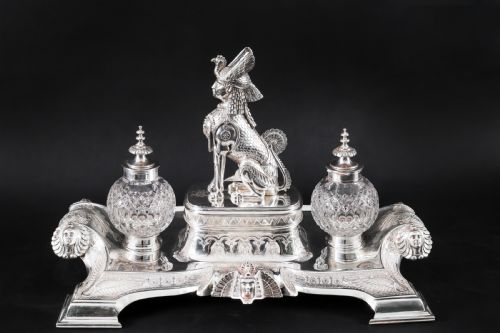
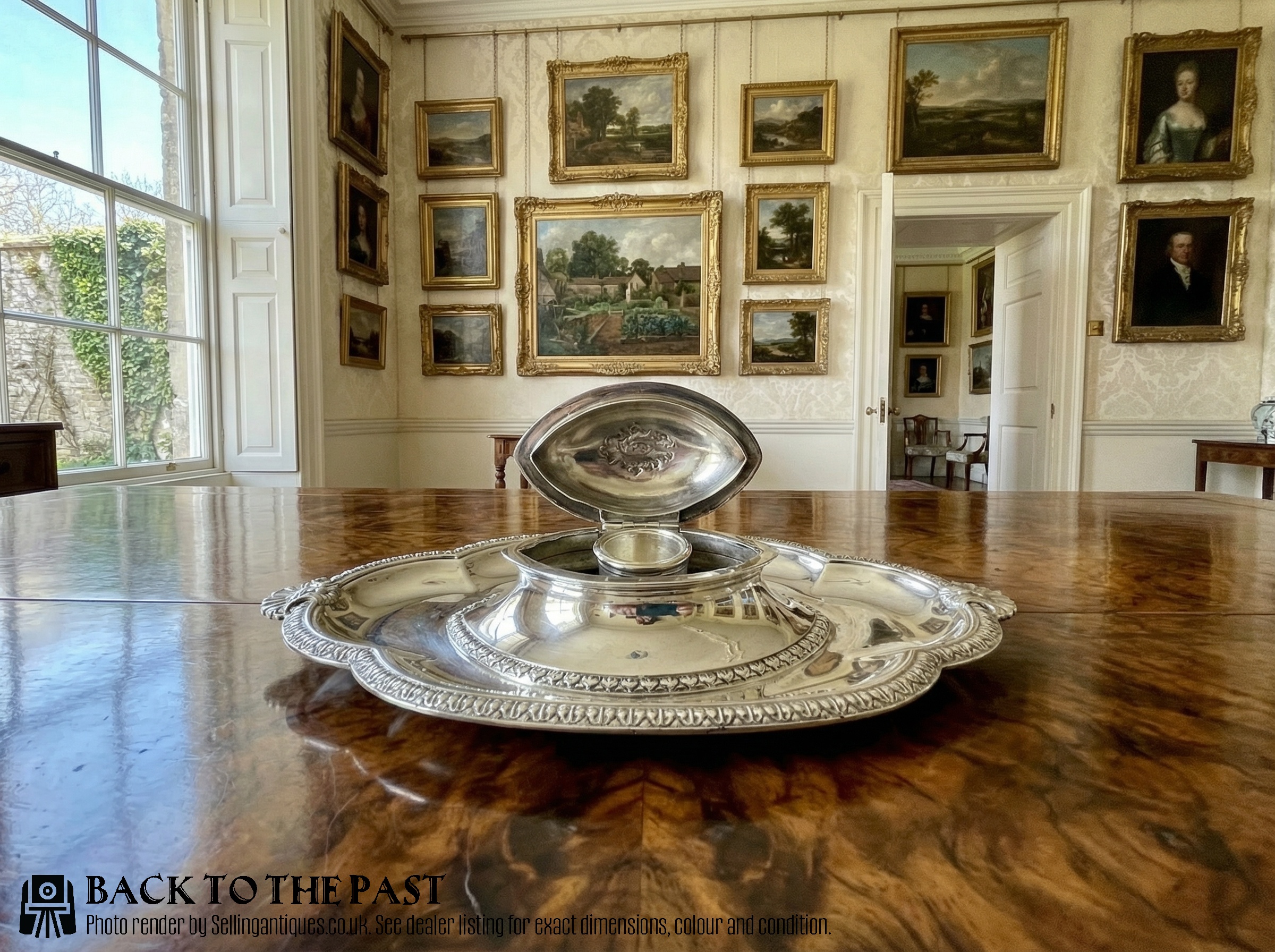
A 19th century silver inkwell encompasses single reservoirs, double inkwells, and elaborate desk stands holding glass or metal containers. The items span the Georgian, early Victorian, and late Victorian periods, moving from restrained classical forms to naturalistic and revivalist designs.
Travel pieces appear alongside stationary desk furnishings, often pairing sterling silver or silver plate with cut glass, horn, brass, and exotic woods like coromandel and satinwood. Makers utilised novelty shapes ranging from armadillos to fruit and dolphins.
Most examples originate from English workshops and silversmiths, reflecting the high period of domestic correspondence when writing desks required dedicated accessories.
Materials and construction
Silversmiths shaped sterling silver and silver gilt through casting, hammering, and engraving, often mounting the metal components onto wooden bases or combining them with cut glass reservoirs. Natural materials such as horn and exotic hardwoods supplied contrasting textures for trays and boxes.
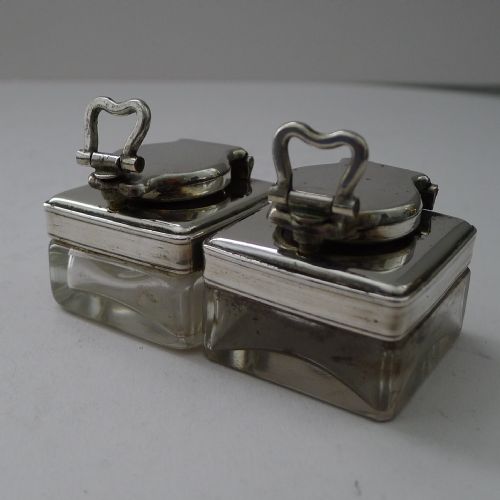
Hinged lids and collars required precision engineering to contain liquid ink securely, particularly in travel pieces designed for portability.
Materials recorded across these listings include sterling silver, silver plate, silver gilt, cut glass, horn, brass, and exotic woods.
Judging quality and execution
Quality rests on the crispness of the chasing and the weight of the silver or silver plate employed in the mountings. Novelty designs and revivalist styles demonstrate varying degrees of sculptural ambition, from simple cast feet to detailed botanical forms.
The integration of materials dictates the standard of the piece, where properly fitted glass inserts, matching secondary woods, and clear hallmarks denote higher workshop standards.
Wilkinson and Co·Robert Garrard·Rupert Favell·Robert Hennell
The 19th Century Silver Inkwell Glossary
- Inkstand
- A complete desk stand usually incorporating one or more inkwells alongside pen trays and sometimes sanders. These larger pieces anchored the writing table.
- Silver Gilt
- Silver that has been coated with a thin layer of gold on its surface. This technique provided a rich yellow finish while maintaining a silver base.
- Sterling Silver
- A silver alloy containing substantial pure silver combined with other metals for durability. Hallmarks on these pieces confirm the metal standard.
- Novelty Inkwell
- An ink container shaped to resemble an animal, fruit, or object rather than a standard vessel. These whimsical pieces reflect Victorian taste.
- Cut Glass
- Glass shaped and patterned through abrasive cutting wheels. It formed the heavy transparent reservoirs of many desk pieces.
19th Century Silver Inkwell: Frequently Asked Questions
What is a 19th century silver inkwell?
A 19th century silver inkwell is a desk accessory made during the Georgian and Victorian eras, designed to hold liquid ink for writing.
These pieces combine silver mounts with glass, wood, or horn, ranging from simple travel inkpots to elaborate desk stands.
How do travel inkwells differ?
Travel inkwells were built for portability, featuring secure screw caps or tightly fitted hinged lids to prevent leaks inside luggage.
They often appear alongside fitted writing boxes or as standalone pocket pieces from the early Victorian period.
How are periods identified?
Periods are identified through hallmarks, registration dates, and stylistic markers such as Egyptian Revival or Victorian naturalism.
Design trends shifted from Georgian restraint toward ornate botanical and animal novelty shapes as the century progressed.