

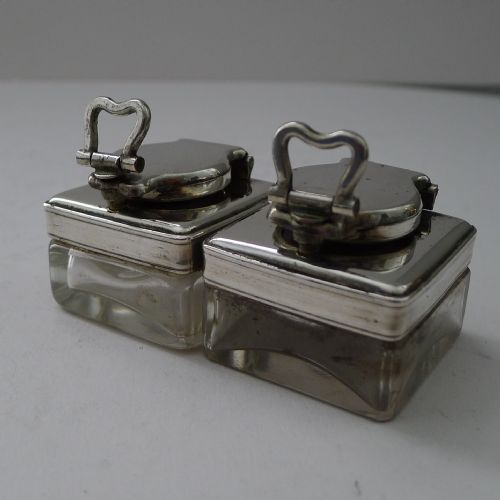


19th Century Silver Inkstand
These 19th century silver inkstand pieces are desk accessories designed to hold writing materials, bringing period craftsmanship and practical elegance to a modern workspace.
19th Century Silver Inkstand
A 19th century silver inkstand is a functional desk accessory that organises writing implements for correspondence. You will most frequently encounter Victorian examples alongside George IV and 19th century iterations.
These items take various forms including standalone stands, travel inkwells, double inkwells, and fitted trays. They incorporate desk accessories alongside materials like cut glass, sterling silver, and silver plate.
Makers utilise styles ranging from standard Victorian and Victorian Naturalism to Egyptian Revival and Victorian Scottish. The pieces reflect the diverse decorative tastes of the nineteenth century.
Materials and construction
Silversmiths constructed these pieces using sterling silver, silver plate, and silver gilt, frequently pairing metalwork with cut glass. Workshops also integrated horn, brass, and wood such as coromandel and satinwood.
The manufacturing process involved combining cast or chased silver mounts with fitted glass wells and wooden or metal trays. Specialised items like travel inkwells required secure fittings to contain ink during movement.
19th Century Silver Inkstand Retail Price Guide 2026
Typical asking prices for 19th century silver inkstand among the pieces listed under this phrase on Sellingantiques today, from the lower quarter to the upper quarter. They describe what is for sale here now, not the wider market.
Some Victorian desks featured inkstands shaped as apples, pears, and pomegranates.
Assessing quality
Quality in a 19th century silver inkstand is determined by the complexity of the design and the execution of the metalwork. Pieces featuring naturalistic forms like fruit or figural elements such as dolphins demonstrate greater artistry than plain trays.
The integration of multiple materials, including glass, wood, and silver gilt, influences the overall sophistication of the object. Maker attribution also plays a role in distinguishing standard utility pieces from workshop creations.
Wilkinson & Co·Robert Garrard·Rupert Favell·Robert Hennell·J Dixon
The 19th Century Silver Inkstand Glossary
- Inkstand
- A tray or stand designed to hold inkwells, quill pens, and other writing equipment. These objects sat upon desks in studies and libraries.
- Silver Gilt
- Silver that has been coated with a thin layer of gold on its surface. This technique provided a rich, golden appearance while utilising a silver base.
- Cut Glass
- Glass shaped and patterned by abrasive cutting wheels to create facets and decorative motifs. It was commonly used for the inkwells fitted into silver trays.
- Sterling Silver
- A silver alloy containing a high proportion of pure silver combined with other metals for durability. It served as the primary material for high-grade nineteenth-century desk wares.
19th Century Silver Inkstand: Frequently Asked Questions
What is a 19th century silver inkstand?
A 19th century silver inkstand is a desk accessory created to hold inkwells and writing implements. These pieces served a functional purpose in writing correspondence before the widespread use of fountain pens.
Craftsmen produced them in various metals and styles, incorporating materials like cut glass and wood. They reflect the prevalent design movements of the Georgian and Victorian eras.
How were travel inkwells used?
Travel inkwells were designed for portability, allowing writers to carry ink securely while away from a fixed desk. They typically featured secure mountings and sealed glass containers to prevent spills.
These portable items were produced in silver plate and sterling silver during the early and mid-Victorian periods.
What styles are common on these pieces?
The listings show styles including Victorian Naturalism, Egyptian Revival, and Victorian Scottish. These designs incorporated motifs from nature, ancient civilizations, and regional aesthetics.
Makers applied these styles to both travel items and large library desk stands.
How do I identify a Victorian piece?
Victorian pieces correspond to the nineteenth century and often feature hallmarks or registration dates associated with the period. The evidence includes pieces dated from 1828 through 1899.
Stylistic indicators such as Egyptian Revival or naturalistic fruit motifs also point to specific decades within the Victorian era.