






Gold Inkstand
A gold inkstand brings desk accessories into focus, offering a gilded bronze, ormolu, or silver gilt centrepiece for correspondence.
Gold Inkstand
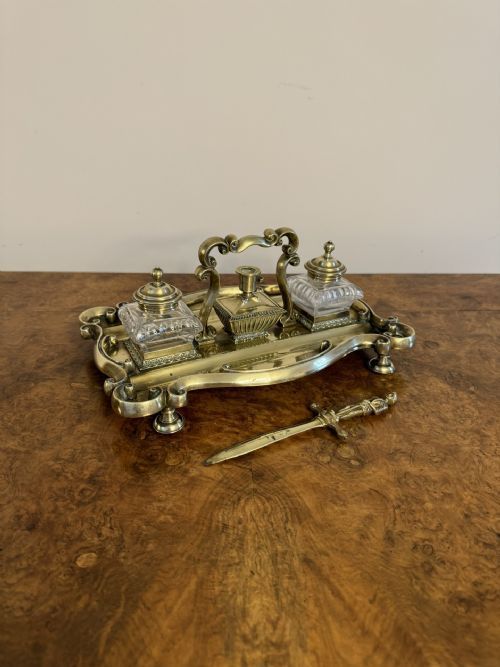
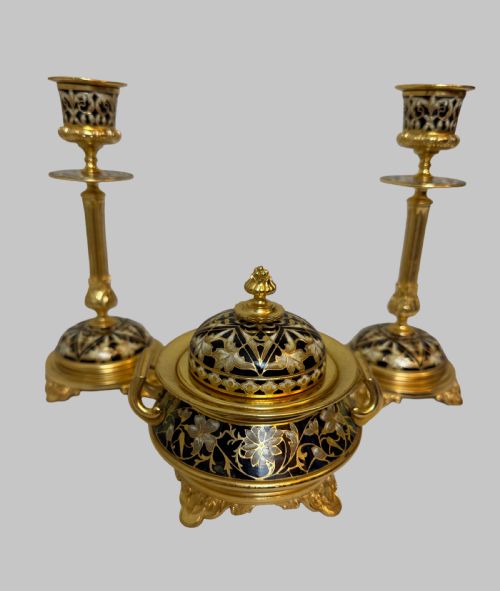
A gold inkstand serves as a desk accessory designed to hold ink and pens, appearing on this page in forms ranging from simple inkwells to elaborate desk sets with candlestands. These pieces date across the nineteenth century into the early twentieth century, spanning Georgian, Victorian, Edwardian, and Art Nouveau periods.
Buyers encounter French Empire and Rococo Revival designs alongside English novelties featuring animals like parrots, bulldogs, and stags. Materials cluster around cast bronze, ormolu, and silver gilt, frequently mounted on marble or combined with glass components.
How they were made
Metalwork forms the core of these pieces, utilising bronze, brass, or gilt bronze cast into figural or architectural shapes. Ormolu and gold leaf treatments provide the metallic lustre, while champlevé enamelling or hand painting adds colour and pattern.
Bases incorporate carved Sienna marble or mahogany wood to anchor the heavier metal inkwells. Glass liners hold the fluid within the metal housings, and ceramic elements such as porcelain or pottery appear in specific regional examples.
Gold Inkstand Retail Price Guide 2026
Typical asking prices for gold inkstand among the pieces listed under this phrase on Sellingantiques today, from the lower quarter to the upper quarter. They describe what is for sale here now, not the wider market.
Several nineteenth-century bronze desk pieces feature original glass eyes peering out from parrots, stags, and bulldogs.
What varies in quality
The precision of the metal casting dictates the definition in figural subjects, separating sharp animal details from softer secondary work. Heavier gilding and the preservation of original fire gilt surfaces distinguish superior examples from simpler brass or painted items.
The integration of contrasting materials, such as fitted marble bases, matched glass inserts, and well-preserved ceramic components, marks the distinction between standard desk furniture and ambitious studio pieces.
Flight Barr And Barr·Marson And Jones·Albert Marionnet·Robert Hennell·Bergmann
The Gold Inkstand Glossary
- Ormolu
- Gilded bronze produced through a mercury gilding process, creating a durable golden finish common on French nineteenth-century pieces. This technique imparts a distinct warm metallic tone.
- Standish
- An alternative term for an inkstand that includes space for pens, wafers, and sand alongside the inkpot. These portable desk accessories kept writing equipment organised.
- Silver gilt
- Silver objects coated with a thin layer of gold, providing the lustre of solid gold while maintaining structural strength. This finish appears frequently on regulated hallmarked desk sets.
- Champlevé
- An enamelling technique where troughs are dug into a metal surface and filled with vitreous enamel before firing. It creates vibrant coloured patterns across bronze mounts.
- Novelty inkwell
- An inkstand shaped to resemble an animal, fruit, or human figure rather than a standard geometric container. Victorian makers produced numerous naturalistic examples with glass eyes.
Gold Inkstand: Frequently Asked Questions
What is a gold inkstand?
A gold inkstand is a desk accessory made from gilded bronze, ormolu, brass, or silver gilt, designed to hold inkwells and pens for writing.
These pieces range from simple single inkwells to large desk sets incorporating candlesticks, letter holders, and marble bases.
How do you use an inkstand?
An inkstand holds the liquid ink securely in a glass or ceramic liner fitted inside the metal or marble housing, preventing spills on the desk.
The accompanying pen rests and trays keep writing instruments close at hand during correspondence.
How old are these inkstands?
The pieces listed span the eighteenth, nineteenth, and early twentieth centuries, covering Georgian, Victorian, Edwardian, and Art Nouveau periods.
Nineteenth-century French and English workshops produced the majority of these gilt bronze and ormolu designs.
What styles are available?
Styles include French Empire, Rococo Revival, and Art Nouveau, alongside naturalistic Victorian novelty pieces shaped as animals and fruit.
Materials range from polished brass and Sienna marble to champleve enamel and painted porcelain.