

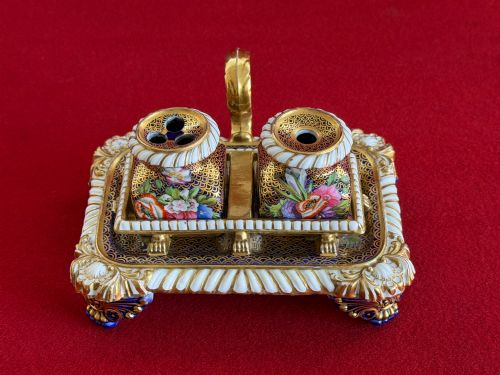



Antique Gilded Writing Set
An antique gilded writing set brings desk accessories in porcelain and ormolu to the table, offering a glimpse of writing desks from the Georgian and Victorian eras.
Antique Gilded Writing Set
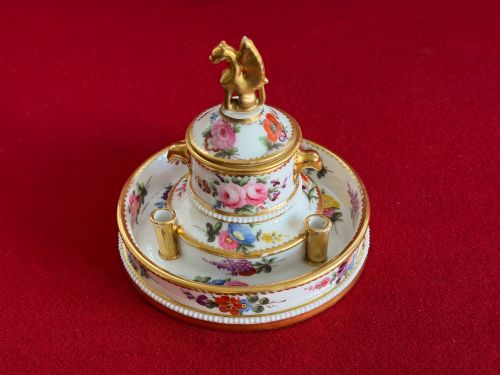
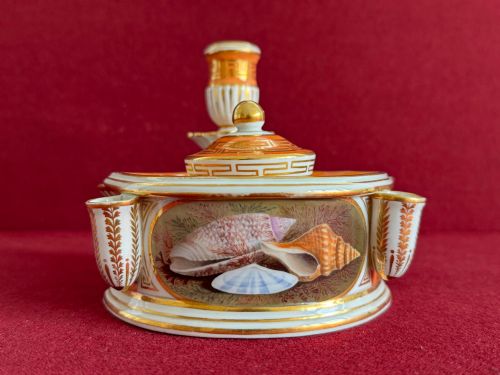
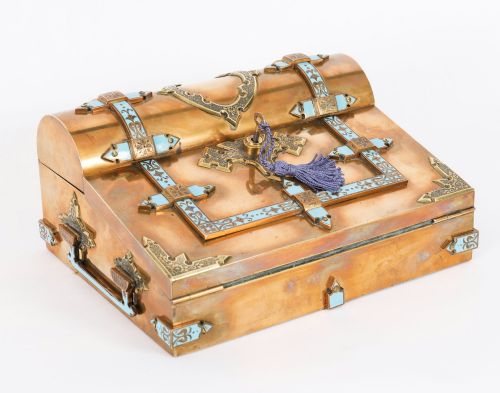
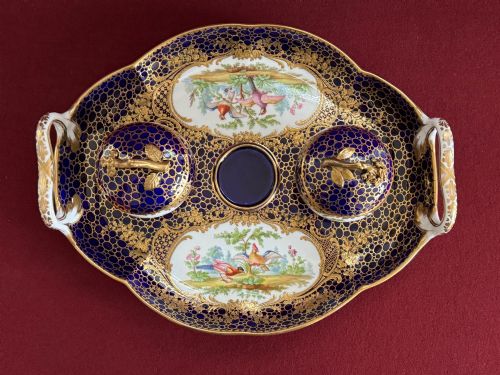
An antique gilded writing set encompasses desk accessories, inkstands, and inkwells created during the Georgian, Regency, and Victorian periods. These objects served the daily correspondence of homes and offices, combining utility with decorative metalwork and ceramics.
The pieces appearing on this page span from French bronze and marble stands to English porcelain vessels. Makers from Worcester and Germany contributed porcelain inkstands, while French foundries produced ormolu and gilded bronze designs.
Forms range from simple desk top inkwells to elaborate inkstands featuring candlestands, fruit motifs, and figural groups such as playing kittens or busts. Each version reflects the stylistic shifts from Regency classicism through Rococo Revival and Art Nouveau.
How they were made
Makers utilised porcelain bodies moulded into botanical or classical shapes, applying hand-painted details and gold leaf highlights before firing. Porcelain works from factories like Spode, Minton, and Flight and Barr show the refined ceramic techniques of the period.
Metal components rely on bronze, brass, and ormolu, shaped through casting and then treated with mercury gilding or gold leaf application. Marble and onyx provide heavy, stable bases for these bronze and ormolu desk sets.
Papier-mâché and specialised materials also appear in writing equipment, alongside cast silver gilt components shaped into naturalistic fruit forms such as apples and pears.
Antique Gilded Writing Set Retail Price Guide 2026
Typical asking prices for gilded writing set among the pieces listed under this phrase on Sellingantiques today, from the lower quarter to the upper quarter. They describe what is for sale here now, not the wider market.
Desk sets occasionally depict playful subjects, including bronze kittens at play alongside inkwells.
What varies in quality
The refinement of the casting and chiselling separates standard metalwork from superior examples, particularly in French ormolu and gilded bronze where crisp detail defines the piece. The depth and preservation of the original fire gilding determine the visual richness of the metal surface.
Ceramic quality rests on the crispness of the porcelain body, the precision of the pattern work, and the preservation of the enamel and gilt decorations over time. Factory attribution, such as documented work from Worcester or Sèvres-style Minton pieces, elevates the standing of a ceramic inkstand.
Completeness dictates the integrity of an antique writing set, as many inkstands originally included matched covers, multiple inkwells, and tapersticks or candlestands. The retention of original liners and fitted cases preserves the historical character of the desk set.
Spode·Minton·Flight and Barr·Robert Hennell·Albert Marionnet
The Antique Gilded Writing Set Glossary
- Ormolu
- Finely ground high-carat gold applied to a bronze base using a mercury amalgamation technique. This historic process creates a distinct warm lustre found on French desk accessories.
- Inkstand
- A portable tray or stand holding inkwells, sanders, and pen holders for a writing desk. These vessels formed the centrepiece of formal stationery equipment.
- Schneeballen
- A German porcelain decorating technique featuring dense clusters of small applied floral petals, frequently seen on eighteenth-century covers. It creates a highly textured white surface.
- Silver gilt
- Sterling silver that has been coated with a thin layer of gold. This material combines the weight of silver with a golden finish.
- Gilded bronze
- Bronze metal treated with gold leaf or chemical gilding to produce a golden metallic surface. It provides durability and decorative brilliance for nineteenth-century desk objects.
Antique Gilded Writing Set: Frequently Asked Questions
How were antique inkstands used?
Antique inkstands held liquid ink within ceramic or glass liners protected by fitted metal or porcelain covers. They sat upon writing tables to keep writing implements organised and accessible for letter writing.
Many examples incorporated candlestands for sealing wax or sanders to blot wet ink. Their placement on desks signalled both literacy and social status in the home.
How do I clean gilded bronze?
Gilded bronze requires gentle dusting with a soft, dry brush to remove surface debris without disturbing the metal finish. Moisture and abrasive cleaners should be avoided to protect the historic gold surface.
Professional handling is recommended for pieces with delicate patination or mercury gilding. Proper care preserves the original lustre of the bronze components.
How can I tell the period of a desk set?
The stylistic markers of the metalwork and ceramics reveal the date of manufacture, shifting from Regency classicism to Victorian naturalism and Art Nouveau. Materials such as ormolu, porcelain, onyx, and papier-mâché align with specific nineteenth-century design movements.
Maker marks, factory patterns, and signatures stamped on the bronze or porcelain provide further chronological evidence. Comparing these details with documented pieces clarifies the era.