
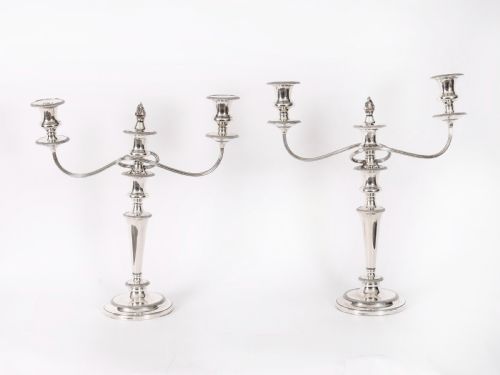


19th Century Silver Candlesticks
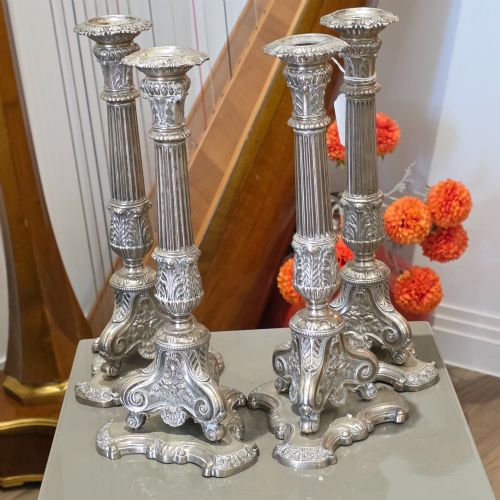
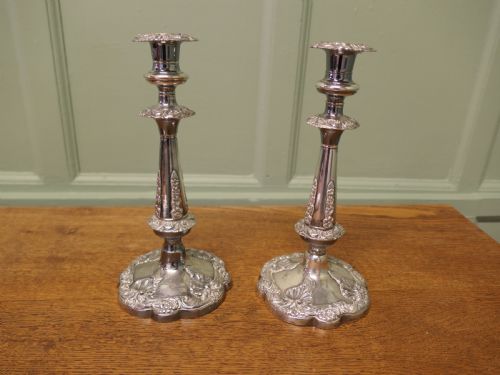
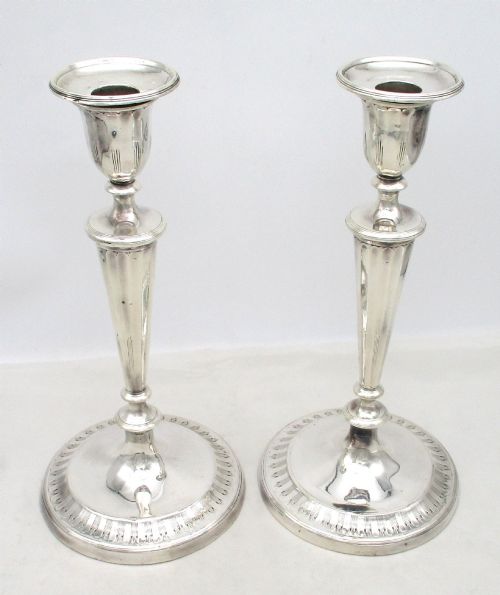
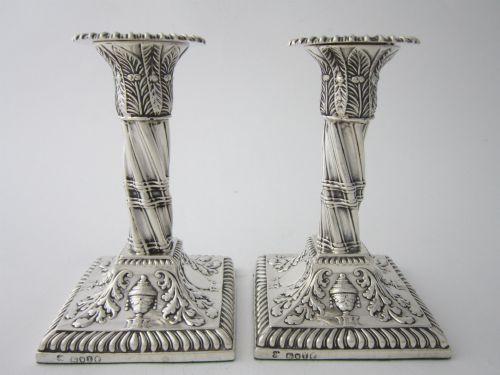
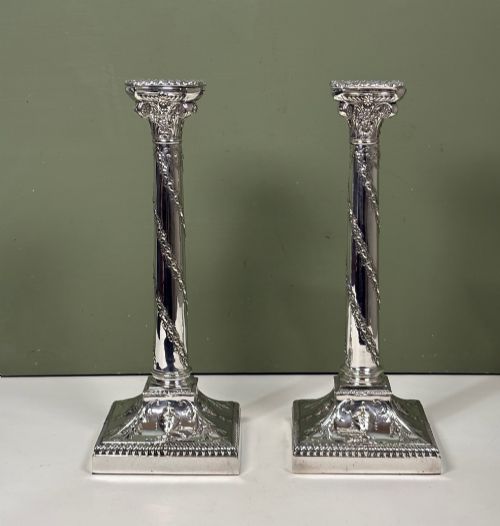
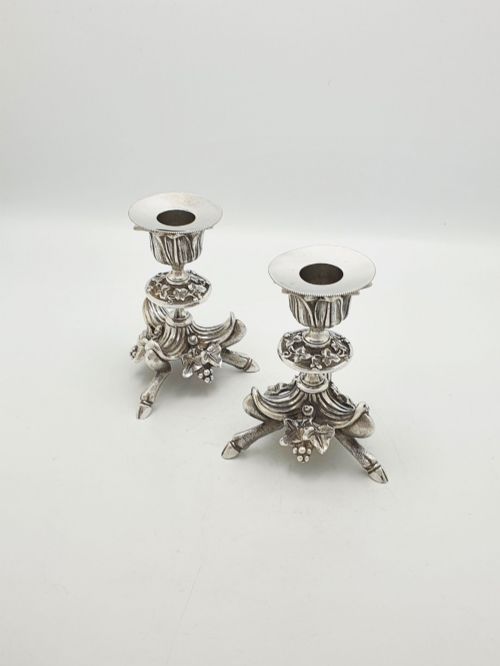
These 19th century silver candlesticks bring substantial weight and considered period design to a dining table or mantelpiece.
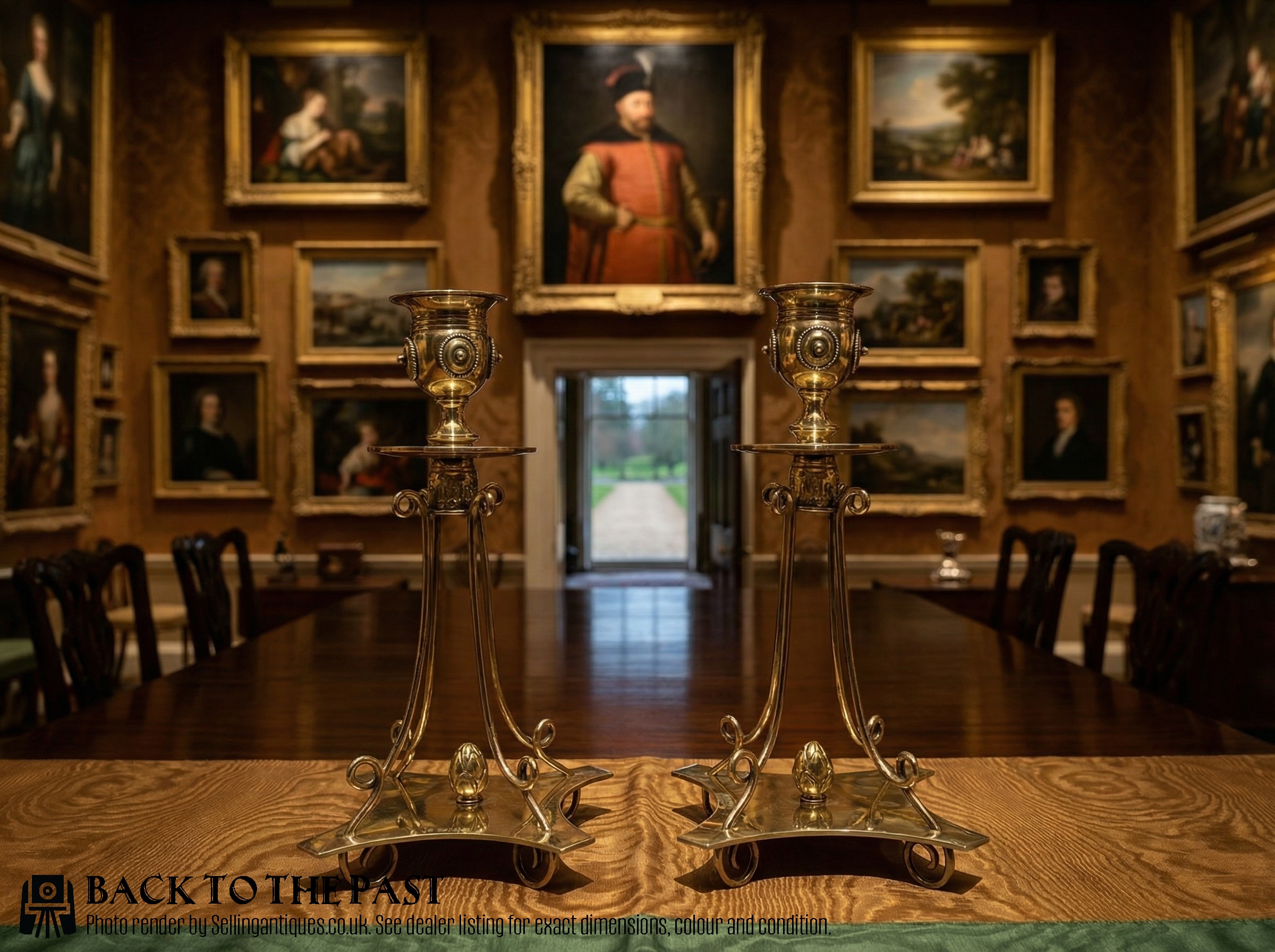
19th Century Silver Candlesticks
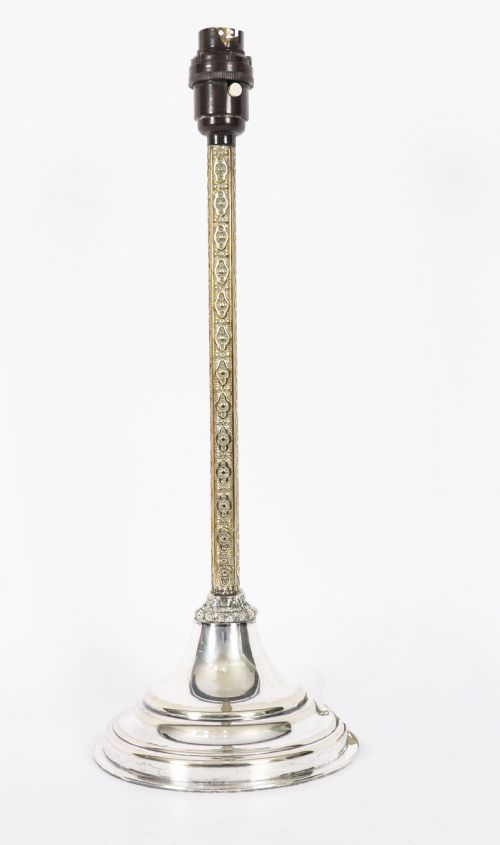
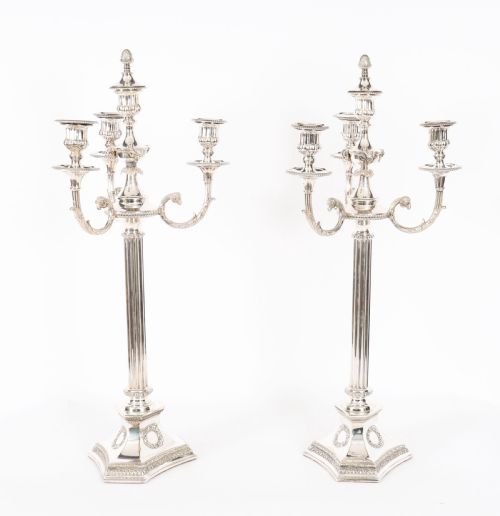
When you search for 19th century silver candlesticks, you encounter a wide selection spanning the Victorian era and earlier decades, including matching pairs and larger sets of four. The assortment includes standard candlesticks, chambersticks designed for carrying, and multi-light candelabra or table lamps adapted from lighting forms.
Most pieces you meet on this page are silver plated or utilise Old Sheffield plate, alongside sterling silver examples bearing hallmarks from assay offices like Sheffield and London. Styles draw heavily on Neoclassical, Classical Revival, and French ecclesiastical vocabulary, reflecting the aesthetic shifts of the Victorian period.
Materials and construction methods
Makers shaped base metals such as brass, copper, and bronze, then applied silver plating or created solid sterling silver structures. Old Sheffield plate involved fusing a thin sheet of silver to a copper core, while electroplated nickel silver emerged later in the century.
Details include parcel gilt accents, silver leaf on wooden structures, horn inserts, and satin glass components on peg oil lamps. Casting and soldering joined components such as Corinthian columns, figural bases, and sconces together.
Travelling candlesticks neatly cased themselves away so an earl could read in bed without setting fire to the curtains.
Distinguishing quality across pieces
Quality rests in the crispness of cast ornament, such as the fluting on Corinthian columns or the modelling of figural bases. Heavy gauge metal and clean proportions distinguish superior examples from simpler production pieces.
Makers' marks and hallmarks provide clear indicators of origin and workshop standards, while intact original plating or parcel gilt surfaces preserve the intended visual impact.
Conrad Eduard Mappe·Mappin & Webb·Garrard & Co·Harrison Brothers & Howson·Goldsmiths·Ferdinand Barbedienne·Palmer & Co·Thomas Bradbury·Elkington
The 19th Century Silver Candlesticks Glossary
- Old Sheffield plate
- A composite material made by fusing a layer of silver to a copper base before fabrication. This technique creates a distinctive edge where the copper core shows slightly.
- Chamberstick
- A low candlestick fitted with a handle and a small pan to catch melting wax. These were carried to light the way through dark hallways at night.
- Candelabra
- A branched lighting fixture holding multiple candles on separate arms. Many 19th-century examples convert between single sticks and multi-light configurations.
- Parcel gilt
- Silver objects with specific areas highlighted in gold applied to the surface. This technique creates contrast between the white silver and the warm gold tones.
- Pricket
- A sharp metal spike set in the centre of a candle pan to hold a thick church candle in place. These appear frequently on French ecclesiastical pieces.
19th Century Silver Candlesticks: Frequently Asked Questions
How do I clean antique silver candlesticks?
Use a soft cloth and a gentle, non-abrasive silver polish formulated for antiques. Avoid vigorous rubbing that can wear through thin silver plating or Old Sheffield plate.
Take care around weighted bases and delicate junctions where moisture might seep inside the structure.
What is the difference between sterling and silver plated?
Sterling silver consists of a solid silver alloy governed by strict legal purity standards, usually bearing official town and maker hallmarks. Silver plated items have a thin layer of silver applied over a base metal such as copper, brass, or nickel silver.
Plated items offer the appearance of solid silver at a different weight and construction standard.
How can I date a pair of candlesticks?
Examine any stamped hallmarks or maker marks that correspond to specific registry dates or assay office records. Stylistic clues, such as Neoclassical columns or heavy Victorian cast ornament, also point to specific decades.
Construction techniques, such as the presence of Old Sheffield plate versus later electroplating, narrow the manufacturing period further.
Were all of these meant for dining tables?
While many candlesticks and candelabra served as table centrepieces for dining, others had distinct domestic roles. Chambersticks were portable units for bedrooms and hallways, while tall floor or table lamps were adapted later for oil or electricity.
Ecclesiastical prickets served church altars rather than domestic rooms.