




19th Century Shop Counter
A 19th century shop counter provides practical workspace and period presence, bringing authentic commercial heritage directly into domestic or retail interiors.
19th Century Shop Counter
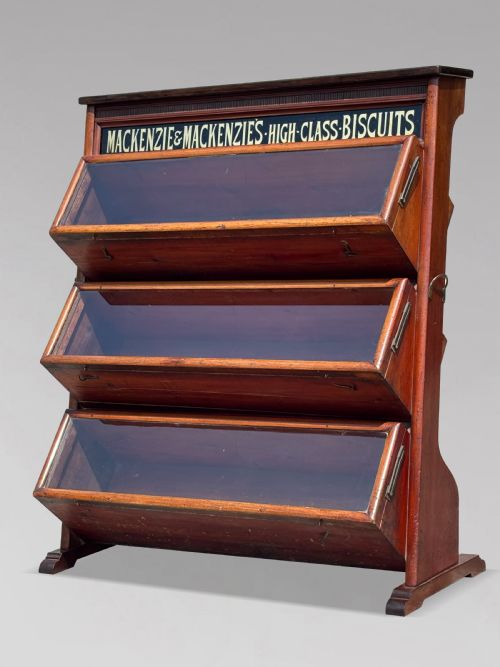
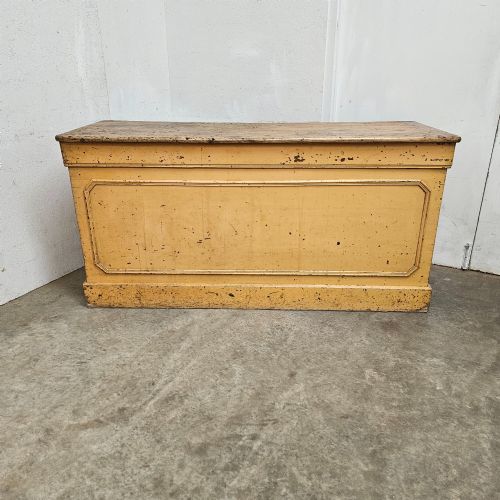
A 19th century shop counter spans robust drapers tables, glazed display cabinets, and painted commercial units originating from English, French, and Spanish workshops. These substantial items served daily trade in drapery, grocery, and millinery establishments before finding new life in modern spaces.
The version most commonly met on this page is the French drapers table, often constructed in oak or pine with a long surface suited to contemporary use as a kitchen island or sideboard. Alongside these stand dedicated retail display cases, glazed counters, and specialised counters bearing the marks of active trade.
The selection extends to related commercial accessories and smaller fixtures, including apothecary boxes, balance scales, and tole tea canisters. These diverse forms share a direct lineage from Victorian and continental shops, retaining the utilitarian build quality demanded by nineteenth-century merchants.
Materials and construction
Makers utilised durable timbers such as oak, mahogany, pine, elm, and lignum vitae to withstand heavy daily commercial use. These woods were joined with robust framing techniques, ensuring the structural longevity evident in surviving examples.
Surface finishes range from original paint schemes and aged patinas to polished wood and bleached oak surfaces. Secondary materials like brass, iron, and glass appear in display glazing, counter bells, and hardware fittings.
19th Century Shop Counter Retail Price Guide 2026
Typical asking prices for 19th century shop counter among the pieces listed under this phrase on Sellingantiques today, from the lower quarter to the upper quarter. They describe what is for sale here now, not the wider market.
English and French origins are well represented, featuring both utilitarian work tables and glazed retail display cases.
Evaluating quality and authenticity
Quality rests upon the integrity of the original surface and the honesty of the timber. Pieces retaining their early paintwork or untouched polished wood stand apart from those altered by aggressive stripping or modern restoration.
Proportion and scale dictate the success of a piece, with monumental lengths and well-balanced proportions commanding greater interest. The crispness of original hardware, glass panes, and maker details further distinguishes superior examples.
John Stow Ltd of Bradford·Trussant & Cie·Pinto Collection
The 19th Century Shop Counter Glossary
- Drapers table
- A long, wide table historically utilised for measuring and folding fabric in cloth shops. They typically feature deep timber tops and straightforward bases designed for practical utility.
- Tole
- Lacquered or painted metalware used for storage containers such as tea canisters and grocery hoppers. It often displays decorative motifs including Chinoiserie.
- Treen
- Small handmade wooden household and commercial objects turned on a lathe, such as string holders and coin bowls. They display the dense grain of hardwoods like lignum vitae.
- Butchers block
- A thick, heavy wooden block used for food preparation in butcher shops. These items show deep surface wear from active commercial chopping.
- Display cabinet
- A glazed case designed to showcase merchandise securely to customers. They combine timber frames with glass panels for maximum visibility.
19th Century Shop Counter: Frequently Asked Questions
How do I use a shop counter at home?
A 19th century shop counter works exceptionally well as a kitchen island, hallway console, or generous sideboard. Their robust construction and deep storage surfaces suit modern domestic routines.
Positioning them away from direct heat sources helps preserve historic timber and original painted finishes over years of daily interaction.
What wood types are most common?
Oak and pine dominate the larger drapers tables and counters, offering structural strength and versatile grain patterns. Mahogany and elm also appear frequently in specific regional pieces.
Hardwoods like lignum vitae were reserved for smaller treen items such as string dispensers and coin bowls due to their extreme density.
Are painted finishes usually original?
Many pieces retain surviving layers of early or original paint, often showing natural wear from decades of shop use. Such surfaces require gentle cleaning rather than chemical stripping to maintain historical integrity.
Unpainted examples generally display polished wood or bleached oak patinas achieved through age and light exposure.
How do I clean a glazed display case?
Glass panels benefit from careful wiping with a mild, non-abrasive cleaner applied to a cloth rather than sprayed directly onto the wood frame. This protects fragile antique timber and surrounding joinery.
Interior shelving and timber surfaces should be dusted with a dry, soft cloth to avoid disturbing the aged patina.
What is the difference between a drapers table and a counter?
Drapers tables generally offer open framework beneath a long, wide wooden top designed for laying out textiles. Shop counters more often incorporate enclosed storage, drawers, or glazed display sections facing the customer.
Both types share a heavy-duty 19th century commercial build intended to withstand constant public interaction.