



Rustic French Shop Counter
A rustic french shop counter brings genuine commercial history and sturdy workspace utility into a modern kitchen or interior.
Rustic French Shop Counter
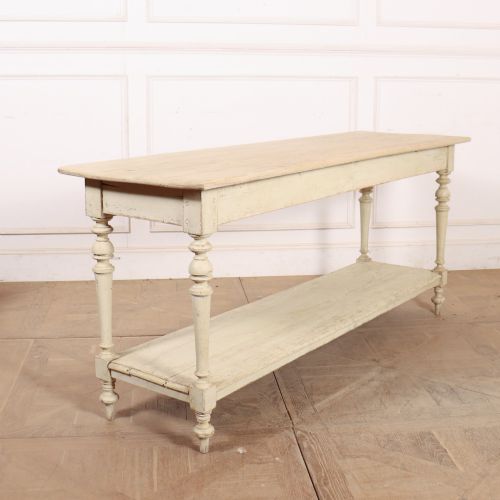
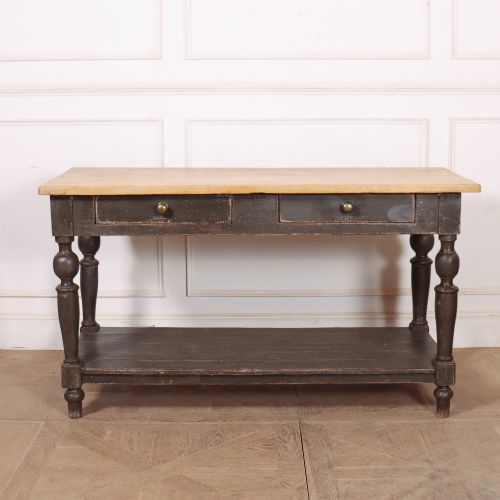
A rustic french shop counter encompasses heavy workspace furniture built for nineteenth-century trade, predominantly appearing as drapers tables, panelled oak counters, and banks of drawers. These pieces served tradespeople in groceries, draperies, and tailors shops across France during the nineteenth century, utilising utilitarian forms designed for daily retail service.
The varieties most commonly met on this page include pine and oak drapers tables, often featuring long linear tops above open lower shelves or banks of multiple small drawers. Buyers also encounter specialised retail items such as butchers blocks, grocers balance scales, and tobacco storage tins that completed the nineteenth-century shop interior.
Originating from provincial French workshops, these items display the honest construction methods of French country and industrial design. Their generous proportions and practical layouts make them sought after for contemporary domestic spaces requiring substantial surface area and storage.
Materials and construction
Makers constructed these counters primarily from sturdy native timbers such as pine and oak, selected for their ability to withstand heavy daily commercial use. Surfaces frequently exhibit original paint finishes, or conversely, a clean bleached oak appearance achieved through historical stripping and finishing.
Joinery techniques focus entirely on durability, utilising thick timber panels, sturdy legs, and functional hardware in brass and sheet metal. Functional elements such as banks of drawers and panelled cabinetry demonstrate straightforward carpentry intended for practical longevity rather than decorative display.
Rustic French Shop Counter Retail Price Guide 2026
Typical asking prices for rustic french shop counter among the pieces listed under this phrase on Sellingantiques today, from the lower quarter to the upper quarter. They describe what is for sale here now, not the wider market.
Pine and oak dominate the material records, supported by brass hardware, sheet metal, and original painted finishes across nineteenth-century forms.
Quality variations in commercial furniture
The upper tier of these pieces is distinguished by substantial proportions, such as monumental four-metre lengths, and the survival of original paint surfaces that record decades of commercial history. Timber selection also dictates grade, with dense, mature oak framing and heavy pine construction commanding greater presence than lighter decorative consoles.
Proportion, scale, and functional complexity separate standard utility tables from exceptional examples like multi-drawer banks and signed butchers blocks. Original hardware, intact panelled construction, and well-proportioned lower tier shelving elevate the integrity of a piece.
Trussant & Cie
The Rustic French Shop Counter Glossary
- Drapers Table
- A long, narrow table historically used in fabric shops for measuring and displaying cloth. These pieces feature deep proportions and often include lower staging shelves.
- Bleached Oak
- Timber that has been treated to lighten its natural tone, exposing the grain. This finish provides a brighter appearance while retaining the hard-wearing properties of oak.
- Butchers Block
- A heavy, thick-topped cutting table built for butchery trade. They utilise dense end-grain or solid timber blocks designed to absorb heavy impacts.
- Panelled Counter
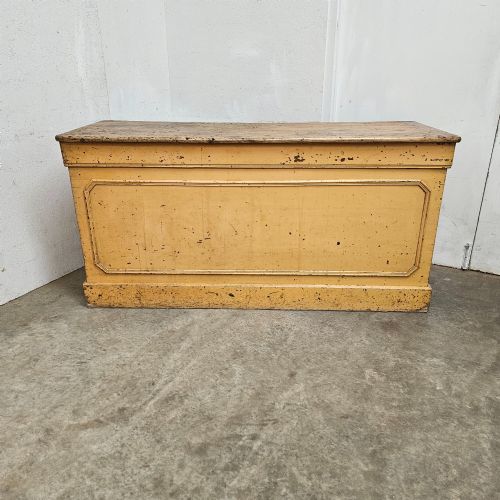
- A shop counter featuring wooden panels inset into a heavier framework. This method prevents warping and adds structural rigidity to large front-facing surfaces.
- Shop Counter
- A primary retail fixture designed to face customers during transactions. They combine display space on top with storage capacity on the merchant side.
Rustic French Shop Counter: Frequently Asked Questions
What rooms suit a rustic french shop counter?
These large pieces find a natural home in spacious kitchens functioning as central islands, or in hallways providing generous surface space. Their robust build allows them to handle demanding daily use.
In living areas or studies, they serve as substantial sideboards or writing desks with deep storage capacity. The extended length requires careful measuring of doorways and floor plans before placement.
How do I care for original painted wood?
Maintenance requires gentle dusting with a dry or slightly damp cloth to protect fragile nineteenth-century pigment layers. Avoid modern chemical solvents that can strip historic finishes.
Applying a neutral wax periodically helps nourish the underlying timber without altering the character of the painted surface. Keeping pieces away from direct heat sources prevents warping in older pine and oak.
What is the difference between drapers tables and shop counters?
Drapers tables generally feature open lower shelving beneath a long, narrow top designed for laying out textiles. They offer lighter visual weight and open accessibility from multiple sides.
Shop counters typically incorporate solid panelling, drawers, or enclosed storage facing the merchant side. They were engineered to secure retail goods and withstand heavier point-of-sale activities.
How can I tell nineteenth century pieces apart?
Nineteenth-century items display hand-cut joinery, pegged framing, and timber wear consistent with pre-industrial production methods. Tool marks and fastener types offer clear indicators of age.
Later reproductions or French style items often lack the organic weathering and dense timber weight found in period pieces. Examining the interior framework and drawer construction reveals the true age of the carpentry.