


19th Century Sheet Music Holder
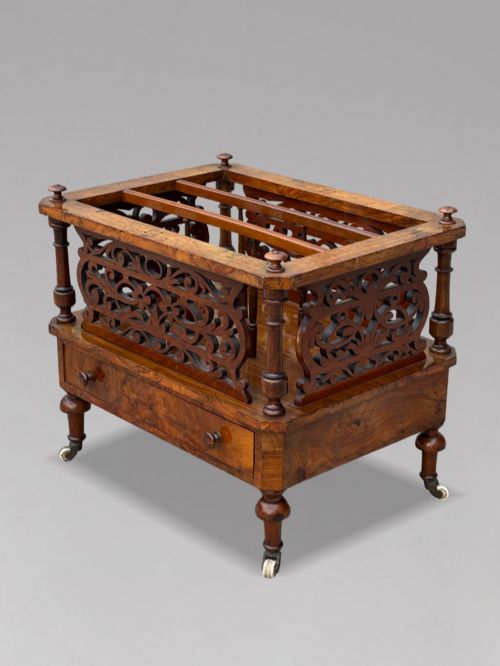
A 19th century sheet music holder organises folios and scores with compartmented divisions and occasional drawers, bringing period craftsmanship into a music room.
19th Century Sheet Music Holder
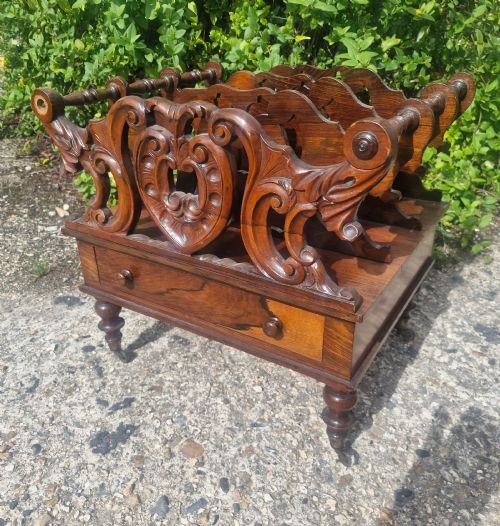
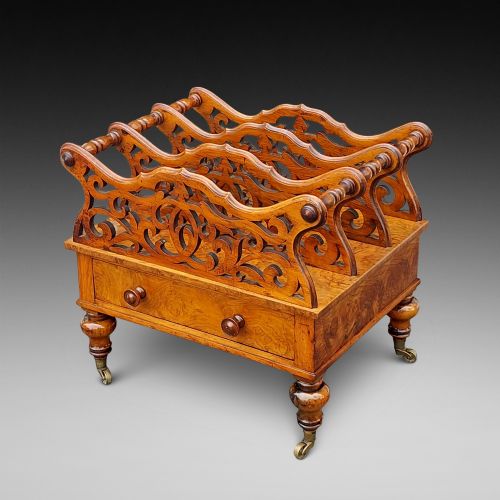
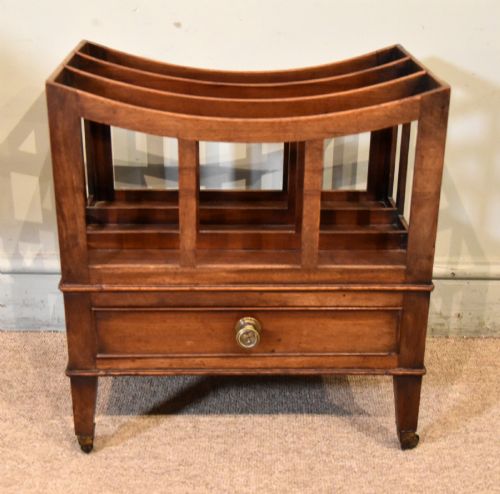
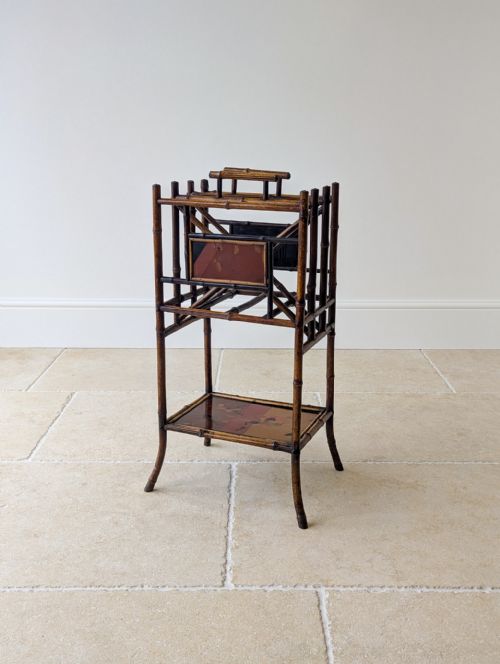
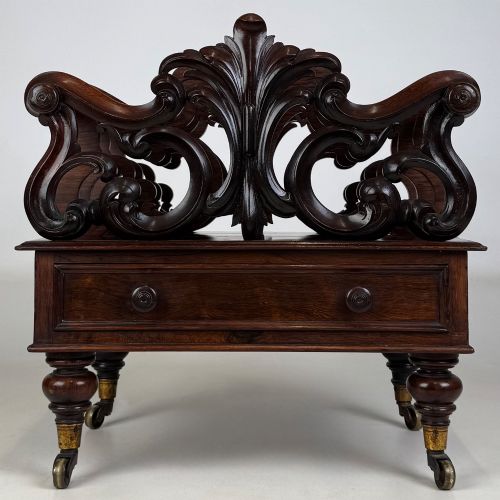
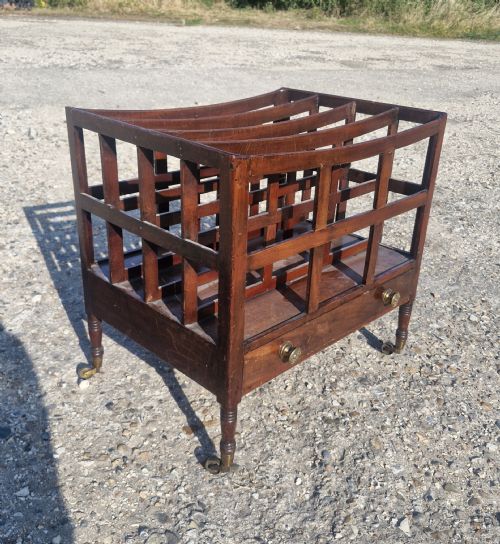
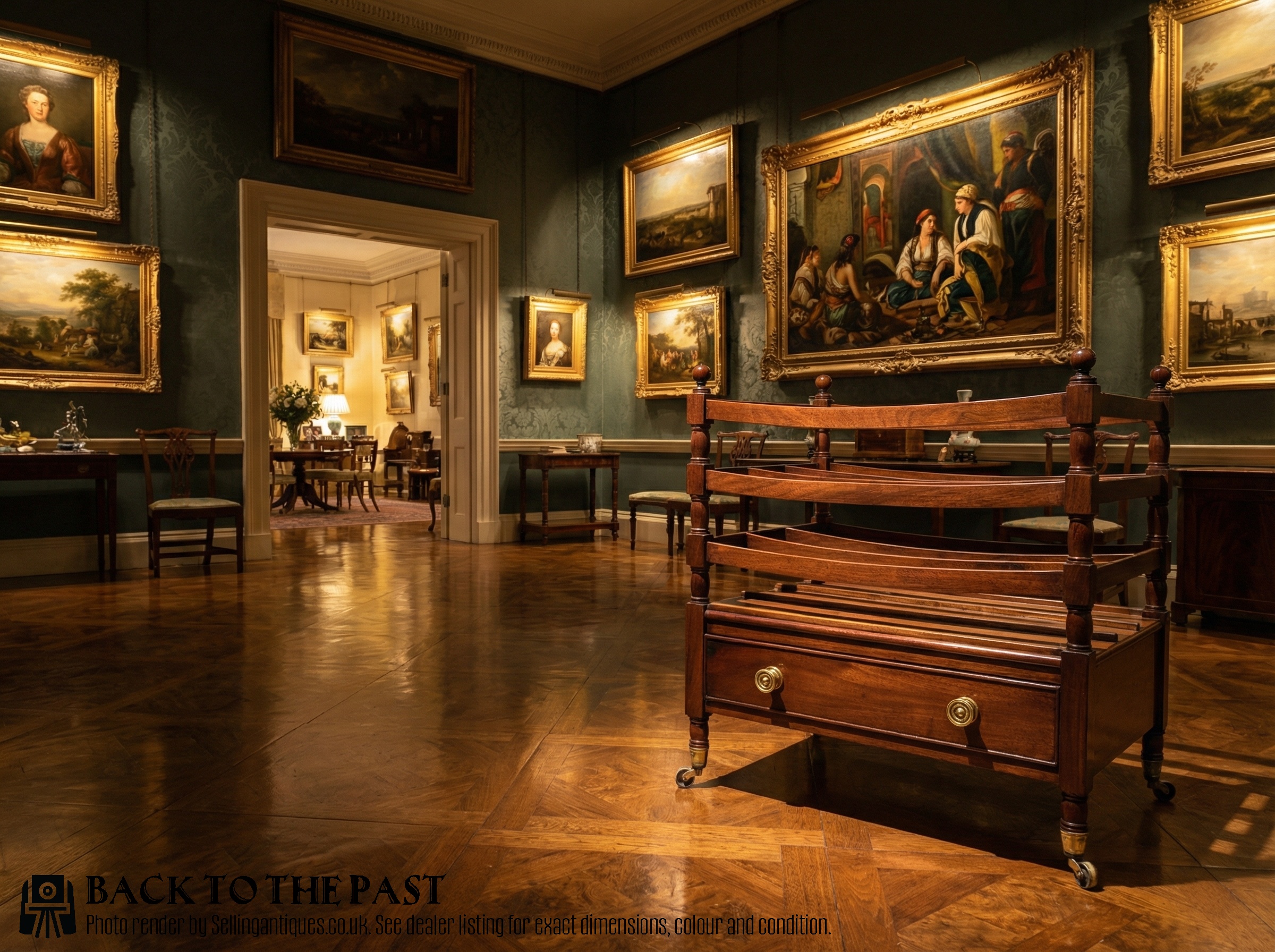
A 19th century sheet music holder most commonly takes the form of a canterbury, featuring slatted divisions designed to hold upright scores and folios. These pieces originate across the Regency, Victorian, William IV, and Georgian periods, showcasing forms such as magazine racks, duet music stands, and combination whatnot stands.
Makers constructed these items in mahogany, rosewood, walnut, burr walnut, oak, and bamboo, frequently incorporating brass casters, ceramic details, and lower drawers for smaller manuscript papers. The selection on this page demonstrates how domestic music rooms and parlours utilised these dedicated storage stands throughout the 1800s.
Materials and construction
Cabinet makers utilised dense hardwoods including mahogany, rosewood, and walnut, often selecting figured veneers and burr walnut for the primary surfaces. Lighter materials such as bamboo appear in later pieces from the Aesthetic Movement, while brass forms handles, hinges, and castors.
Early nineteenth-century craftsmen occasionally incorporated carved Prince of Wales feathers into rosewood canterbury partitions.
Variations in quality
Quality rests upon the selection of timber veneers, the crispness of turned spindles, and the refinement of carved details like Prince of Wales feathers. Superior examples integrate functional drawers with smooth drawer actions and retain original brass castors.
Pieces displaying intricate marquetry inlay, figured walnut grain, or combined whatnot shelving demonstrate higher workshop skill than plain utility stands. The structural integrity of the slatted divisions and upright supports determines the longevity of each frame.
The 19th Century Sheet Music Holder Glossary
- Canterbury
- A low stand with partitioned sections for holding sheet music, magazines, and folios. These items often include a small drawer below and stand on castors.
- Duet stand
- An adjustable music stand designed to hold scores for two performers simultaneously. They feature pivoting desks mounted on central pillars or tripod bases.
- Whatnot
- A set of open display shelves supported by slender pillars, sometimes combined with a canterbury base. This form emerged during the Victorian period.
- Marquetry
- Decorative patterns formed by fitting together small pieces of wood veneer. Craftsmen applied these geometric or floral designs to table tops and cabinet surfaces.
- Gonçalo Alves
- A dense exotic hardwood with distinctive figuring, utilised by nineteenth-century cabinet makers. It provides durability and a rich dark finish for turned components.
19th Century Sheet Music Holder: Frequently Asked Questions
What is a canterbury?
A canterbury is a low piece of furniture with vertical partitions designed specifically to store sheet music, folios, and periodicals off the floor. Most versions incorporate carry handles and small wheels called castors for movement around a room.
Originating in the late eighteenth century, the form remained popular throughout the Victorian period as home music recitals became common social events.
How do I use a music stand?
Music stands and duet stands hold open scores at a readable angle for musicians practising or performing in a room. Adjustable brass mechanisms allow the user to alter the height and tilt of the wooden desk surface.
These items suit corners or open spaces where printed sheet music needs to remain accessible during instrument practice.
How do I date a walnut piece?
Dating walnut furniture involves examining the grain patterns, hardware, and structural style associated with periods like the Victorian era or the mid-nineteenth century. Figured veneers and burr walnut become particularly prominent on pieces produced around the middle decades of the eighteen-hundreds.
Joinery methods inside drawers and the presence of handmade screws or machine-cut components offer further chronological clues.
What is the difference between a rack and a stand?
A rack generally refers to compartmented frames like cannerburys or magazine holders that store folios vertically in fixed divisions. Stands focus on elevating reading material on a sloping desk or a central pillar for active use during performance.
Some combination pieces merge both functions by placing shelf tiers above a partitioned music rack.