
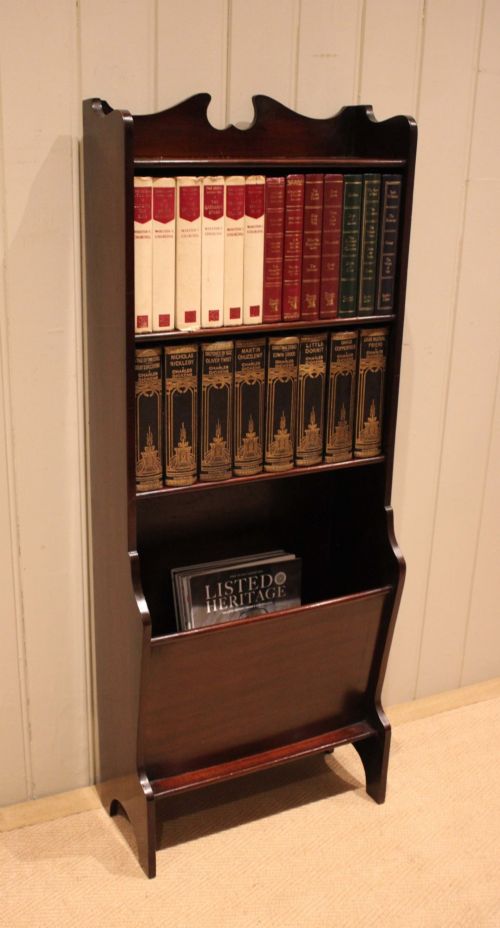
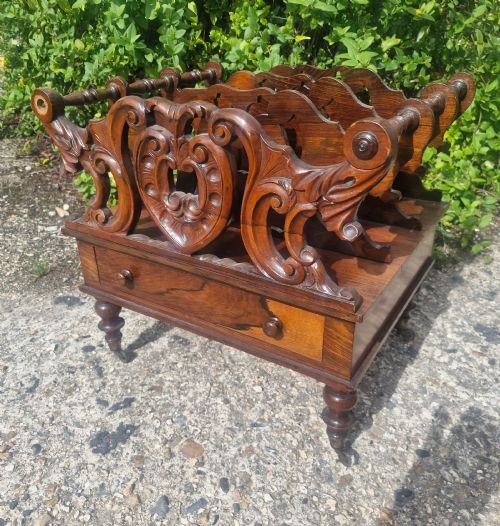
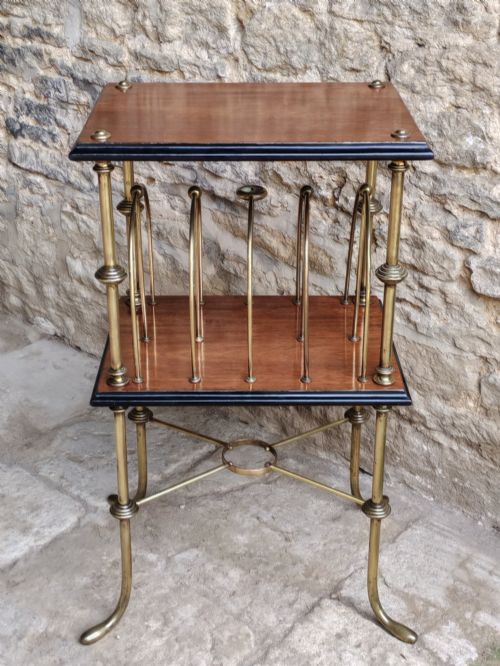
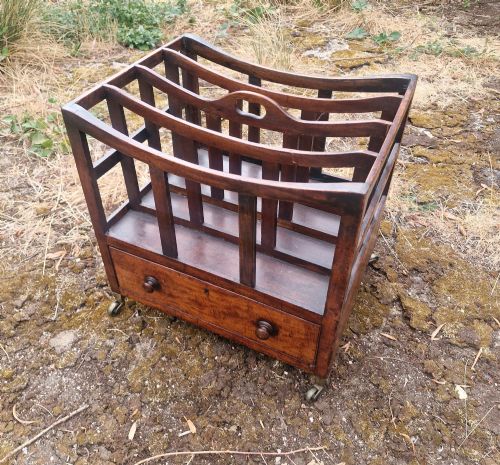

Antique Wood Magazine Stand
An antique wood magazine stand organises periodicals and papers with traditional craftsmanship, bringing period character and practical storage to a room.
How they were made
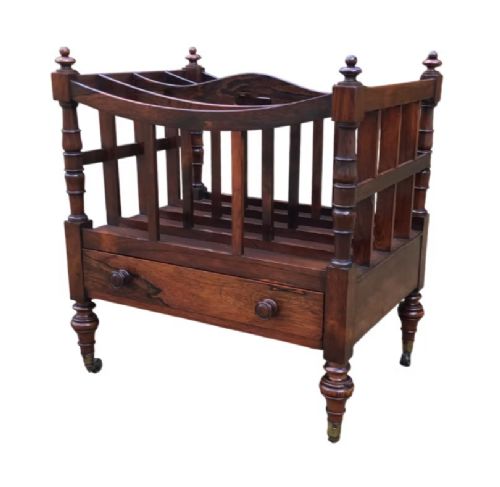
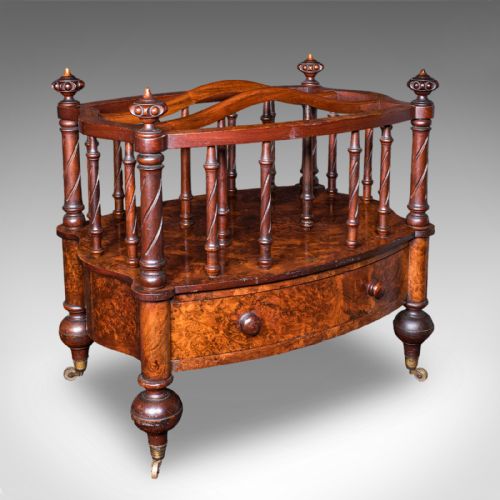
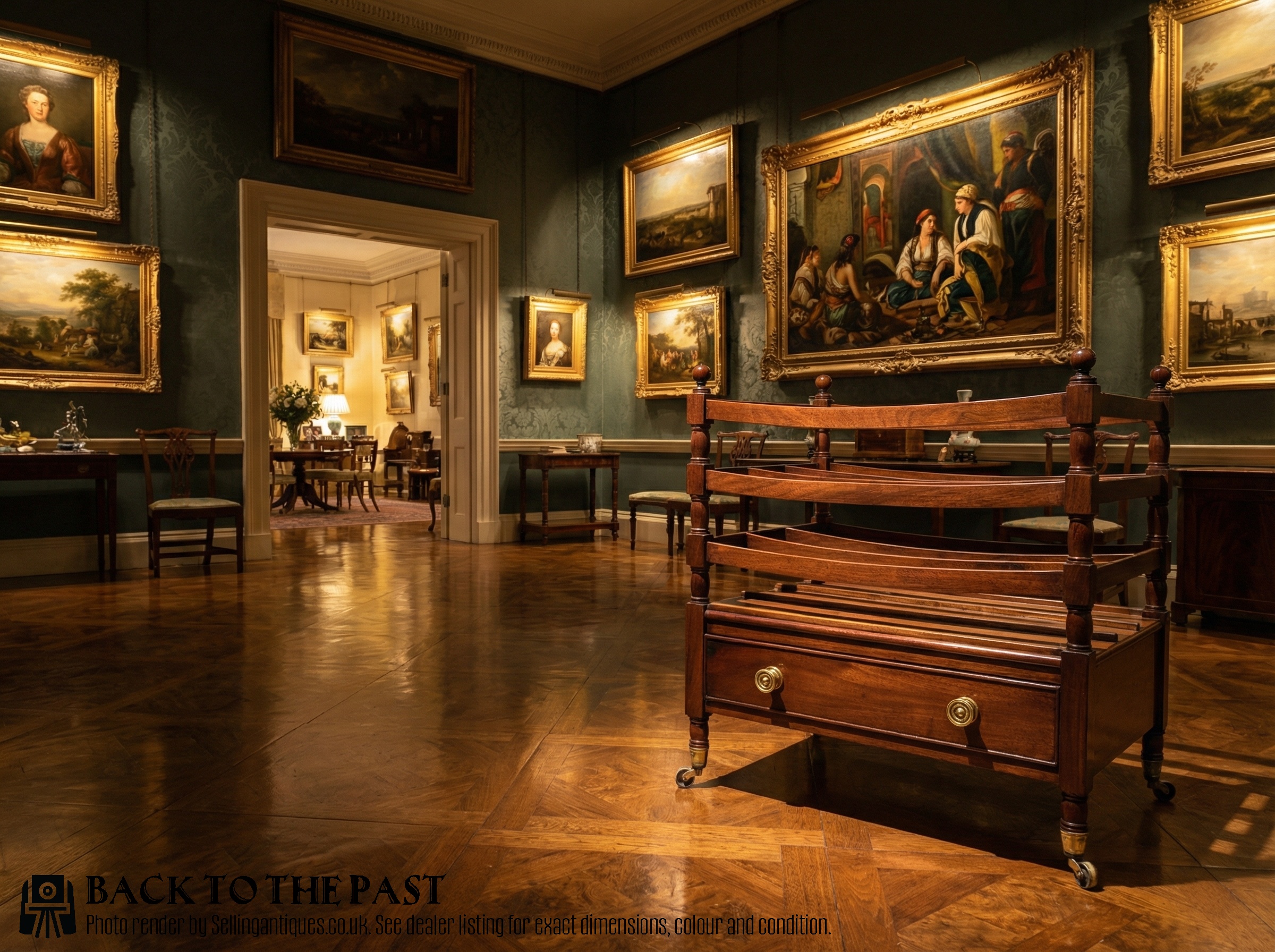
Cabinetmakers built these stands primarily in solid mahogany, rosewood, and walnut, often selecting figured veneers such as flame mahogany or burr walnut for visible surfaces. Wood selection defined the structural integrity and visual weight of each piece.
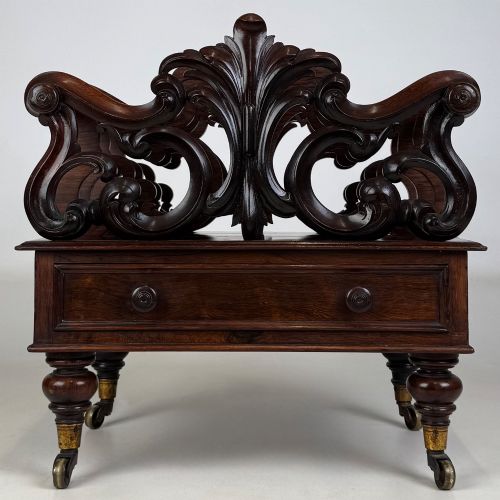
Joining techniques combined traditional mortise and tenon joints with delicate turned supports, fretted partitions, and carved details. Selected examples integrate brass fittings, ceramic elements, or mother of pearl inlay to enrich the timber framework.
What varies in quality
Quality rests in the selection of the timber and the precision of the joinery shaping the vertical divisions. Pieces exhibiting well-figured grain, such as flame mahogany or richly grained rosewood, occupy the upper tier of the range.
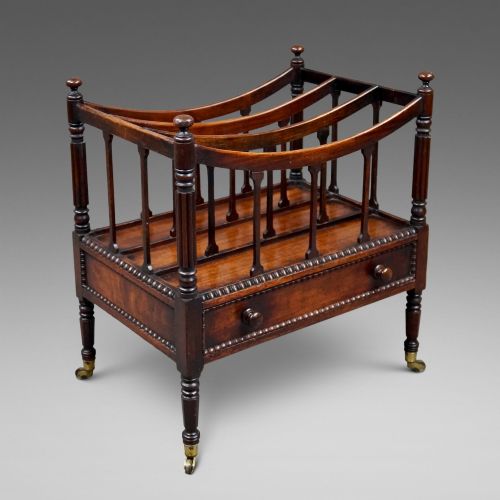
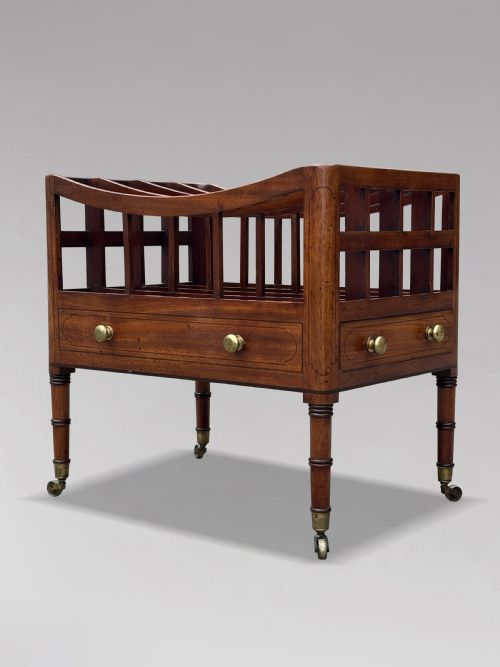
The refinement of the turning on support columns and the crispness of any applied carving or brass detailing distinguish finer workshops from standard production. Integrated drawers with dovetailed construction and original castors also indicate superior execution.
The Antique Wood Magazine Stand Glossary
- Canterbury
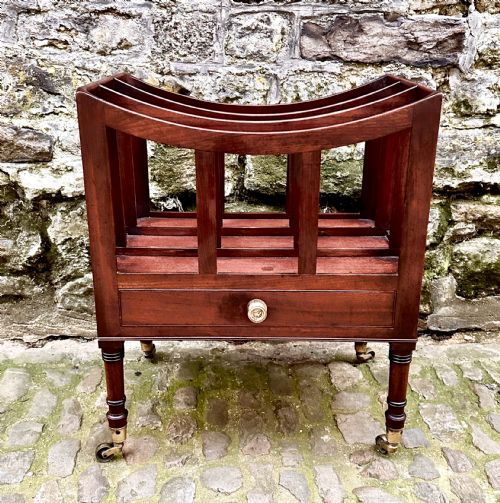
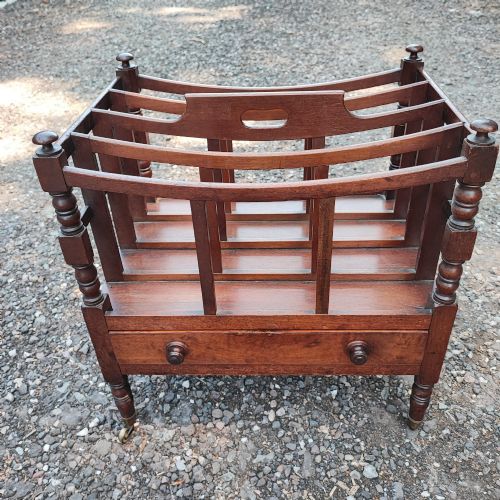
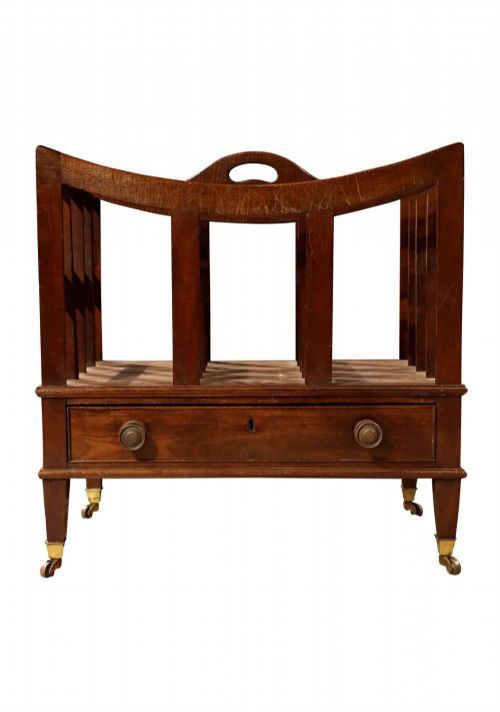
- A low stand with partitioned uprights for holding music sheets, newspapers, or magazines. Originating in the 18th century, it frequently incorporates a small drawer in the base.
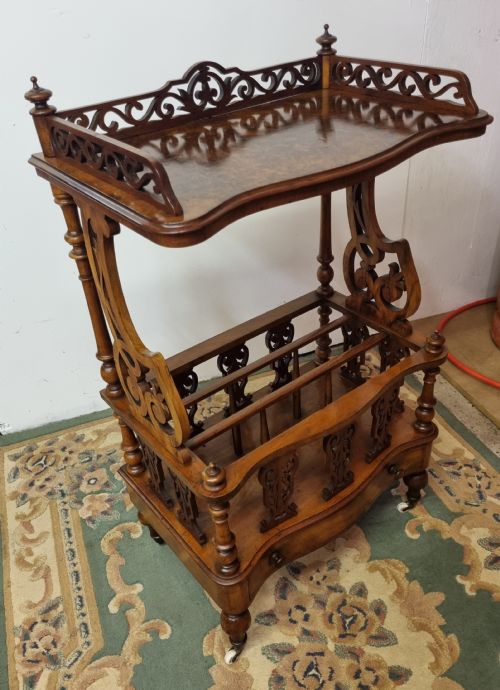
- Whatnot
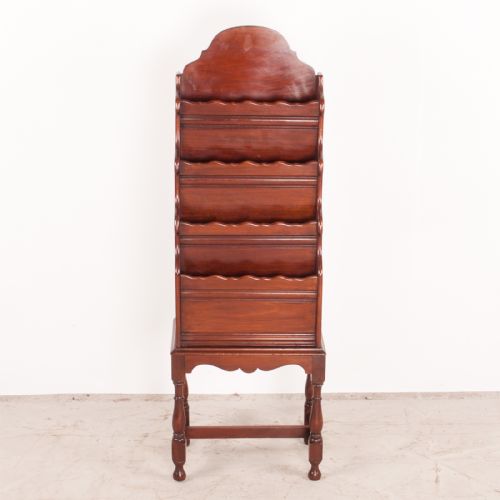
- A piece of open shelving with multiple tiers used for displaying or storing books and papers. Victorian examples often combine this format with lower magazine compartments.
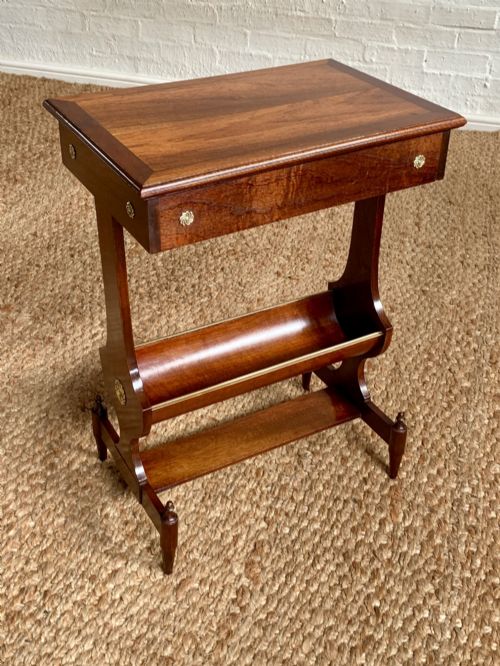
- Book Trough
- A V-shaped or open-topped tabletop stand designed to hold volumes upright. Edwardian and later pieces frequently utilise this format for desk or library use.
- Flame Mahogany
- A veneer cut from the fork of a mahogany tree to produce a rippling, flame-like pattern. Cabinetmakers employed this technique on prominent surfaces to create visual movement.
- Burr Walnut
- Timber taken from a tree growth that yields intricate, swirling grain patterns. It provided a decorative surface on mid-19th-century furniture.
Antique Wood Magazine Stand: Frequently Asked Questions
What is a Canterbury?
A Canterbury is a low, partitioned stand originally designed for holding sheet music, newspapers, and periodicals. Most versions feature upright dividers above a low frame, often raised on castors.
Cabinetmakers adapted these stands through the Georgian, Regency, and Victorian eras, frequently adding a single drawer beneath the partitions for smaller items.
How do I date an antique magazine stand?
Dating relies on timber choice, construction methods, and stylistic cues from the listed periods. Georgian and Regency pieces favour mahogany with clean lines, while Victorian examples often utilise rosewood or burr walnut with heavier carvings.
Edwardian stands frequently show lighter framing and simpler turned supports. Examining the secondary timbers inside drawers and the style of the joinery helps confirm the period.
Where should I place a Canterbury?
These stands fit well beside armchairs, sofas, or within a library setting where reading materials are close at hand. Their compact footprint makes them practical for corners or beside side tables.
Because many include castors, they were traditionally moved about the room as needed during an evening.
Are music stands and magazine racks the same thing?
They share overlapping forms, as many 19th-century pieces served multiple functions for sheet music, books, and periodicals. The partitions built for folios accommodated newspapers and magazines with equal ease.
Catalogues from the period often listed identical forms under various names depending on their intended domestic use.