

19th Century Secretary
A 19th century secretary offers a dedicated writing surface combined with storage, appealing to anyone who values traditional cabinetwork.
19th Century Secretary
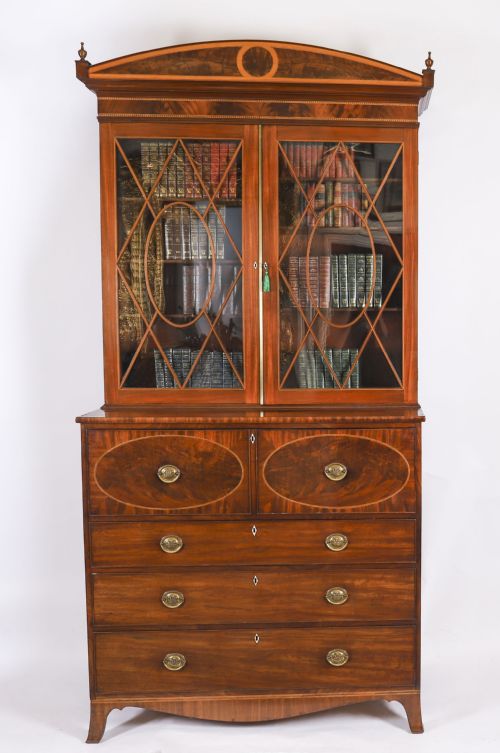
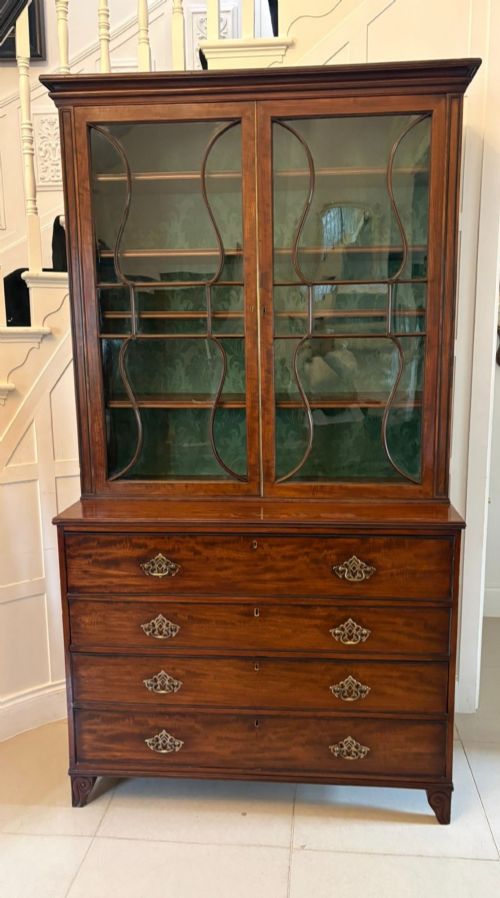
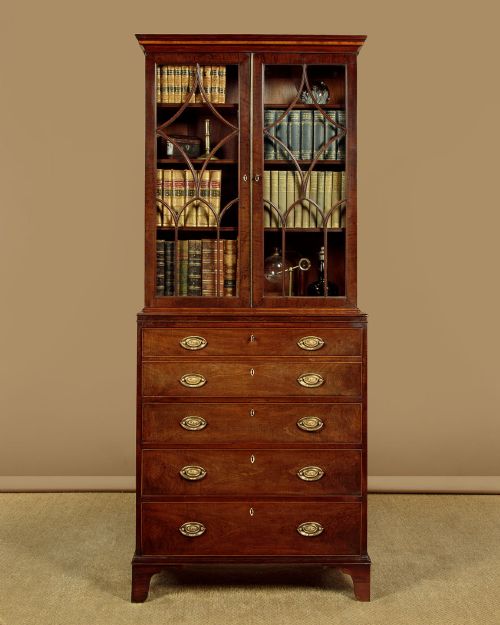
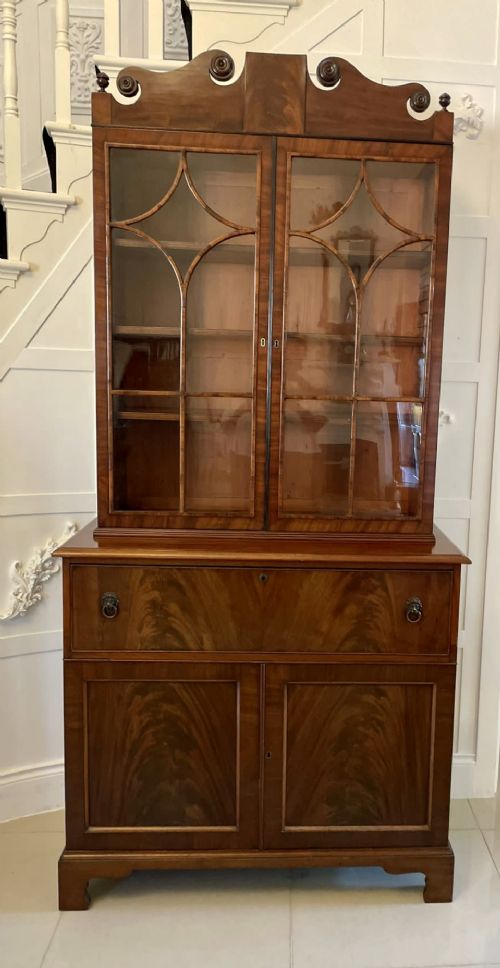
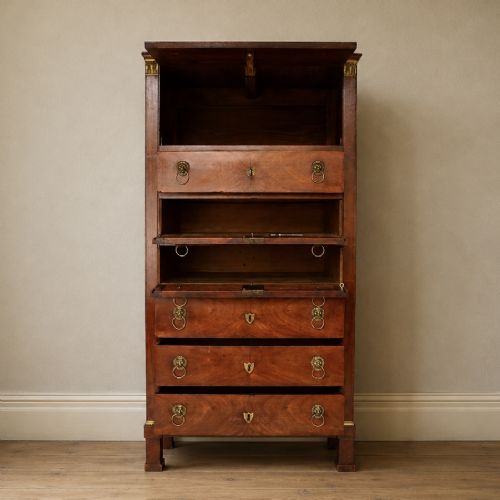
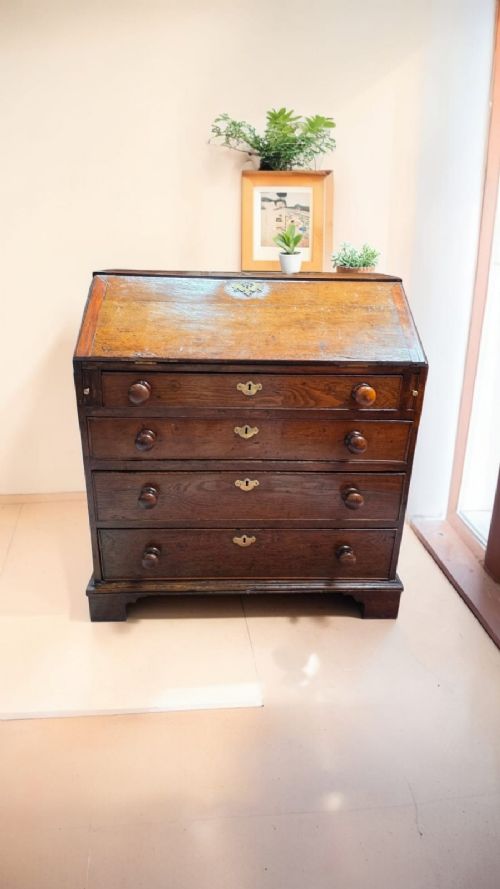
A 19th century secretary encompasses a diverse group of writing furniture designed for domestic correspondence and document storage. The selection on this page centres upon pieces from the Georgian, Regency, William IV, and Victorian periods.
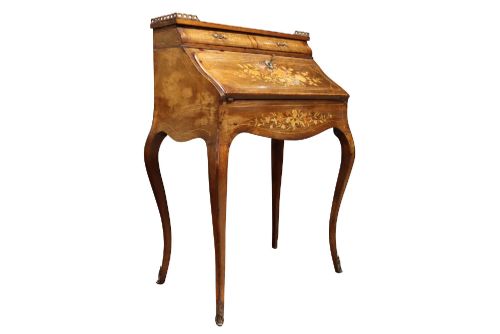
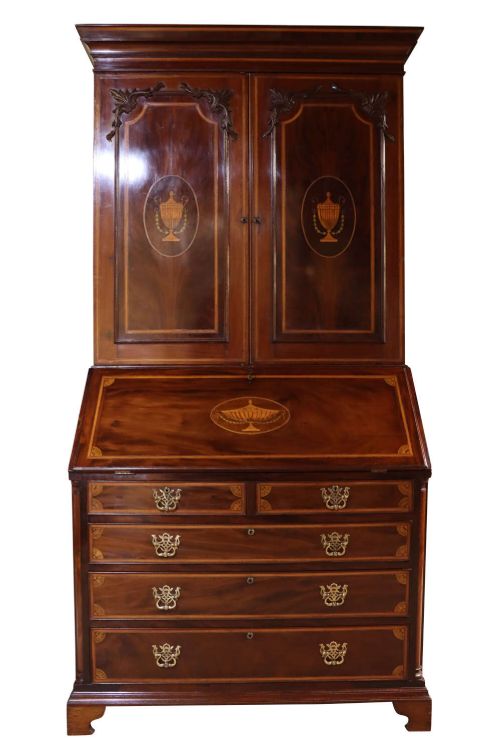
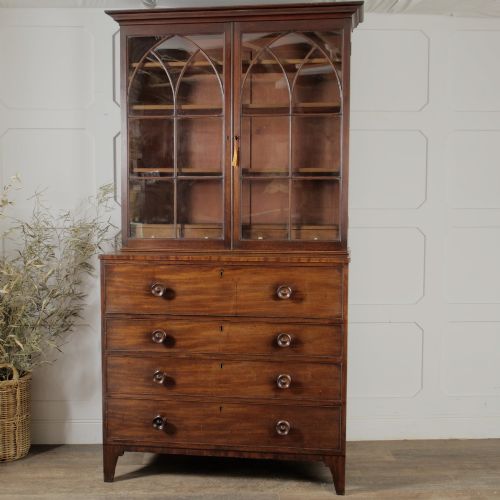
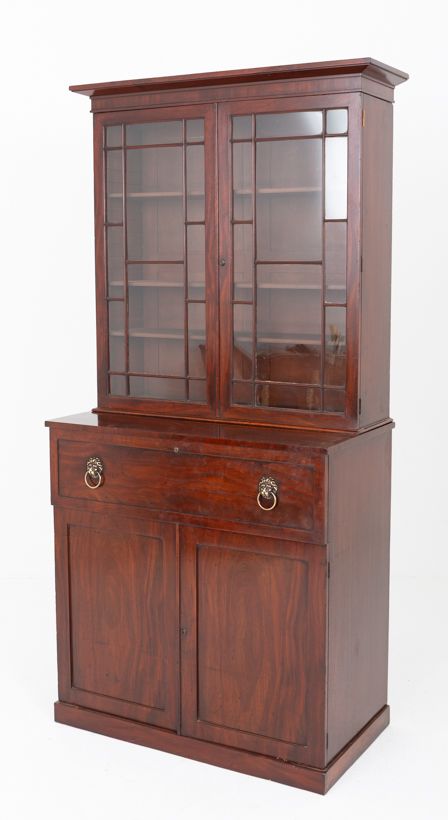
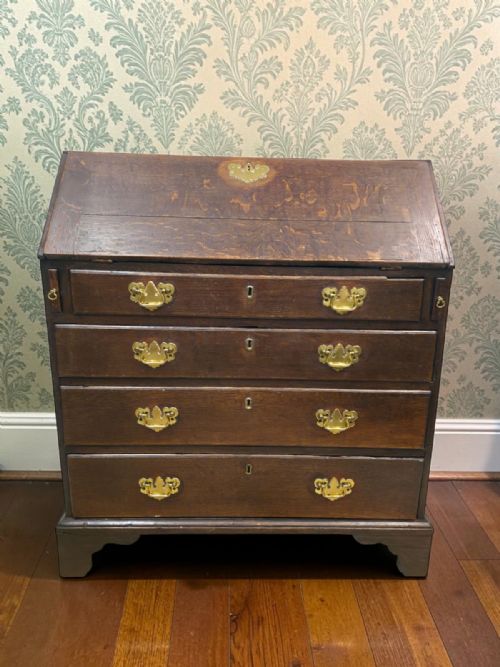
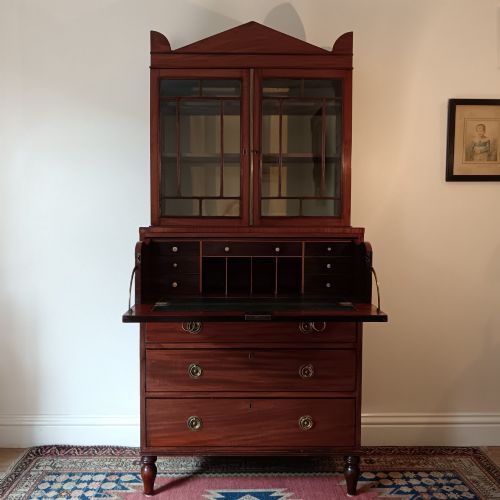
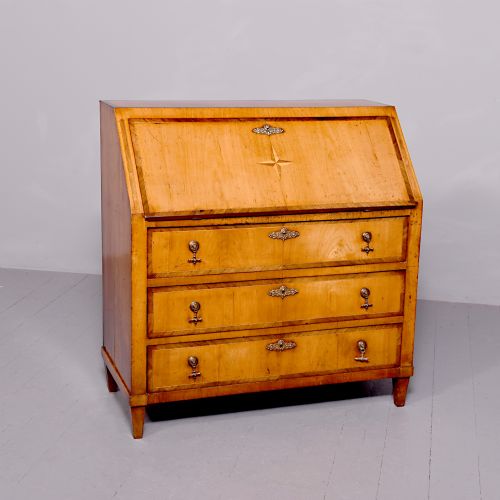
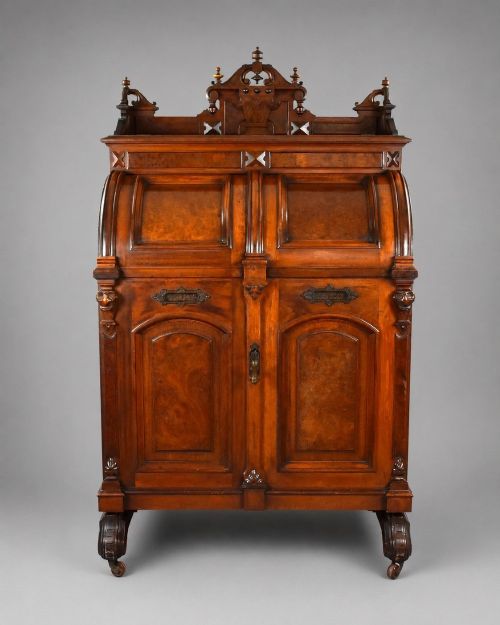
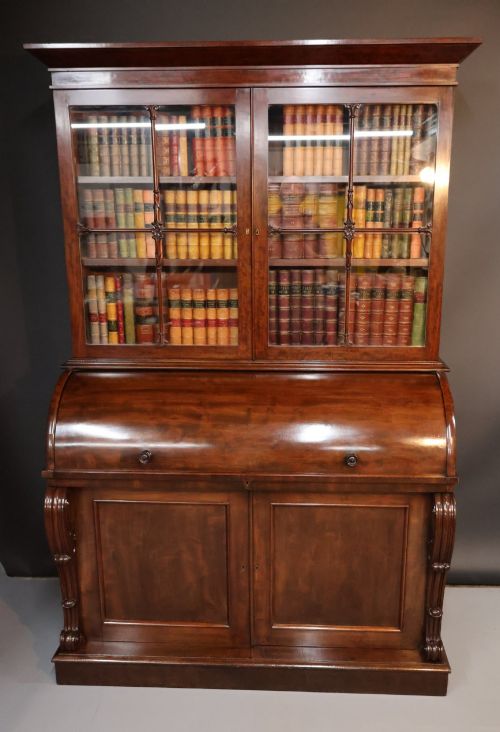
Buyers will encounter several distinct forms within the inventory, ranging from tall secretaire bookcases with glazed upper doors to compact fall front writing desks, bureau bookcases, and cylinder desks.
Originating from English, French, and Continental workshops, these items include specialised formats such as the French secrétaires à abattant and smaller bonheur-du-jour writing tables.
How They Were Made
Cabinetmakers utilised solid and veneered timbers including mahogany, walnut, burr walnut, rosewood, oak, and satinwood, often accentuating the grain with flame mahogany or marquetry inlay.
Decorative embellishments incorporate brass fittings, ormolu or gilt bronze mounts, marble tops, and glazed upper cabinet doors to protect and display books.
Secretarial desks often conceal tiny hidden drawers behind sliding pigeonhole partitions, designed for stashing private correspondence.
What Varies in Quality
The degree of refinement in a 19th century secretary depends heavily on the choice of timber and the precision of the cabinetmaker's joinery, particularly in the internal fitted compartments of the drop-front desks.
Elevated examples display superior handling of decorative elements such as detailed brass inlays, bronze mounts, and matched wood veneers across larger surfaces like cylinder fronts and bookcase doors.
George Oakley·Edwards & Roberts
The 19th Century Secretary Glossary
- Secretaire
- A desk or cabinet featuring a pull-out or drop-down writing flap that conceals small drawers and pigeonholes. This term is often used interchangeably with bureau.
- Secrétaire à abattant
- A tall, vertical writing cabinet with a fall-front door that folds down to create a horizontal writing surface. This form originated in France.
- Bonheur-du-jour
- A light, ladies' writing desk featuring a small cabinet or set of shelves on the upper surface. These desks appeared frequently during the nineteenth century in French and English workshops.
- Cylinder bureau
- A desk featuring a quarter-cylinder rolling shutter that slides back to reveal a fitted interior and a pull-out writing slide. This mechanism keeps correspondence concealed when not in use.
- Glazed doors
- Cabinet doors fitted with glass panes, commonly found on the upper bookcase sections of larger secretaire bookcases to display collections of books.
19th Century Secretary: Frequently Asked Questions
How were secretaire bookcases used?
These dual-purpose items served as both a library bookcase and a private writing desk. The upper glass-doored section held books, while the fitted drop-front compartment provided space for writing letters.
They were placed in parlours, studies, and libraries to manage household correspondence and display valued book collections.
How do I identify a French secrétariat abattant?
A secrétariat abattant is distinguished by its tall, upright chest-like structure with a vertical front panel that hinges downward to form a writing desk. They frequently feature marble tops and gilt bronze or ormolu mounts.
Unlike traditional English kneehole desks, these tall cabinets economize on floor space while concealing extensive internal letter compartments behind the main drop-front panel.
Where should I place a cylinder desk?
A cylinder desk works well in a home study, library, or living room where its rolling shutter front can remain open for daily writing tasks or closed to present a neat cabinet exterior. Their finished backs and compact footprints allow them to stand away from walls in larger rooms.
Ensure the room maintains stable humidity and temperature to protect the antique wood veneers and moving cylindrical mechanisms.