
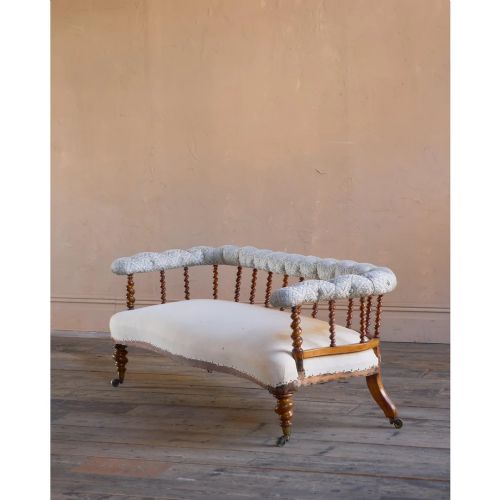
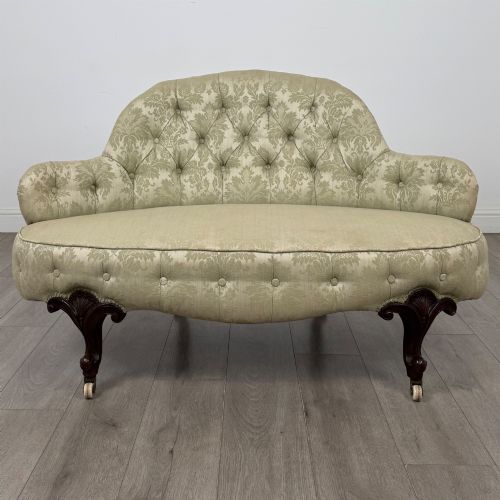
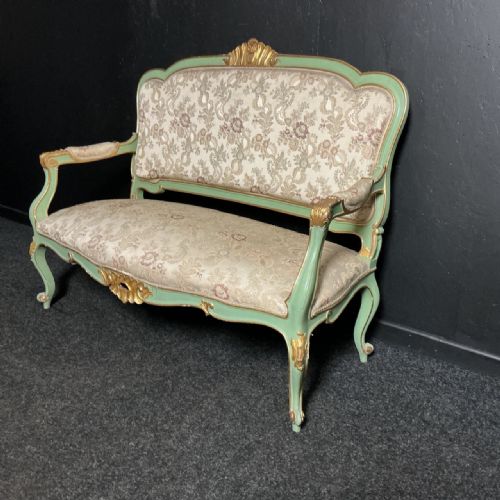
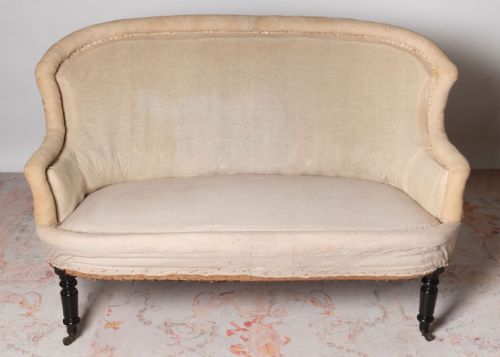


19th Century Salon Settee
A 19th century salon settee brings formal nineteenth-century drawing-room seating into a contemporary interior with distinct carved frames and plush upholstered surfaces.
19th Century Salon Settee
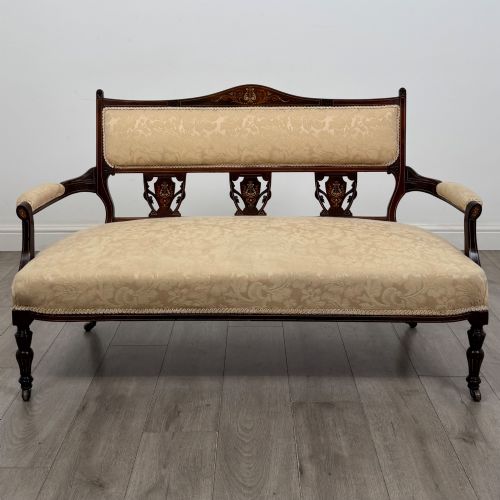
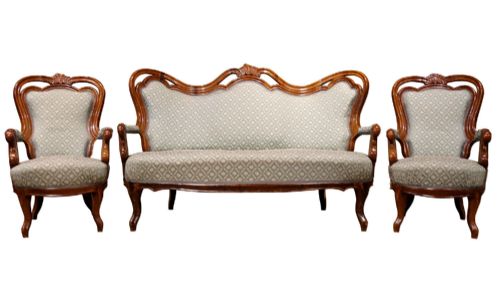
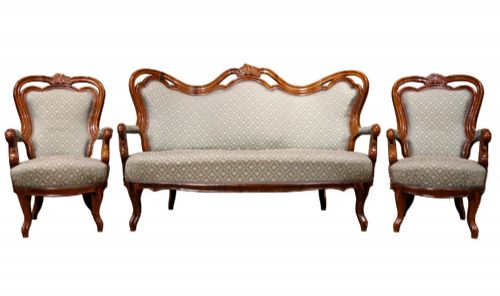
A 19th century salon settee represents formal upholstered seating designed for nineteenth-century reception rooms and drawing rooms. The selection here spans Victorian English pieces and Continental European designs, alongside complete salon suites and individual canapés.
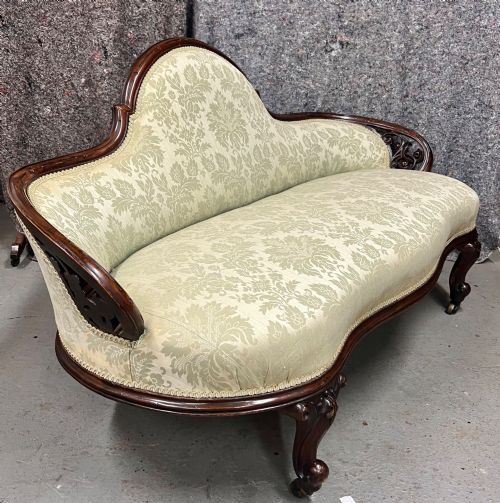
Buyers encounter various stylistic revivals within this category, including Rococo Revival, Louis XV and Louis XVI styles, Sheraton Revival, and Egyptian Revival. These range from walnut and mahogany frames to heavily gilded showframes upholstered in velvet, damask, and decorative fabric.
How they were made
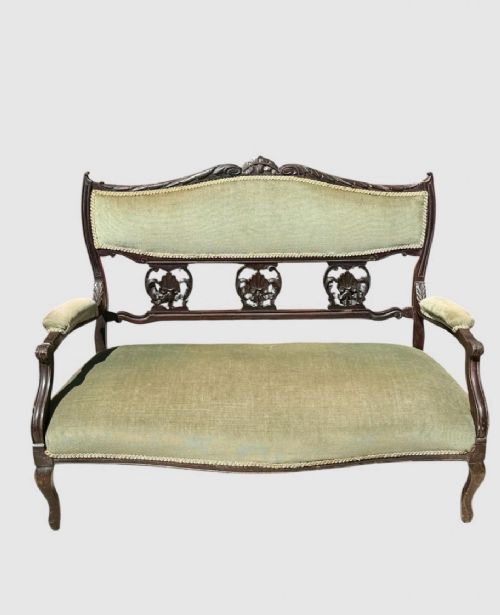
Frames rely predominantly on dense hardwoods such as mahogany, walnut, and rosewood, carved into complex scrollwork, cabriole legs, or clean classical lines. Giltwood and ebonised finishes appear frequently on Continental and aesthetic movement pieces, adding contrasting surface detail.
Traditional upholstery techniques combine internal webbing and stuffing with visible top fabrics like velvet, needlepoint, or patterned textiles, often secured with brass tacking. Marquetry inlay and brass mounts further embellish select mahogany and burr birch examples.
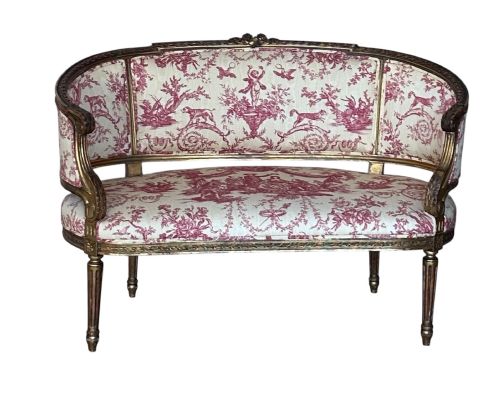
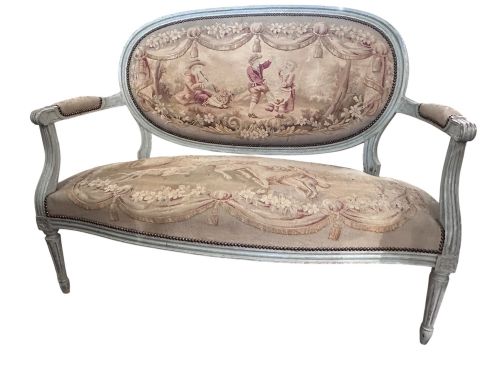
French influences appear across numerous listings, including Louis XV and Louis XVI style canapés alongside English Victorian pieces.
What varies in quality
The standard of carving determines much of the distinction between pieces, moving from stiff, machine-cut decoration to fluid, deeply undercut hand-carved foliage and figures. Timber selection also dictates the grade of a settee, with well-figured burr birch, rosewood, and dense mahogany standing apart from plain secondary woods.
Structural integrity governs longevity, distinguishing frames that remain rigid at the joints from those weakened by loose glue or woodworm damage. The sophistication of the design, such as an integrated giltwood showframe or enamel mounts, separates standard domestic seating from exhibition-grade furniture.
C. Hindley & Sons·Morison & Co·John Tesch
The 19th Century Salon Settee Glossary
- Canapé
- A decorative French sofa with an exposed wooden frame, typically featuring upholstered back and arm rests designed for a formal salon.
- Showframe
- A wooden sofa frame where the polished or gilded timber remains largely visible around the upholstered sections rather than being fully covered in fabric.
- Rococo Revival
- A nineteenth-century design style drawing on mid-eighteenth-century French motifs, characterised by asymmetrical curves, C-scrolls, and naturalistic floral carvings.
- Salon suite
- A matching set of seating furniture, frequently comprising a settee alongside a collection of armchairs, side chairs, or footstools intended for a reception room.
- Aesthetic movement
- A late nineteenth-century design current that rejected heavy Victorian ornamentation in favour of ebonised surfaces, simpler lines, and japonisme influences.
19th Century Salon Settee: Frequently Asked Questions
Where were salon settees placed?
These settees originally occupied formal Victorian drawing rooms and Parisian reception spaces, serving both as decorative centrepieces and functional seating for callers.
Today, buyers place them in living rooms, large hallways, or bedrooms where their ornate carved frames can anchor a room's decorative scheme.
How do I identify a revival style?
Revival pieces borrow decorative vocabulary from earlier European periods, such as the curved cabriole legs of Louis XV furniture or the straight tapered legs associated with Louis XVI design.
Examining the timber ageing, construction joints, and upholstery webbing helps confirm whether a piece dates to the nineteenth-century revival era rather than the original historic period.
Can I use these settees daily?
Most antique settees accommodate regular sitting, provided the internal webbing, frame joints, and upholstery support remain sound and stable.
Buyers intending frequent daily use often check the underlying wood stability and may commission professional reupholstery to reinforce internal padding.
What is a salon suite?
A salon suite consists of a matching set of furniture produced together, usually pairing a settee with several matching armchairs or drawing-room chairs.
These coordinated sets offer a uniform decorative aesthetic for principal reception rooms and remain sought after as complete groupings.