

19th Century Rural Painting
When you choose a 19th century rural painting, you bring home quiet harvest fields and cottage life rendered by Victorian and continental hands.
19th Century Rural Painting
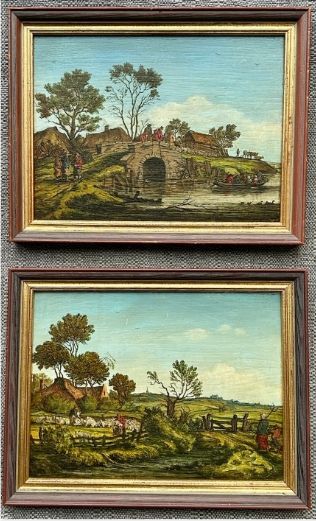
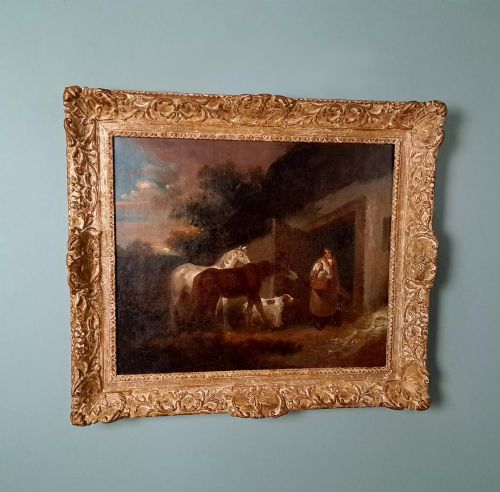
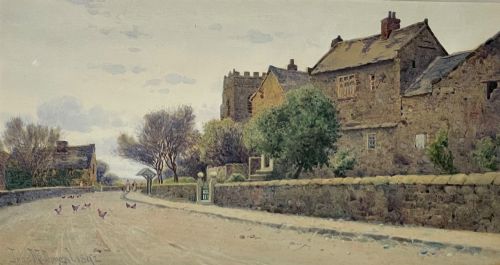
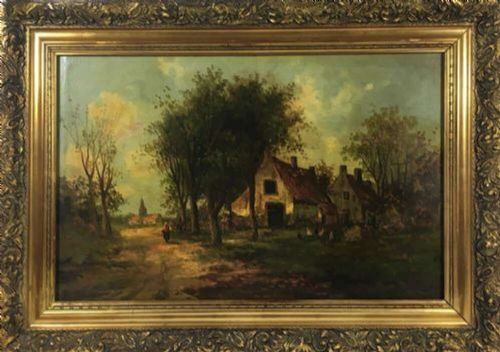
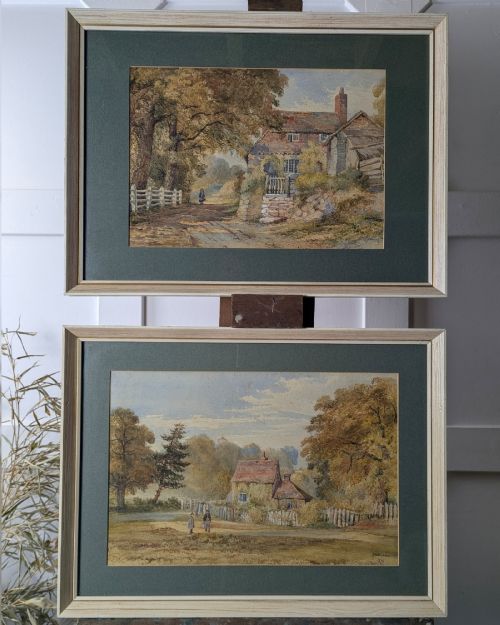
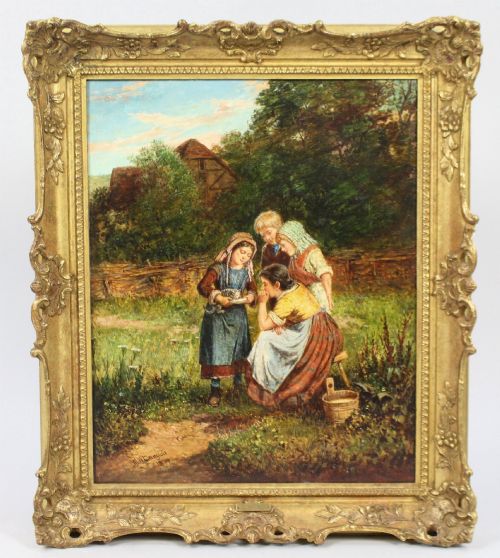
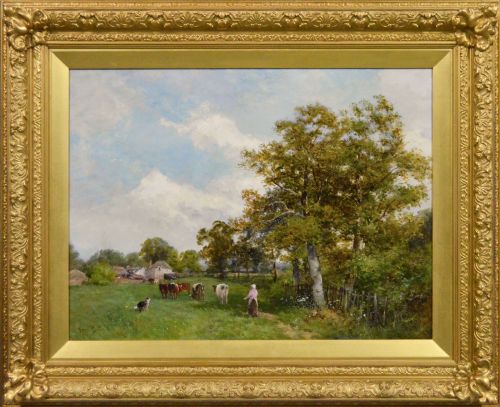
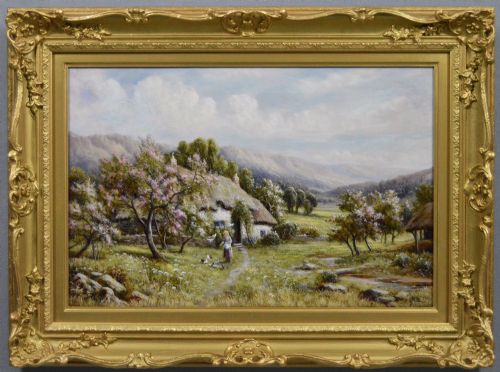
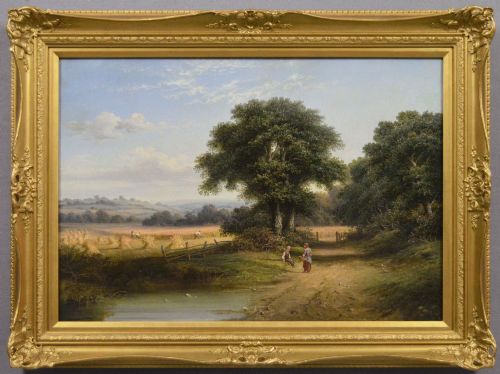
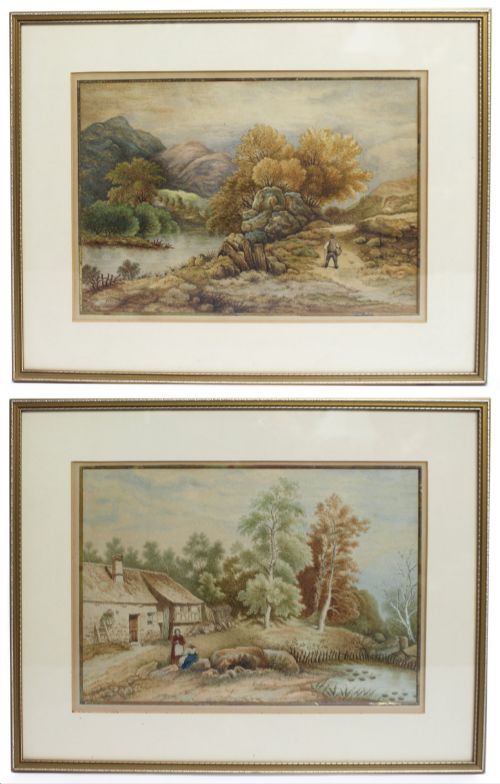
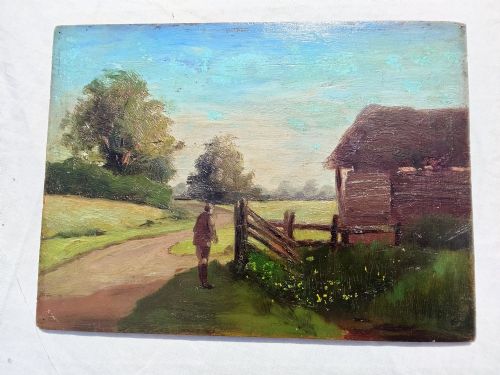
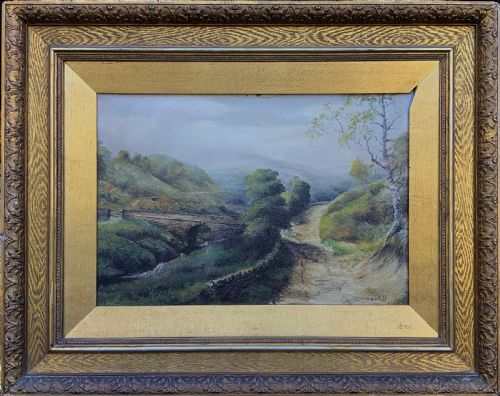
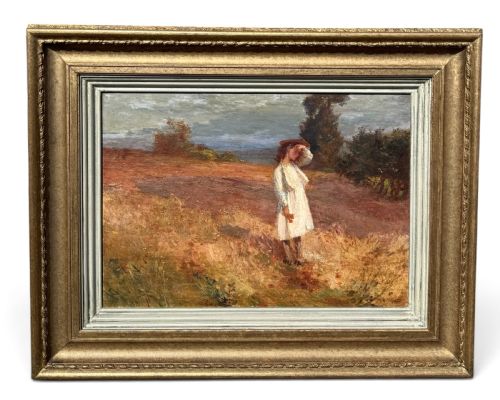
A 19th century rural painting depicts agricultural life, country cottages, river banks, and grazing herds across canvas, wood panels, and paper. These works capture the nineteenth-century fascination with pastoral scenery, ranging from English School landscapes to Barbizon-influenced French farmyards.
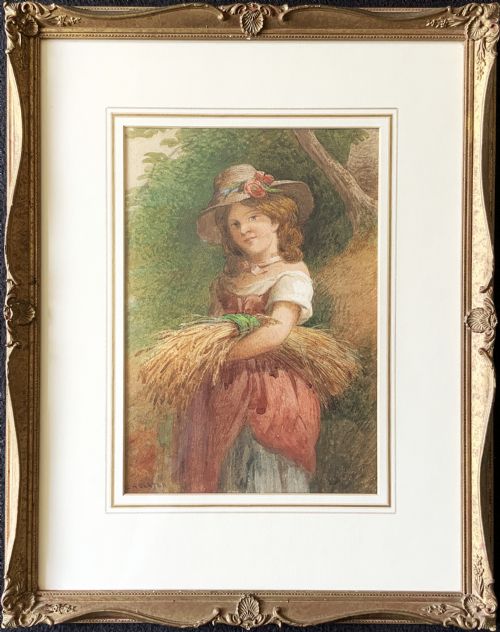
The versions most commonly found here include Victorian oil paintings on canvas and board, alongside delicate watercolours depicting figures near harvest fields or thatched houses. Many examples bear signatures from known British and European artists of the period, while others originate from anonymous regional schools.
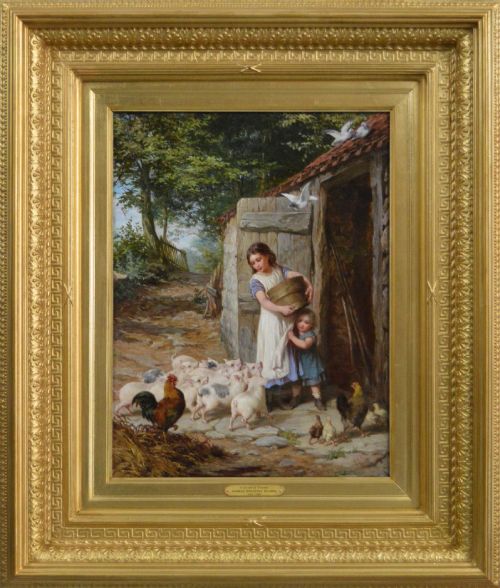
Subjects frequently centre on everyday country occupations, such as herding cattle, feeding poultry, gathering timber, or travelling along rural tracks. Such compositions reflect a deliberate artistic turn towards naturalism and idyllic agrarian settings during the Victorian era and preceding decades.
How They Were Made
Painters of this period typically applied oil paint to stretched canvas, wooden panels, or prepared boards, building rich textures through layered brushwork. Watercolour works on paper utilise transparent washes and fine pigment details to capture the soft light of countryside scenes.
Many finished pieces retain their original period frames, often constructed from wood and embellished with gilt moulding. Support materials vary from sturdy timber panels used by continental schools to lighter paper sheets favoured for detailed watercolour studies.
Materials recorded across the inventory include oil paint on canvas, wood panels, paper, and glass-fronted watercolours.
What Varies in Quality
The distinction between ordinary and exceptional works rests upon the artist's command of light, atmosphere, and natural movement within the landscape. Superior examples display confident brushwork and a balanced composition that gives depth and life to figures, animals, and foliage.
Condition and originality also shape the character of each piece, particularly the preservation of the paint surface and the presence of a legitimate signature or documented attribution. Works that retain their period framing and untouched pigment layers offer a truer connection to nineteenth-century studio practice.
William Joseph Shayer Senior·John McDougal·Mark William Langlois·David Bates·Robert John Hammond·Walter Heath Williams·George Augustus Holmes·Miles Birkett Foster·Charles Henry Slater·Herman S Melville·Frederick Hines·Johannes de Haas·John Horace Hooper·Charles Clair·William Henry Mander·Thomas Sidney Cooper·Ernest Pile Bucknall·James Kyd·Samuel Joseph Clark·James Orrock·Henry John Boddington·James Hardy Junior·Frederick James Knowles·Johannes Philippus Galjaard·Stanley Herdman
The 19th Century Rural Painting Glossary
- Barbizon School
- A mid-nineteenth-century movement centred on realistic landscape painting en plein air. Practitioners focused on direct observation of nature and rustic French farmyards.
- Genre painting
- Artwork depicting scenes from everyday life, ordinary people, and domestic or agricultural tasks. These compositions often include figures tending livestock or working near cottages.
- English School
- A term used to describe paintings produced by artists trained or working within Britain during a specific historical period. Such works frequently showcase pastoral river views and rolling countryside.
- Watercolour
- A painting method where coloured pigments are suspended in a water-soluble vehicle on paper supports. This technique creates luminous washes suited to atmospheric weather and rural light.
- Gilt frame
- A decorative border coated with gold leaf or metallic paint, commonly found on nineteenth-century oil paintings. These surrounds enhance the visual depth of the canvas.
19th Century Rural Painting: Frequently Asked Questions
What subjects appear in 19th century rural paintings?
These works typically show agricultural scenes, including cattle grazing by rivers, figures harvesting crops, and cottages nestled in the countryside. Artists also recorded daily rural labour, such as herding animals or gathering timber.
Such imagery reflects the nineteenth-century appreciation for pastoral life and the natural landscape across Britain and continental Europe.
How do I care for antique oil and watercolour paintings?
Oil paintings on canvas or wood panels benefit from stable indoor environments away from direct sunlight and excessive humidity. Watercolours on paper require framing behind protective glass to prevent fading from light exposure.
Regular dusting with a soft, dry cloth helps preserve the surface without disturbing fragile pigments or nineteenth-century varnishes.
Are these paintings signed by the artists?
Many examples feature artist signatures, monograms, or studio inscriptions on the front or reverse of the canvas, board, or paper. Other pieces remain unsigned or carry indistinct signatures from period practitioners.
Unsigned works are frequently attributed to regional British or European schools based on their style, technique, and subject matter.