
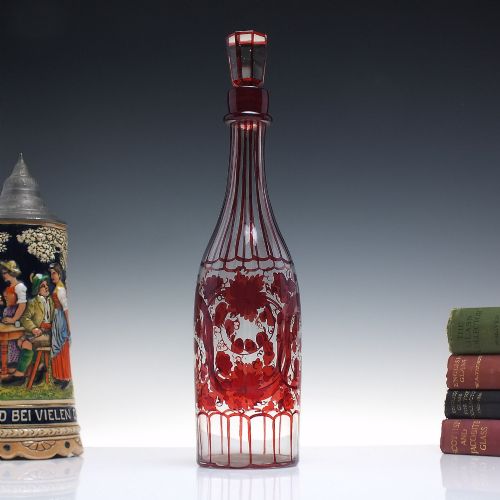


19th Century Ruby Glass
These pieces of 19th century ruby glass bring deep crimson colour and decorative flair to a room, offering everything from heavy decanters to delicate scent bottles.
19th Century Ruby Glass
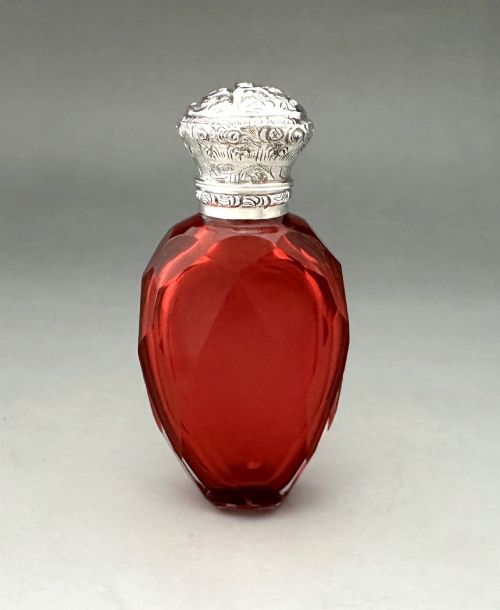
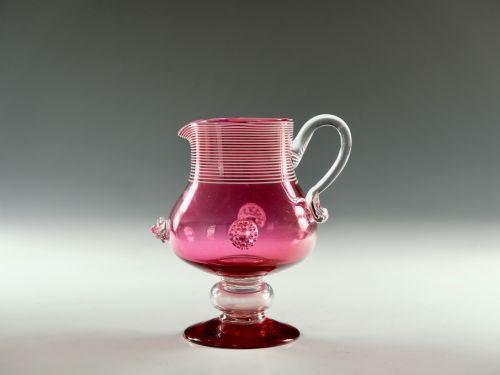
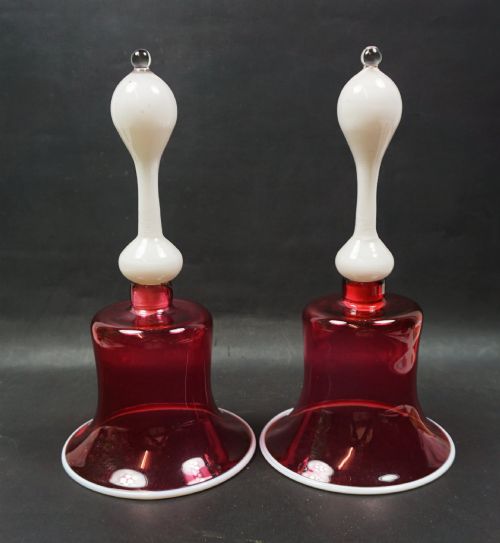
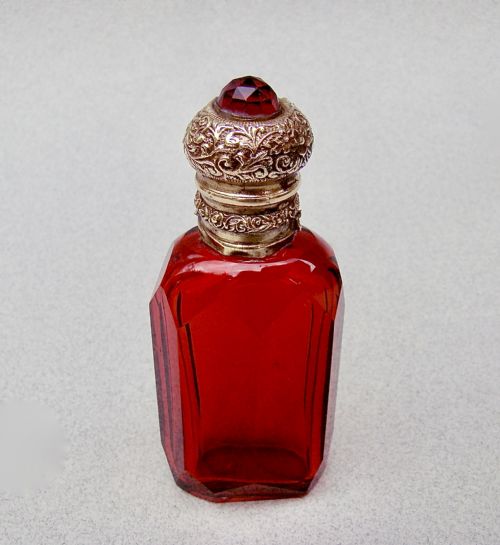
When searching for 19th century ruby glass, buyers encounter a diverse array of functional and decorative items spanning the Victorian era and continental workshops. The selection frequently includes tableware such as wine glasses, decanters, jugs, and finger bowls alongside decorative mantel lustres, oil lamps, and scent bottles.
English and Bohemian makers dominate the origins found in this category, often utilising rich cranberry hues or flashed overlays. Pieces range from small personal items like perfume bottles mounted in silver to large floor vases and matching pairs of chandeliers.
How they were made
Production relied heavily on free-blowing or mould-blowing techniques, incorporating gold chloride into the molten batch to achieve the characteristic deep red or cranberry coloration. Craftsmen frequently employed casing or overlay methods, fusing a layer of ruby glass over clear or white glass before cutting through the outer layer to expose the contrasting colour beneath.
Decoration often involved hand-painting in enamels, intricate gilding with gold leaf, and wheel-engraving with floral or vine motifs. Mounts in brass, ormolu, and sterling silver were frequently added to scent bottles, jugs, and decanters.
At least one piece manages to combine a ruby glass body with the startled face of a Victorian silver owl.
What varies in quality
The standard of execution in cutting and engraving marks the distinction between ordinary vessels and exceptional display pieces. Crisp, deep wheel-cutting through an overlay layer reveals sharp contrast and precision, whereas softer edges indicate simpler production methods.
The richness and evenness of the ruby colour, combined with the delicacy of any applied gilding or enamel work, dictate the overall refinement of an object. Complete matching sets, such as wine glasses or pairs of lustres, command greater interest than isolated examples.
The 19th Century Ruby Glass Glossary
- Cranberry glass
- A transparent type of glass coloured with gold oxide, producing a pinkish-red shade widely used in Victorian tableware.
- Flash glass
- A technique where a thin layer of coloured glass is applied over a thicker base of clear or white glass before being cut away.
- Mantel lustre
- A decorative mantelpiece ornament hung with cut glass prisms, designed to catch the light from candles or oil lamps.
- Ormolu
- Gilded bronze mounts and decorative hardware frequently used on French 19th century scent bottles and glassware.
- Tazza
- A shallow ornamental bowl or cup raised on a high foot and stem, often found in flashed and gilded ruby glass.
19th Century Ruby Glass: Frequently Asked Questions
How do I clean antique ruby glass?
Wash pieces gently by hand using warm water and a mild detergent, avoiding harsh scrubbing on gilded or enamelled surfaces.
Allow them to air dry on a soft cloth rather than rubbing vigorously, which protects delicate surface decoration.
Are all red pieces cranberry glass?
Not all red glass relies on the gold-based formula that defines true cranberry pieces, as some utilise copper or other mineral oxides.
Items described simply as ruby glass or flash glass often display different chemical origins and tonal depths.
Did Victorians use these decanters daily?
Wealthy households utilised ruby glass decanters and wine glasses primarily for formal dining, dessert courses, and serving port.
Smaller scent bottles and trinket boxes served personal grooming needs on dressing tables across the period.