
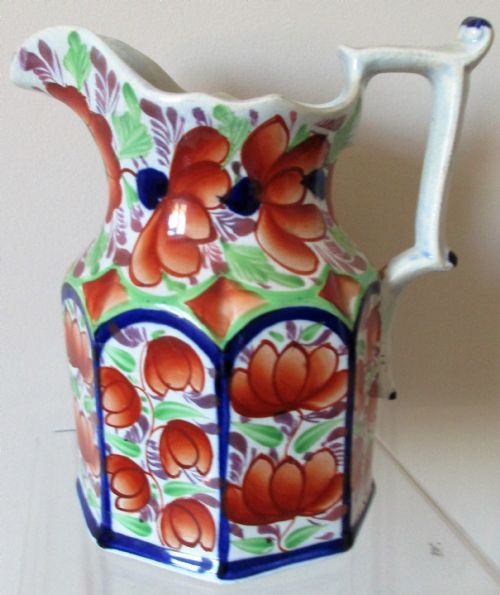


19th Century Porcelain Jug
These 19th century porcelain jug examples combine utility and ornamental flourish, offering buyers tangible pieces of Victorian and Georgian ceramic history.
19th Century Porcelain Jug
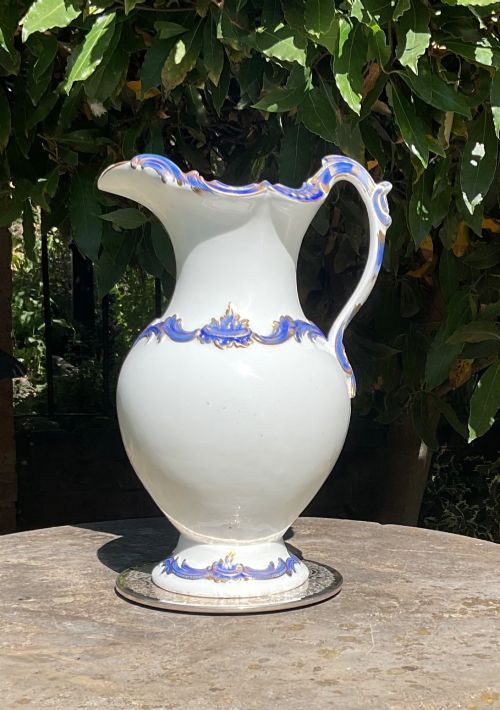
A 19th century porcelain jug represents a diverse category of vessels created for domestic service and decorative display throughout the Georgian and Victorian eras. These containers range from modest milk and water jugs to elaborate ewers and tea sets shaped by aesthetic movements and regional tastes.
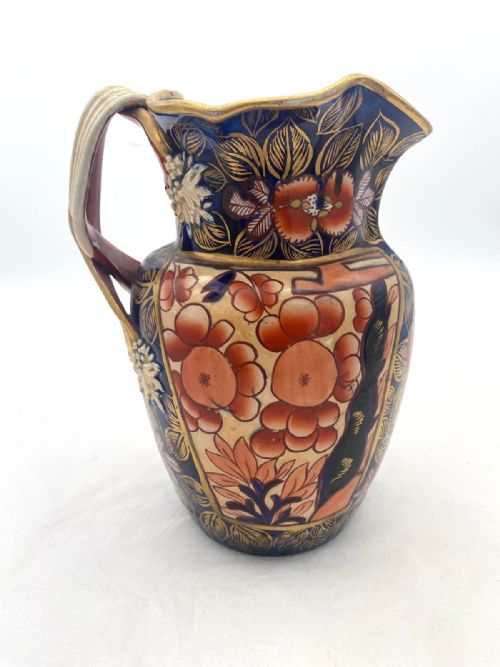
The versions most commonly encountered on this page span the mid to late 19th century, frequently displaying floral panels, cobalt blue grounds, or hand-painted bird motifs. British potteries such as Royal Worcester, Mason's, and Staffordshire dominate the selection, alongside continental pieces.
Makers utilised various forms, including cleft jugs, miniature ewers, and hydra shapes, reflecting both utilitarian needs and the ornamental ambitions of their original owners. Buyers select these items for their historical character and craftsmanship.
How they were made
Potters of the period shaped these vessels using porcelain, ironstone, and earthenware bodies, often refined through specialised moulding and throwing techniques. Bisque porcelain and Parian ware also appear, offering a matt, unglazed finish suited to sculptural detail.
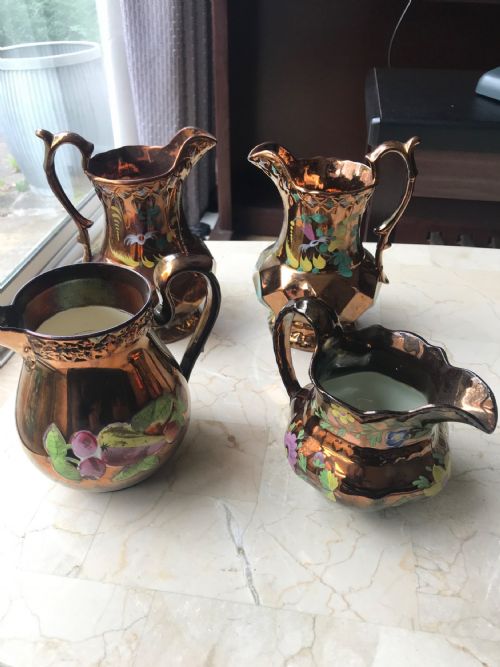
Decoration relied heavily on hand-painted enamel colours, transfer printing, and applied gold leaf or gilding. Cobalt blue grounds and copper lustre glazes provided rich colour contrasts, while relief modelling produced grotesque handles and reticulated surfaces.
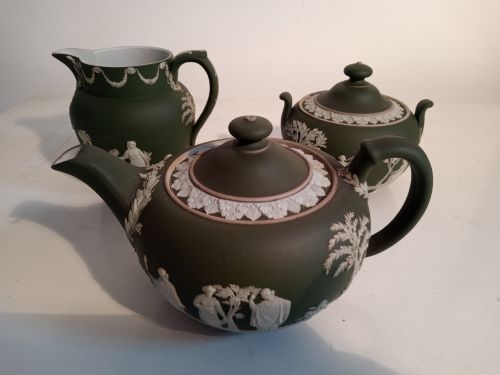
Listings feature items spanning the 19th century, incorporating materials such as enamel, porcelain, gold leaf, ironstone, gilding, earthenware, gilt, and jasperware.
What varies in quality
The standard of a 19th century porcelain jug depends largely on the crispness of the moulding and the finesse of the hand-painted decoration. Superior examples exhibit precise brushwork in floral panels and bird motifs, alongside well-defined relief work on handles and spouts.
The application of gold leaf and gilding marks another distinction, where top-tier pieces maintain burnished metallic highlights rather than flat, faded applications. Weight, potting symmetry, and the clarity of factory marks further separate standard production items from exceptional commissions.
Mason's Ironstone·Wedgwood·Royal Davenport·Royal Worcester·Doulton Burslem·Meissen·Stevenson and Hancock·Rockingham·Royal Crown Derby·Chamberlain Worcester·Royal Vienna
The 19th Century Porcelain Jug Glossary
- Ewer
- A large jug or pitcher with a wide spout and ornate handle, historically used for water or wine but frequently employed as a decorative object in the 19th century.
- Ironstone
- A heavy, durable type of earthenware patented by Charles Mason in the early 19th century, designed to imitate Chinese porcelain while offering greater strength.
- Parian ware
- A fine-grained, unglazed biscuit porcelain developed in the 1840s to resemble marble, commonly used for portrait busts and sculptural jugs.
- Gilding
- The application of gold leaf or gold dust onto the ceramic surface, used to highlight rims, handles, and painted panels.
- Reticulated
- Having an openwork pattern resembling a net or lattice, achieved by cutting through the clay before firing.
19th Century Porcelain Jug: Frequently Asked Questions
How do I date a 19th century jug?
Dating relies on identifying maker's marks, registry stamps, and stylistic cues such as Victorian neoclassical or Aesthetic Movement motifs. Examining the paste, glaze type, and hand-painting style also helps narrow the production era.
Changes in factory ownership and patent dates provide further historical context for narrowing down the exact decade of manufacture.
Were these jugs used daily?
Many jugs served practical functions on dining tables and sideboard settings, containing milk, water, or tea. Miniature and highly decorated ewers, however, were primarily intended for display.
Wear patterns around the base and rim often indicate whether a piece saw active domestic service or remained an ornamental display item.
Can I use antique jugs for serving?
While structurally sound, antique jugs often carry crazing or delicate gilding that makes daily use risky. Hand washing is essential to preserve fragile enamel details and gold leaf.
Collectors generally prefer using them for display or dry floral arrangements rather than active food service.