
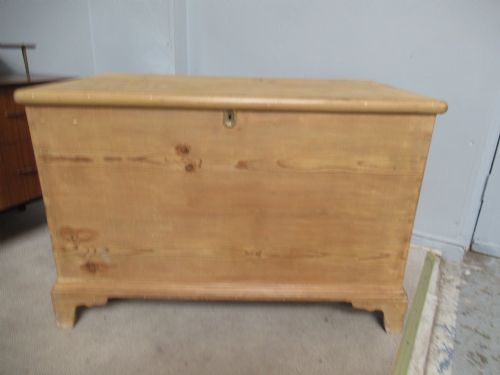
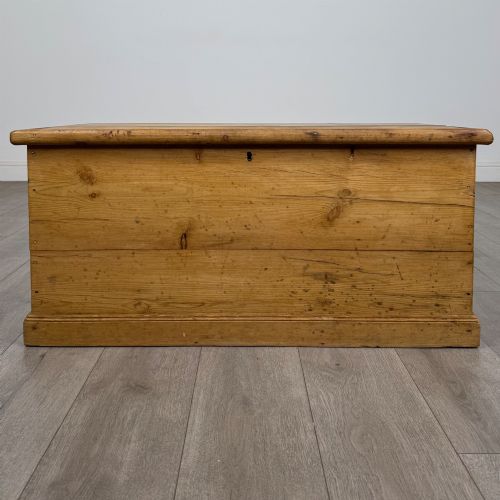
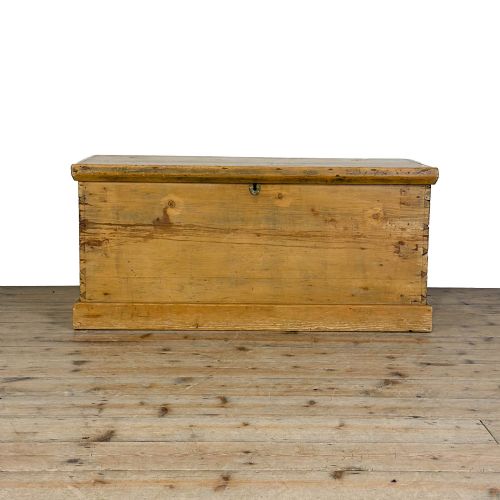
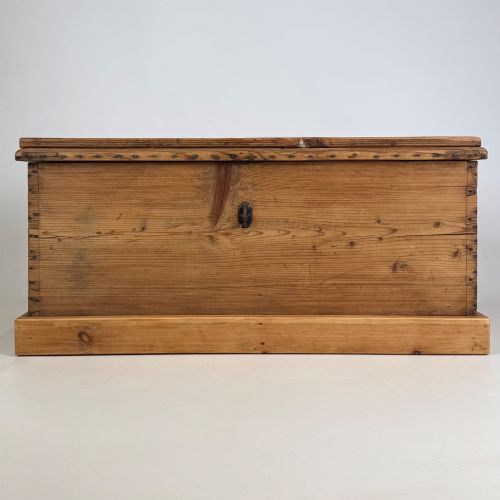
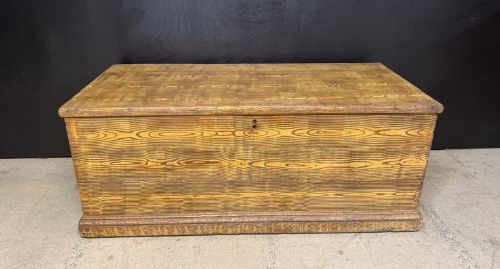
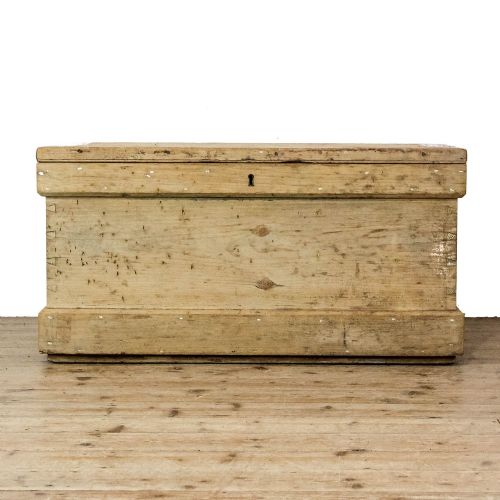
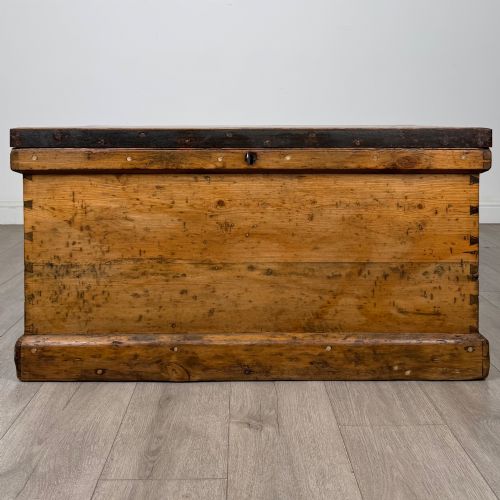
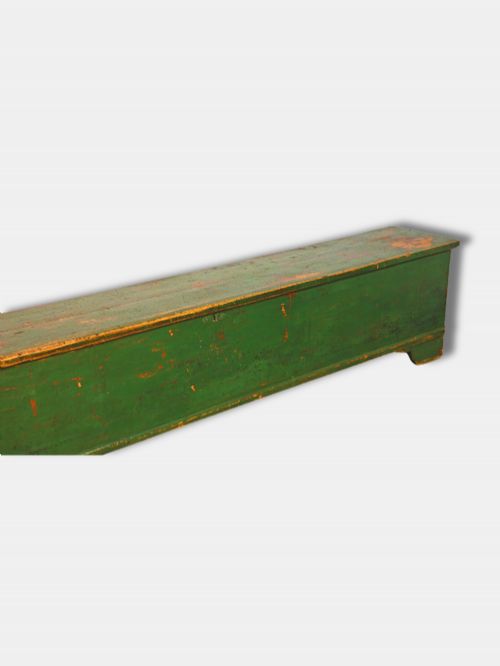
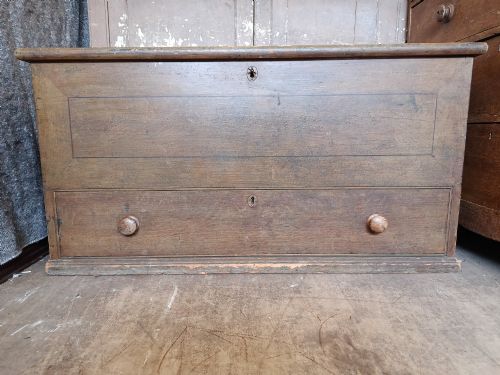

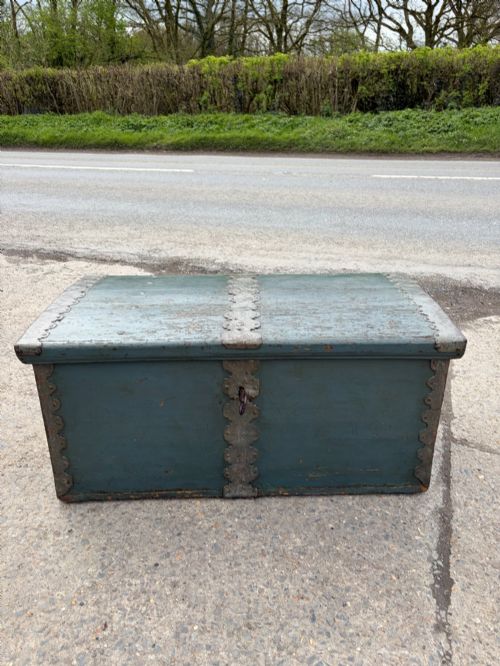


19th Century Pine Coffer
These 19th century pine coffer examples bring honest utility and rustic charm into a modern interior.
Identifying a 19th century pine coffer
A 19th century pine coffer serves as a sturdy storage box, blanket chest, or strong box. Buyers seeking this phrase encounter practical household containers spanning the Victorian era and mid-century rural traditions.
Forms range from simple six plank construction and lidded blanket chests to pieces fitted with lower drawers, bracket feet, or iron carrying handles. Scandinavian country variants introduce painted surfaces and folk art decoration alongside woven textures.
The material palette centres on pine and pitch pine, often enhanced by original paint, metal hinges, and wrought iron hardware. These functional items reflect both British domestic utility and continental Scandinavian craftsmanship.
Construction and materials
Carpenters built these coffers primarily using solid pine and pitch pine, sometimes combining elm boards for structural strength. Joinery methods included simple plank construction and panelled framing designed to withstand heavy daily use.
Hardware consists of forged iron, wrought iron, and standard metal elements forming strap hinges, corner braces, and carrying handles. Surfaces often display original paint, period finishes, or folk art decoration applied directly to the timber.
Retail Price Guide 2026
Typical UK retail prices for 19th century pine coffer, calculated from the Sellingantiques database of over a million retail prices indexed since 2003. This retail price guide relies exclusively on Sellingantiques data; no external sources or auction records are used, so the figures do not describe the wider market.
Materials recorded across the inventory include pine, pitch pine, iron, wrought iron, and applied paint.
Judging quality in pine coffers
Quality rests in the survival of original surfaces, from untouched timber grain to intact period paint and folk art decoration. Pieces retaining their early wrought iron hardware and bracket feet command greater appreciation.
Construction integrity distinguishes standard utilitarian boxes from finer panelled chests or fitted blanket boxes with internal drawers. The balance between honest wear and structural completeness defines the character of each piece.
The 19th Century Pine Coffer Glossary
- Pine
- A soft timber widely utilised throughout the nineteenth century for utilitarian furniture and country boxes. It accepts paint finishes readily and provides a stable, lightweight carcase.
- Six plank coffer
- A primitive box construction formed from six individual boards joined simply at the edges. This method represents an early and enduring vernacular woodworking tradition.
- Bracket foot
- A small architectural support projecting beneath the corners of a chest or coffer. It lifts the base away from damp floors and adds visual refinement.
- Folk art decoration
- Hand-applied painted motifs and ornamentation reflecting regional cultural traditions. Such decoration transforms a basic storage box into a piece of decorative art.
- Wrought iron
- Iron beaten and shaped by hand into hardware such as strap hinges and carrying handles. This material offers both robust security and decorative contrast to the pine timber.
Frequently Asked Questions
What is a pine coffer used for?
These pieces functioned historically as heavy-duty storage containers for blankets, linens, and household valuables. Today they serve practical storage roles in living spaces while adding rustic texture.
Their robust lids also allow them to double as occasional seating or low display surfaces at the foot of a bed.
How do I identify a 19th century coffer?
Look for construction traits such as hand-cut boards, forged iron strap hinges, and timber patination consistent with nineteenth-century hand tools. Period examples often show dovetail joints or simple plank construction rather than modern fixings.
Painted finishes, folk art motifs, and country origins like Scandinavian workshops further help contextualise the age and style.
Are painted pine coffers original?
Many Scandinavian and country pieces retain early or original decorative paint schemes applied to protect the softwood or provide folk art embellishment. Close inspection of the paint layer reveals craquelure, wear patterns, and pigment consistency matching the age of the timber.
Surfaces that show undisturbed patination around iron hardware indicate long-term stability and historical authenticity.
What is pitch pine?
Pitch pine is a denser, more resinous variety of pine timber utilised for robust furniture and architectural joinery. It offers greater hardness and durability compared to standard softwood variants.
Items constructed from pitch pine often feature pronounced grain patterns and heavier structural weight.