
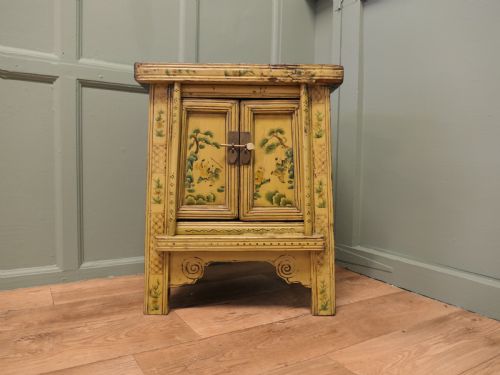
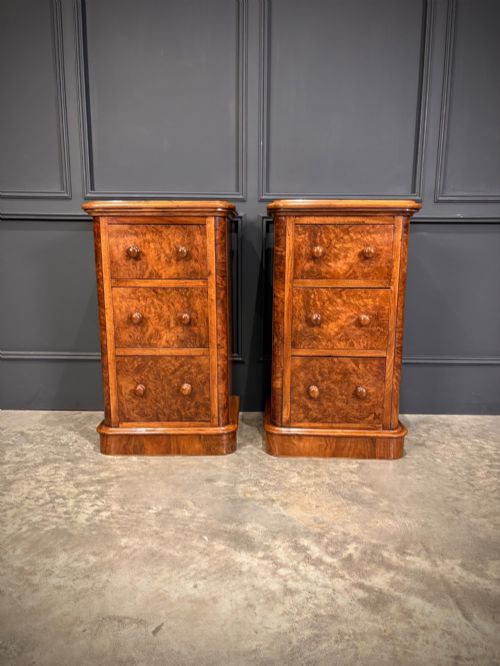
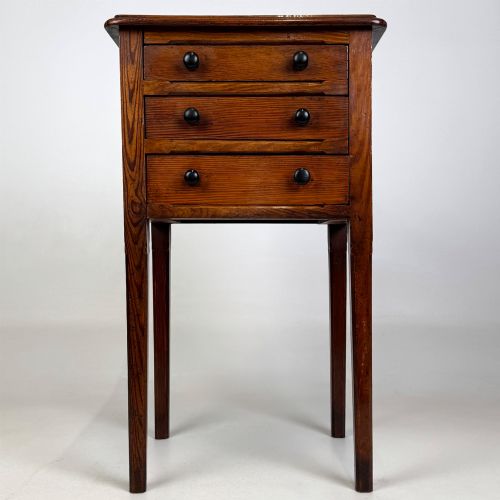
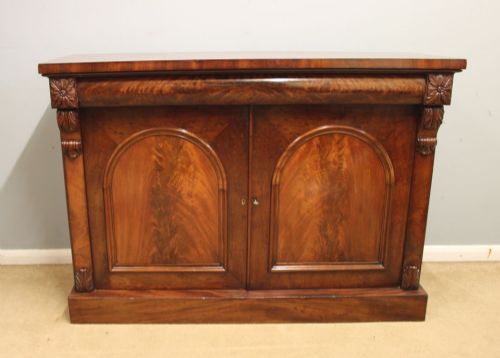
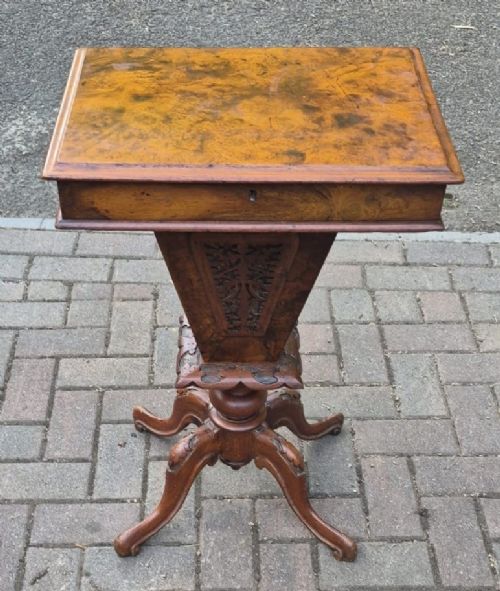
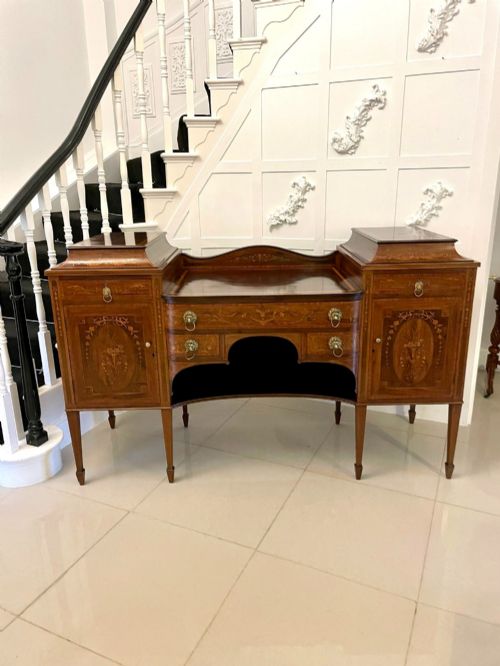
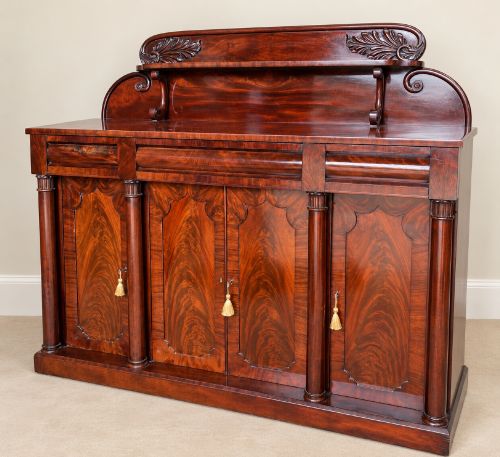
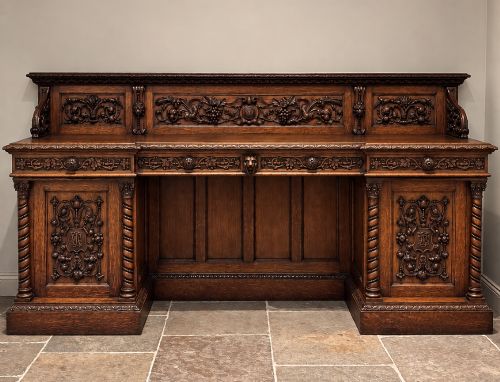
19th Century Pedestal Cabinet
A 19th century pedestal cabinet offers sturdy bedside or bedside-adjacent storage with distinct period timber grain, suiting collectors seeking functional antique furniture.
19th Century Pedestal Cabinet
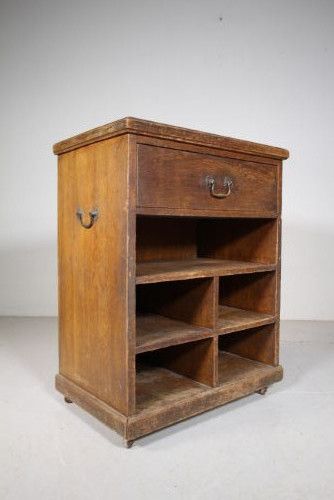
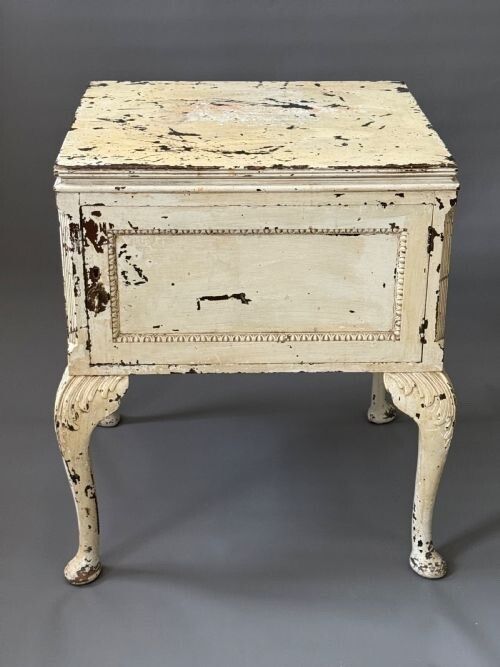
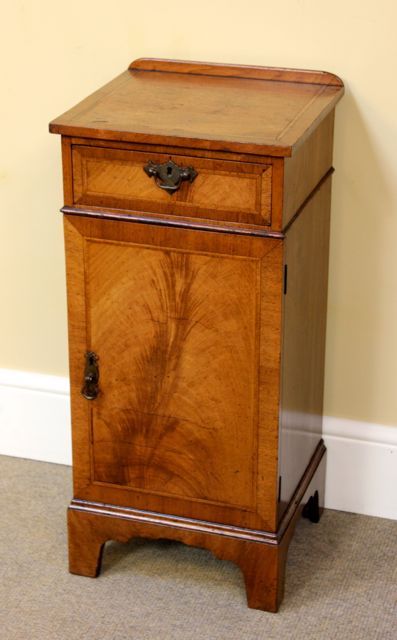
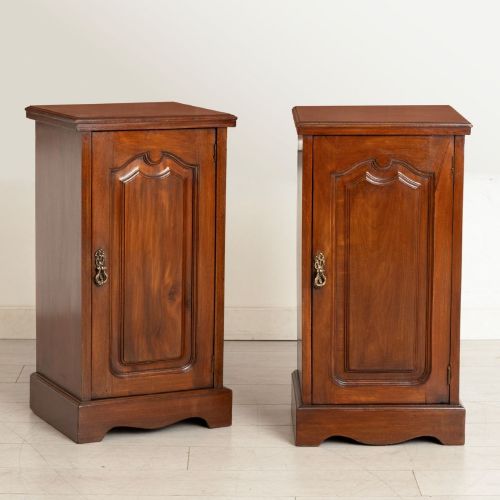
A 19th century pedestal cabinet typically manifests as a compact bedside cupboard, nightstand, or pot cupboard designed for discrete storage beside a bed or in a corner. These pieces frequently appear in Victorian variants alongside Regency, William IV, and French Empire examples, showing considerable utility in domestic spaces.
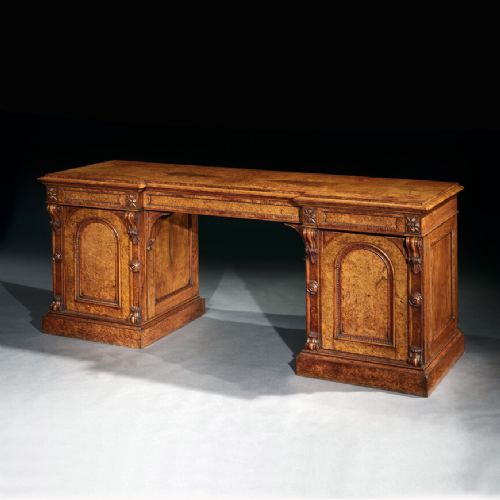
The form encompasses single-door cupboards, chests of drawers, and tall pedestals, often constructed from dense hardwoods like mahogany and walnut. Buyers meet these items most commonly in mahogany and burr walnut, reflecting the prevailing domestic preferences of the Victorian era.
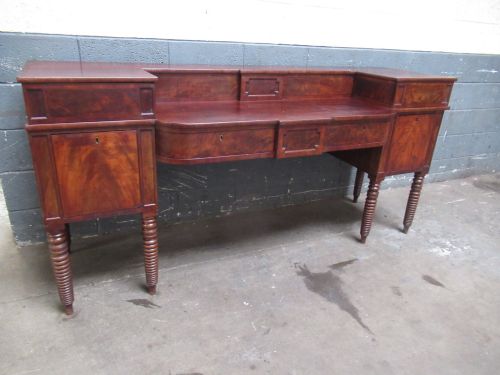
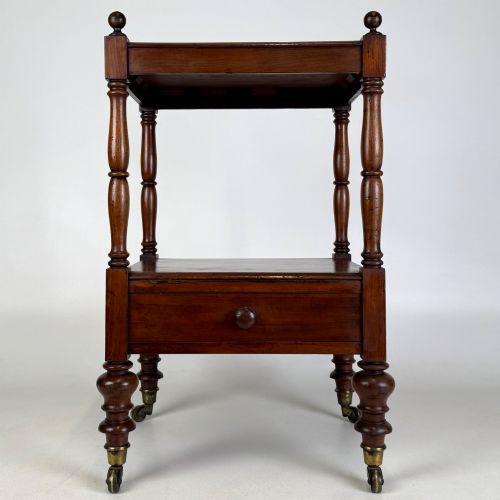
Beyond standard bedroom use, related forms in the wider selection include sideboards, desks, and occasional tables, yet the core 19th century pedestal cabinet remains defined by its enclosed single pedestal structure and compact footprint.
How they were made
Cabinet makers utilised dense timbers such as mahogany, oak, walnut, and burr walnut, frequently applying marble tops or intricate marquetry and satinwood inlay to elevate the visual weight. Structural frames often incorporate secondary woods like pine, joined with traditional methods suited to heavy daily use.
Surface decoration relies heavily on natural wood veneers, particularly figured burr walnut and birds eye maple, supplemented by brass handles, hinges, and occasional ormolu mounts. Polish and wax finishes were built up by hand to protect the timber and highlight the natural grain patterns.
Listings feature pieces spanning the entire nineteenth century, incorporating Victorian, Regency, William IV, and French Empire styles in mahogany, walnut, oak, and marble.
What varies in quality
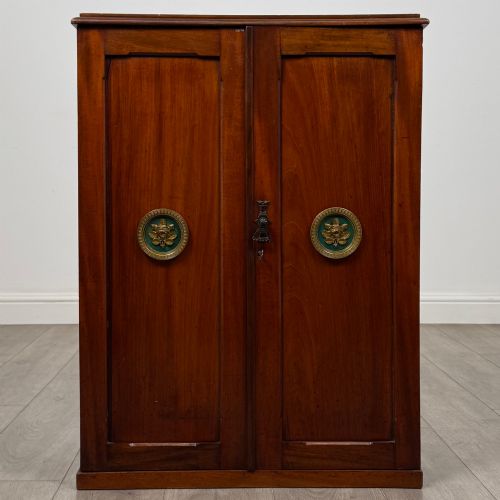
Quality rests upon the selection of timber figures, where matched burr walnut veneers or dense, heavy mahogany command greater appreciation than plain, utilitarian pine or secondary softwoods. The crispness of carved details, such as those found on Victorian or French Empire mounts, also separates standard workshop output from exceptional cabinet work.
Internal construction standards dictate longevity, visible in the precision of drawer dovetailing, the integrity of marble inserts, and the original pairing of brass hardware. Pieces retaining their structural stability without excessive timber shrinkage or replacement parts represent the upper tier of surviving examples.
Hewetsons London·Gillows·Johnston and Jeanes
The 19th Century Pedestal Cabinet Glossary
- Pedestal cabinet
- A freestanding, enclosed single-column piece of furniture usually fitted with a door or drawers. It provides compact storage for domestic chambers.
- Burr walnut
- A highly figured timber veneer taken from the wart-like growth on a walnut tree. It creates intricate, swirling patterns across the surface of nineteenth-century doors and drawers.
- Pot cupboard
- A historical term for a small bedside cabinet originally built to house a chamber pot. They now serve primarily as lamp stands or nightstands.
- Marquetry
- The art of applying decorative pieces of veneer to a structural structure to form pictorial or geometric designs. It appears on superior nineteenth-century surfaces.
- Ormolu
- Gilded bronze mounts applied to the corners, feet, or doors of fine nineteenth-century furniture, particularly pieces influenced by French Empire styles.
19th Century Pedestal Cabinet: Frequently Asked Questions
What is a pedestal cabinet used for?
A pedestal cabinet provides compact enclosed storage inside a bedroom or parlour, originally functioning as a nightstand or bedside cupboard for personal items.
Today, buyers utilise them as lamp tables or decorative accent pieces that fit neatly into smaller spaces while offering hidden shelving.
How do I tell a Victorian cabinet from a Regency one?
Regency pieces generally display cleaner architectural lines, classical proportions, and often simpler brass mounts reflecting early nineteenth-century neoclassical tastes.
Victorian cabinets tend to show heavier proportions, richer carved walnut or mahogany, and occasionally more ornate embellishments suited to later domestic interiors.
Are marble tops original to these cabinets?
Many nineteenth-century pedestal cabinets, particularly French Empire and mid-period bedside variants, were manufactured with fitted marble slabs to provide a durable, stain-resistant surface.
These tops are typically heavy and rest directly upon the timber frame, matching the exact dimensions of the cabinet base.
What timbers were commonly used?
Mahogany and walnut form the vast majority of surviving nineteenth-century examples, with burr walnut utilised for highly decorative grain patterns on doors and drawer fronts.
Secondary timbers like pine appear inside carcasses and drawer linings, while occasional pieces utilise oak, satinwood, or rosewood.