





Victorian Cylindrical Bedside Table
These Victorian cylindrical bedside table pieces bring neat nineteenth-century curves and practical marble tops right beside the bed.
Victorian Cylindrical Bedside Table
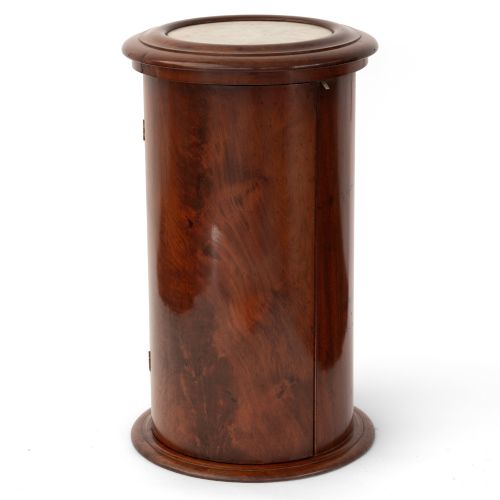
A victorian cylindrical bedside table takes the form of a round cupboard or pedestal designed to sit neatly next to a bed. These pieces often go by names such as pot cupboards, bedside cabinets, and nightstands.
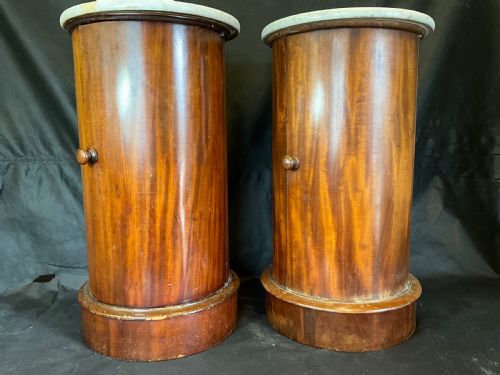
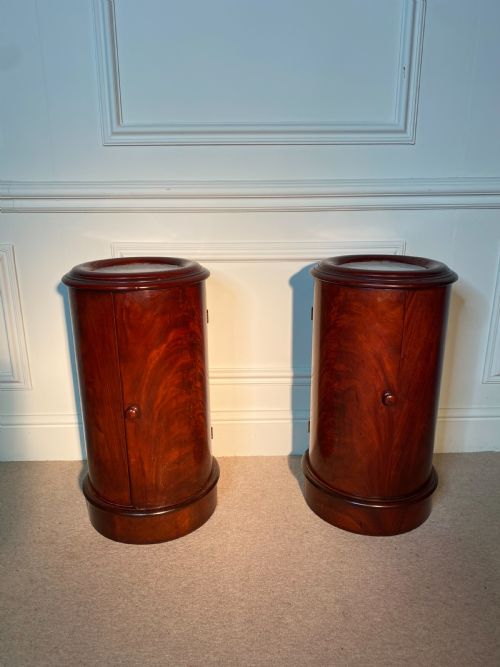
The version most commonly met on this page is the nineteenth-century mahogany cabinet, frequently topped with white or grey marble and occasionally finished in flame mahogany.
Makers of the period also produced faux marble cylinder stands and walnut pedestals, giving buyers a choice of rich timber grains and stone surfaces.
How they were made
Cabinet makers built these round structures using solid and veneered timbers like mahogany, flame mahogany, and walnut, curved to form the enclosed body of the cabinet.
Heavy marble slabs were fitted precisely to the circular tops to provide a durable, wipe-clean surface for water jugs and night-time necessities.
Details such as brass handles and paint finishes completed the construction, balancing utility with the formal styles of the era.
Victorian Cylindrical Bedside Table Retail Price Guide 2026
Typical asking prices for victorian cylindrical bedside table among the pieces listed under this phrase on Sellingantiques today, from the lower quarter to the upper quarter. They describe what is for sale here now, not the wider market.
Some nineteenth-century makers disguised humble pine beneath clever coats of paint to imitate expensive marble on a budget.
What varies in quality
The distinction between ordinary and superior pieces rests on the choice of timber and the handling of the wood grain, particularly where flame mahogany or figured walnut is employed.
Heavier, well-fitted marble tops and neatly matched pairs elevate certain cabinets above single, plain timber versions.
The crispness of the turning and the integrity of the cylindrical carcase determine whether a cabinet maintains its structural presence over decades of use.
The Victorian Cylindrical Bedside Table Glossary
- Pot cupboard
- A nineteenth-century bedside cabinet originally designed to house a chamber pot. They typically feature a single internal shelf and a door curved to follow the cylindrical carcase.
- Flame mahogany
- A timber veneer displaying a distinct, fiery, flame-like grain pattern. Cabinet makers selected these prized boards for the most prominent exterior surfaces.
- Pedestal
- A tall, freestanding column or support base used as a standalone display stand or bedside unit. In nineteenth-century furniture, these often double as enclosed cupboards.
- Cylindrical
- Having the shape of a cylinder with parallel straight sides and circular ends. This geometry required specialist woodworking techniques to curve timber neatly.
Victorian Cylindrical Bedside Table: Frequently Asked Questions
What is a Victorian cylindrical bedside table used for?
These cabinets served as practical bedside storage for chamber pots and personal items during the nineteenth century. Today, they function as elegant nightstands with convenient round surfaces for lamps and books.
Their enclosed cupboards keep bedroom clutter hidden while occupying a minimal footprint beside the bed.
How do I identify a marble top bedside cabinet?
Marble top models feature a fitted stone slab inset directly into the wooden rim of the cylinder top. This provided a waterproof surface that easily withstood the placement of heavy water jugs and washing basins.
Listings from the Victorian era frequently pair this stone with mahogany or walnut bodies.
Are pairs of bedside cabinets common?
Matched pairs appear occasionally among nineteenth-century bedroom furnishings, though finding them intact is less common than single pieces. Cabinet makers produced them to flank larger double beds of the period.
Buyers often encounter closely matched sets alongside individual pedestals.
What woods were used for these cabinets?
Mahogany remains the predominant timber found in these round nineteenth-century designs, often enhanced by striking flame grain variations. Walnut and painted surfaces also appear across the selection.
Cabinet makers utilised these dense hardwoods to achieve the smooth, curved forms characteristic of the style.