

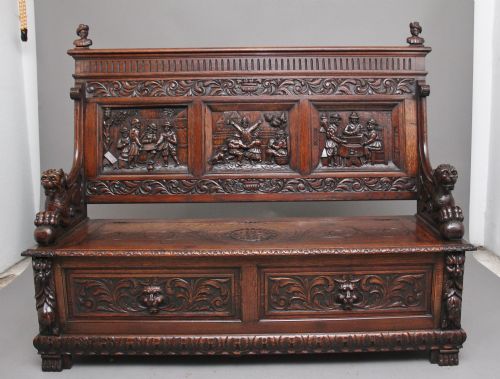


19th Century Panelled Bench
These 19th century panelled bench examples bring solid timber seating into a hallway or kitchen, offering high backs and enclosed storage.
19th Century Panelled Bench
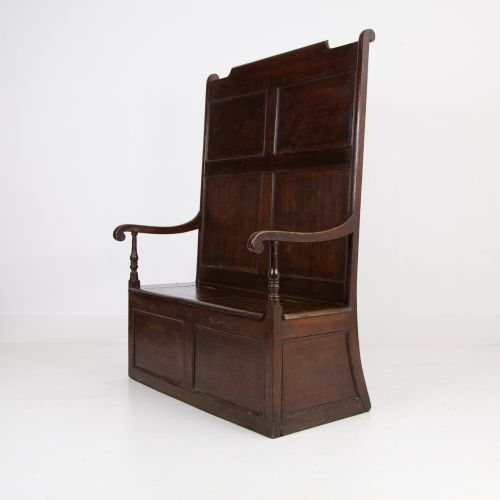
When you search for a 19th century panelled bench, you encounter sturdy settles, high-back pews, and box benches designed to block drafts and provide seating. These pieces originate from English, Spanish, and French country contexts, utilising solid wood construction suited for domestic and ecclesiastical interiors.
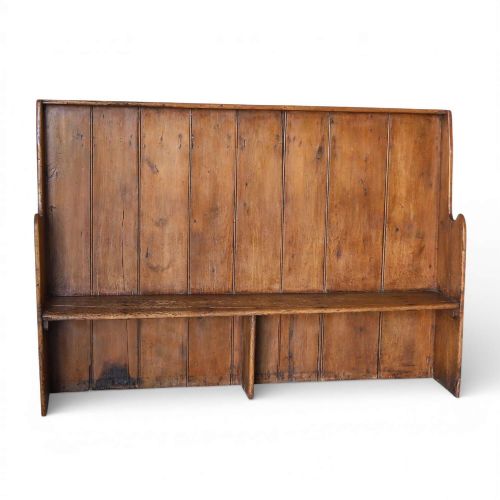
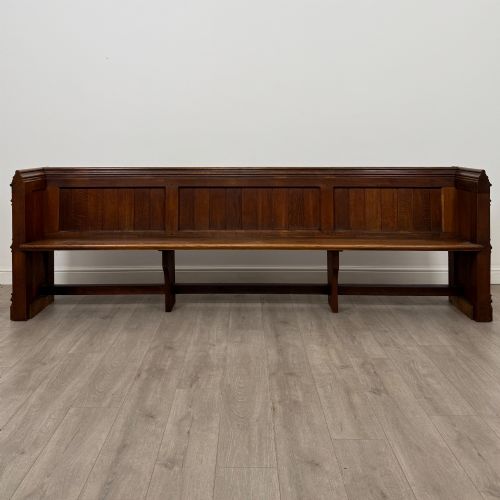
The most common formats on this page include oak and pine settles featuring panelled backs and integrated box storage beneath the seat. You also find church pews and hall benches originating from the Victorian period and the late nineteenth century.
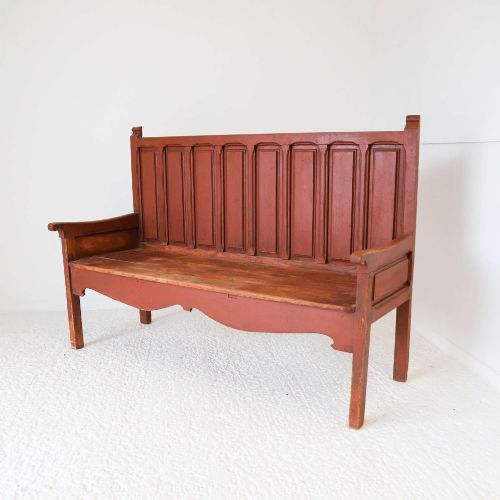
Regional variations span English country pine, Spanish painted versions, and Jacobean revival oak pieces with carved details. Such seating served practical functions in farmhouses, halls, and churches before entering the antique market.
How they were made
Carpenters built these items using solid oak and pine, employing traditional joinery such as frame and panel construction to accommodate wood movement. Surfaces received either a clear wax finish to highlight honey brown patina, historical paint, or carved ornamentation.
Many examples incorporate hinged seats opening to reveal storage boxes for blankets or household goods. Pews and settles utilise upright panelled backs, sometimes featuring ecclesiastical provenance or simple country framing.
One listed oak pew spent its working life inside St. Paul's Church in Tiverton before reaching the market.
What varies in quality
Quality differences stem from the grade of timber employed, the depth of carved or panelled detailing, and the integrity of the structural frame. Pieces retaining their original box storage, authentic patina, and untouched timber surfaces hold greater architectural interest.
The sophistication of the joinery and the regional style dictate the distinction between simple utilitarian seating and more elaborate revival pieces. Condition varies according to the amount of historical timber replacement and the preservation of original paint or wax finishes.
The 19th Century Panelled Bench Glossary
- Settle
- A wooden bench with a high panelled back, solid arms, and often a box base. This form protected occupants from draughts in domestic interiors.
- Box settle
- A variation featuring a hinged seat lid that opens to reveal storage underneath. It combines seating with functional household storage.
- Patina
- The surface sheen and colour developed by wood over decades of handling and polishing. Honey brown patina indicates long-term wax finishing and use.
- Pew
- A long wooden bench traditionally found in churches. Examples on this page originate from ecclesiastical settings like St. Paul's Church, Tiverton.
- Bergere
- An upholstered armchair or settee design with enclosed sides. The evidence includes a French example alongside traditional wooden benches.
19th Century Panelled Bench: Frequently Asked Questions
Where did these benches originate?
The listings show origins spanning English, Spanish, and French country workshops, alongside ecclesiastical settings.
Maker and regional details reflect vernacular furniture traditions across the nineteenth century.
How were box settles used?
Box settles provided seating while keeping draughts away from the occupants in domestic rooms.
The lidded seat allowed households to store items like textiles and boots out of sight.
What woods were commonly used?
Carpenters primarily selected oak and pine for these seating forms.
Mahogany and painted wood also appear across specific regional styles.