








19th Century Painted Settle
A 19th century painted settle brings country character and enclosed seating into a room, offering historic pine construction and regional decorative finishes.
19th Century Painted Settle
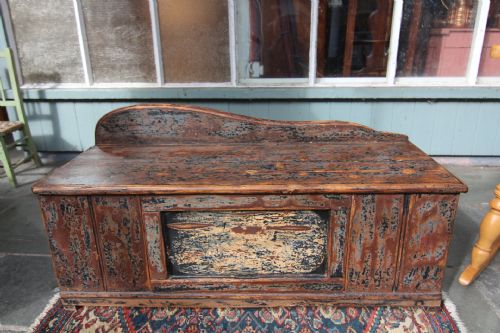
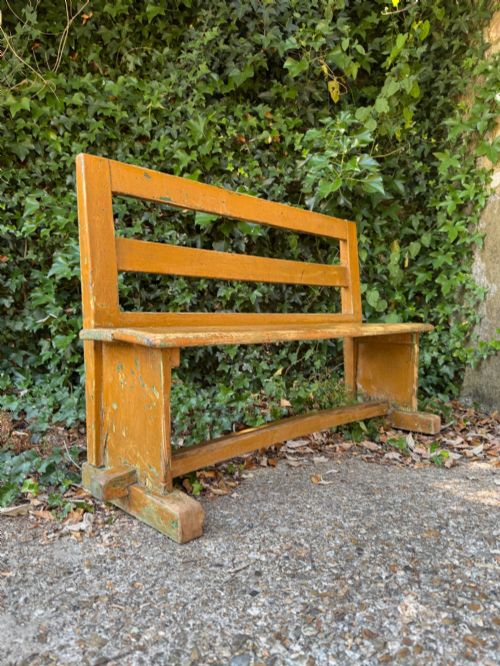
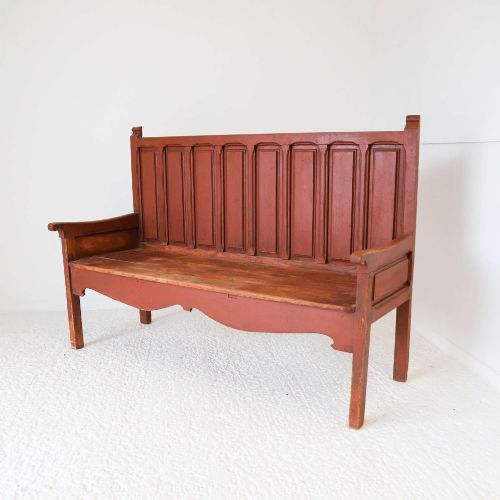
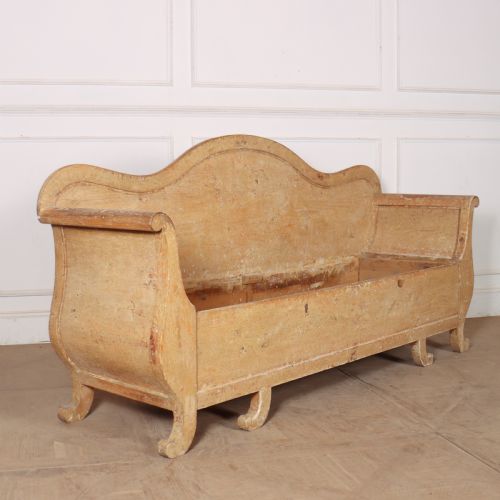
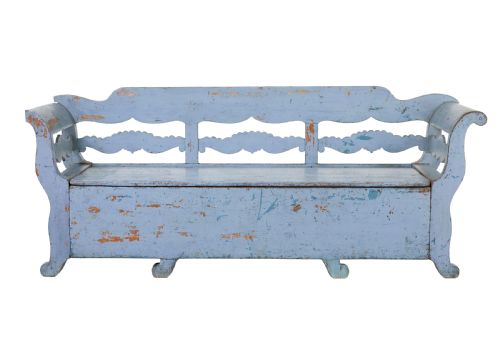
A 19th century painted settle typically takes the form of a high-backed wooden bench, frequently incorporating a box seat for interior storage. Buyers looking for these seating pieces encounter regional expressions ranging from Swedish Gustavian and Austrian examples to Spanish, French, and British country forms.
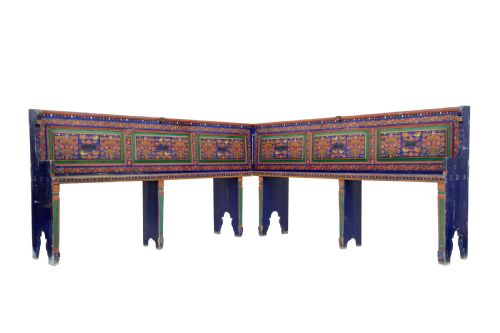
The selection on this page centres heavily on pine benches and settles, alongside related folk art corner seats, box seats, and occasional maritime paintings by artists sharing the surname Settle. These seating items served practical domestic purposes in European farmhouses, taverns, and rural dwellings before entering the antique market.
Most specimens date from the Victorian era and the broader nineteenth century, showcasing styles defined by folk art, rustic country, and Scandinavian aesthetics. The combination of structural timber and original or aged paint surfaces gives each piece a distinct local identity.
Materials and construction methods
Carpenters built these settles primarily using solid pine and timber, joining boards with traditional methods suited to heavy daily use in rural households. Box seats and high backs required sturdy framing to support storage compartments and protect sitters from drafts.
Decoration relied upon layers of paint applied to wood surfaces, often featuring cream, green, or polychrome schemes that reflected specific regional folk traditions. Over decades of use, these painted finishes acquired natural patination and wear.
Listings feature pine and timber construction with painted finishes spanning Swedish, Austrian, Spanish, and British regional traditions.
Factors that distinguish quality
Quality rests heavily upon the originality and preservation of the painted surface, with untouched historic pigment holding greater interest than modern repainting. The integrity of the underlying pine timber and the retention of original hardware further separate standard examples from finer survivals.
Proportion and decorative detail also differentiate the pieces, as balanced regional proportions and deliberate folk art motifs elevate a standard bench into a more compelling example of nineteenth-century craft.
William Frederick Settle
The 19th Century Painted Settle Glossary
- Settle
- A wooden bench with a high back and solid arms, often designed with a box seat for storage beneath the cushion. These pieces provided draught-proof seating near hearths in historic homes.
- Box seat
- A bench seat hinged to open and reveal a compartment underneath for storing household items. This practical addition maximised utility in smaller rooms.
- Gustavian
- The Swedish neoclassical style popular in the late eighteenth and nineteenth centuries, known for pale painted finishes and restrained classical ornamentation. Pieces from this tradition often feature soft cream or grey tones.
- Folk art
- Decorative objects and furniture created within a specific regional tradition by self-taught or local artisans. These items display distinctive vernacular motifs rather than formal academic styles.
- Polychrome
- Decorated in multiple colours. This term describes painted surfaces that incorporate several distinct hues within their decorative scheme.
19th Century Painted Settle: Frequently Asked Questions
What is a painted settle?
A painted settle is a wooden bench featuring a high back to block draughts and a solid base, frequently incorporating a storage box beneath the seat. Nineteenth-century examples often display regional European painted finishes.
These pieces were traditionally placed near firesides in farmhouses and taverns to provide comfortable, enclosed seating.
How do I date a 19th century painted settle?
Dating relies on examining the construction techniques, timber characteristics, and the wear patterns on the painted surface. Hand-cut joints and period-specific pigments help establish whether a piece belongs to the Victorian era or earlier decades.
Regional styles like Gustavian or folk art also provide clues to the origin and approximate decade of manufacture.
Where were these settles made?
These seating pieces originated across various European regions, with strong representation from Sweden, Austria, Spain, France, and Britain. Local vernacular traditions dictated the specific shapes and paint colours used by regional makers.
Swedish pieces often reflect Gustavian restraint, while Austrian and British examples lean towards rustic country forms.
How should I care for an antique painted settle?
Protect the painted wood by keeping the bench away from direct sunlight and maintaining stable room humidity. Avoid harsh chemical cleaners that might lift historic paint layers.
Dust gently with a dry cloth and apply wax sparingly only if the unpainted timber requires nourishment.