

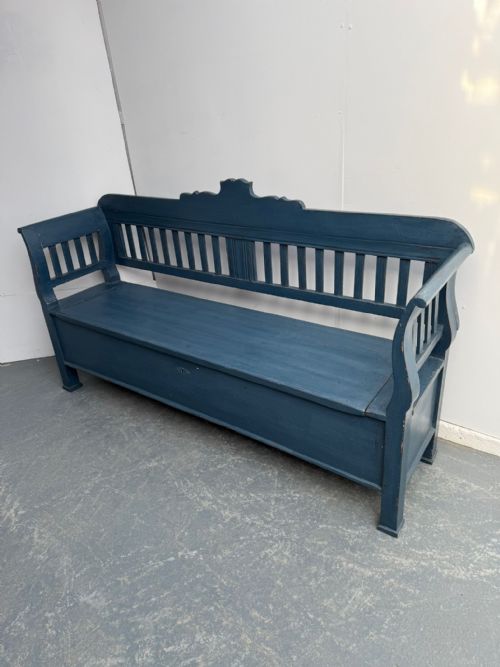
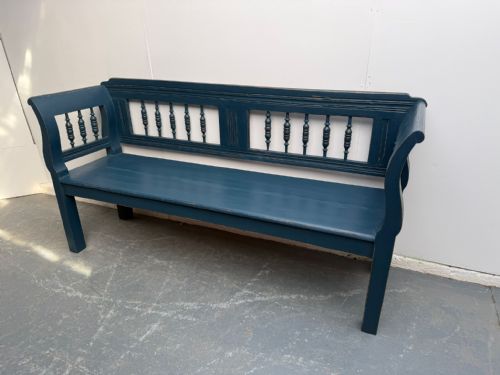


Rustic Painted Country Bench
A rustic painted country bench brings honest regional character and functional seating to an interior through time-worn surfaces and sturdy timber construction.
Rustic Painted Country Bench
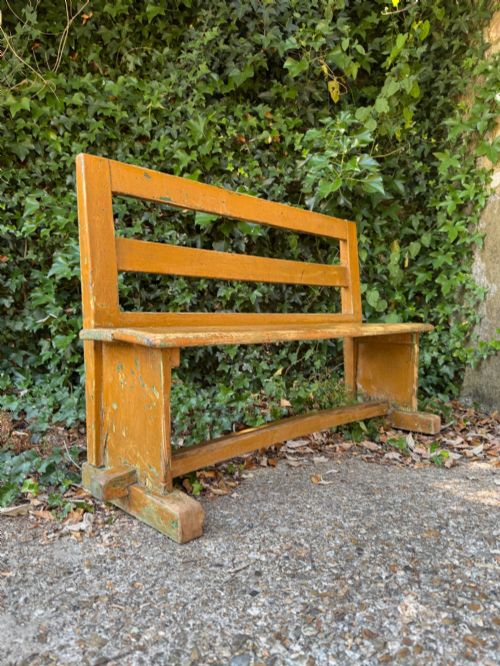
A rustic painted country bench encompasses seating forms created for everyday domestic and provincial use, spanning periods from the eighteenth century through to the early twentieth century. These utilitarian pieces originate from various European regions including England, France, Sweden, Austria, Spain, and Hungary.
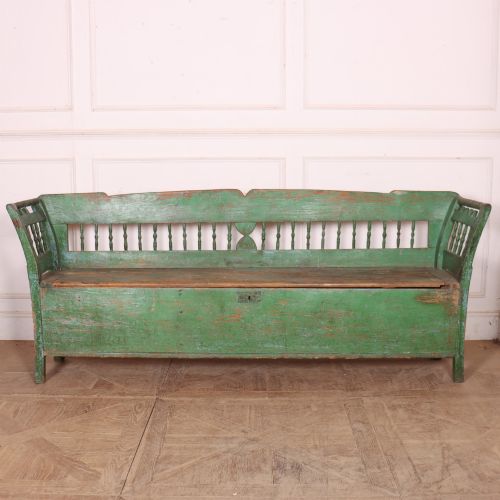
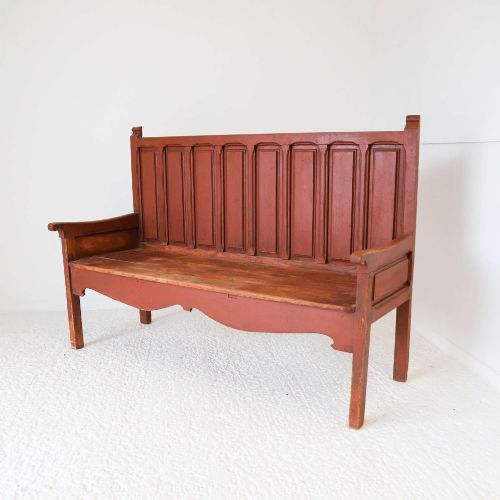
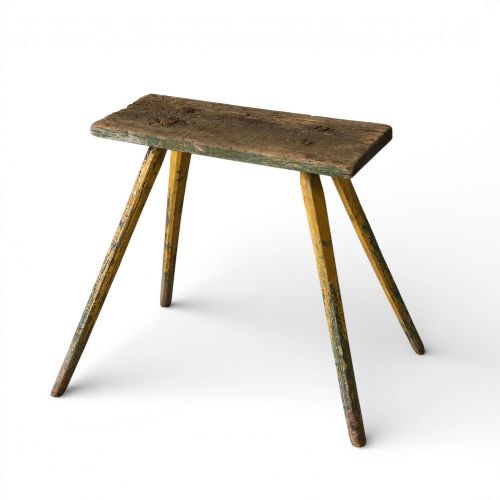
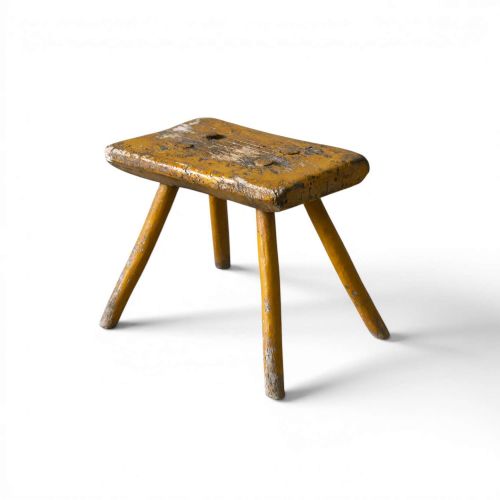
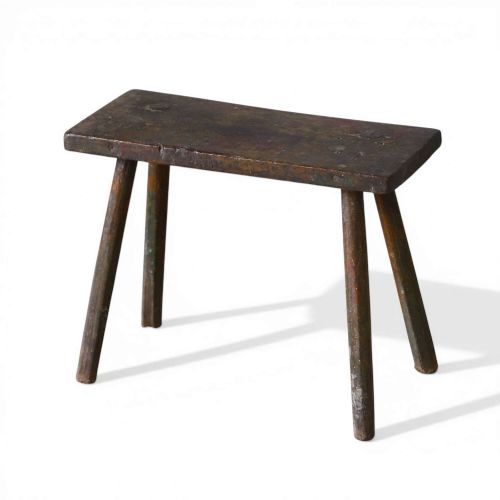
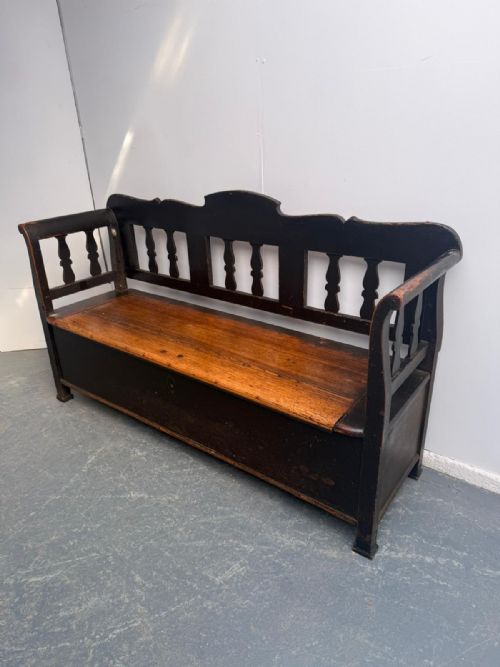
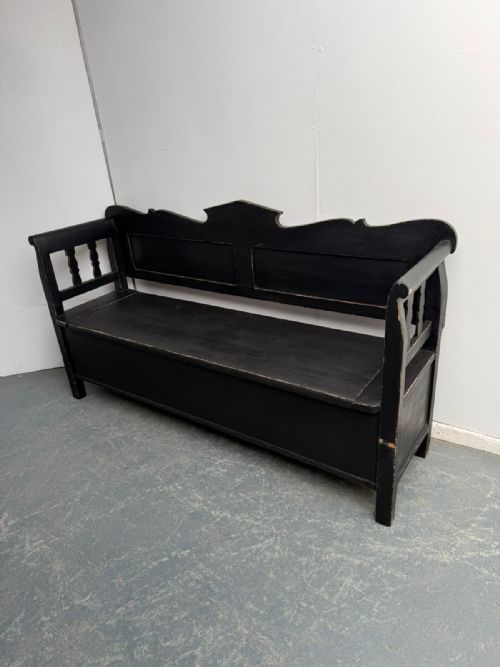
The most common formats found within this selection include long dining benches, high-backed settles, and box settles that double as storage compartments. Stools and trestle variations also appear, reflecting the practical needs of past rural households.
Makers ranged from local village joiners to scratch-built domestic makers who utilised readily available timber to supply farmhouses, taverns, and country homes. Their output relies on straightforward construction methods tailored to daily utility rather than formal court aesthetics.
Materials and construction methods
Construction relies primarily on pine and softwood timber, chosen for availability and ease of working by regional joiners. Iron fixings and hardware occasionally support the wooden frames of larger settles and benches.
Surfaces are finished with layers of original paint, often surviving in tones of ochre, green, grey, blue, or black. Some pieces display scumble finishes or distressed patination acquired through decades of domestic use.
Several milking stools managed to survive centuries of farm chores while keeping splashes of vibrant green and ochre paint entirely intact.
Assessing character and material integrity
Quality rests in the survival of original painted surfaces rather than later retouches or stripped bare wood. The depth of wear and the honesty of the timber grain reveal how a bench has aged in its original provincial setting.
Proportions and structural integrity dictate the success of the form, from neat Georgian examples to large multi-seater settles. Regional idiosyncrasies, such as barrel backs or integrated storage boxes, elevate the distinctiveness of individual pieces.
The Rustic Painted Country Bench Glossary
- Settle
- A wooden bench with a high back, solid arms, and often a closed base, designed to block draughts in farmhouse kitchens. These pieces frequently incorporate hinged seats revealing storage space beneath.
- Scumble
- A decorative painting technique involving a translucent glaze dragged over a lighter base coat to imitate grain or create mottled textures. It appears on primitive regional furniture.
- Softwood
- Timber derived from conifers, predominantly pine in these listings, which served as the standard material for everyday provincial furniture across Europe.
- Tavern bench
- A long, sturdy bench made for commercial hospitality environments such as inns and public houses, built to withstand heavy daily traffic.
Rustic Painted Country Bench: Frequently Asked Questions
How do I care for original paint?
Keep painted wooden furniture away from direct sunlight and steady heat sources to prevent the historic pigments from fading or lifting.
Dust gently with a dry, soft cloth and avoid chemical cleaning products that might strip the surviving layers.
Where were settles used?
These high-backed seats stood near hearths in farmhouses and inns to shield occupants from cold draughts coming across stone floors.
The enclosed box base also provided secure storage for household blankets or provisions.
How do I identify the period?
Dating relies on construction joints, tool marks, and the chemical composition of underlying paint layers rather than maker marks.
Georgian and eighteenth-century examples often display simpler, heavier framing while later Victorian and turn-of-the-century pieces show varied regional styles.
Can I use these benches daily?
Most provincial benches are structurally sound for modern seating provided the timber joints remain stable and uncompromised.
Placing felt pads beneath the feet helps protect both the antique frame and modern flooring surfaces from friction.