
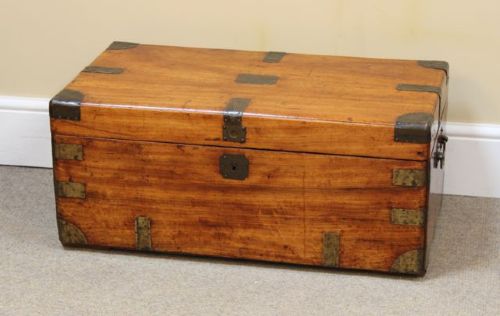
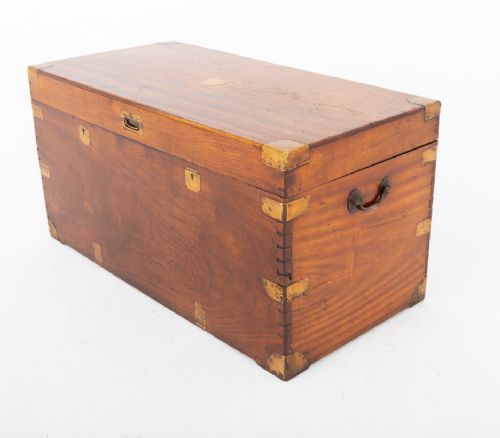
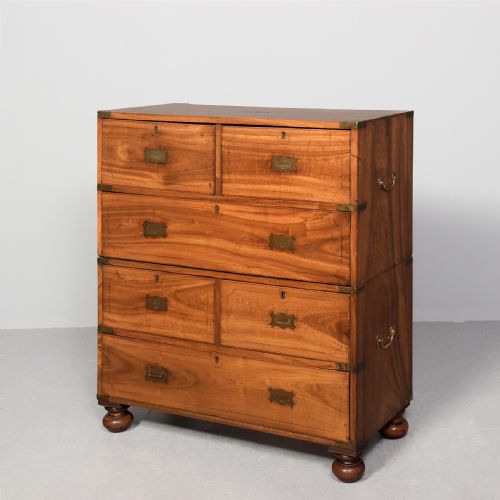


19th Century Officers Trunk
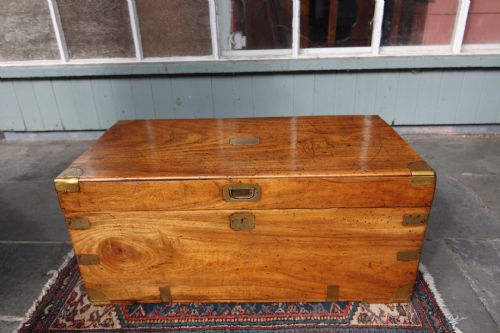
A 19th century officers trunk offers rugged travel utility and rich timber character, built to accompany commanders across the British Empire.
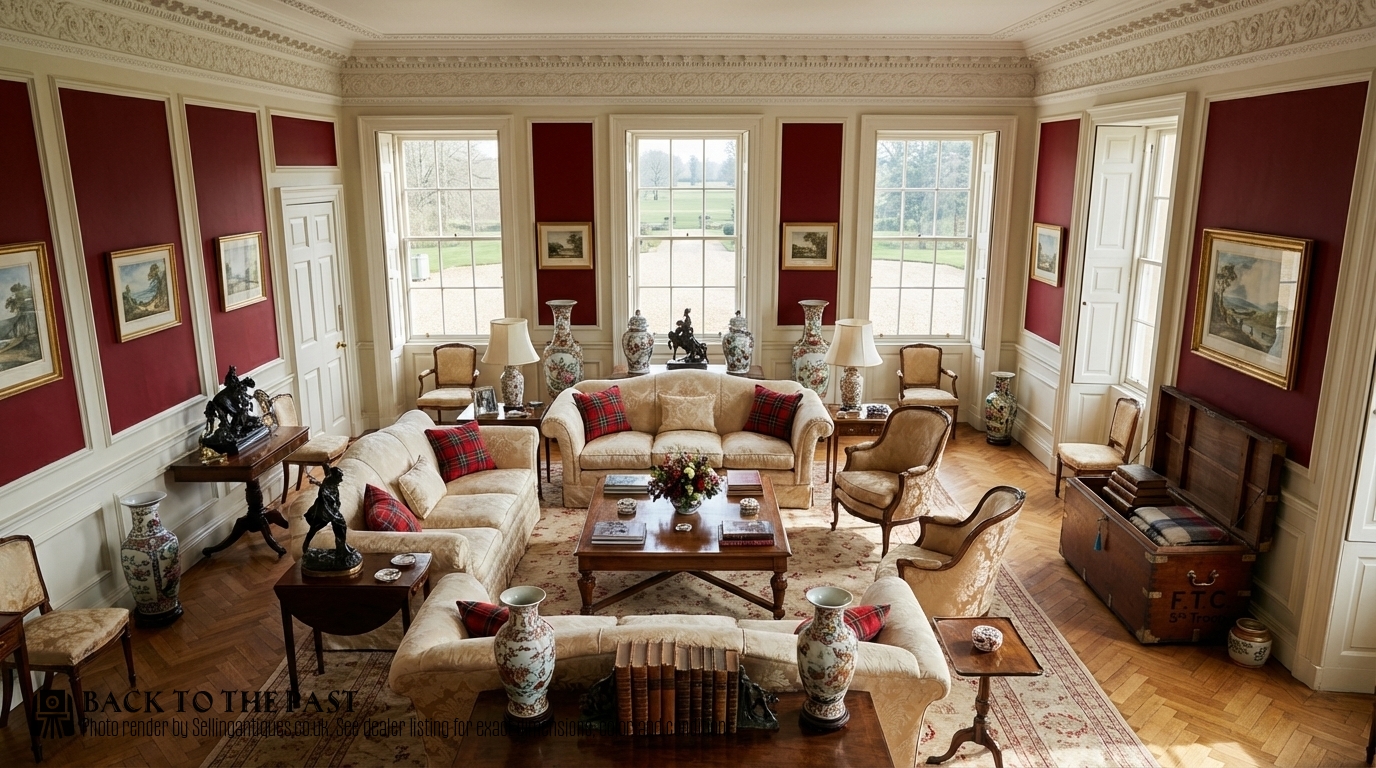
19th Century Officers Trunk
A 19th century officers trunk serves as portable military luggage designed for colonial service and demanding travel across the empire. These robust chests and chests of drawers protect uniforms and equipment during long voyages by sea and land.
The pieces appearing on this page span the 19th century, drawing from Regency and Victorian periods. Most examples reflect military campaign styles, featuring sturdy timber construction intended for repeated dismantling and transport.
Buyers encounter forms ranging from simple lidded coffers to sophisticated two-part chests of drawers. Origins include British colonial workshops, China Trade commissions, and domestic production for officers on active duty.
Construction methods and materials
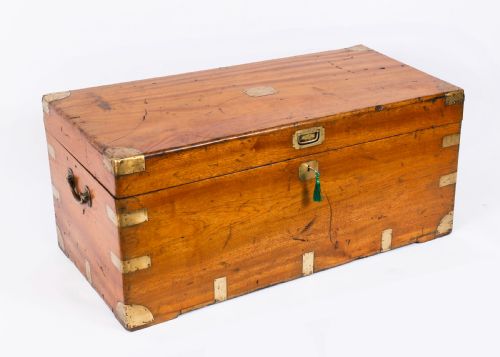
Carpenters build these pieces primarily using dense timbers such as camphor wood, teak, oak, and walnut to withstand tropical humidity and rough handling. Camphor wood provides a natural insect repellent property prized during long maritime journeys.
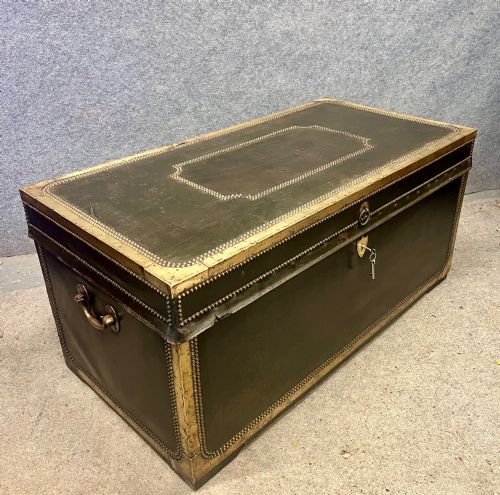
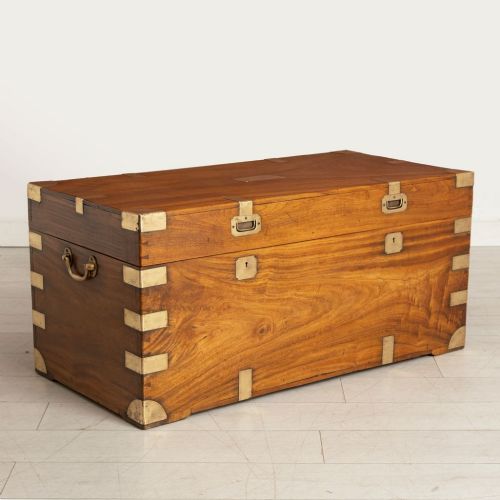
Metal reinforcement defines the genre, employing heavy brass corners, straps, and binding to protect vulnerable edges from impacts. Iron fittings and leather coverings appear alongside recessed brass carrying handles designed to sit flush against the timber sides.
Many camphor wood trunks still retain their sharp, medicinal fragrance after two centuries inside military tents and colonial cabins.
Distinctions in craftsmanship
The standard of timber selection and joinery separates standard travel chests from elite officer commissions. Finely figured camphor wood or teak boards, matched across the front facade, indicate superior workshop production.
Hardware integration marks another quality tier, where hand-beveled brass plates fit flush into recessed channels rather than resting on the surface. Original inscriptions, intact zinc linings, and maker signatures like Drew and Sons elevate the historical integrity of the piece.
Drew and Sons
The 19th Century Officers Trunk Glossary
- Campaign chest
- A portable set of drawers built in two separate sections for easy transport by pack animal or wagon. Brass corners protect the edges during transit.
- Camphor wood
- An aromatic timber native to Asia, utilised extensively for military trunks to deter moths and dampness. Its distinct scent remains noticeable decades later.
- Brass bound
- A method of reinforcing wooden trunk edges and corners with heavy metal strips secured by numerous small screws. This prevents splitting under heavy military use.
- China Trade
- Goods manufactured in treaty ports for Western export during the 19th century, combining European furniture forms with local Asian timber and craftsmanship.
- Recessed handle
- A flush-fitting metal grip inset into the side of a trunk or chest so it does not project beyond the timber surface during packing.
19th Century Officers Trunk: Frequently Asked Questions
What is a campaign trunk?
A campaign trunk is a sturdy, portable wooden chest designed for military officers on active service during the 19th century.
These pieces use modular construction and brass reinforcement to survive rough transport across the British Empire.
Why use camphor wood?
Camphor wood naturally repels insects and resists moisture, making it ideal for storing uniforms in tropical climates.
The timber releases a distinct aromatic scent that helps protect textiles from moth damage over long periods.
How were these trunks transported?
Officers packed these trunks onto pack animals, wagons, and ships during military campaigns and colonial postings.
Recessed brass handles and protective corner brackets allowed multiple trunks to be stacked securely in transit.
How to date a campaign chest?
Dating relies on timber choices, brass hardware styles, and construction markers recorded across Regency and Victorian periods.
Earlier pieces often feature China Trade camphor construction, while later examples incorporate oak, walnut, or zinc linings.