

19th Century Office Drawers
These 19th century office drawers offer sturdy utility and rich timber character, built to organise Victorian paperwork with genuine architectural presence.
19th Century Office Drawers
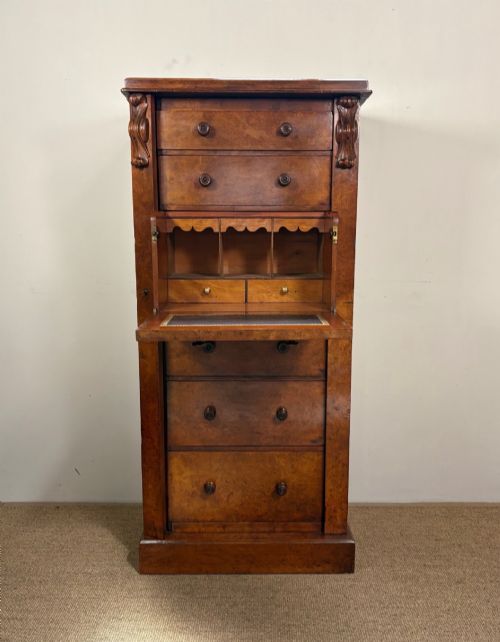
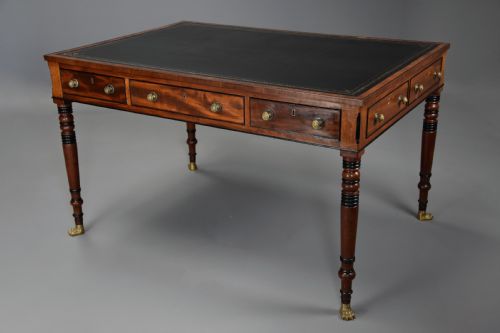
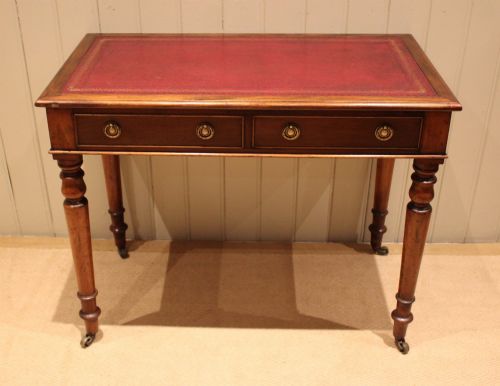
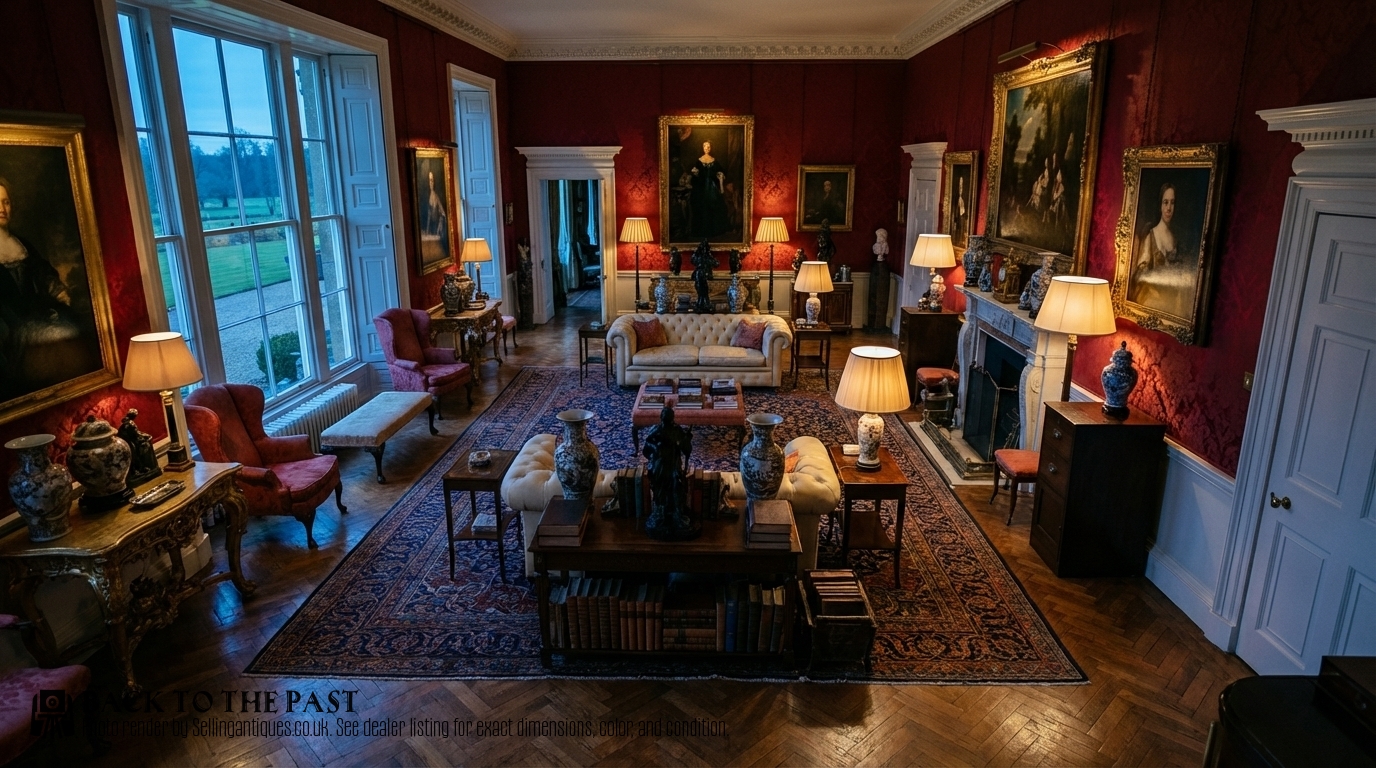
When searching for 19th century office drawers, buyers encounter substantial pieces designed for serious administrative tasks rather than casual correspondence. The selection here spans the Victorian era alongside Regency and Charles X pieces, concentrating heavily on pedestal desks, writing tables, and filing cabinets.
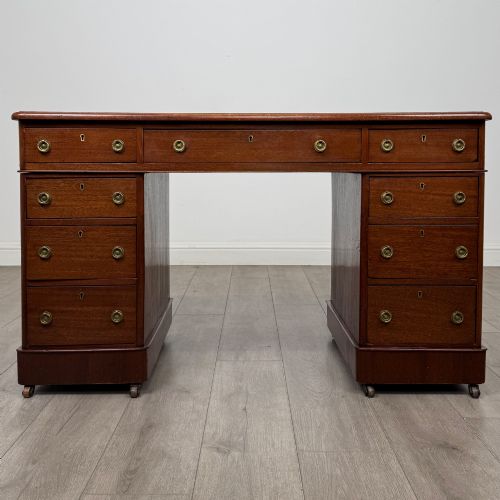
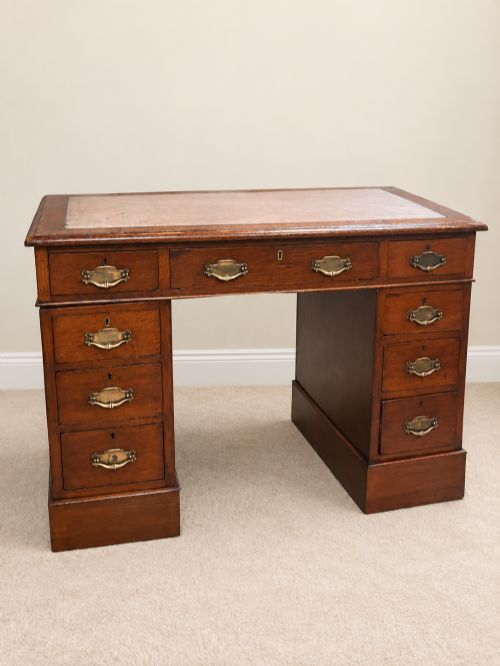
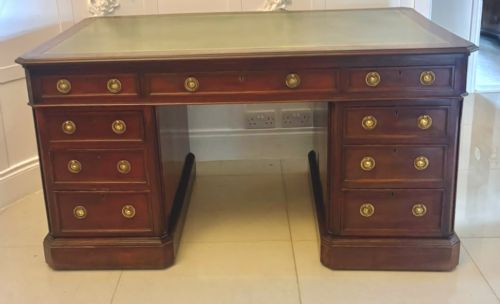
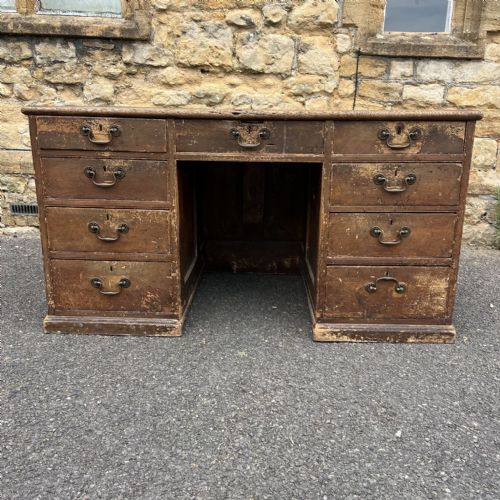
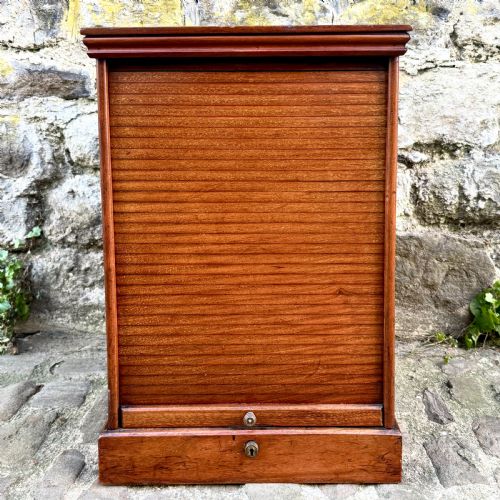
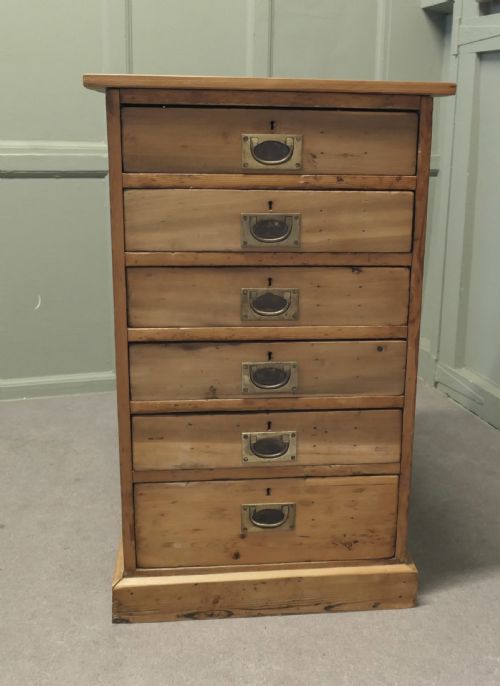
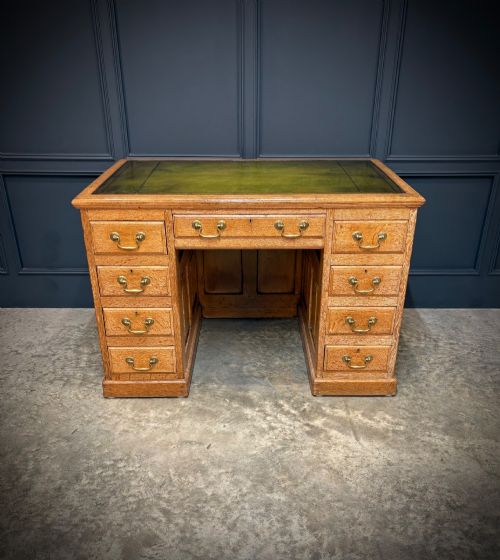
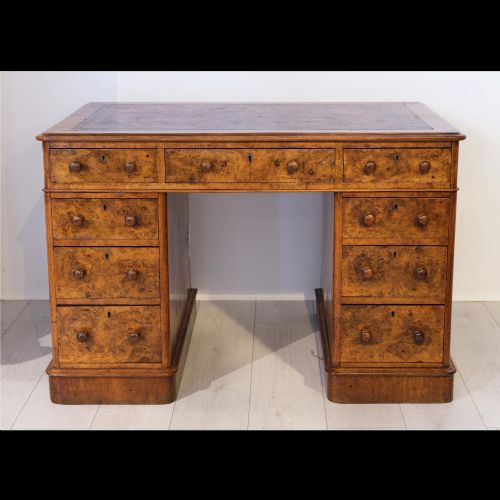
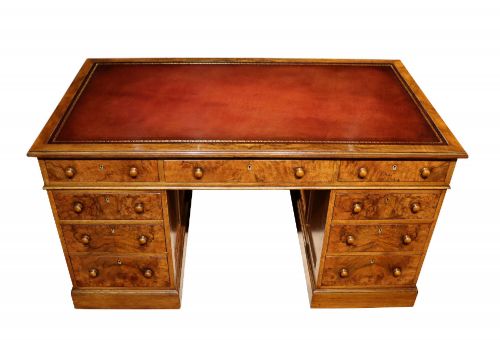
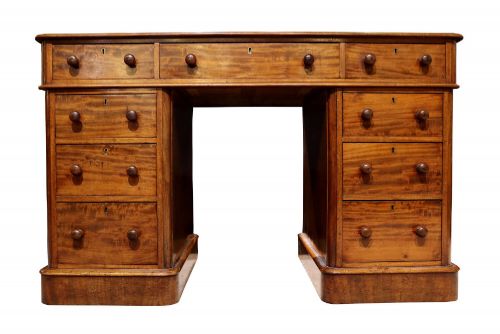
The dominant forms are pedestal desks and kneehole desks fitted with banks of drawers, often accompanied by Davenport desks, campaign filing cabinets, and shallow pine filing drawers. These items originated in working offices, solicitors' chambers, and country estates.
Mahogany and oak appear most frequently as the primary woods, while burr walnut and satin birch surface in more decorative furniture. Buyers meet everything from heavy banker's drawer units to freestanding partner desks.
Judging the standard
Quality rests upon the selection of timber veneers, the crispness of the drawer joinery, and the retention of original brass hardware. Pieces originating from known workshops display superior secondary woods and thoughtful internal fittings such as stationery drawers and writing slides.
Proportion and the natural ageing of the surface dictate the visual appeal of each desk or cabinet. Examples that retain a fine, faded patina and original leather writing surfaces demonstrate better preservation than heavily altered items.
Some heavy banker's drawer units included integrated safe cupboards for hiding port and petty cash.
Maple and Co·Heal and son
The 19th Century Office Drawers Glossary
- Pedestal desk
- A heavy office desk featuring two banks of drawers supporting the main writing surface. These freestanding units were designed to sit centrally in a room.
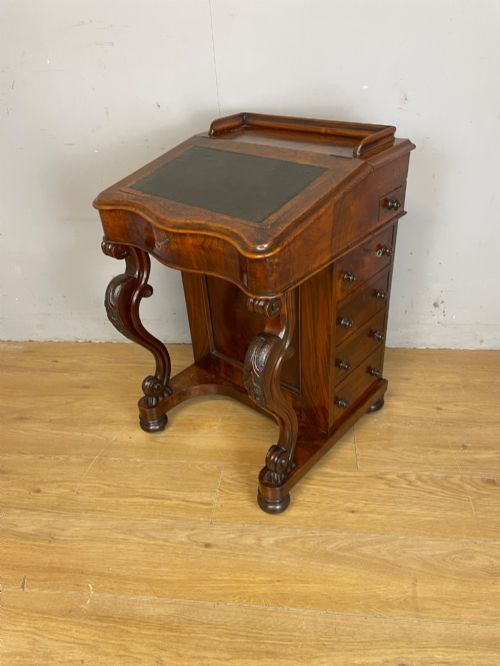
- Davenport desk
- A compact Victorian writing desk featuring a sloping top above a side-opening bank of drawers. It provided a practical writing station for smaller studies.
- Campaign filing cabinet
- Portable modular storage built in sections with brass corners and recessed handles. Officers and administrators used them for transporting documents.
- Cartonnier
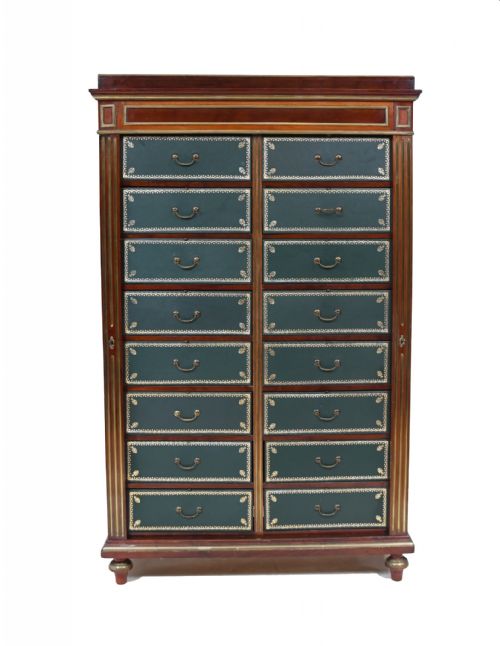
- A French cabinet fitted with multiple pigeonholes or shallow drawers for sorting papers. They were often constructed in mahogany during the early nineteenth century.
- Kneehole desk
- A smaller desk with a recessed central space for the legs, flanked by pedestals of drawers. They offered efficient storage without occupying excessive floor space.
19th Century Office Drawers: Frequently Asked Questions
How do I identify a Victorian pedestal desk?
Look for twin banks of drawers supporting a top inset with leather, usually constructed in solid mahogany or walnut. These desks often feature deep bottom drawers for ledgers and central kneehole compartments.
Examine the drawer linings to check for hand-cut dovetails and solid secondary timbers like oak or pine. Period brass pulls and working locks with original keys further confirm authenticity.
Were these drawers used in homes or offices?
Nineteenth-century office drawers served working environments such as solicitors' offices, banks, estate offices, and municipal buildings. Their robust construction was engineered for heavy daily administration and ledger storage.
Over time, many of these functional pieces migrated into private libraries and home studies. Today, buyers repurpose them as executive computer desks and primary study storage.
What is a Davenport desk used for?
A Davenport desk provides a compact writing surface combined with built-in stationery storage and side drawers. The sloping top lifts to reveal a small compartment for inkwells and paper.
Victorian writers used them for correspondence and household accounts in smaller rooms where a full pedestal desk proved too large. The side drawers pivot or pull out sideways to keep contents accessible.
How should I care for leather desk tops?
Tooled leather surfaces require gentle cleaning with a slightly damp cloth followed by a neutral leather cream to prevent cracking. Avoid harsh chemical cleaners and excessive moisture that might stain the surrounding timber.
Keep the desk away from direct sunlight and heat sources to protect both the leather insert and the underlying mahogany or walnut veneer. Regular conditioning maintains the supple texture of the writing surface.