


Brass Handle Pedestal Drawers
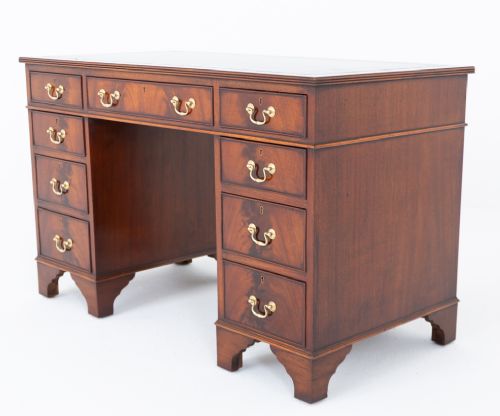
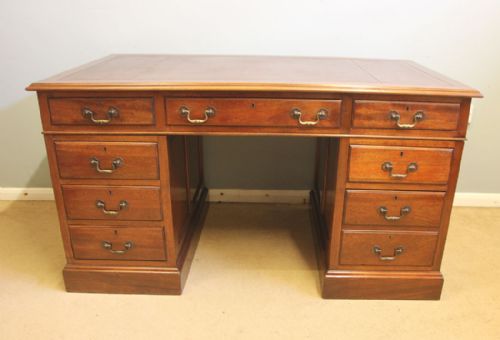
These brass handle pedestal drawers bring functional utility and period character to a room, offering sturdy compartmentalised storage within twin or single pedestal writing desks and filing cabinets.
Brass Handle Pedestal Drawers
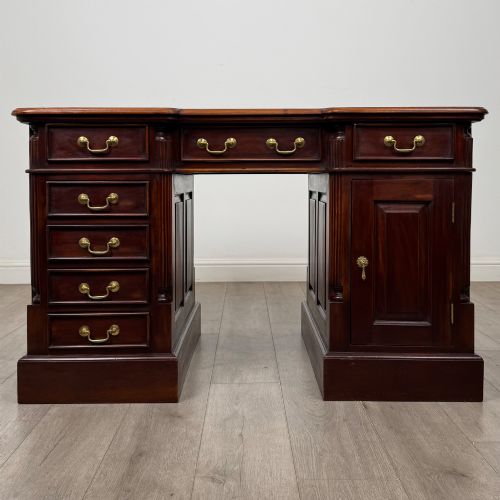
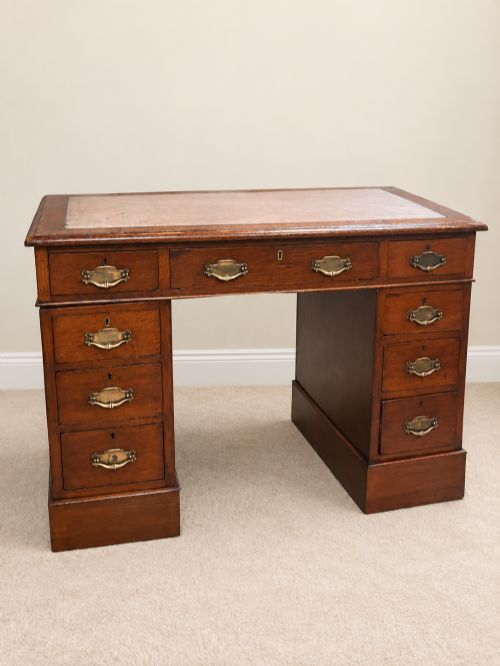
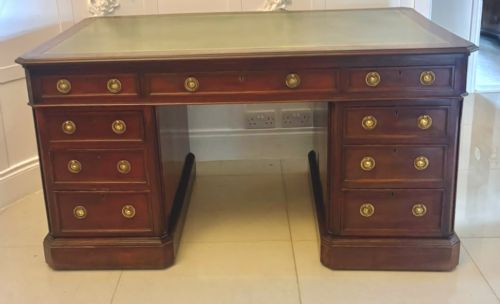
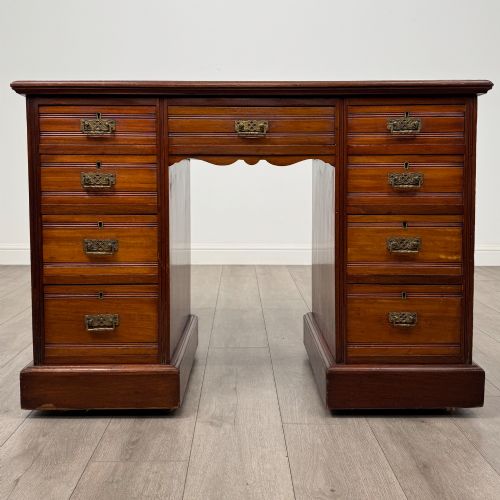
When you search for brass handle pedestal drawers, you are looking at substantial items of antique furniture built around banks of drawers flanking a central kneehole or opening. These pieces primarily take the form of desks, filing cabinets, and library pieces designed for administrative or writing work.
The versions you are most likely to meet on this page span the Victorian and Edwardian eras, alongside Georgian revivals, constructed with timber carcasses and metal hardware. Forms range from heavy bankers' drawer units to refined satinwood writing desks and nine-drawer filing cabinets.
Originating predominantly from British workshops across the nineteenth and early twentieth centuries, these units reflect the heavy administrative needs of their original period. They combine pedestal supports with multi-drawer configurations to maximise working surface and storage capacity.
Materials and construction methods
Construction relies heavily on dense timbers such as mahogany, oak, and satinwood, frequently paired with secondary woods for internal drawer linings. Cabinetmakers utilised framing techniques that allowed large pedestal carcasses to support heavy loads of paper and books without warping.
Hardware consists principally of brass, taking the form of drop handles, swan neck pulls, and backplates fixed to drawer fronts. Details such as leather writing surfaces, crossbanding in kingwood, and oak-lined drawers complete the build of these functional items.
Listings feature mahogany, oak, satinwood, and kingwood across desks, filing cabinets, and chests of drawers spanning the Victorian and Edwardian periods.
Assessing quality in pedestal storage
Quality separates the standard utilitarian office furniture from finer domestic library pieces through the selection of timber figure and decorative inlay. Finer examples display carefully matched mahogany grain, satinwood veneers, and crossbanding that elevate the piece beyond plain utility.
The integrity of internal construction also dictates worth, seen in the use of solid oak for drawer linings rather than cheaper conifers. Well-executed dovetailing on drawer joints and the retention of original brass hardware mark the upper tier of surviving examples.
The Brass Handle Pedestal Drawers Glossary
- Pedestal desk
- A heavy writing table supported by two vertical banks of drawers that rest directly on the floor. This layout provides extensive drawer space beneath the main writing surface.
- Crossbanding
- A narrow strip of veneer laid around the border of a drawer front or table top so that the grain runs at right angles to the surrounding wood. This technique creates a neat framing effect.
- Swan neck handle
- A metal furniture pull shaped like the curved neck of a swan, mounted on two vertical backplates. It is typical of Georgian and later revival drawer hardware.
- Dovetail
- A joint formed by interlocking wedge-shaped fingers of wood, used extensively in period drawer construction for maximum tensile strength. It requires precise hand-cutting in antique pieces.
Brass Handle Pedestal Drawers: Frequently Asked Questions
What is a pedestal desk?
A pedestal desk is a large writing table supported by two columns or banks of drawers on either side of a central seating space. They were designed for libraries, studies, and offices to provide ample surface area and secure document storage.
Most surviving examples date from the Victorian and Edwardian periods, constructed in timbers like mahogany or oak. They remain practical working desks for modern homes.
How do I date a mahogany pedestal desk?
Dating relies on examining construction methods, timber choice, and hardware styles across the piece. Earlier nineteenth-century examples often feature solid mahogany and hand-cut dovetails, while later revival pieces show specific decorative idioms.
Hardware such as brass handles and the presence of secondary woods inside the drawers also offer clues to the decade of manufacture. Comparing the style to documented periods helps narrow down the age.
Are these desks suitable for daily work?
These pieces were built for heavy administrative duties, making them well-suited for modern study use. Their robust timber carcasses and deep drawers easily accommodate contemporary stationery and equipment.
Many feature fitted writing slides or leather inserts that provide practical surfaces for writing or computing. Their substantial weight ensures stability during daily use.
What woods were used for these cabinets?
Mahogany and oak form the primary structural materials for the majority of these pieces. Cabinetmakers also utilised satinwood and kingwood for decorative veneers on higher-status items.
Internal elements such as drawer linings commonly employ oak or secondary softwoods. The choice of timber usually reflects the period of manufacture and the intended status of the furniture.