
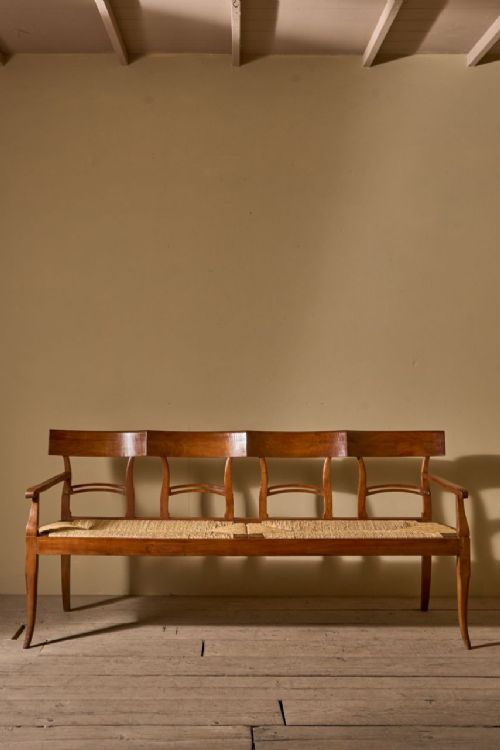
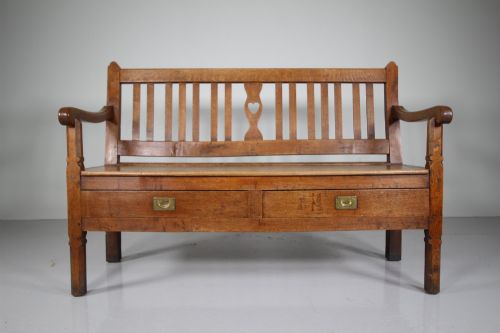
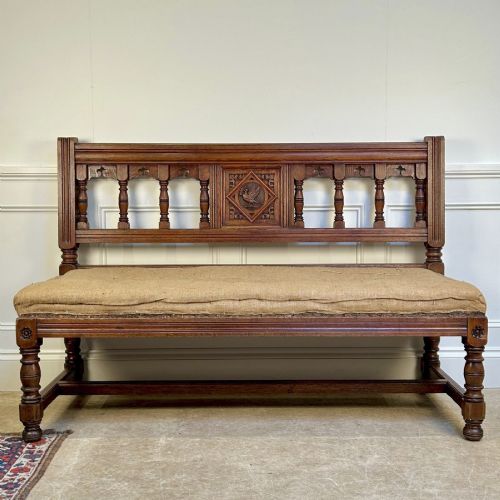
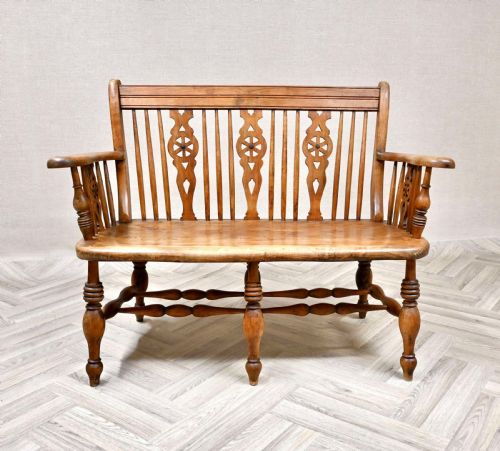



19th Century Oak Settle
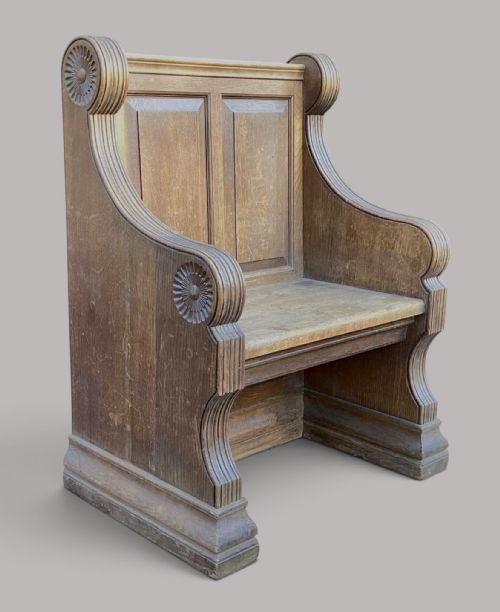
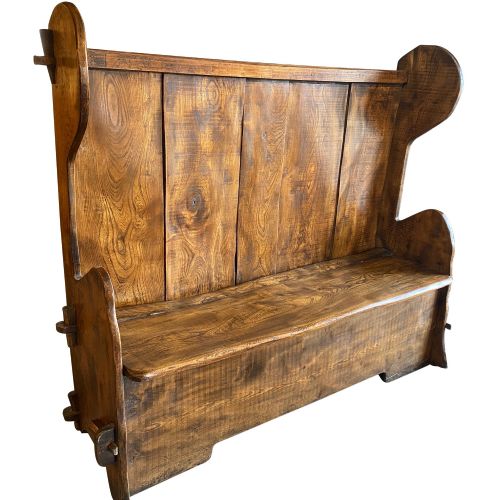
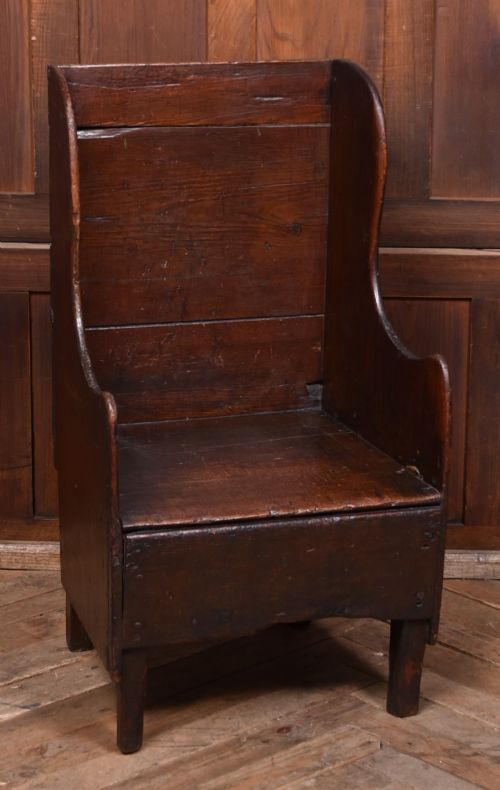
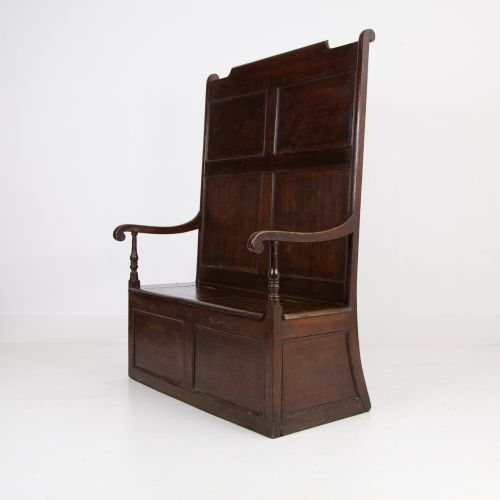
The 19th century oak settle offers high backs and enclosed storage, serving as a functional seating piece handed down through generations.
19th Century Oak Settle
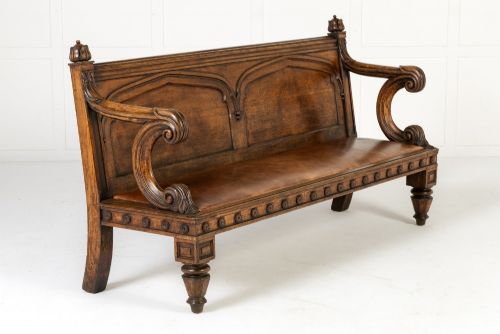
A 19th century oak settle provides sturdy seating for hallways and domestic rooms, frequently incorporating high backs to deflect draughts from cold stone floors. These heavy wooden seats appear across regional styles including English country, Welsh country, and Victorian Gothic Revival forms.
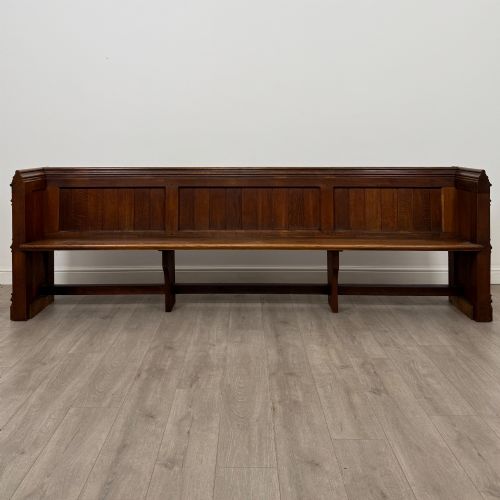
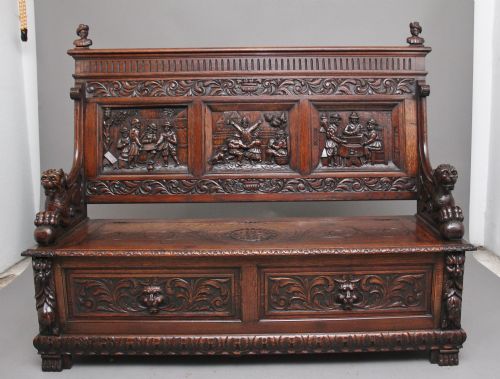
Many surviving examples function as box settles with lift-up lids concealing storage space beneath the seat boards. Others take the architectural form of church pews or monks benches, merging bench seating with panelled backs and arms.
While solid timber predominates, variations emerge in auxiliary materials like rush, elm, and brass. The selection ranges from plain provincial benches to heavily carved pieces bearing foliate motifs.
Materials and construction
Makers utilised solid timber construction, relying primarily on oak supported by occasional secondary woods like pine, elm, and cherrywood. Joinery methods typically involved pegged mortise and tenon joints to stabilise the heavy framework under daily use.
Carved ornament appears frequently across panelled backs, displaying architectural tracery, Green Man motifs, and foliate patterns. Box compartments employ simple boarded construction with hinged lids to provide interior storage.
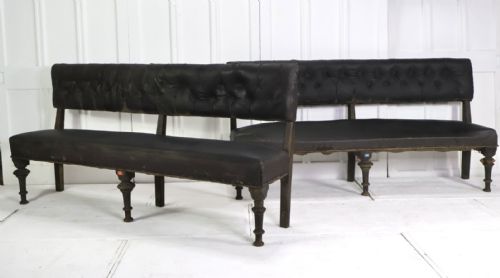
Upholstery is less common but appears on specific hall benches and window seats utilising fabric, leather, or rush seating. Surface treatments vary from natural waxed finishes to bleached chestnut and dark polished oak.
Several pieces feature carved resting lions and rampant figures guarding the seat from imaginary intruders.
Assessing quality and character
The integrity of the timber framing dictates structural soundness, distinguishing pieces that retain their original boards from those assembled with later replacements. Heavy box seats rely on sound internal framing to support the weight of the lid and daily sitters.
Carving depth and execution separate standard provincial output from bespoke commission work, particularly on Gothic Revival and Arts and Crafts examples. Crisp relief work on panels and arm supports indicates superior workshop skill.
Proportion and scale influence desirability, as large high-back settles require balanced timber thickness to avoid a heavy appearance. Surface patina and original hardware, such as brass hinges, contribute to the historical coherence of the piece.
GIllows
The 19th Century Oak Settle Glossary
- Box settle
- A wooden bench featuring an enclosed storage compartment beneath the seat, accessed via a hinged lid. This form kept blankets and household items dry and away from floor draughts.
- High back
- A tall timber panelled backrest designed to shield occupants from cold air currents in unheated rooms. These backs often display carved tracery or architectural panelling.
- Monks bench
- A convertible piece functioning as a settle with a back that folds down to form a table top. This multi-purpose furniture type suits compact domestic spaces.
- Gothic Revival
- A decorative style mimicking medieval ecclesiastical architecture, featuring pointed arches, tracery, and carved foliage. This aesthetic dominated Victorian church pews and hall benches.
- Green Man
- A sculptural motif depicting a human face carved from or entwined with leaves and vines. It appears frequently on carved Victorian oak furniture.
19th Century Oak Settle: Frequently Asked Questions
Where did people place settles?
Historically, households positioned these high-backed seats near hearths or in entryways where draughts were most prevalent. The solid wooden back deflected cold air away from the person sitting.
Over time, these benches moved into hallways and reception rooms as decorative and functional seating.
How do I use a box settle today?
The interior compartment provides practical storage for bulky items like blankets, boots, or board games. This hides clutter while maintaining a traditional seating area.
In hallways, the bench offers a convenient spot to sit while putting on shoes.
Are all settles made of solid oak?
While oak serves as the primary structural material, makers frequently incorporated other woods. Surviving examples incorporate elm, pine, cherrywood, and chestnut within secondary panels or seats.
Upholstered versions may also feature underlying webbing, fabric, or rush seating.
What defines Gothic Revival furniture?
This style draws inspiration from medieval architecture, incorporating pointed arches, quatrefoils, and heavy structural framing. Carved details often include linenfold panelling and foliate motifs.
Such pieces reflect nineteenth-century revivals of earlier historic designs.