



19th Century Needlework Picture
A 19th century needlework picture brings hand-stitched domestic scenes, alphabets, and portraits into a room through wool, silk, and canvas.
19th Century Needlework Picture
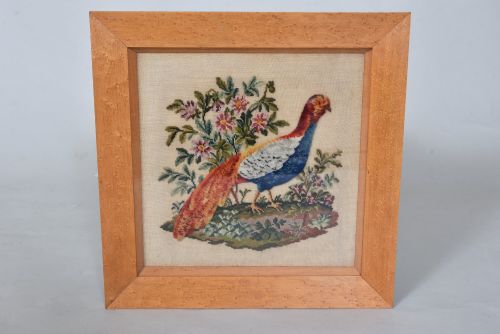
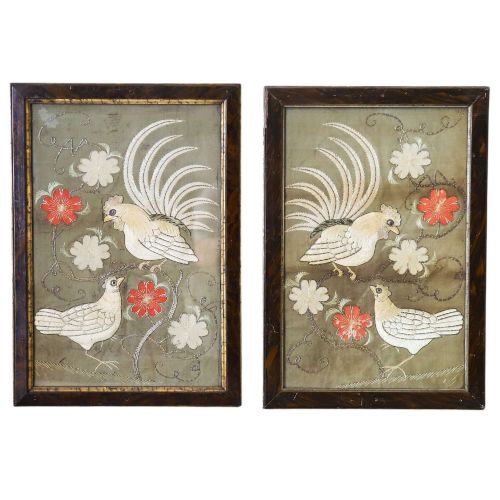
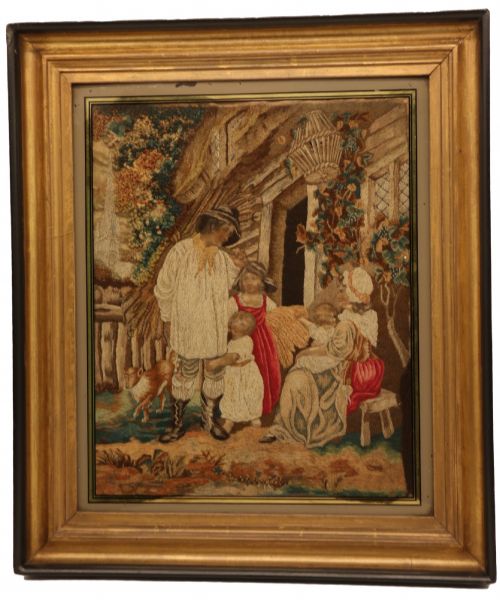
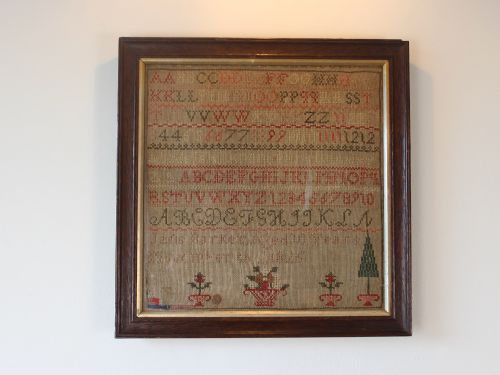
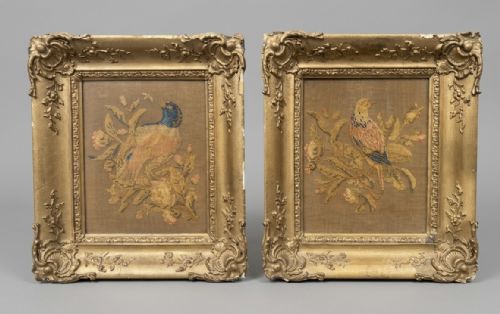
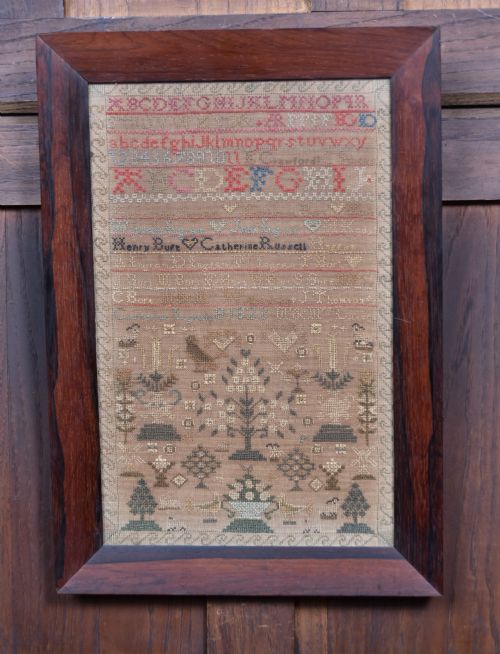
A 19th century needlework picture encompasses framed textile art, wool work, samplers, and silk embroideries created across the Victorian, Georgian, and Regency periods. These wall-hung pieces range from detailed pictorial scenes of animals and figures to structured alphabet samplers worked by young makers.
The most common examples encountered on this page are Victorian and Georgian wool work panels, Berlin wool work, and traditional samplers. They frequently arrive in period surrounds such as burr maple, rosewood, or giltwood frames, often retaining their original glass and backing materials.
Materials and construction
Makers utilised wool, silk, linen, and canvas as the primary grounds and threads for these pictures, occasionally combining them with hand-painted watercolour details on silk. Stitches such as gros point, petit point, crewel work, and plushwork provided varied texture and depth to the imagery.
Framing played an integral part in the creation and preservation of these textiles, employing wood, glass, gold leaf, and verre églomisé panels to protect the delicate needlework from environmental damage.
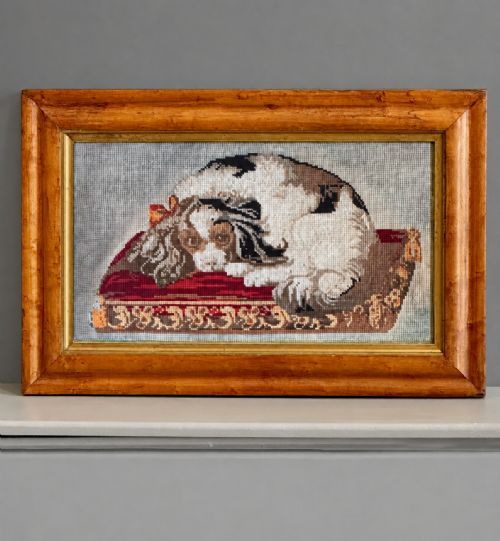
At least one nineteenth-century maker immortalised a king Charles spaniel in wool, ensuring the pet outlived its generation by two centuries.
Assessing the execution
The standard of a needlework picture rests on the precision of the stitching, the complexity of the colour palette, and the sophistication of the pictorial composition. Fine shading in silk and well-executed petit point details distinguish accomplished works from simpler schoolroom samplers.
The integrity of the original frame and the preservation of the textile ground, whether canvas, linen, or wool, dictate the overall character and historical survival of the piece.
The 19th Century Needlework Picture Glossary
- Berlin wool work
- A style of needlepoint embroidery popular in the nineteenth century that utilised printed colour-grid patterns. This technique allowed makers to produce highly detailed pictorial tapestries using wool yarn on canvas.
- Sampler
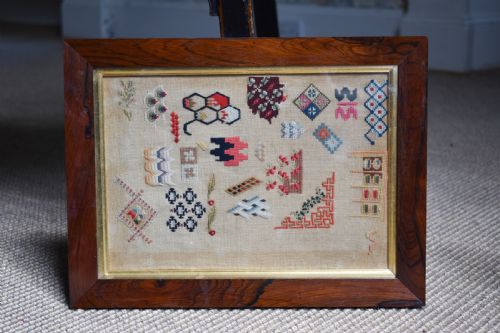
- A piece of needlework produced to demonstrate proficiency in various stitches and alphabets. These works frequently include dates, the maker's age, and geometric or pictorial motifs.
- Verre églomisé
- A process of applying gold or silver leaf to glass and engraving a design into the metal before sealing it. It frequently appears as a decorative border on the glass of nineteenth-century frames.
- Gros point
- A coarse needlepoint stitch worked on canvas. It provides a durable texture often utilised for backgrounds and heavy pictorial elements.
19th Century Needlework Picture: Frequently Asked Questions
What subjects appear in 19th century needlework pictures?
These textiles display a wide range of subjects including domestic animals, landscapes, literary scenes, and religious narratives. Alphabet and genealogical samplers also feature prominently.
Makers frequently drew inspiration from contemporary prints, local scenery, or traditional patterns, translating stories and everyday observations into thread.
How should I hang a textile picture?
Needlework pictures require positioning away from direct sunlight to prevent the fading of wool and silk threads. Stable indoor humidity protects both the textile fibres and the original wooden frames.
Using secure picture hooks matched to the weight of the frame ensures the piece hangs safely without placing strain on the original hanging hardware.
Are these pictures usually signed?
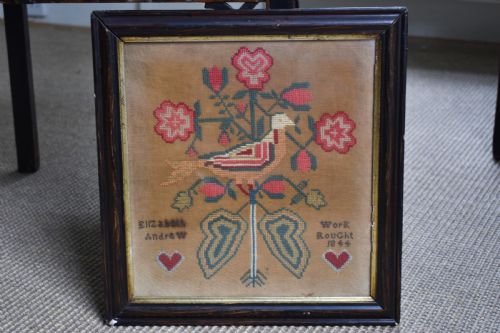
Many samplers and pictorial works include the maker's name, age, and a date stitched directly into the composition. Others remain entirely anonymous.
Schoolgirl samplers regularly record names and dates as part of the educational exercise, whereas professional or commercial wool work panels typically omit maker details.
What framing is typical for these works?
Original frames from this era frequently feature rosewood, burr maple, or giltwood construction. Many retain old glass and protective backing boards.
Finding a piece in its period frame preserves the historical context and complements the aesthetic of the needlework within.