

19th Century Narrative Art
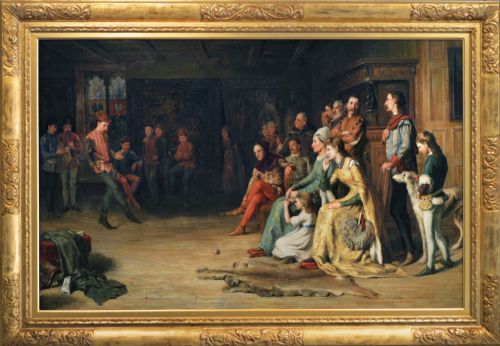
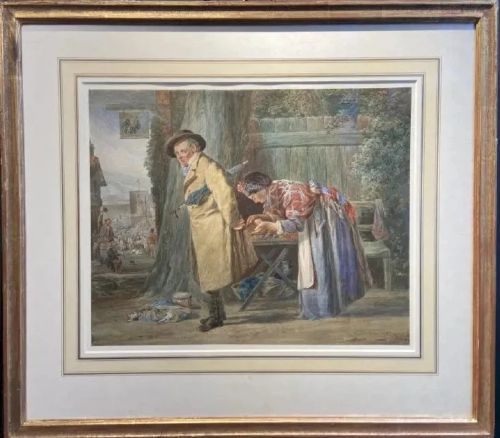
19th century narrative art comprises oil paintings, watercolours, prints and textile works that tell a story from literature, history or daily life.
19th Century Narrative Art
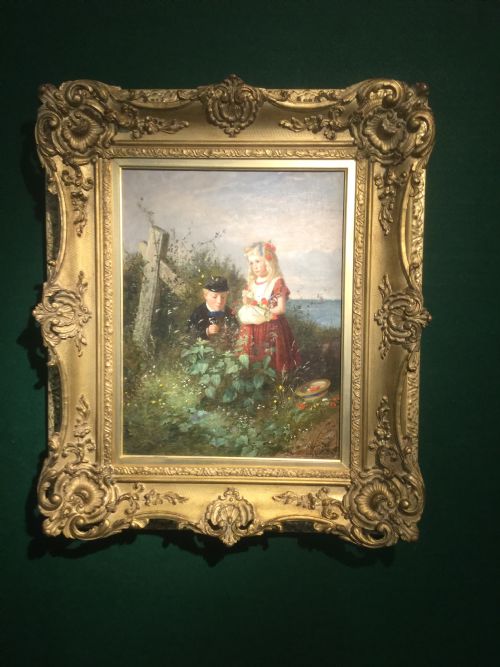
When searching for 19th century narrative art, buyers encounter oil paintings, watercolours, etchings, engravings and tapestry needlepoints that depict specific stories, social histories, domestic interactions and literary scenes. The pieces on this page span the Victorian era, the Georgian period, and the broader nineteenth century, reflecting both high-minded historical subjects and intimate domestic moments.
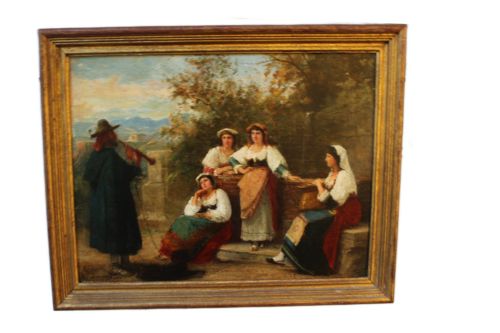
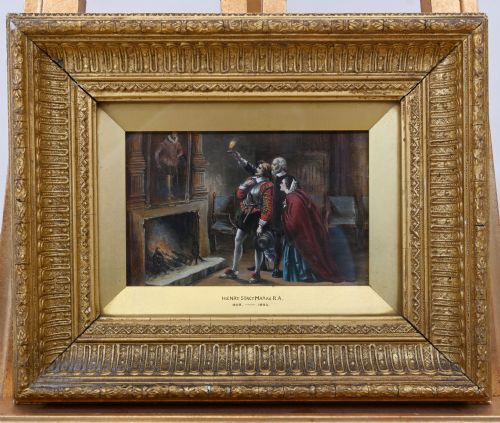
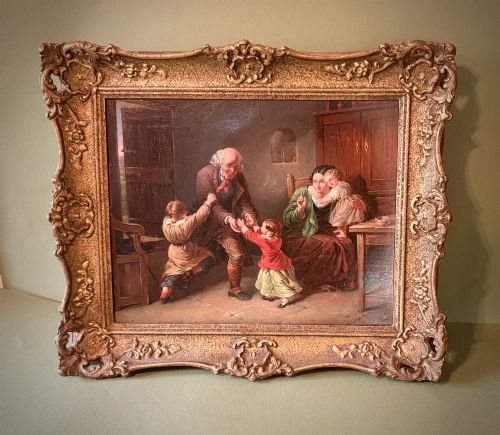
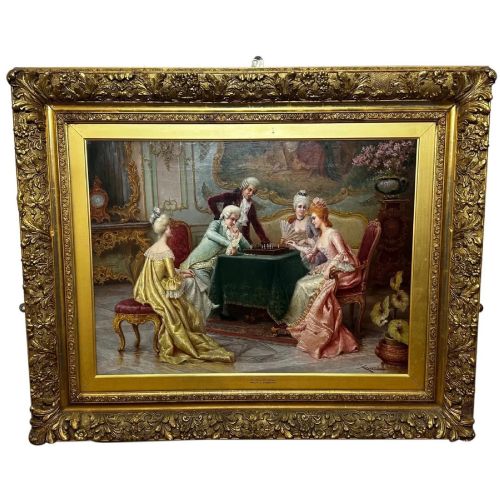
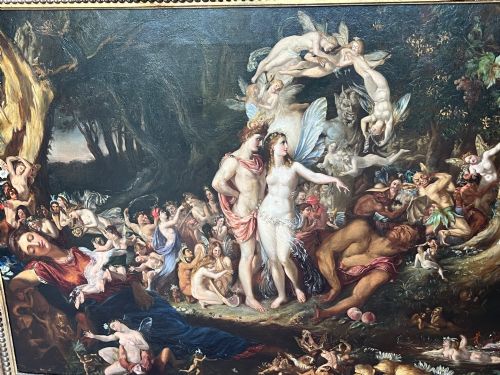
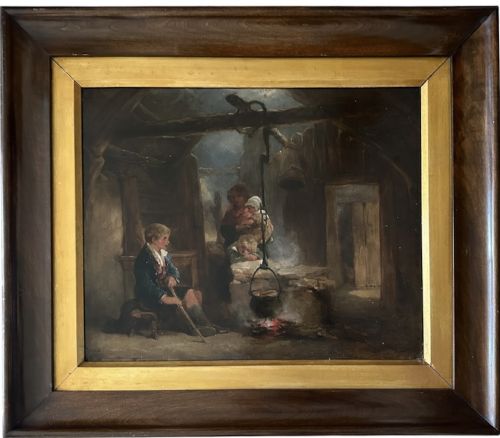
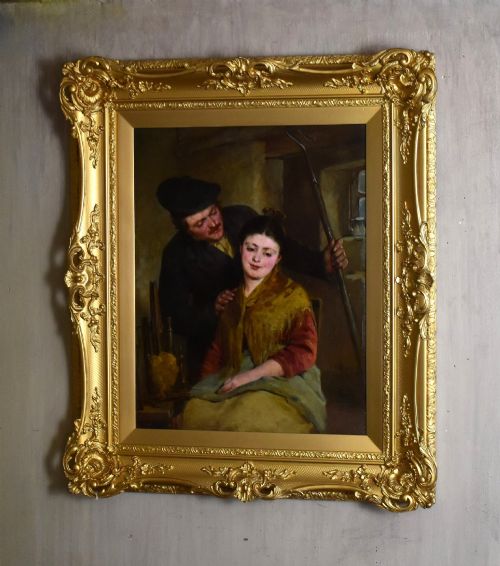
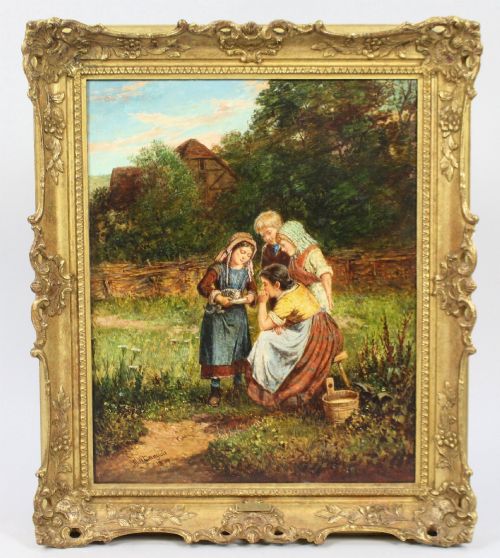
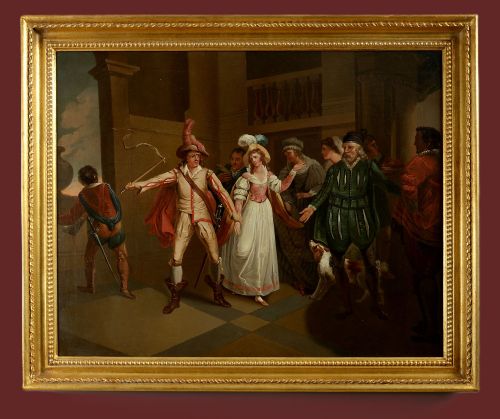
The most common examples on this page are oil paintings on canvas depicting genre scenes, domestic interiors, and historical or literary moments involving figures. These works range from tightly focused studies of children and country house interiors to large canvases illustrating Shakespearean drama or biblical events.
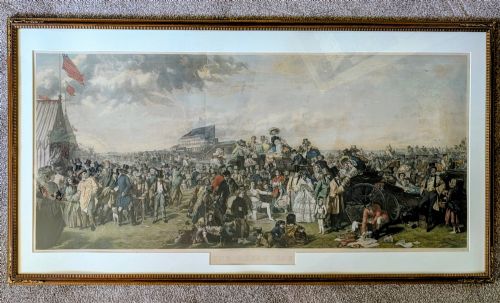
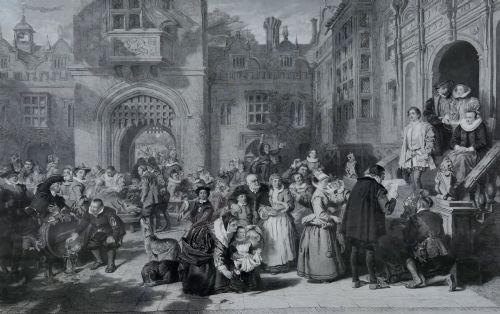
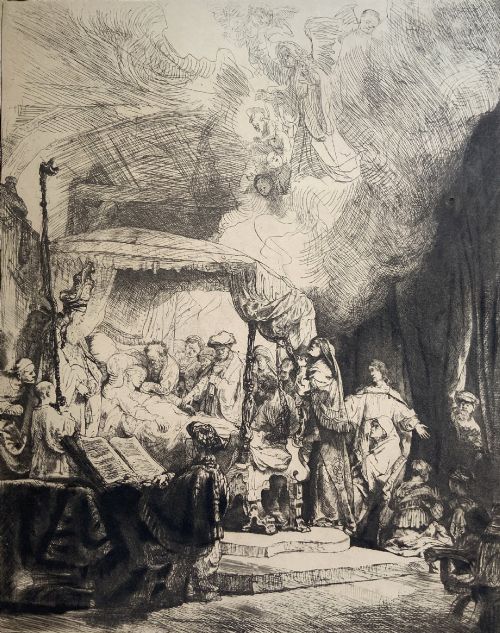
Beyond original oils, the selection includes prints, engravings, and lithographs after well-known compositions, alongside watercolours and textiles. These various mediums demonstrate how narrative subjects circulated among British and European audiences during the period.
Materials and techniques
Draftsmanship and pigment application underpin the oil paintings and watercolours on this page, while printed works utilise plates or stones to replicate complex figure compositions. Textile pieces employ needlepoint techniques to render narrative scenes in thread.
19th Century Narrative Art Retail Price Guide 2026
Typical asking prices for 19th century narrative art among the pieces listed under this phrase on Sellingantiques today, from the lower quarter to the upper quarter. They describe what is for sale here now, not the wider market.
The object types span oil paintings, framed art, textile art, fine art prints, and watercolours.
Distinctions in quality
Quality in these works resides in the handling of narrative tension, facial expression and psychological interaction between figures within the scene. Superior examples demonstrate a secure command of composition and naturalistic lighting that draws the eye directly to the narrative focus.
The standard of execution in details such as hands, fabrics, and interior furnishings separates accomplished academic or exhibited works from more formulaic studio output. Additionally, the preservation of the original surface, along with period framing using giltwood or gesso, contributes to the integrity of the piece.
Sir Joseph Noel Paton·Jozef Jansessens·Felix Stone Moscheles·Stephen Samuel Lewin·Mark William Langlois·William Powell Frith·Howard Helmick·Joseph H Barnes·James Hamilton·Charles Hunt·J. C. Dollman·James Kyd·Léon Joseph Voirin·Edwin Thomas Roberts·Robert Alexander Hillingford·George Smith·Edwin Hughes·Alfred Holst Tourrier
The 19th Century Narrative Art Glossary
- Genre painting
- Depiction of aspects of everyday life by portraying ordinary people engaged in common activities. These works often carry social commentary or moral narratives.
- Etchings
- Printmaking process where lines are incised into a metal plate with acid before ink is applied and transferred to paper. This technique allows for fine, fluid detail in graphic works.
- Giltwood
- Wood that has been covered with a thin layer of gold leaf or gold paint. It frequently appears on period frames housing nineteenth-century canvases.
- Social realism
- Artistic movement highlighting the everyday conditions of the working classes and the poor. Works in this category present unvarnished views of historical and social realities.
- Engraving
- Intaglio printmaking method where an artist cuts lines directly into a plate using a sharp tool. The resulting prints reproduce complex tonal compositions.
19th Century Narrative Art: Frequently Asked Questions
What is 19th century narrative art?
These pieces are paintings, prints, watercolours and textiles that tell a specific story drawn from literature, history, or domestic daily life. They use human figures to communicate moral, dramatic, or social messages.
Buyers find everything from large historical canvases to intimate interior scenes depicting cottage life or family interactions.
How were these artworks used?
Original oil paintings and watercolours hung in domestic drawing rooms, country houses, and galleries as focal points of conversation and culture. Narrative prints allowed middle-class homes to enjoy popular gallery subjects at a smaller scale.
Needlepoint tapestries served as decorative furnishings that demonstrated domestic skill while telling a tragic or historical tale.
How do I live with these pieces?
Display these works on neutral walls away from direct sunlight to protect oil paint and paper from fading. Ensure original giltwood or wood frames are properly secured to support the weight of canvas and glass.
Pairing these narrative works with period furniture helps contextualise their historical and domestic origins.
How do I tell periods and types apart?
Examine the costume, interior decor, and subject matter to distinguish between Georgian, Victorian, and late nineteenth-century styles. Realist and social history works often feature working-class or contemporary figures, whereas biblical and literary scenes draw on classical texts.
Signatures, artist exhibition records, and framing styles such as Hogarth frames provide further clues to dating.