

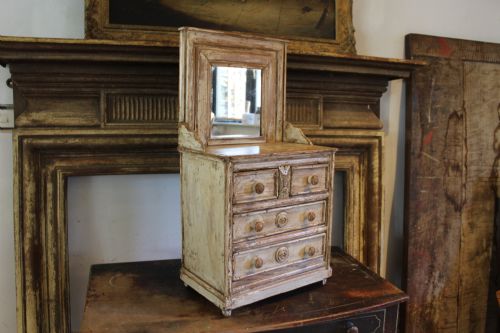
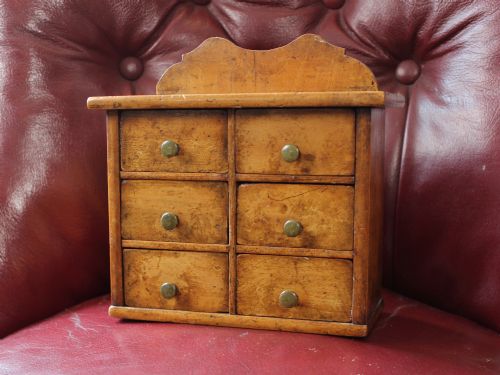


19th Century Mini Chest
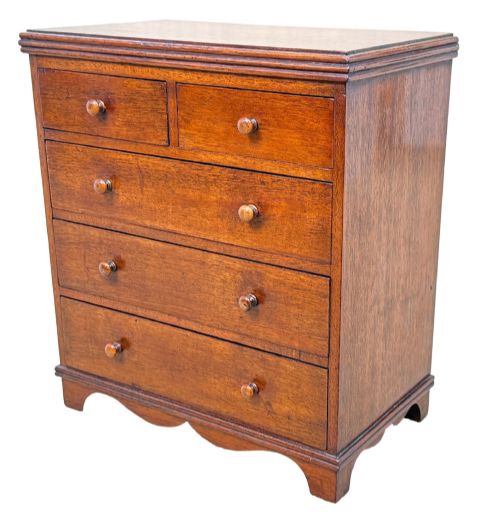
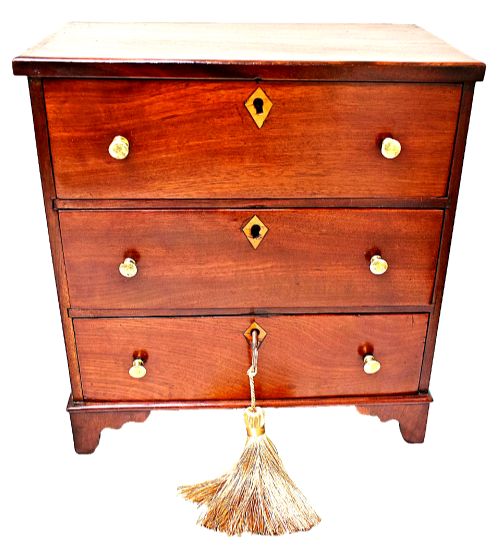
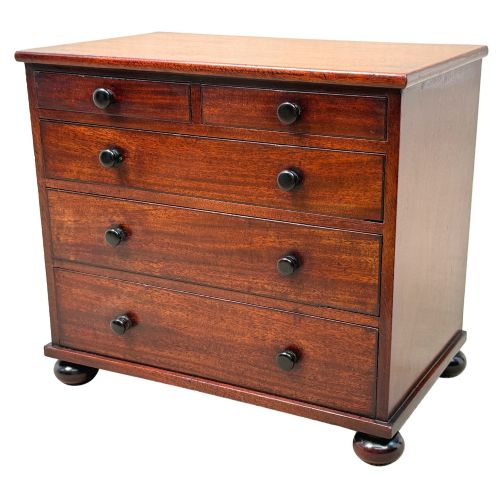
A 19th century mini chest packs the formal presence of full-scale joinery into a compact desk or table format.
19th Century Mini Chest
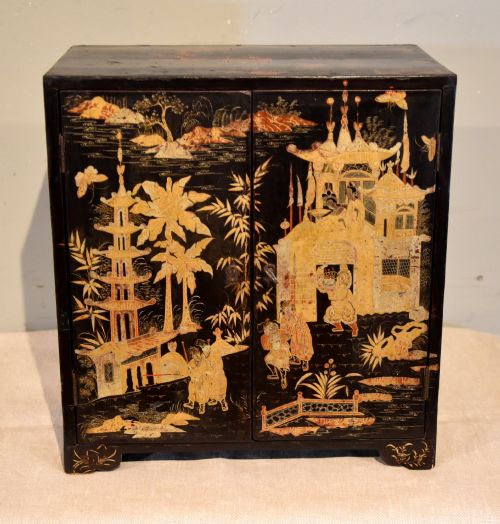
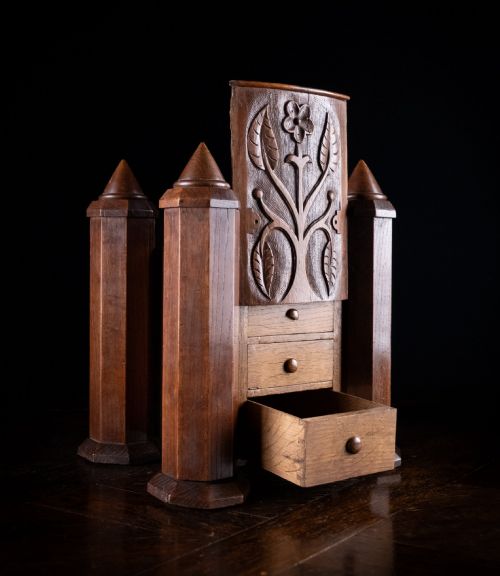
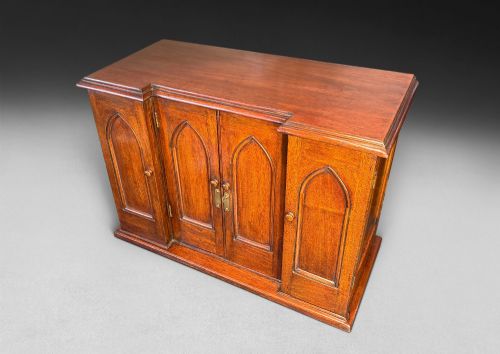
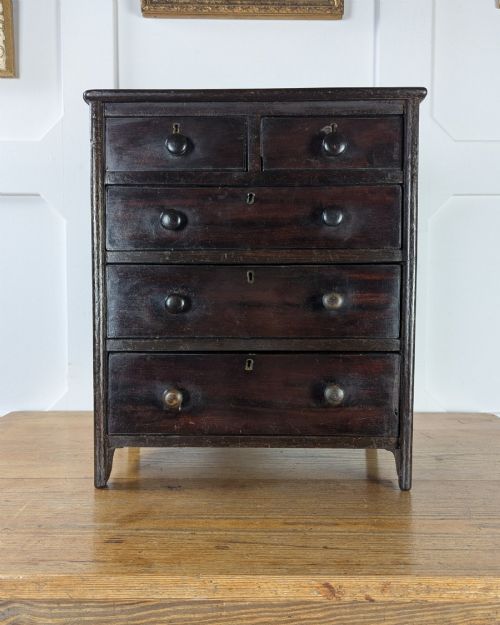
A 19th century mini chest gathers miniature furniture, table cabinets, and apprentice pieces produced across the Georgian, Regency, and Victorian eras. These items served as maker demonstrations, merchant samples, or private tabletop storage for trinkets and specimens.
Mahogany and pine dominate the domestic output, supplemented by walnut, oak, fruitwood, and elm. Forms range from straight-front drawer stacks and bow fronts to commodes, spice drawers, and glazed table cabinets.
English and French regional workshops generated most examples, incorporating stylistic influences from Gothic Revival, Arts and Crafts, and provincial traditions. Scale varies from diminutive desktop boxes to floor-standing miniature dresser bases.
How they were made
Cabinetmakers built these pieces using traditional timber framing, often employing solid mahogany, oak, or pine carcasses with finely dovetailed drawer construction. Secondary woods appear inside drawer linings, reflecting standard workshop economy of the period.
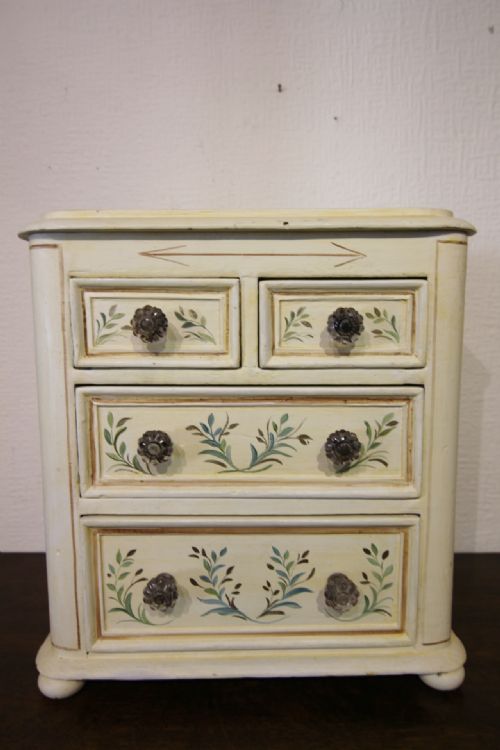
Surfaces receive varied treatment, from polished timber patinas and inlaid details to simulated painted finishes and solid colour coats. Brass drop handles, key escutcheons, and glass panels complete the fabrication using hardware scaled down from domestic furniture.
19th Century Mini Chest Retail Price Guide 2026
Typical asking prices for 19th century mini chest among the pieces listed under this phrase on Sellingantiques today, from the lower quarter to the upper quarter. They describe what is for sale here now, not the wider market.
Some miniature drawers are shallow enough to hide a secret note, proving that big secrets fit in small spaces.
What varies in quality
Proportion and execution separate master cabinet work from simpler utilitarian output, evident in the crispness of dovetails and the grain selection of veneers. Fine pieces maintain architectural balance at a reduced scale, whereas lesser examples rely on heavier proportions.
Patina and original surface integrity dictate desirability, rewarding items that retain period brassware, matching timber movement, and untouched polish over later refinishing.
The 19th Century Mini Chest Glossary
- Apprentice piece
- A scaled furniture example created by a journeyman to demonstrate mastery of joinery before entering a trade guild. These items mirror full-size construction methods in miniature.
- Collectors cabinet
- A specialised tabletop case designed to house natural history specimens, coins, or medals in shallow fitted drawers. They feature enclosed doors or glazed fronts to protect contents.
- Bow front
- A convex curved cabinet facade popular during the Georgian and Regency periods. This technique required precise timber shaping to maintain smooth drawer operation.
- Coffer bach
- A Welsh miniature chest or blanket box raised on feet, often featuring panelled construction. The term translates directly from Welsh as little chest.
19th Century Mini Chest: Frequently Asked Questions
What were 19th century mini chests used for?
Cabinetmakers produced these scaled pieces as apprentice demonstrations of skill or as commercial samples for travelling salesmen to display furniture designs to prospective buyers.
Domestic owners also utilised them on tabletops and dressers to store jewellery, letters, sewing gear, and small collection items.
How do I date a mini chest?
Dating relies on identifying period wood choices, construction methods, and stylistic cues such as Georgian bracket feet, Regency brass inlays, or Victorian gothic motifs.
Examine the secondary timbers inside the drawers and the hand-cut dovetails to establish whether the piece aligns with early, mid, or late nineteenth-century workshop practices.
Are apprentice pieces different from regular miniature chests?
Apprentice pieces specifically represent a maker's formal qualification test, demanding exact proportions and advanced joinery techniques executed on a reduced scale.
Other mini chests served purely as decorative furnishings or utilitarian desktop storage without the formal examination context of a guild test.
Where were these small chests made?
Workshops across England, Wales, and France produced these pieces, incorporating regional timber preferences such as Welsh oak or French fruitwood.
Regional cabinet styles naturally followed local architectural trends, ranging from provincial French commodes to English Regency mahogany drawer units.
How should I care for an antique mini chest?
Keep the piece away from direct heat sources and sudden humidity shifts to prevent timber shrinkage and veneer splitting.
Maintain the surface by applying occasional traditional wax polish rather than modern liquid sprays to preserve the historical patina.