



19th Century Marble Vase
A 19th century marble vase brings classical antiquity indoors, offering heavy stone substance and bronze mounts that anchor a room.
19th Century Marble Vase
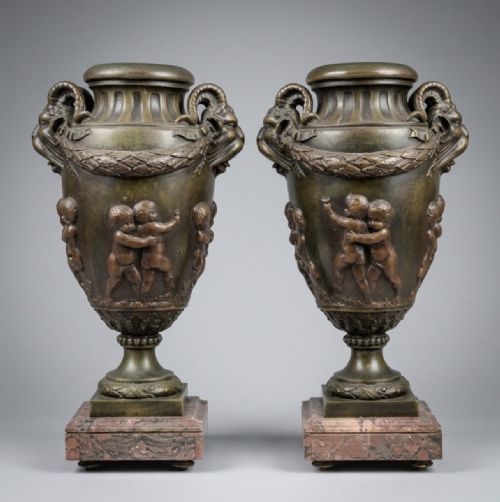
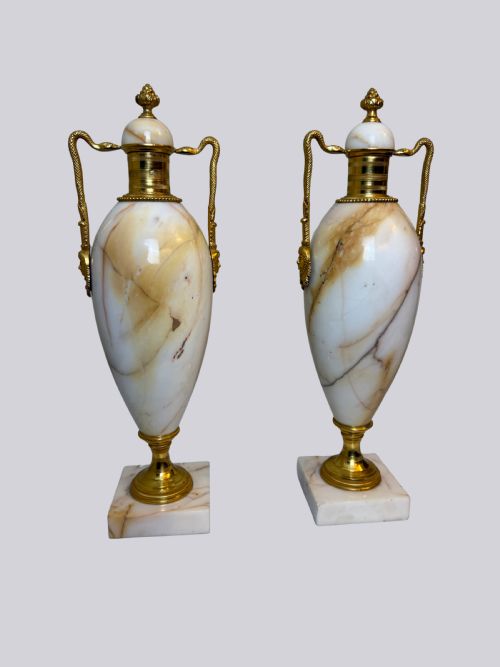
A 19th century marble vase typically takes the form of a classical urn, campana shape, or souvenir reduction modelled after famous antique excavations. Buyers seek these pieces for their architectural presence and connection to the Grand Tour travels through Italy.
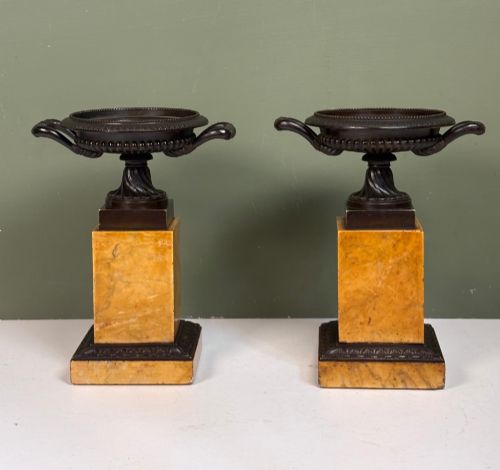
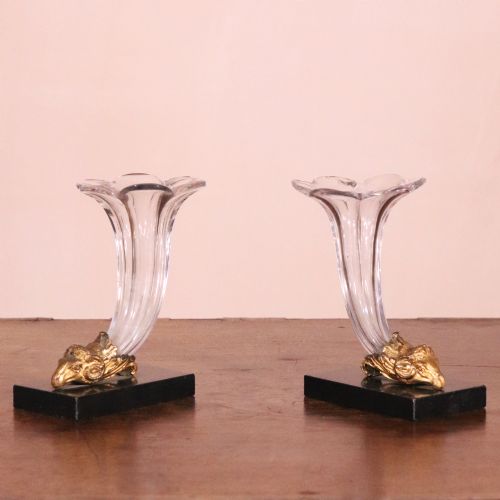
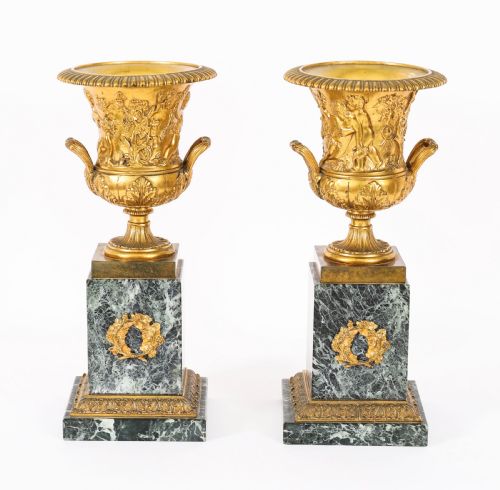
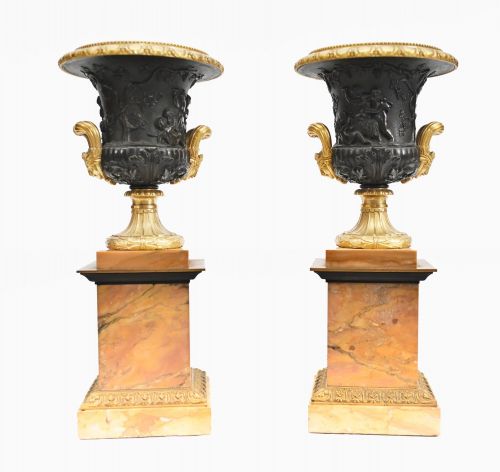
The most common variants met on this page include French Empire and Italian Grand Tour designs, frequently paired with gilt bronze mounts, or integrated into garniture sets. Pieces range from diminutive alabaster vessels to large decorative urns mounted on heavy stone plinths.
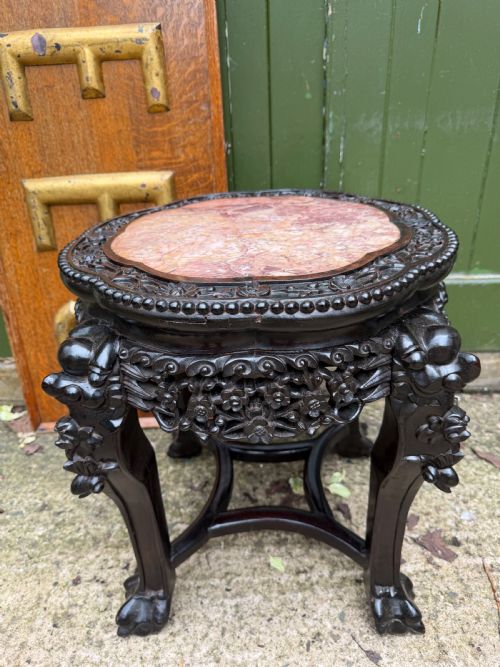
Other expressions of the form include serpentine marble, green marble, and white onyx bodies, alongside related stone or hardwood stands designed to elevate decorative vases.
Materials and Working Methods
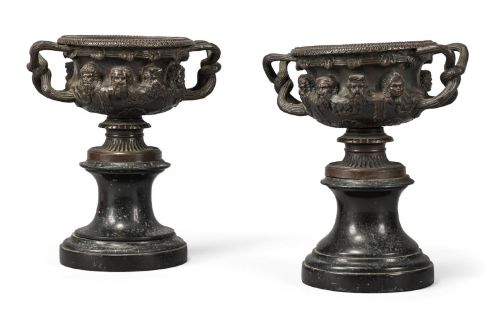
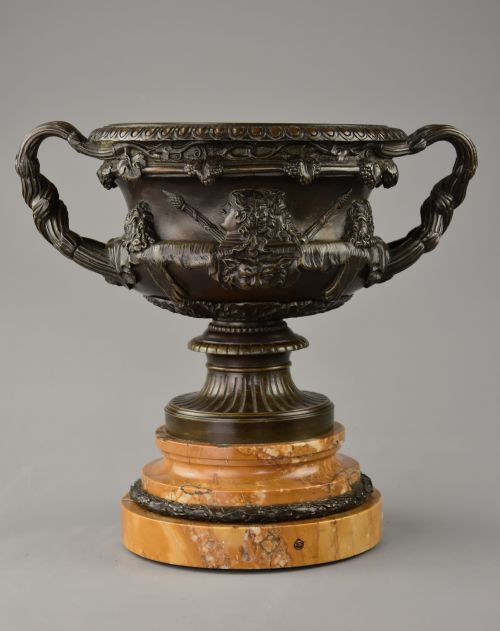
Carving solid marble, alabaster, and onyx required skilled masonry to hollow out deep vessels and shape classical profiles like the Warwick or Medici vase. Workshops paired these turned stone bodies with cast bronze, gilt bronze, or ormolu handles, rims, and bases.
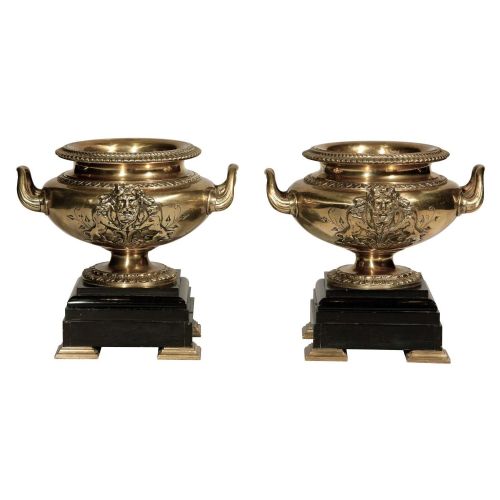
Alternative metals such as spelter and silvered bronze appear in place of solid bronze, often patinated to simulate aged antiquity. Mounts were mechanically fitted or pinned to the stone plinths, combining foundry work with lapidary craft.
Evaluating Quality and Execution
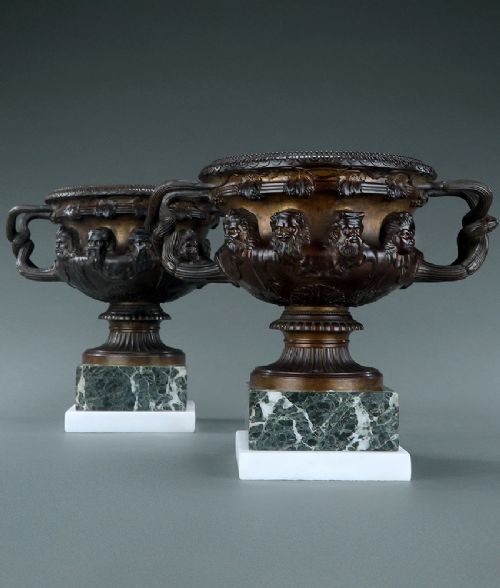
The distinction between ordinary and superior pieces rests on the crispness of the bronze chasing and the selection of the stone. Finer examples display deeply carved foliage, sharp casting details on bacchanalian masks or handles, and dense, unblemished marble or serpentine.
Lesser items rely on softer spelter metalwork with simpler patination and minor casting seams, coupled with plain stone bases that lack distinct veining or polish.
Selim Bright
The 19th Century Marble Vase Glossary
- Campana urn
- A bell-shaped vessel with flared rims and looped handles, popular in classical antiquity and revived during the nineteenth century.
- Grand Tour
- A traditional trip through Europe undertaken by upper-class students and travellers, resulting in the acquisition of classical souvenirs.
- Cassolette
- A decorative vase fitted with a reversible lid that functions either as an open urn or a closed burner.
- Ormolu
- Gilding technique involving finely ground gold mercury applied to bronze, giving a rich metallic surface finish.
- Alabaster
- A fine-grained translucent stone used for carved vases, prized for its pale tone and soft texture.
19th Century Marble Vase: Frequently Asked Questions
What is a Grand Tour vase?
A Grand Tour vase is a souvenir piece made in Europe during the nineteenth century, modelled after famous ancient Roman or Greek archaeological finds.
Travellers purchased these miniature reductions of iconic vessels like the Warwick vase to commemorate their travels through Italy and classical sites.
How do I clean a marble vase?
Clean nineteenth-century marble and stone surfaces using a soft, dry cloth to remove dust without abrasive action.
Avoid chemical solvents or excessive water, particularly on mixed-media pieces that combine stone with delicate gilt bronze or patinated spelter mounts.
Where were these vases displayed?
These decorative vessels sat upon mantelpieces, pedestals, or tables within nineteenth-century drawing rooms and libraries.
Their heavy stone bases and classical silhouettes suited formal architectural interiors, often arranged as matched pairs or flanked by clock garnitures.
How do I tell alabaster from marble?
Alabaster is softer and possesses a translucent quality that allows light to pass slightly beneath the surface when illuminated.
Marble is harder, opaque, and characterised by distinct natural mineral veining running through the stone body.