



19th Century Kidney Table
A 19th century kidney table offers an undulating serpentine silhouette designed to fit comfortably against the body while serving as a refined desk or side piece.
19th Century Kidney Table
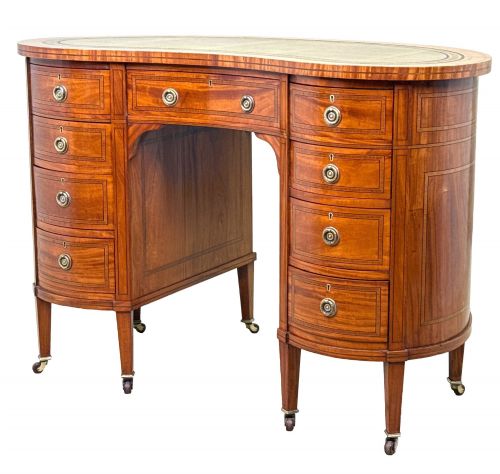
A 19th century kidney table presents a distinctive curved top that immediately identifies its function as a desk or writing surface. These pieces appear most frequently in Victorian and Edwardian iterations spanning walnut, mahogany, and satinwood.
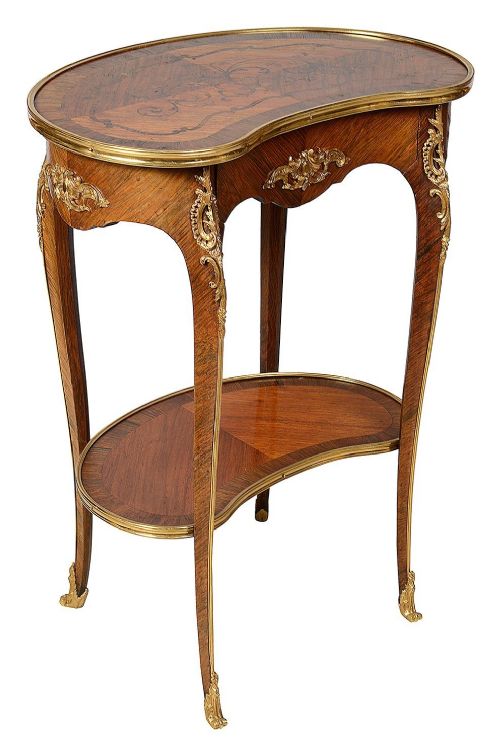
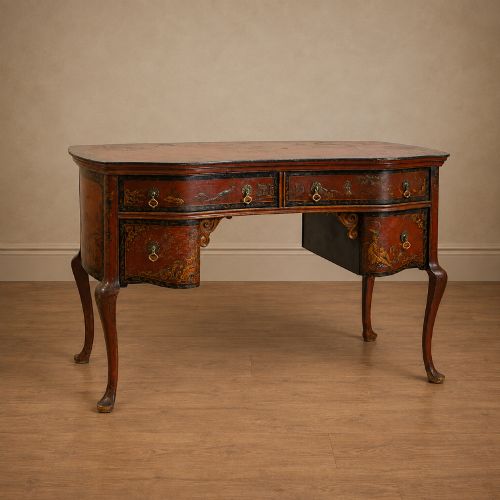
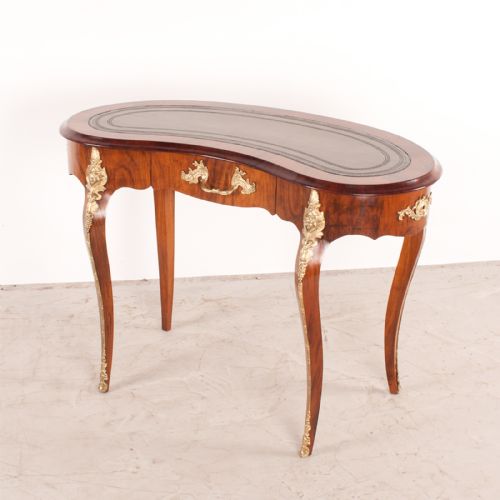
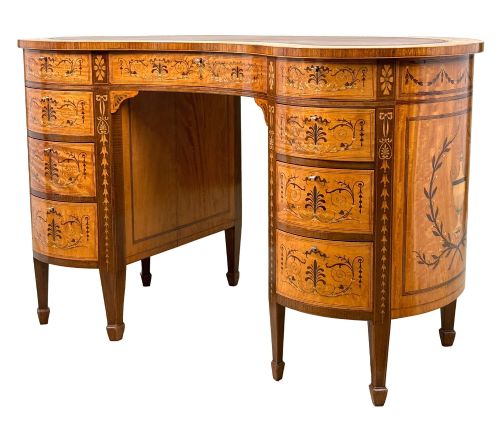
Makers adapted the kidney shape for various forms including ladies writing desks, dressing tables, and side tables. Examples range from simple mahogany boards to elaborate French revival marquetry and painted Chinoiserie.
The profile accommodates the sitter at the centre while providing functional surface area on either curved wing. Surviving pieces draw from Regency origins through late Victorian cabinetmaking traditions.
Materials and Construction
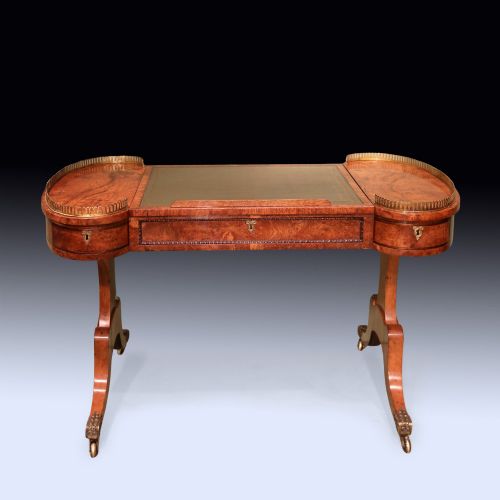
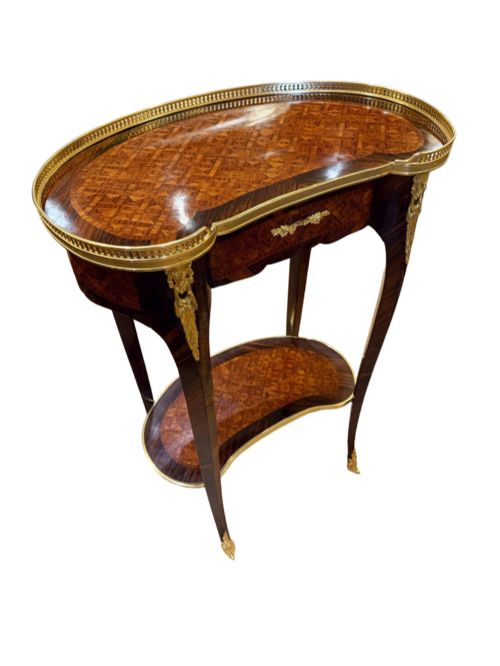
Cabinetmakers utilised dense timbers such as mahogany and walnut as foundational frames, frequently applying figured veneers like burr walnut, kingwood, and satinwood across the curved top. Marquetry and parquetry inlay add geometric or floral patterns that follow the difficult contours of the serpentine edge.
Brass mounts, ormolu details, and leather writing inserts frequently complete the surfaces of these tables. Structural integrity relies on precise joining along the tight interior and exterior curves of the apron.
19th Century Kidney Table Retail Price Guide 2026
Typical asking prices for 19th century kidney table among the pieces listed under this phrase on Sellingantiques today, from the lower quarter to the upper quarter. They describe what is for sale here now, not the wider market.
Listings demonstrate that burr walnut, mahogany, and satinwood remain the dominant timber choices for these serpentine writing surfaces.
Assessing Quality
Quality rests in the handling of the serpentine curves and the selection of veneer timbers. Finer examples feature matched grain patterns that flow smoothly around the perimeter without distortion.
The precision of the marquetry inlay and the weight of applied brass or ormolu mounts distinguish standard production from exceptional cabinetmaking. Superior pieces maintain crisp carving and stable joints along the complex concave front.
Edwards & Roberts·Williams and Gibton·Gillows
The 19th Century Kidney Table Glossary
- Kidney table
- A small table or desk featuring a concave front edge and a convex back edge, resembling a bean shape. This contour allows a person to sit closely into the centre.
- Marquetry
- Decorative woodwork where pieces of veneer are fitted together to form pictorial or geometric designs. Craftsmen apply this technique across curved table tops.
- Parquetry
- A geometric mosaic of wood pieces used for decorative floors and furniture surfaces. It creates repeating patterns across the top of a writing table.
- Ormolu
- Gilded bronze mounts applied to furniture for decorative effect. These metal accents highlight the corners and legs of French revival pieces.
- Satinwood
- A durable yellowish wood native to India and Ceylon prized for its lustrous sheen. Cabinetmakers utilised it extensively for late period writing desks.
19th Century Kidney Table: Frequently Asked Questions
What are 19th century kidney tables used for?
These tables served primarily as ladies writing desks, dressing tables, or compact side surfaces in parlours and bedrooms. The curved front allowed a person to sit comfortably at the centre while keeping writing materials close at hand.
Today they function effectively as standalone writing desks or decorative display surfaces in smaller residential spaces. Their distinctive silhouette makes them suitable for placement away from flat walls.
How do I identify the period of a kidney table?
Dating relies on timber choices, decorative styles, and construction markers recorded in the evidence. Earlier examples favour Regency mahogany while later Victorian and Edwardian pieces frequently showcase satinwood, burr walnut, or marquetry.
Stylistic influences also guide attribution, including French revival designs, Chinoiserie lacquer, and Sheraton revival details. Examining the secondary woods and drawer linings helps confirm the manufacturing era.
Are these tables sturdy enough for daily use?
Solid mahogany and walnut frames provide sufficient structural strength for writing and light desk work. The curved aprons and leg placement distribute weight adequately across the footprint.
Care should be taken with veneered surfaces and leather inserts during everyday tasks. Regular maintenance preserves both the structural joints and the decorative marquetry.
What styles are common in these tables?
Victorian and Edwardian interpretations dominate the selection alongside French revival and Sheraton revival aesthetics. Craftsmen incorporated marquetry, parquetry, and painted decoration to echo continental taste.
Some pieces feature Neoclassical Wedgwood plaques or giltwood accents while others display simple figured mahogany grain. This stylistic variety reflects the preferences of nineteenth century cabinetmakers.