
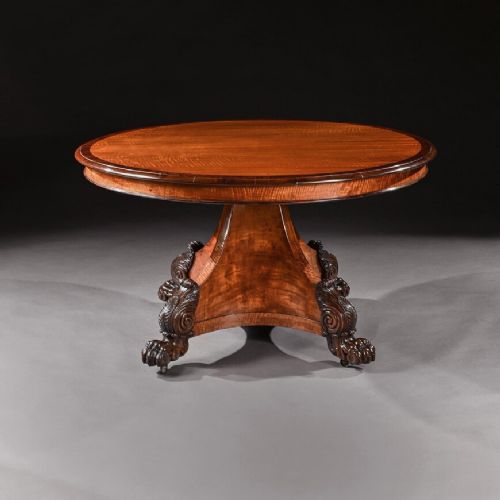


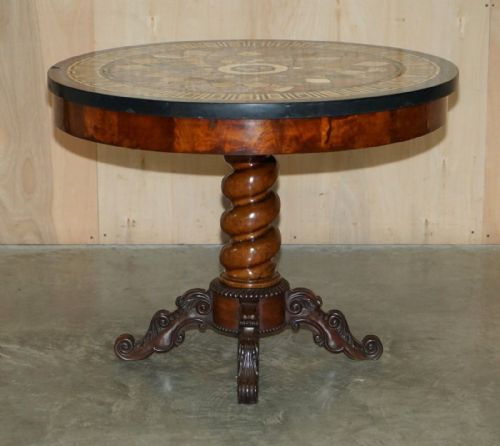


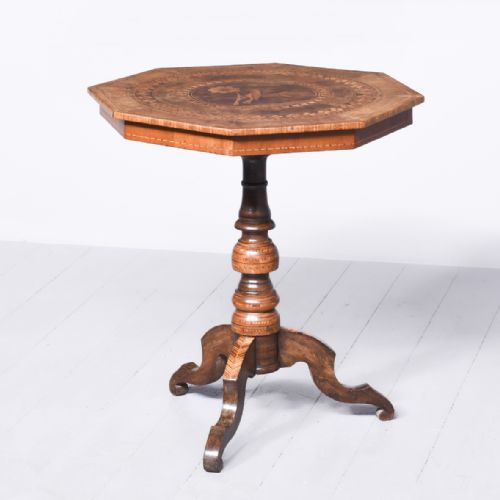
19th Century Italian Pedestal Table
These 19th century italian pedestal table designs bring marble, marquetry and rich woods together for striking display and functional centrepieces.
19th Century Italian Pedestal Table
A 19th century italian pedestal table encompasses various forms including centre tables, occasional tables, tilt top tables, and specific pedestals or plant stands. These pieces predominantly date from the nineteenth century, with specific examples appearing from decades such as the 1870s, 1880s, and 1890s, alongside Victorian interpretations.
Buyers will frequently encounter inlaid walnut Sorrento tables featuring marquetry and parquetry work. Other common forms on this page include giltwood centre tables, olive wood flip top pieces, and marble top tables reflecting Grand Tour influences.
Stylistic variations range from Florentine Renaissance Revival and Venetian Rococo to Grand Regency and Grand Tour Italian aesthetics. Alongside traditional tables, the selection includes related forms such as figure stands and sculptural alabaster or scagliola works.
Materials and Construction
Cabinet makers utilised a rich palette of timbers including walnut, fruitwood, rosewood, satinwood, and olive wood or olivewood. These woods formed the structural bases and intricate surface designs of the tables.
Decorative surfaces frequently employed specialised techniques such as marquetry, parquetry, and pietra dura inlay using specimen marble. Giltwood finishes and scagliola imitation marble further enhanced the decorative impact of these nineteenth-century pieces.
Listings feature walnut, olive wood, satinwood, and rosewood alongside marble and giltwood across nineteenth-century styles.
Assessing Quality in These Tables
The sophistication of the surface decoration largely separates standard items from finer examples. Intricate pietra dura work, detailed marquetry, and precise parquetry patterns demand exceptional skill from the maker.
The choice of materials also dictates the grade of the piece, with choice timbers like satinwood and rosewood or heavy marble and alabaster tops elevating the overall execution of the design.
Peters of Genoa
The 19th Century Italian Pedestal Table Glossary
- Marquetry
- Decorative veneer applied to furniture in patterns and pictures. It uses thin pieces of wood and other materials to create detailed pictorial designs on table tops.
- Parquetry
- Geometric mosaic woodwork used for surface decoration. This technique arranges wood blocks in repeating patterns like squares and triangles.
- Pietra Dura
- Inlay technique using cut and fitted polished coloured stones to create images. It appears frequently on specimen marble table tops.
- Scagliola
- Composite material made from selenite, glue, and pigments used to imitate marble and other fine stones. Craftsmen apply it to achieve the look of stone without the weight.
- Giltwood
- Wood carved and then covered with a thin layer of gold leaf. This finish provides a bright, reflective surface characteristic of ornate nineteenth-century frames and pedestals.
19th Century Italian Pedestal Table: Frequently Asked Questions
What is a Sorrento table?
A Sorrento table is a piece of furniture originating from the Italian town of Sorrento, known for intricate wood inlay and marquetry. These tables frequently feature detailed geometric patterns or scenic depictions on the top.
They serve primarily as occasional or centre tables, showcasing regional woodworking traditions from the nineteenth century.
How do I care for a marble top table?
Marble top tables require gentle cleaning with a damp cloth and mild soap to avoid damaging the polished stone surface. Acidic substances like wine or citrus should be wiped away immediately to prevent etching.
Using coasters and placestats helps protect the historical stone from stains and scratches during daily use.
How do I identify a Victorian Italian import?
Victorian Italian imports often combine British interior tastes with Italian craftsmanship, utilising materials like walnut, giltwood, and pietra dura. Documentation or maker signatures, such as those from Genoa or Sorrento, can indicate origin.
Stylistic cues include Florentine Renaissance Revival motifs and Grand Tour themes integrated into standard Victorian furniture forms.