
19th Century Inlaid Box
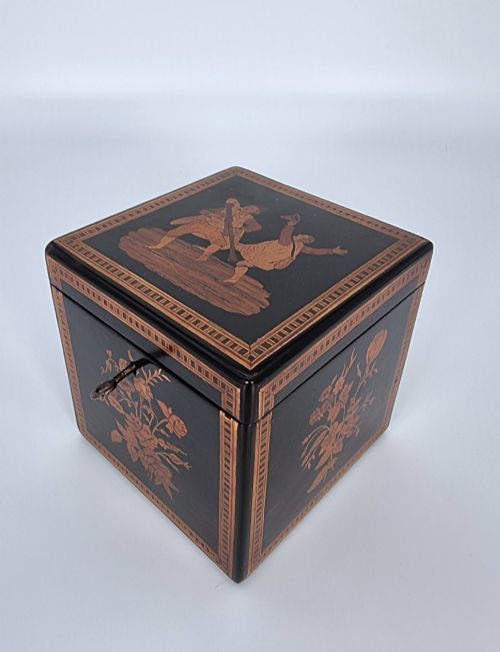
A 19th century inlaid box offers a glimpse into period craftsmanship, providing a secure and decorative home for letters, jewellery, or tea.
19th Century Inlaid Box
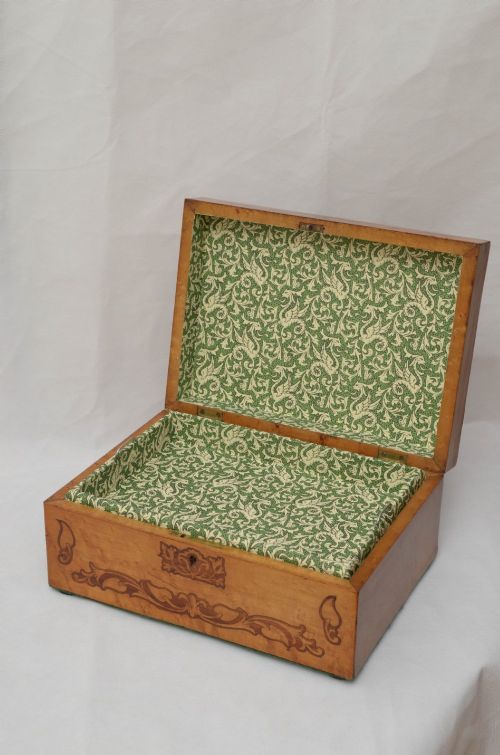
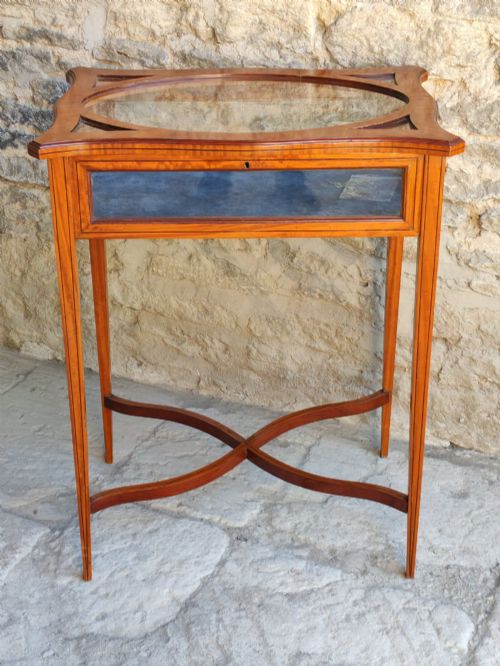
The objects frequently encountered on this page range from small pocket snuff boxes and trinket retainers to substantial coromandel writing desks and burr walnut dressing cases. Many retain functional internal fittings such as removable trays, glass inkwells, velvet-lined compartments, or secret drawers.
Origins span British cabinet makers, French ateliers, Italian workshops, and specialised regional centres such as Tunbridge Wells. Buyers select these items for their decorative surface patterns, historical utility, and the survival of original fitted interiors.
How they were made
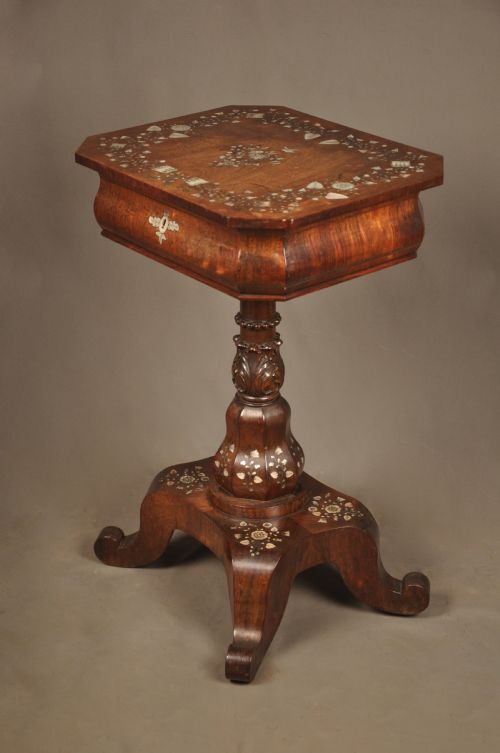
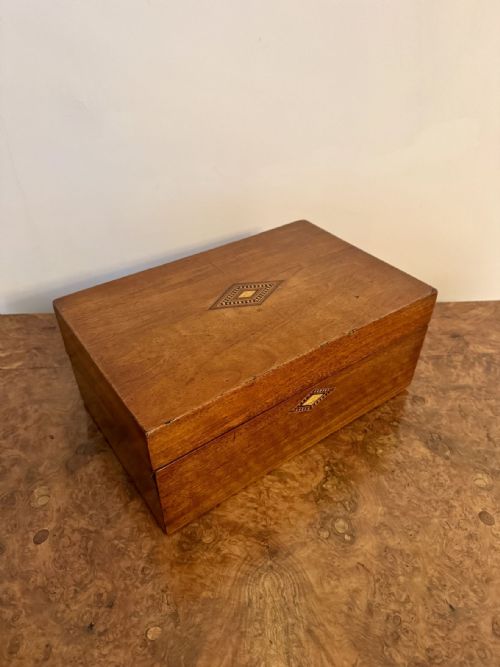
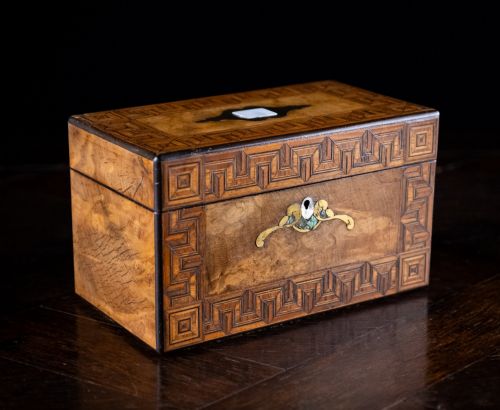
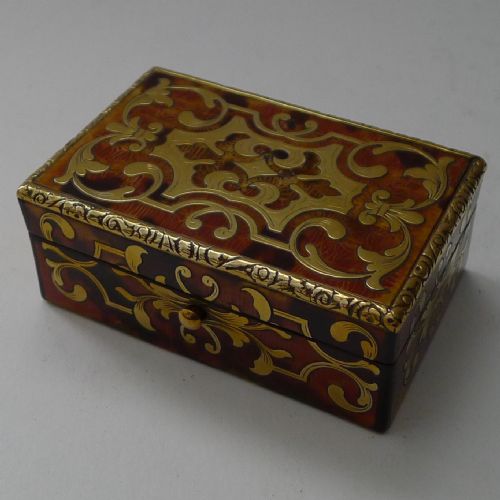
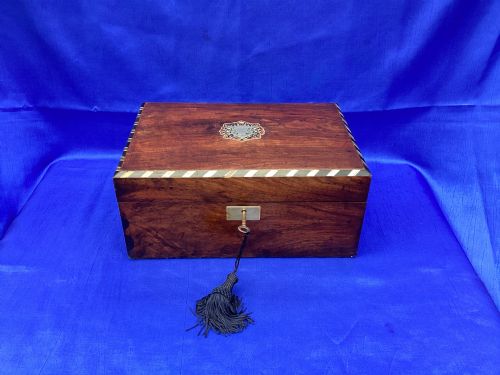
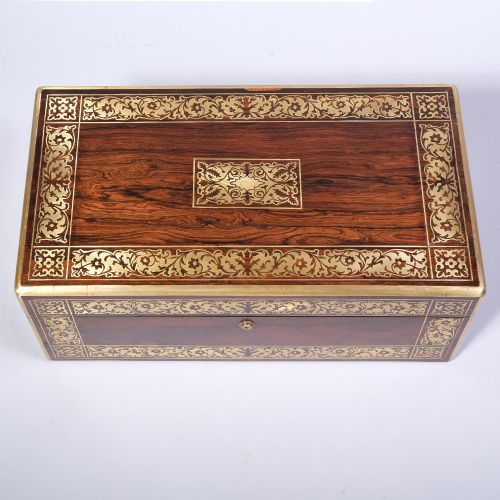
Cabinet makers constructed the foundational carcase from dense timbers like mahogany, rosewood, walnut, or coromandel, often applying decorative veneers of satinwood, maple, or amboyna over the underlying wood. Surface decoration relied on contrasting woods, mother-of-pearl, brass strings, pewter, bone, and tortoiseshell set flush into the primary surface.
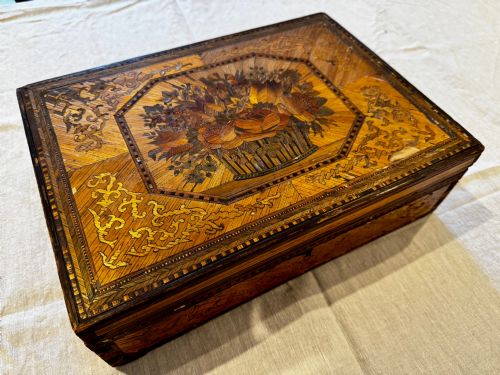
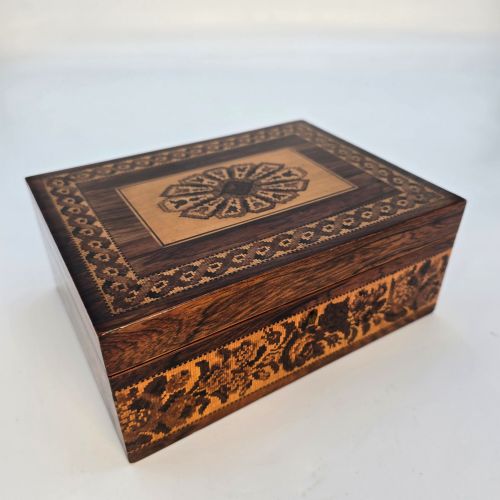
Specialised techniques such as parquetry created geometric tile patterns, while marquetry assembled pictorial motifs from diverse botanical specimens. Tunbridge Ware examples utilised thousands of tiny tinted wood blocks arranged into complex mosaic designs before being sliced and applied to the box exterior.
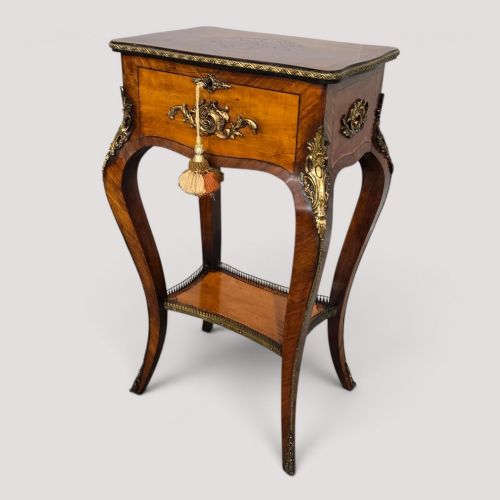
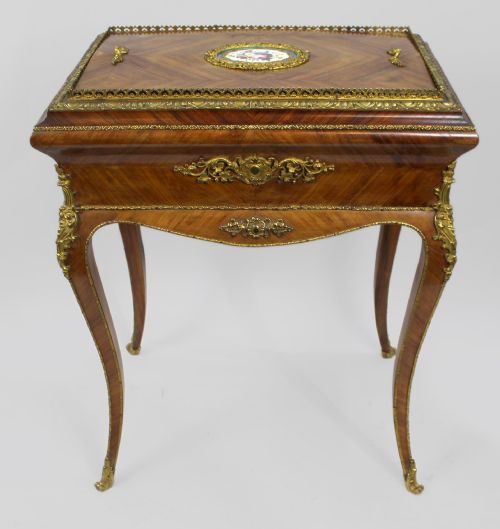
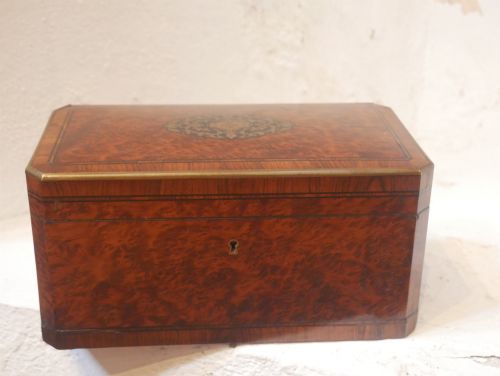
French and English workshops frequently integrated cast or gilt ormolu mounts, hinges, and lock escutcheons to reinforce corners and frame the decorative panels.
Several Victorian items include secret locking mechanisms requiring hidden release buttons to access concealed drawers for private correspondence.
What varies in quality
The standard of a 19th century inlaid box depends heavily on the precision of the joinery and the complexity of the surface ornamentation. Superior examples display tight, seamless integration of contrasting materials where brass stringing and wood veneers meet without visible gaps or excessive filler.
Tahan Paris·Edmund Nye·Henry Hollamby·William Seuffert
The 19th Century Inlaid Box Glossary
- Tea caddy
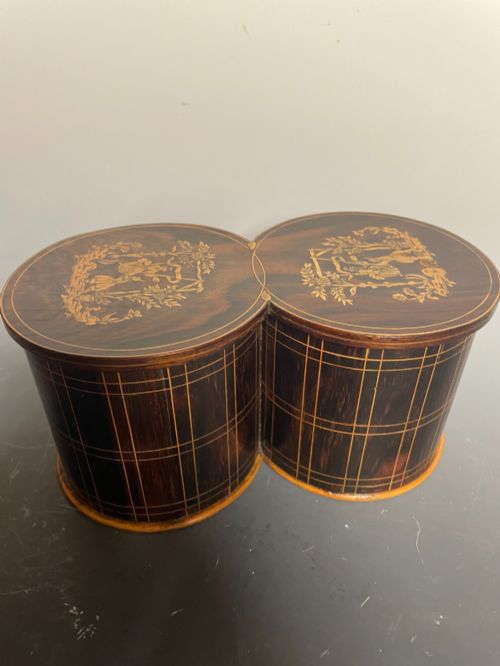
- A box designed for storing loose tea leaves, often featuring internal compartments and a central mixing bowl or dual canisters.
- Marquetry
- The art of applying pieces of veneer to a structural structure to form decorative patterns or pictures.
- Parquetry
- Geometric mosaic woodwork used to create repeating patterns of chequers, cubes, or zigzags across a surface.
- Tunbridge Ware
- A distinct type of wooden mosaic ornamentation produced in Kent, utilising minuscule blocks of coloured timber to form pictorial or geometric designs.
- Writing slope
- A portable inclined desk that opens to reveal a slanted writing surface, pen trays, and storage for paper and inkwells.
- Boulle work
- An elaborate form of marquetry consisting of tortoiseshell and brass inlaid in contrasting positive and negative patterns.
19th Century Inlaid Box: Frequently Asked Questions
What were 19th century boxes used for?
These receptacles served specific domestic functions in the Victorian and Regency home, organising correspondence, securing precious jewellery, or preserving expensive tea leaves under lock and key.
Larger variations functioned as portable writing desks for travel, while smaller pocket versions held snuff or coins.
How do I identify a Regency box?
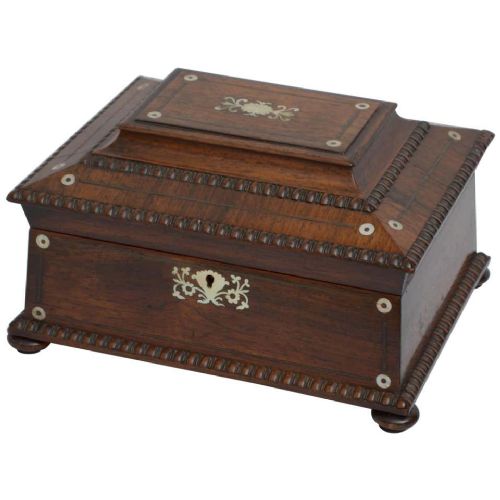
Regency period pieces typically date from the early decades of the century, displaying classical proportions, architectural sarcophagus shapes, and crisp brass inlay.
They frequently employ dark rosewood or mahogany timbers combined with lion mask ring handles and bold brass stringing.
What is Tunbridge Ware?
Tunbridge Ware refers to decorative wooden items decorated with mosaic surface patterns made from thousands of minuscule tinted wood blocks.
Craftsmen in Kent assembled these blocks to depict butterflies, flowers, or geometric grids before slicing them thin to veneer the box exterior.
How should I care for an antique box?
Keep wooden and veneered boxes away from direct sunlight and extreme temperature fluctuations to prevent timber shrinkage and veneer lifting.
Apply a minimal amount of appropriate microcrystalline wax occasionally to nourish the historic polish without dampening inlaid metals or mother-of-pearl.