





19th Century Indian Brass
These 19th century indian brass items combine utility and craftsmanship, offering practical storage and decorative metalwork for the home.
19th Century Indian Brass
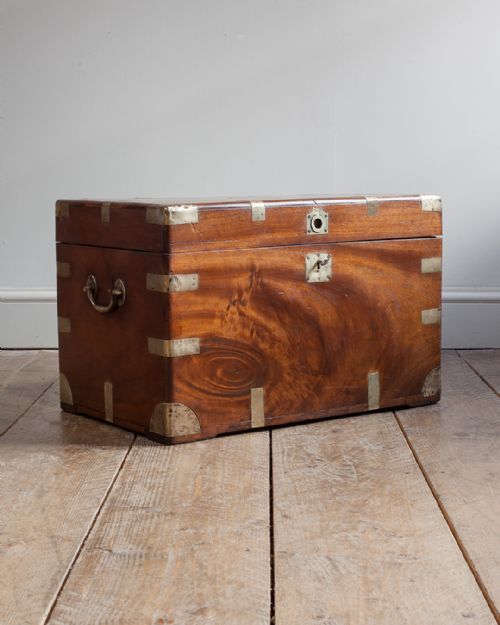
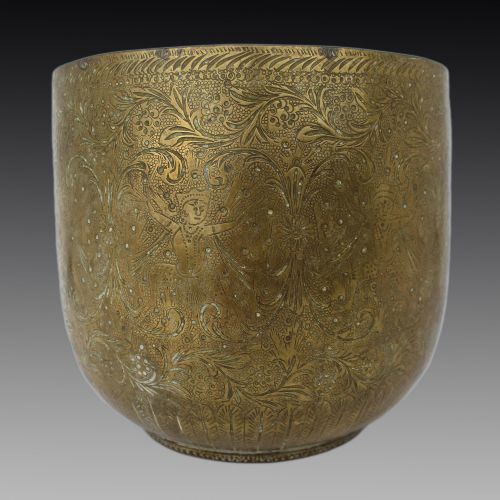
When searching for 19th century indian brass, buyers encounter a diverse selection of utilitarian and decorative objects originating from the subcontinent during the Victorian era and Raj period. These items range from heavy campaign trunks and deed boxes reinforced with brass straps to domestic vessels like cachepots, jardinières, and ceremonial bowls.
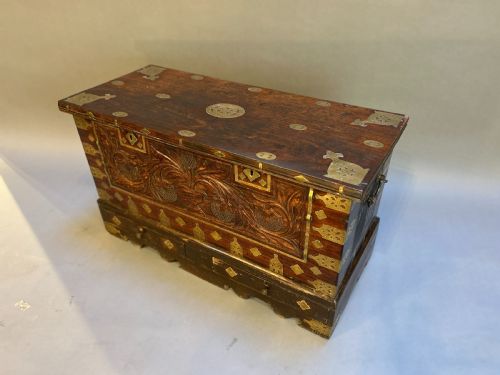
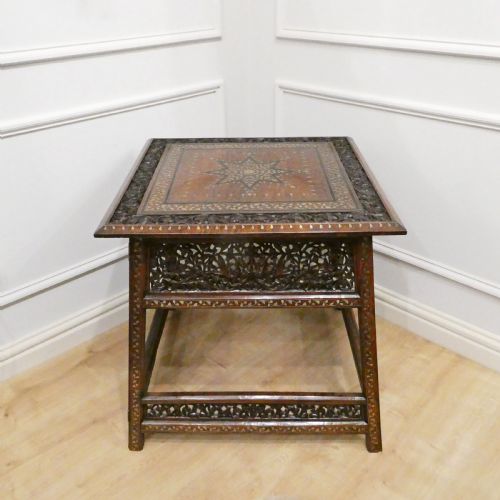
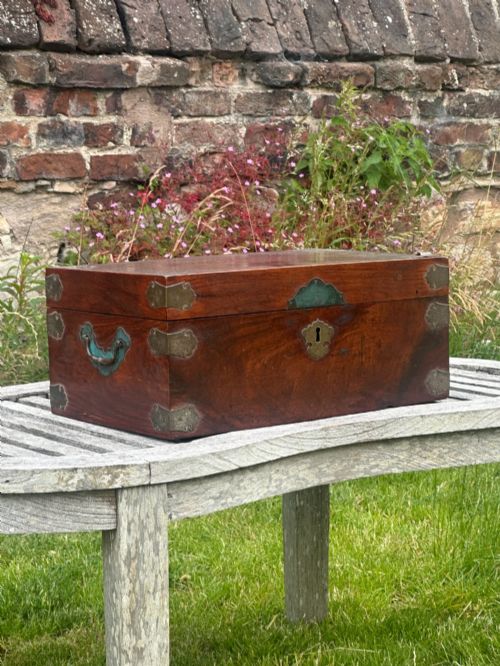
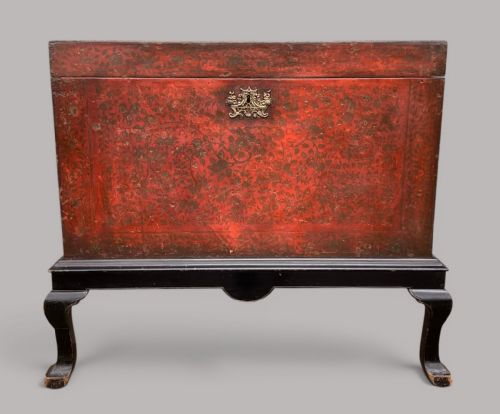
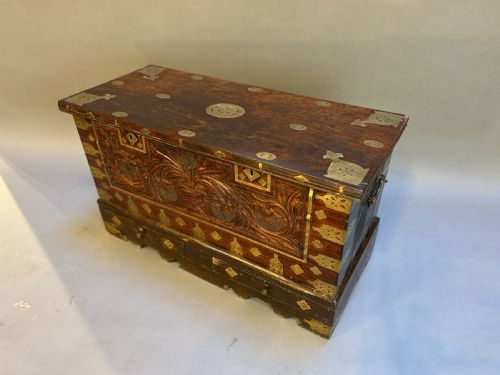
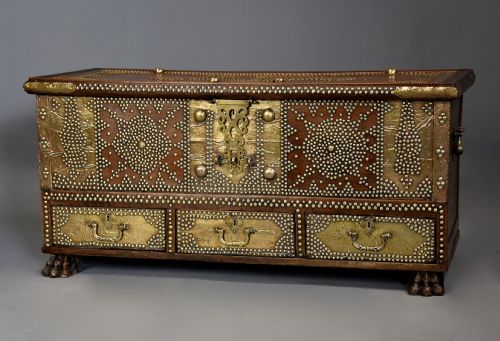
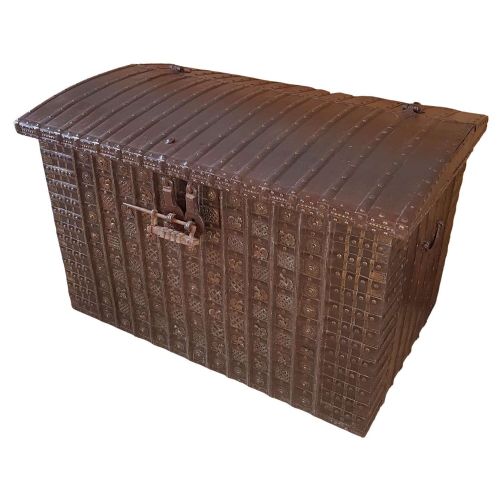
The most common forms on this page include brass-bound hardwood chests, such as Zanzibar and campaign trunks, alongside smaller items like inlaid side tables, engraved shields, and brass vases. Many pieces reflect Anglo-Indian or regional styles, combining local timbers with intricate metalwork.
Materials and construction methods
Makers utilised durable tropical hardwoods such as teak, padouk, camphor wood, rosewood, and hardwood for the structural bodies of trunks, desks, and tables. These timbers were selected for their resilience against humidity and pests, then joined with precision.
Brass formed the primary metal component, appearing as strapwork, corner brackets, stud decoration, and intricate inlays. Artisans also employed bronze, iron, and copper, applying hand-engraving, chasing, and beating techniques to ornament the surfaces.
19th Century Indian Brass Retail Price Guide 2026
Typical asking prices for 19th century indian brass among the pieces listed under this phrase on Sellingantiques today, from the lower quarter to the upper quarter. They describe what is for sale here now, not the wider market.
Among the metalwork, an articulated fish powder flask waits ready to dispense gunpowder with flexible charm.
Factors influencing quality
The standard of a piece rests on the depth and precision of the metalwork, where deeply chased or engraved foliage and figurative motifs demonstrate superior artisan skill compared to shallow stamping. The complexity of brass inlay, particularly in Hoshiarpur tables, marks the upper tier of execution.
Structural integrity and the retention of original brass fittings, locks, and studs dictate the standing of storage pieces. Rich timber grain, combined with robust dovetailing and intact secondary woods, separates standard utility items from finer domestic furnishings.
The 19th Century Indian Brass Glossary
- Campaign chest
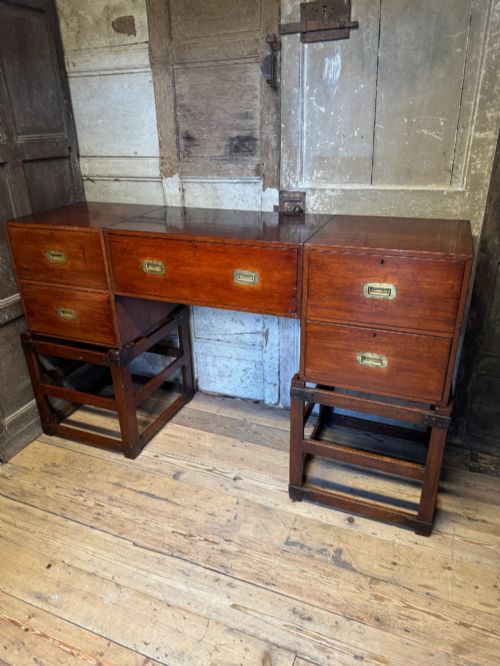
- A modular chest of drawers or trunk made in sections with recessed brass pull handles and corner brackets, designed for easy transport by military officers.
- Zanzibar chest
- A heavy wooden storage chest embellished with intricate brass stud work, strap hinges, and central hasp locks, reflecting trade links across the Indian Ocean.
- Cachepot
- An ornamental outer flowerpot designed to hold a plant pot, frequently rendered in beaten or engraved brass during the Raj period.
- Hoshiarpur
- A style of woodwork originating from Punjab, characterised by dense, intricate brass or bone inlay set into dark timber surfaces.
19th Century Indian Brass: Frequently Asked Questions
How were campaign chests used?
Campaign chests were built in modular sections with flush brass hardware to withstand frequent transport by British military officers and colonial administrators on the move.
The recessed handles and corner reinforcements prevented the furniture from snagging or sustaining damage during transit.
What distinguishes Hoshiarpur tables?
Hoshiarpur tables are identified by intricate, microscopic brass wire and sheet inlay covering the entire wooden surface in geometric or foliate patterns.
Originating from northern India, these tables utilise dense hardwoods as a dark background to highlight the bright metallic ornamentation.
How do I care for brass-bound furniture?
Maintain the timber using appropriate natural waxes while allowing the brass components to retain their age-appropriate patina without harsh chemical polishing.
Keep the items away from direct heat sources and extreme humidity shifts to preserve the stability of the wood and the security of the metal inlays.